f you have ever stood on the terraces of Croke Park on a blistering August afternoon, you know that hurling is not just a sport; it is an opera of speed, leather, and ash. Dubbed the fastest field sport on earth, its ancient origins stretch back three millennia, woven tightly into the fabric of Irish mythology. Yet, when the global sporting community gathers every four years under the banner of the five Olympic rings, this breathtaking spectacle is conspicuously absent.
How does a game of such raw, athletic brilliance find itself on the periphery of the world’s greatest sporting stage? The relationship between hurling and the Olympic Games is a fascinating study of cultural isolation, historical happenstance, and the unique friction between global standardisation and fiercely guarded amateur localism.
The St. Louis Oddity: 1904
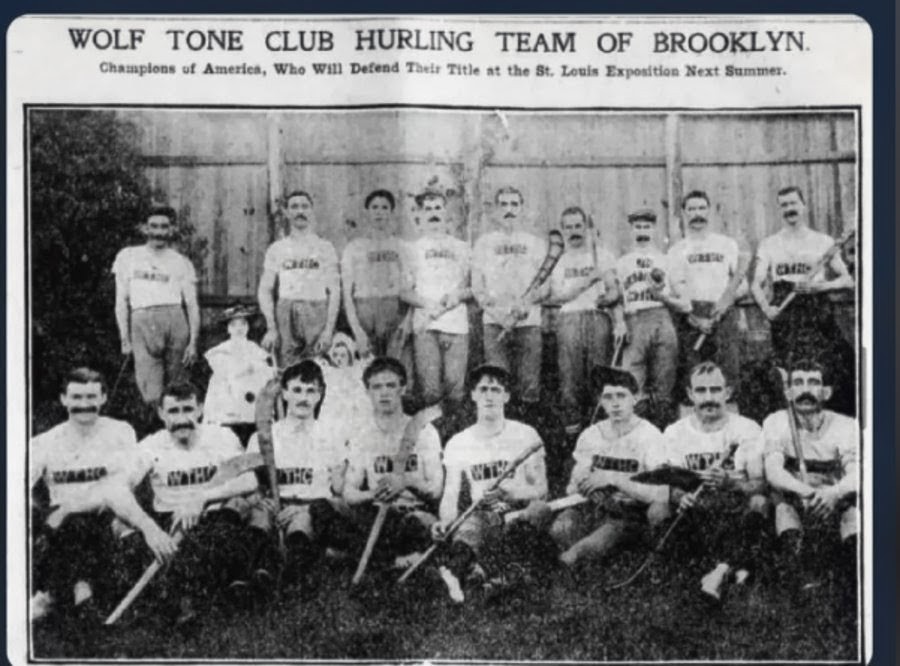
To understand hurling’s Olympic history, we have to travel back over a century. Many sports fans are surprised to learn that hurling did actually make an appearance at the Olympic Games. The year was 1904, and the host city was St. Louis, Missouri. Held alongside the Louisiana Purchase Exposition, these Games were, by all accounts, a chaotic and heavily American-centric affair.
Because of the massive Irish diaspora in the United States, Gaelic games had found a second home across the Atlantic. Hurling was included in the 1904 programme as an unofficial demonstration sport. The historical record of the event is frustratingly brief, but we know that local diaspora clubs took to the field to showcase the sport to a bewildered international audience. The Innisfail Hurling Club of St. Louis ultimately took home the accolade, defeating a rival team from Chicago.
For a brief moment in the Missouri sun, hurling was an Olympic event. But instead of acting as a springboard for global expansion, it remained a historical footnote. For exactly 120 years, the sport vanished entirely from the Olympic purview—until a brief, symbolic revival in 2024, when a hurling exhibition was showcased at the Château de Vincennes during the Paris Games to celebrate international sporting heritage.
The Paradox of Inclusion
Why did it vanish? The answer lies in the very rules that govern how a sport qualifies for the modern Olympic program. The International Olympic Committee (IOC) requires a sport to have widespread, active global participation—specifically, it must be widely practiced by men in at least 75 countries across four continents, and by women in 40 countries across three continents.
This is where hurling runs into a beautiful, stubborn paradox.
Hurling is governed by the Gaelic Athletic Association (GAA), an organisation founded in 1884 to preserve and cultivate Ireland’s national pastimes. The GAA is built on a foundational bedrock of strict amateurism and regional identity. Players do not transfer clubs for multi-million-dollar contracts; they play for the parish they were born in, alongside the neighbors they grew up with.
| Metric | Olympic Requirement | The Reality of Hurling |
| Global Reach | 75+ countries across 4 continents | Concentrated in Ireland; diaspora clubs exist but lack competitive domestic leagues. |
| Player Status | Elite professionalization allowed | Strictly amateur; players balance elite training with everyday careers. |
| Cultural Intent | Universal internationalism | Deeply tied to Irish heritage, geography, and community identity. |
To scale hurling to the point of global Olympic compliance would require a level of international professionalization that could fundamentally dilute the soul of the game. If everyone plays it globally, is it still uniquely Irish?
The Future: Could We See a Compact Version?
In recent years, the landscape of the Olympics has shifted toward younger, faster, and more compact sports. The successful introduction of Rugby Sevens and 3×3 Basketball proves that the IOC is willing to adapt traditional sports into shortened, high-octane formats to capture global attention.
This has sparked quiet, persistent conversations within the diaspora and the GAA. Could a modified, “9-a-side” version of hurling—requiring smaller pitches and fewer players—one day find a home as an Olympic invitational sport? The global growth of the game via clubs in the US, Europe, and Asia proves there is an appetite for it. Seeing the breathtaking athleticism of a slíotar (leather ball) struck at 150 km/h on a global television broadcast would undoubtedly captivate the world.
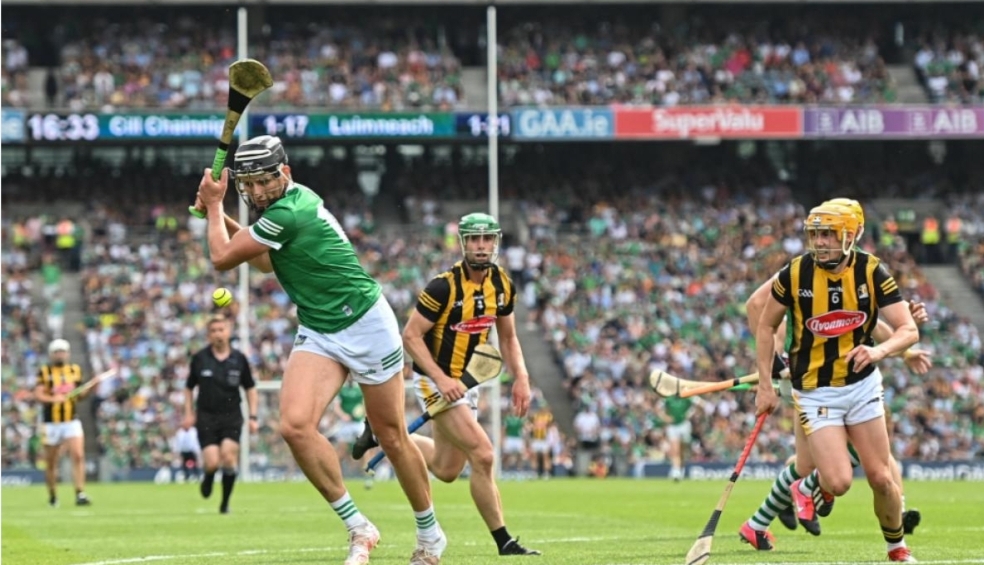
For the first time in exactly 120 years after the St. Louis Games, hurling and its sister Gaelic sports returned to the Olympic stage. That historic absence finally ended in August 2024 during the Paris Summer Olympics, when Ireland was selected as one of ten European nations invited to showcase its indigenous cultural sports at a major ten-day festival organized by France’s National Institute of Sport (INSEP).
The setting was appropriately historic. Within the vast Olympic fan zone at the iconic Château de Vincennes—welcoming more than 10,000 visitors each day—a two-day exhibition brought the clash of ash to the heart of Paris.
Rather than relying on elite inter-county players from Ireland, the GAA chose to highlight the sport’s expanding international reach. The exhibition was led by World GAA, which now includes more than 470 clubs outside Ireland, and was delivered on the ground by members of the local Paris Gaels GAA club.
The event unfolded in two distinct phases:
The Next Generation:
Day one featured a three-hour interactive workshop designed for French schoolchildren, introducing them to the skills of hurling, the use of the hurley, and the speed and physics of the slíotar.
The Global Stage:
Day two opened the experience to the wider international public, giving visitors from around the world the opportunity to try the sport themselves, watch live demonstrations, and experience the extraordinary pace and intensity of the game firsthand.
A Sport Too Big for a Gold Medal
Ultimately, hurling’s absence from the Olympics is not a reflection of its quality, but a testament to its unique cultural weight. Most sports view the Olympic Games as the absolute pinnacle of human achievement—the ultimate destination.
But hurling already has its Olympus. It is a packed, roaring stadium in North Dublin on an autumn Sunday. For a hurling player, the ultimate glory isn’t a gold medal handed down by an international committee; it is lifting the Liam MacCarthy Cup in front of their own people, knowing they have brought honor back to the county that raised them.
The Olympics may be the world’s greatest stage, but some treasures are meant to be kept close to home.
sources
https://en.wikipedia.org/wiki/Hurling_at_the_1904_Summer_Olympics
https://www.olympedia.org/sports/HUR


Leave a Reply