When we think of the Holocaust and the Nazi camp system, names like Auschwitz or Dachau immediately come to mind. But to truly understand how the machinery of the Third Reich was built, we have to look at a lesser-known but historically pivotal site: Oranienburg concentration camp.
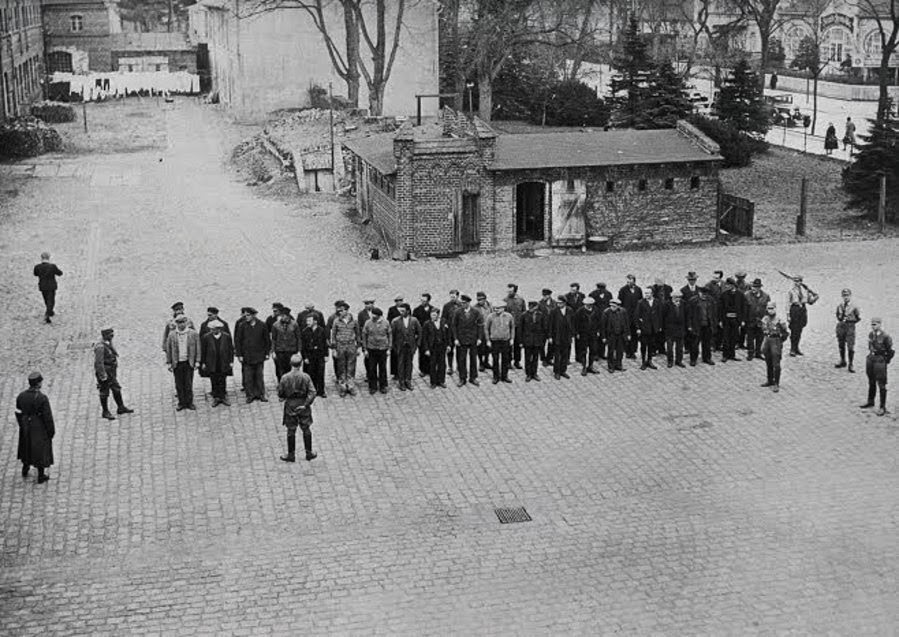
Established 21 March 1933, just two months after Adolf Hitler was appointed Chancellor, Oranienburg was one of the very first concentration camps in Nazi Germany. It wasn’t hidden away in a remote forest; it was built right in the center of the town of Oranienburg, just north of Berlin, occupying a former brewery.
The camp was founded by SA Regiment 208 (Standarte 208) without prior authorization from the responsible authorities in Berlin. On the evening of March 21, 1933, the first 40 prisoners were transported to the small town approximately 20 kilometers north of Berlin. Located on the grounds of a former brewery along a main road, Oranienburg became the first concentration camp established in Prussia. Beginning in September 1933, subcamps were also operated at the Elisenau estate in Blumberg near Bernau and in Börnicke.
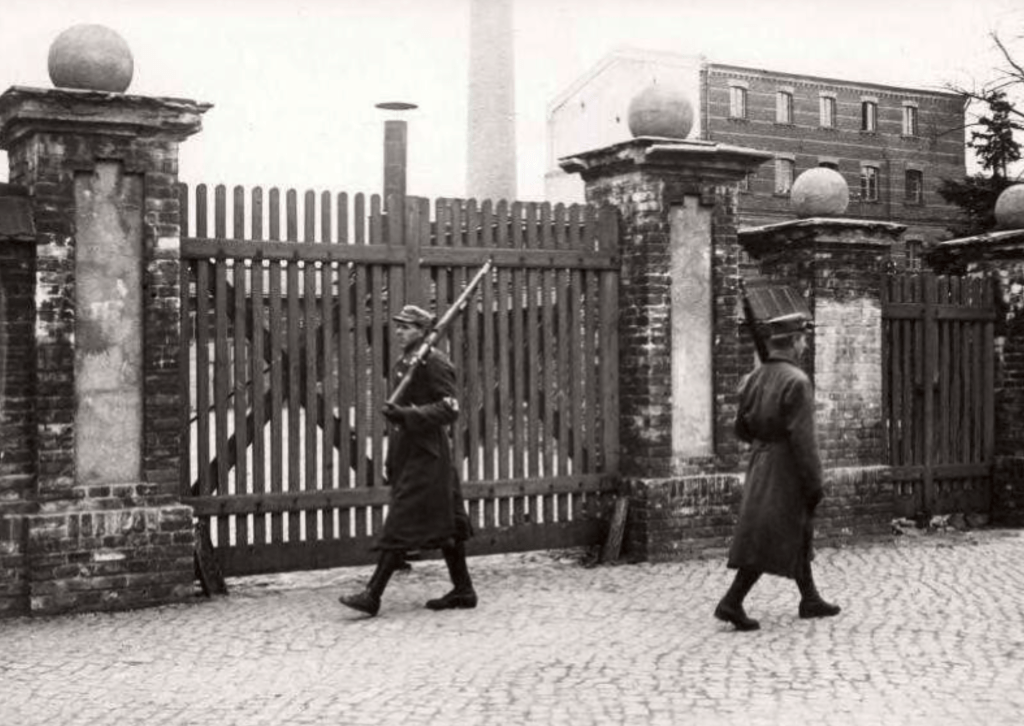
The SA established Oranienburg primarily for German political prisoners, especially Communists and Social Democrats. The camp quickly gained notoriety for the brutal treatment of inmates. Nevertheless, Nazi authorities attempted to counter accusations of abuse through carefully orchestrated propaganda that portrayed camp life as orderly and routine. Journalists, both German and foreign, were invited to tour the facility, radio broadcasts reported from the camp, and local newspapers extensively covered the institution. Cinemas also screened propagandistic images depicting the camp in a favorable light.
The Early Days of Suppression
Unlike the later extermination camps designed for mass murder, Oranienburg was initially created to crush political opposition. The SA (the Nazi paramilitary wing, or “Stormtroopers”) used it to imprison, terrorize, and silence those who spoke out against the new regime.
The Targets: Primarily Communist Party (KPD) and Social Democratic Party (SPD) members, journalists, trade unionists, and intellectuals.
The Scale: Over its short lifespan, it held roughly 3,000 prisoners. At least 16 individuals were documented as murdered here, though the psychological and physical toll on the survivors was immeasurable.
The Propaganda: In 1933, the Nazis actually invited journalists to Oranienburg. They wanted the public to see that political dissidents were being “re-educated” through hard labor, using the camp as a tool of open intimidation to discourage any resistance in nearby Berlin.
Only days after the camp’s creation, SA-Standartenführer Werner Schulze-Wechsungen transferred administrative control to the Potsdam district president. From that point onward, both the camp and its guards were financed with public funds. Between August 1933 and July 1934, approximately 280,000 Reichsmarks were spent maintaining the camp. Prisoners were sent to Oranienburg not only by police and party authorities but also by local administrative offices. Due to its location within the town itself, Oranienburg became what historians have described as a “transparent concentration camp,” visible to the local population. Prisoners were frequently forced to perform public labor in the town.
Camp commander SA-Sturmbannführer Werner Schäfer attempted to defend the camp’s reputation through the publication of an apologetic work titled Anti-Braunbuch (“Anti-Brown Book”), in which he dismissed reports of abuse as “atrocious propaganda.” Despite these efforts, reports of mistreatment continued to circulate widely.
Former concentration camp prisoner Gerhart Seger described Schäfer in the following terms:
“Schäfer was an utterly subservient man whose hatred of the Social Democrats knew no bounds. He preferred to express this hatred by directing vulgar and degrading insults at defenseless prisoners, who, according to camp regulations, were required to stand at attention in his presence. Although Schäfer did not frequently engage in physical violence himself, he readily imposed disciplinary punishments, solitary confinement, bans on correspondence and visits, and assignment to penal labor detachments. […] There can be no doubt that Commandant Schäfer bore full responsibility for all crimes, abuses, and other inhumane treatment inflicted upon prisoners in Oranienburg.”
Approximately 3,000 prisoners were incarcerated at Oranienburg during its existence. The inmate population fluctuated significantly, increasing from 97 prisoners to 911 by August 1933 before declining to 271 by June 1934. Most prisoners were laborers or unemployed men between the ages of 20 and 40, largely from Berlin and the surrounding region. Many had been transferred from smaller Brandenburg concentration camps, including Alt Daber, Börnicke, Havelberg, and Perleberg, following their closure in mid-1933. Additional prisoners arrived from Börgermoor, Lichtenburg, and Sonnenburg later that year.
Most inmates belonged to the Communist Party of Germany (KPD), the Social Democratic Party (SPD), or smaller left-wing organizations such as the Socialist Workers’ Party (SAP) and the Communist Party Opposition (KPO). Among those imprisoned were approximately 50 Jewish youths from a progressive educational home operated by the German Jewish Community Association in Wolzig. They had been arrested on accusations of “Communist activities.”
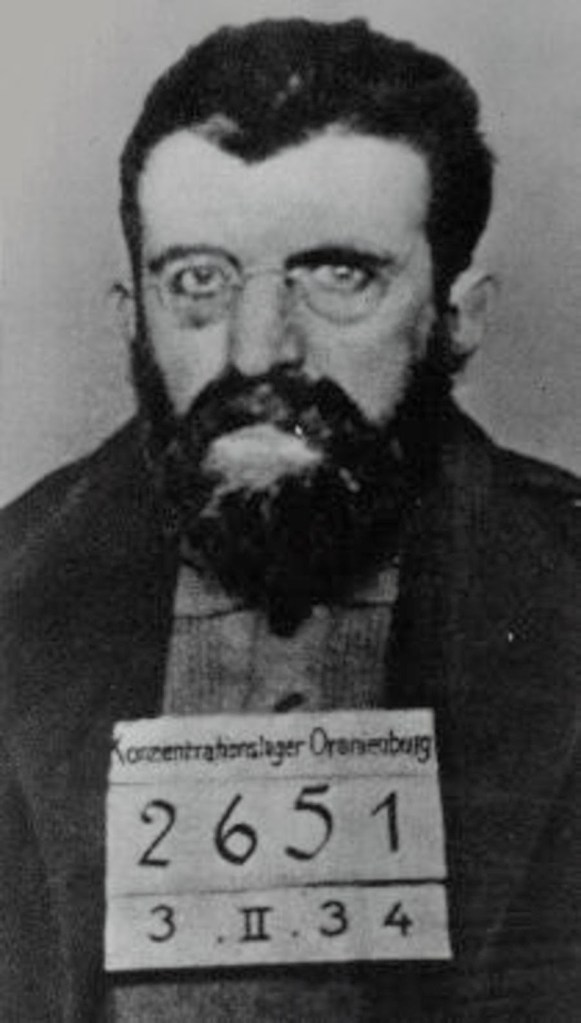
Several prominent individuals were also imprisoned at Oranienburg, including Friedrich Ebert Jr., son of Germany’s former president; Dr. Kurt Magnus, director of the Reich Broadcasting Association; SPD politician Ernst Heilmann; Werner Hirsch, editor of the Communist newspaper Rote Fahne; pacifist writers Kurt Hiller and Armin T. Wegner; and SPD parliamentarian Gerhart Seger. Seger escaped from the camp in December 1933, eventually fleeing to the United States. His later account of conditions at Oranienburg became one of the earliest firsthand testimonies describing life inside a Nazi concentration camp.
Prisoners were generally held for periods of two to three months. The primary purpose of their detention was to suppress political opposition and prevent activists associated with the workers’ movement from continuing their activities. Although systematic killing was not initially official policy, prisoners were subjected to arbitrary violence, torture, and severe neglect. At least 16 inmates died as a result of mistreatment and inadequate medical care, including the anarchist writer Erich Mühsam, who was tortured to death on July 11, 1934.
The camp guards were recruited from among “proven” SA members, many of whom had previously been unemployed. Their numbers grew from approximately 50 men in March 1933 to 170 during the summer, before declining to 74 by June 1934. The camp leadership largely consisted of lower-middle-class men from rural backgrounds who had become involved in radical right-wing organizations during the Weimar Republic and later joined the Nazi Party.
Werner Schulze-Wechsungen, who initiated the construction of the camp, had joined the NSDAP and SA in 1925 and already possessed a criminal record for participating in a violent raid on a Communist allotment settlement in Berlin. Camp commander Werner Schäfer had previously served in the Freikorps “Olympia” and later as a police officer before joining the Nazi Party in 1928.
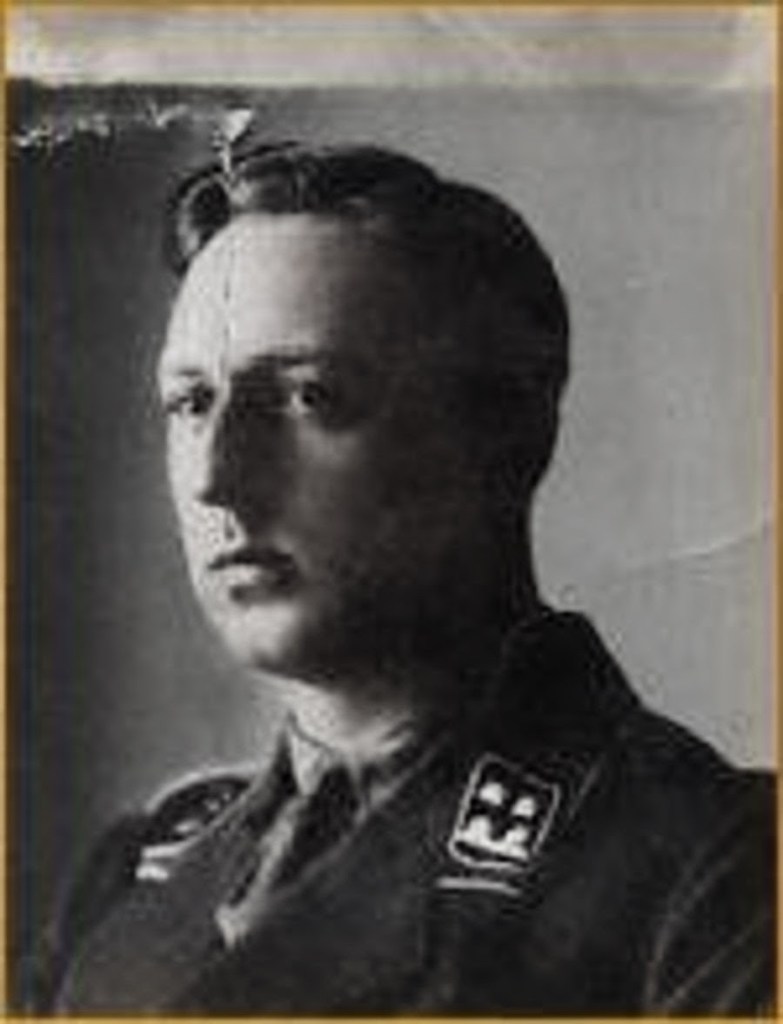
Responsibility for prisoner interrogations initially fell to SA-Sturmbannführer Hans Krüger, later succeeded by SA-Sturmführer Hans Stahlkopf. Both men were notorious for extreme brutality. Stahlkopf, a former member of the Völkische Freiheitspartei and the Freikorps “Rossbach,” was described by Gerhart Seger as “a stereotypical sneaky, especially disgraceful sadist.” Following the closure of Oranienburg, Stahlkopf joined the SS Leibstandarte Adolf Hitler before committing suicide in 1935.
Krüger’s later career reflected the escalating radicalization of the Nazi regime. After joining the SS in 1938, he became commander of the Security Police and SD in Galicia following the German invasion of the Soviet Union, where he played a major role in the systematic murder of Jewish civilians. In 1968, he was sentenced to life imprisonment by a court in Münster.
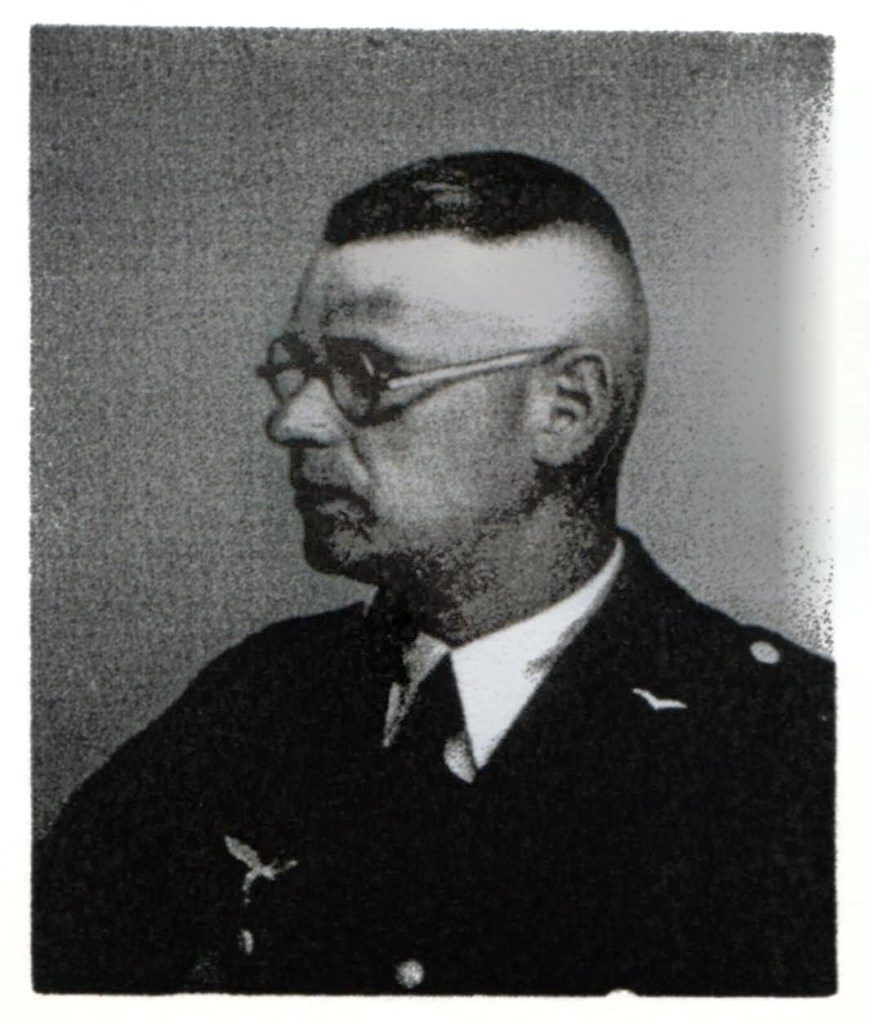
Dr. Carl Lazar, a physician from Bernau and SA official responsible for the camp’s medical unit, regularly attempted to conceal evidence of abuse and murder within the camp.
Criminal acts committed at Oranienburg were consistently ignored by German judicial authorities. Complaints against guards never resulted in indictments. Even after 1945, none of the perpetrators associated with the camp were successfully prosecuted. By contrast, individuals who attempted during the Nazi era to expose conditions at Oranienburg were themselves prosecuted and imprisoned for spreading “atrocity propaganda.” Through press reports, radio broadcasts, and public rumor, the brutal reality of the camp was widely known, yet open criticism remained impossible under the Nazi regime.
The transition from the early Oranienburg camp to Sachsenhausen represents a major shift in Nazi history. It marks the moment the camp system moved from a scattered, chaotic network of local prisons into a highly centralized, professionalized empire of terror run exclusively by the SS.
Here is how the two camps were fundamentally connected:
- The Death of the SA and Birth of the SS System
In 1933, the Oranienburg camp was run by the SA (the Stormtroopers). It was a makeshift operation set up in an old brewery, right in the middle of town.
However, during the Night of the Long Knives in the summer of 1934, Hitler purged the SA leadership. The rival SS, led by Heinrich Himmler, took complete control of all concentration camps. Himmler hated the chaotic, unorganized nature of the early SA camps and shut Oranienburg down in July 1934. He wanted purpose-built facilities designed for total control.
- Physical and Geographic Continuity
Even though the original brewery camp was closed, the town of Oranienburg remained the ideal strategic location for the SS. It was only 22 miles north of Berlin, making it incredibly easy to transport political prisoners directly from the capital.
In 1936, just two years after closing the original camp, the SS forced prisoners to clear a massive forested area just a couple of miles away from the old brewery. This became Sachsenhausen concentration camp.
- Oranienburg as the Administrative Brains
While Sachsenhausen is the famous camp where prisoners were held, the town of Oranienburg itself became the administrative capital of the entire Nazi concentration camp universe.
In 1938, the SS moved the Inspectorate of Concentration Camps (IKL) to Oranienburg. This was the central headquarters that managed every single camp in Europe, including Dachau, Buchenwald, and later, Auschwitz. The complex was built right next to Sachsenhausen. From this office, SS officers coordinated forced labor contracts with companies like Siemens and organized the logistics of mass murder.
sources
https://en.wikipedia.org/wiki/Hans_Krueger
https://de.wikipedia.org/wiki/KZ_Oranienburg
https://encyclopedia.ushmm.org/content/en/article/oranienburg-1
Donation
Your readership is what makes my site a success, and I am truly passionate about providing you with valuable content. I have been doing this at no cost and will continue to do so. Your voluntary donation of $2 or more, if you are able, would be a significant contribution to the continuation of my work. However, I fully understand if you’re not in a position to do so. Your support, in any form, is greatly appreciated. Thank you. To donate, click on the credit/debit card icon of the card you will use. If you want to donate more than $2, just add a higher number in the box left from the PayPal link. Your generosity is greatly appreciated. Many thanks.
$2.00


Leave a comment