Conversation with Gemini
Write a substantial essay about Kepler’s Mother Arrest
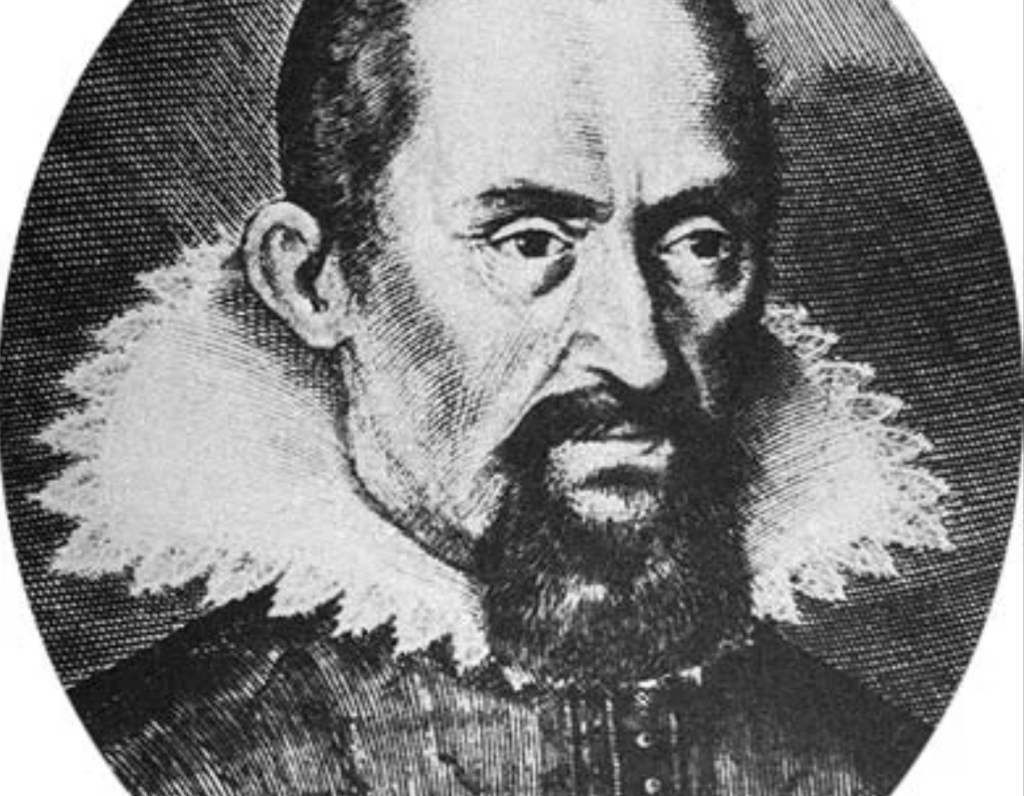
In the history of the Scientific Revolution, 1615 is usually remembered as the year Johannes Kepler was refining his laws of planetary motion and preparing his landmark work, Harmonice Mundi (The Harmony of the World). Yet, during this pinnacle of his scientific career, Kepler’s life was upended not by celestial mechanics, but by a terrestrial nightmare: his 68-year-old mother, Katharina Kepler, was accused of witchcraft in their home region of Württemberg, Germany.
Her legal battle, arrest, and trial lasted six years, culminating in a harrowing fourteen-month imprisonment. The trial of Katharina Kepler stands as one of the most poignant historical intersections between the birth of modern rationalism and the dying, violent grips of early modern superstition.
The Origins of the Accusation
Katharina Kepler was an independent, sharp-tongued, and somewhat reclusive widow living in the town of Leonberg. Like many women of her time, she practiced herbal medicine and folk healing, a role that often invited both reliance and suspicion from neighbors.
The trouble began in 1615 following a petty neighborhood dispute. Ursula Reinbold, the wife of a local glazier, accused Katharina of giving her a potion that caused severe, chronic illness. Soon, local rumor amplified the claim. Neighbors came forward with fantastical accusations:
Claims that Katharina had entered locked rooms through walls.
Accusations that her touch had killed livestock and paralyzed children.
Allegations that she had dug up the grave of her own father to collect bones for magical rituals.
The political and social climate of the Holy Roman Empire on the eve of the Thirty Years’ War (1618–1648) further fueled the frenzy. Economic instability, religious strife, and plague created an atmosphere of collective anxiety where scapegoats were eagerly sought—and older, non-conforming women were prime targets.
1615 1619 Aug 1620 Sep 1621 Oct 1621
——–|——————–|————————|———————–|——————–|——–
Ursula Reinbold Formal Warrant Issued Katharina Arrested & Territio Realis Acquitted & Released
Accuses Katharina by Magistrate Einhorn Chained in Güglingen (Torture Shown) (Dies April 1622)
Escalation and Arrest (1619–1620)
The accusations were enthusiastically taken up by the local magistrate of Leonberg, Lutherus Einhorn, a zealous prosecutor determined to rid the district of “satanic influence.” For four years, Katharina attempted to protect herself by initiating a slander lawsuit against Reinbold, but the judicial system turned against her.
By late 1619, the slander suit was officially inverted into a formal criminal trial for sorcery.On 7 August 1620, as political chaos brewed across Germany, Katharina was arrested. To prevent her family from hiding her, local authorities dragged her from her home in a chest and transported her to the nearby town of Güglingen.
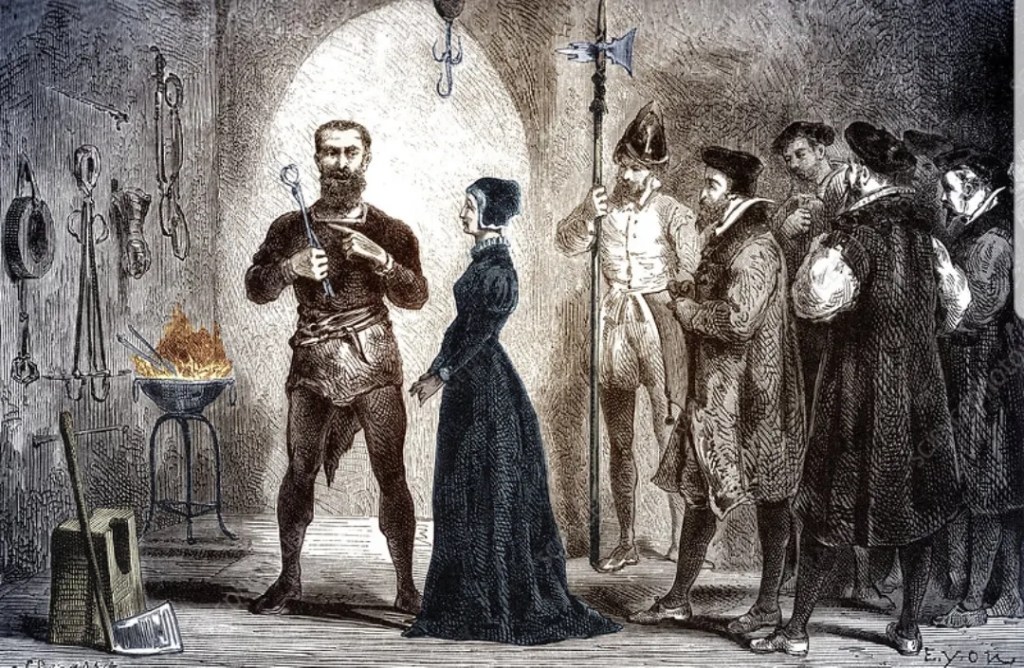
She was chained to the stone wall of a cold tower, where she remained imprisoned for fourteen months at her own expense—a common legal practice of the era that rapidly impoverished accused families.
Johannes Kepler’s Scientific Defense
When news of his mother’s arrest reached Johannes Kepler in Linz, Austria, where he served as the Imperial Mathematician, he immediately suspended his scientific research. He relocated his family to Württemberg to take personal charge of her legal defense.
Kepler approached his mother’s trial with the same meticulous logic and empirical rigor he applied to planetary orbits:
“If a doctor cannot explain an illness, it is not proof of the Devil; it is proof of human ignorance.”
— Johannes Kepler, from his legal petitions for Katharina Kepler
Empirical Deconstruction: Kepler systematically cross-examined every witness statement. He demonstrated that the ailments attributed to his mother’s “magic” were documented medical conditions, natural infections, or preexisting injuries.
Exposing Petty Malice: He proved that the accusers were motivated by financial debts, personal grudges, and public slander rather than credible evidence.
Challenging Judicial Inconsistencies: Applying his legal training, Kepler filed dozens of petitions exposing procedural errors and illegal moves made by Magistrate Einhorn.
The Territio Realis and Final Acquittal
Under the Constitutio Criminalis Carolina (the imperial legal code), a suspect could not be executed for witchcraft without a confession. When logical arguments failed to secure a confession, courts routinely turned to torture.
In September 1621, the court subjected the 74-year-old Katharina to territio realis (the show of instruments). She was led into a dark torture chamber by the executioner, who pointed out each instrument—thumb-screws, strappado, and iron boots—and described in graphic detail how they would be used to break her body if she did not confess.
Despite her age and frail health, Katharina refused to break. She dropped to her knees, prayed aloud, and declared:
“Do with me what you will. Even if you pull every vein out of my body, I have nothing to confess, for I know nothing of witchcraft.”
Because she refused to confess under the territio, and because Kepler’s legal defense had completely dismantled the prosecution’s evidentiary claims, the High Court of Tübingen ruled that torture could not be legally applied. On October 4, 1621, Katharina Kepler was acquitted and released from prison.
Historical Significance and Legacy
Though victorious, the trial shattered the family. Katharina’s health never recovered from the brutal conditions of her imprisonment; she died six months after her release in April 1622. The trial had consumed six years of Johannes Kepler’s life and significant financial resources during a critical period of his career.
Yet, out of this personal tragedy came a broader historical shift:
Legal Precedent: Kepler’s legal briefs were later studied by jurists and contributed to the gradual tightening of evidence rules for witchcraft trials in German lands.
Symbol of the Enlightenment: The trial exposed the stark contrast between two worldviews—one bound by fear, superstition, and forced confession, and the other governed by evidence, cause-and-effect reasoning, and humanitarian law.
Johannes Kepler went on to publish the Rudolphine Tables in 1627, laying the groundwork for Isaac Newton’s physics. However, his successful defense of his mother remains one of his greatest, if least celebrated, achievements: applying the light of reason not to the heavens, but to save a human life on Earth.
sources
https://www.britannica.com/biography/Johannes-Kepler
https://www.aps.org/apsnews/2015/08/kepler-mother-imprisoned-witchcraft


Leave a comment