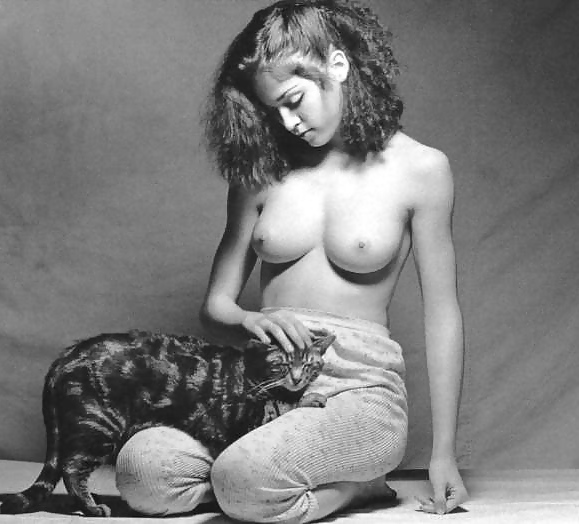
Love her or loathe her, but there is no denying she is a musical icon
Madonna (born August 16, 1958, in Bay City, Michigan) is an American singer, songwriter, actress, and entrepreneur whose extraordinary popularity during the 1980s and 1990s enabled her to achieve a level of power and creative control that was almost unprecedented for a woman in the entertainment industry. More than simply a pop star, Madonna became a cultural icon, renowned for her constantly evolving musical and fashion styles, provocative public persona, and outspoken support for LGBTQ+ rights.
Into the 21st century, Madonna remained a figure of controversy as well as influence. Critics questioned whether she remained relevant as younger generations of female performers surpassed some of her achievements in the charts and record sales. Her highly sexualized image also prompted continuing debates about how older female artists should present themselves publicly. Madonna, however, largely dismissed such criticism. Instead, she continued to embrace new musical trends, challenge expectations, and reinvent herself.
Early life and rise to fame
Madonna was born into a large Roman Catholic family. Her father, Silvio Ciccone, was an engineer and a first-generation Italian American, while her mother, Madonna Louise Ciccone (née Fortin), was a homemaker of French-Canadian heritage.
In 1963, when Madonna was just five years old, her mother died of breast cancer. The loss had a profound effect on her. Madonna has subsequently described her mother’s death as one of the defining experiences of her childhood and has suggested that it contributed to her intense determination to achieve success and recognition later in life.
During high school, Madonna found an important mentor in her dance teacher, Christopher Flynn. He not only encouraged her artistic ambitions but also introduced her to a wider community of people who, like her, did not necessarily conform to conventional expectations. Flynn took Madonna to a gay nightclub in Detroit, an experience she later described as transformative.
Speaking at the 2019 GLAAD Media Awards, Madonna recalled that she finally felt she belonged somewhere. For a young woman who had often felt different, the experience gave her a sense of acceptance and hope.
During the 1970s, Madonna studied dance at the University of Michigan and later trained with the Alvin Ailey American Dance Theater in New York City. She subsequently moved briefly to Paris, where she performed as part of Patrick Hernandez’s disco revue.
After returning to New York, Madonna performed with several rock groups before signing with Sire Records. Her breakthrough came with the release of “Holiday” in 1983. Its upbeat dance-pop sound and infectious melody provided a blueprint for much of the music that followed.
Madonna’s ambition was evident from the beginning. During an appearance on American Bandstand with Dick Clark in 1984, she famously declared that she wanted to “rule the world.” Her profile continued to grow, and in 1985 she performed at Live Aid, the enormous international benefit concert organized to raise money for famine relief in Ethiopia.
Before long, Madonna’s public appearances themselves became pop-culture events. One memorable example came at the 1991 Academy Awards, where she appeared alongside fellow superstar Michael Jackson.
Music, videos, and the creation of an icon
Early in her career, Madonna was sometimes criticized for having a limited vocal range. Yet her distinctive, youthful voice proved particularly effective within the world of pop music. Her songs combined memorable melodies and catchy choruses with lyrics exploring love, sexuality, relationships, spirituality, and personal identity.
Her musical evolution was remarkable. “True Blue” (1986) presented a relatively innocent and romantic image, while “Justify My Love” (1990) explored more explicitly erotic themes. Later songs, including those on Ray of Light (1998), reflected a growing interest in spirituality and self-examination.
Perhaps more importantly, Madonna recognized the enormous potential of the music video. She was among the first artists to understand that a music video could be more than promotional material: it could become an essential part of an artist’s identity and artistic expression.
She collaborated with leading designers such as Jean-Paul Gaultier, photographers including Steven Meisel and Herb Ritts, and directors such as Mary Lambert and David Fincher. Drawing inspiration from underground club culture, fashion, sexuality, religion, and the avant-garde, she repeatedly constructed new versions of herself.
From the knowing ingénue of “Like a Virgin” (1984) to the controversial religious imagery of “Like a Prayer” (1989), Madonna deliberately challenged conventional ideas about femininity, sexuality, religion, and celebrity.
Her videos also placed an enormous emphasis on dance and choreography. One of her most influential productions was “Vogue” (1990), which featured Madonna performing the dance style known as voguing, in which dancers strike dramatic poses inspired by fashion models.
The video helped bring voguing into the mainstream and drew international attention to the queer Black and Latino ballroom culture from which the dance originated. At the same time, Madonna faced criticism from some observers who accused her of cultural appropriation.
By 1991, Madonna had achieved 21 Top 10 hits in the United States and had sold approximately 70 million albums worldwide. Her commercial success gave her considerable financial power, but she was equally determined to maintain control over her image and career.
That determination contributed to the creation of Maverick, a subsidiary of Time Warner established as part of a $60 million deal with Madonna. Her business success sent an important message to other women in the entertainment industry: commercial success could translate into genuine creative and financial control.
Acting, controversy, and film
In 1992, Madonna pushed her provocative public image even further with the publication of Sex, an explicitly erotic coffee-table book featuring the singer in a series of provocative photographs. It was released alongside the album Erotica, which explored the darker complexities of sex, intimacy, and love during the AIDS crisis.
While Erotica received considerable attention, Sex dominated the public conversation. Madonna was accused by some critics of being exploitative and overly calculating. Yet the controversy also demonstrated one of her greatest strengths: her ability to make herself, rather than simply her music, the centre of cultural debate.
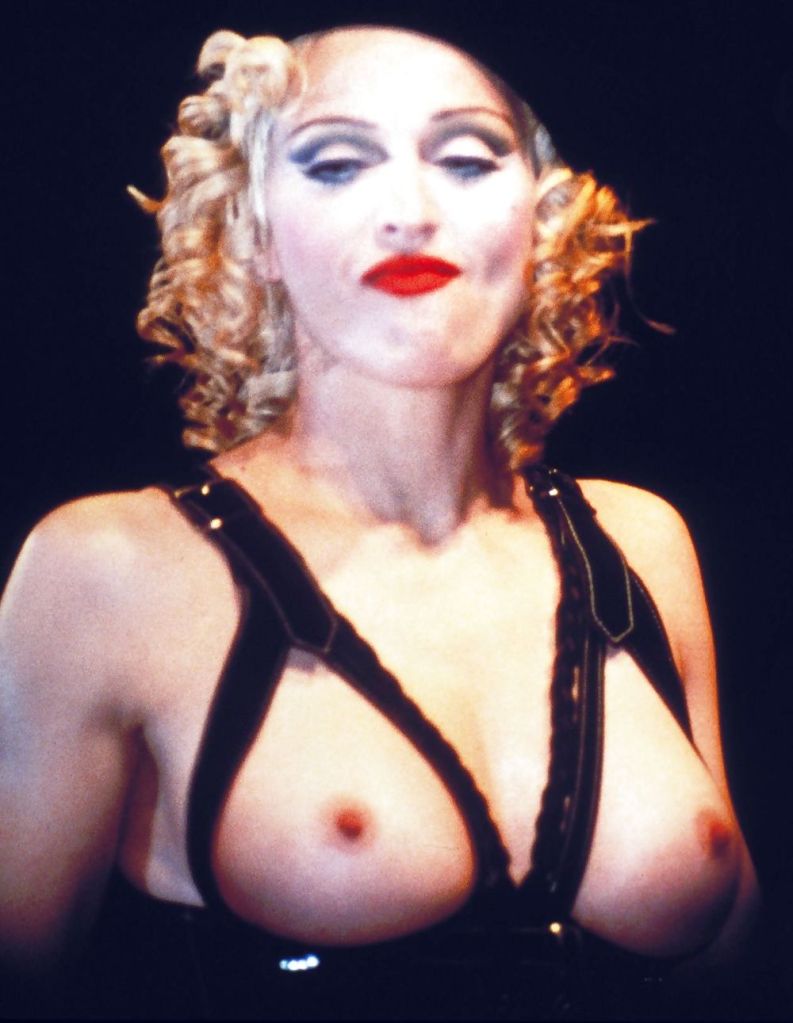
Madonna had already begun pursuing an acting career. Her breakthrough came with Desperately Seeking Susan (1985), in which she delivered a charismatic performance. Her subsequent films included the poorly received Shanghai Surprise (1986) and the uneven Dick Tracy (1990).
She found greater success with Truth or Dare (1991), also known as In Bed with Madonna. The documentary followed her during the controversial Blond Ambition tour and offered an unusually intimate look at her life on the road, including her relationships with her dancers.
The film subsequently became regarded as an important music documentary, particularly for its portrayal of Madonna’s close relationships with her gay backup dancers and its positive representation of LGBTQ+ people.
In 1992 she appeared in A League of Their Own, playing a baseball player in the All-American Girls Professional Baseball League during World War II. The film also featured her tenth number-one single, the nostalgic “This Used to Be My Playground.”
Madonna’s greatest acting success came in 1996 when she starred as Eva Perón in Evita, the film adaptation of the stage musical by Andrew Lloyd Webber and Tim Rice. Her performance earned her a Golden Globe Award for Best Actress in a Motion Picture – Musical or Comedy.
Ray of Light and a career resurgence
After several years of controversy and experimentation, Madonna experienced a major artistic resurgence with the release of Ray of Light in 1998.
Her first album of new material in four years, Ray of Light incorporated electronic and techno influences with introspective and spiritually themed lyrics. The album was both a critical and commercial success and earned Madonna her first competitive Grammy Awards.
Her experimentation with electronic music continued with Music (2000). Five years later, she returned to her disco roots with Confessions on a Dance Floor (2005), a collaboration with British producer Stuart Price.
The album became one of the most celebrated releases of her later career. Its centerpiece, “Hung Up,” became a worldwide hit, while the album itself earned the Grammy Award for Best Electronic/Dance Album.
Personal life and later career
Madonna’s personal life has frequently attracted as much attention as her professional career.
She married actor Sean Penn in 1985. Their relationship was heavily covered by the tabloids, and the couple divorced four years later.
In 1996, Madonna gave birth to her first child, Lourdes, whose father is personal trainer and actor Carlos Leon. In 2000 she married British film director Guy Ritchie. They had a son, Rocco, before divorcing in 2008.
Madonna later adopted four children from Malawi: David Banda, Mercy James, and twins Stella and Estere.
Despite the enormous attention surrounding her relationships and family life, Madonna has consistently maintained a fiercely independent public identity. At the same time, she has never been reluctant to collaborate with some of the biggest names in contemporary music.
Her 2008 album Hard Candy, for example, incorporated hip-hop influences and featured writing, vocals, and production from artists including Justin Timberlake, Timbaland, and Pharrell Williams.
In 2008 Madonna embarked on the Sticky & Sweet Tour, which became the highest-grossing concert tour by a female artist at the time. That record was later surpassed by Beyoncé and, subsequently, Taylor Swift.
Madonna continued to experiment with contemporary sounds on albums such as MDNA (2012) and Rebel Heart (2015). MDNA featured appearances from M.I.A. and Nicki Minaj, while Rebel Heart included production from Diplo and Kanye West and guest appearances from Minaj and Chance the Rapper.
In 2019 she released her fourteenth studio album, Madame X. Inspired partly by her move to Lisbon, Portugal, the album incorporated Latin pop, art pop, and hip-hop influences.
Although MDNA and Madame X both reached number one, some critics regarded Madonna’s later work as less memorable than her earlier material and accused her of following musical trends rather than creating them.
Madonna’s response was characteristically defiant: she continued to reinvent herself.
The Celebration Tour and Confessions II
In 2023 Madonna embarked on the Celebration Tour, a retrospective of her extraordinary career. The tour eventually concluded in Rio de Janeiro in May 2024 with a free concert on Copacabana Beach.
An estimated 1.6 million people attended the event, making it one of the largest standalone concerts ever performed by a recording artist.
In April 2026 Madonna announced a sequel to Confessions on a Dance Floor, once again working with producer Stuart Price. Titled Confessions II, the album was described by Madonna as a “manifesto” centred on the dance floor as a place of connection, vulnerability, community, and self-expression.
The announcement coincided with a surprise appearance by Madonna during Sabrina Carpenter’s performance at the Coachella music festival in California. The two performers debuted their collaboration “Bring Your Love.”
Released later that summer, Confessions II was welcomed by many critics as a return to form. Several songs adopted a strongly autobiographical approach, reflecting on Madonna’s early years in New York, personal loss, and her relationship with her daughter Lourdes, who appears on the track “The Test.”
Film and other projects
Madonna continued to act during the 21st century, appearing in films such as The Next Best Thing (2000) and Guy Ritchie’s Swept Away (2002).
She also moved increasingly behind the camera. In 2008 she co-wrote and directed Filth and Wisdom, a comedy about three unconventional flatmates living in London.
She subsequently directed W.E. (2011), a drama that juxtaposed the historical romance between Wallis Simpson and King Edward VIII with the fictional story of a woman researching Simpson’s life.
Madonna has also written several children’s picture books, including The English Roses and Mr. Peabody’s Apples, both published in 2003.
Charity work and legacy
Throughout her career, Madonna has used her fame to support causes that are important to her. She became an outspoken advocate for HIV/AIDS awareness and research and has consistently supported LGBTQ+ rights.
In 1998 she established the Ray of Light Foundation, which supports initiatives involving equal rights, education, and peace around the world. In 2006 she founded Raising Malawi, an organization dedicated to helping vulnerable and impoverished children in Malawi.
Madonna was inducted into the Rock and Roll Hall of Fame in 2008. In 2016 she was named Billboard’s Woman of the Year, during which she delivered a powerful speech addressing the sexism, misogyny, and ageism she had encountered throughout her career.
In 2023, the U.S. Library of Congress added Like a Virgin to the National Recording Registry, recognizing recordings considered culturally, historically, or aesthetically significant.
The enduring legacy of Madonna
Madonna’s career is difficult to define simply because she has spent much of it refusing to remain defined.
She has been a singer, songwriter, actress, dancer, fashion icon, businesswoman, filmmaker, author, philanthropist, and provocateur. More importantly, she understood that popular culture was constantly changing—and that survival within it required constant reinvention.
Her importance extends beyond record sales and chart positions. Madonna challenged traditional expectations surrounding female sexuality, confronted religious and social conventions, embraced LGBTQ+ culture, and demonstrated that a woman could exercise unprecedented control over her own image and career.
She has also endured criticism that would have ended the careers of many other performers. Yet controversy repeatedly became part of her appeal. Rather than retreat from criticism, Madonna often incorporated it into the next stage of her career.
That may ultimately be her greatest achievement. Madonna did not simply participate in popular culture; she repeatedly changed the conversation around it.
sources
https://www.billboard.com/artist/madonna
https://www.britannica.com/biography/Madonna-American-singer-and-actress


Leave a comment