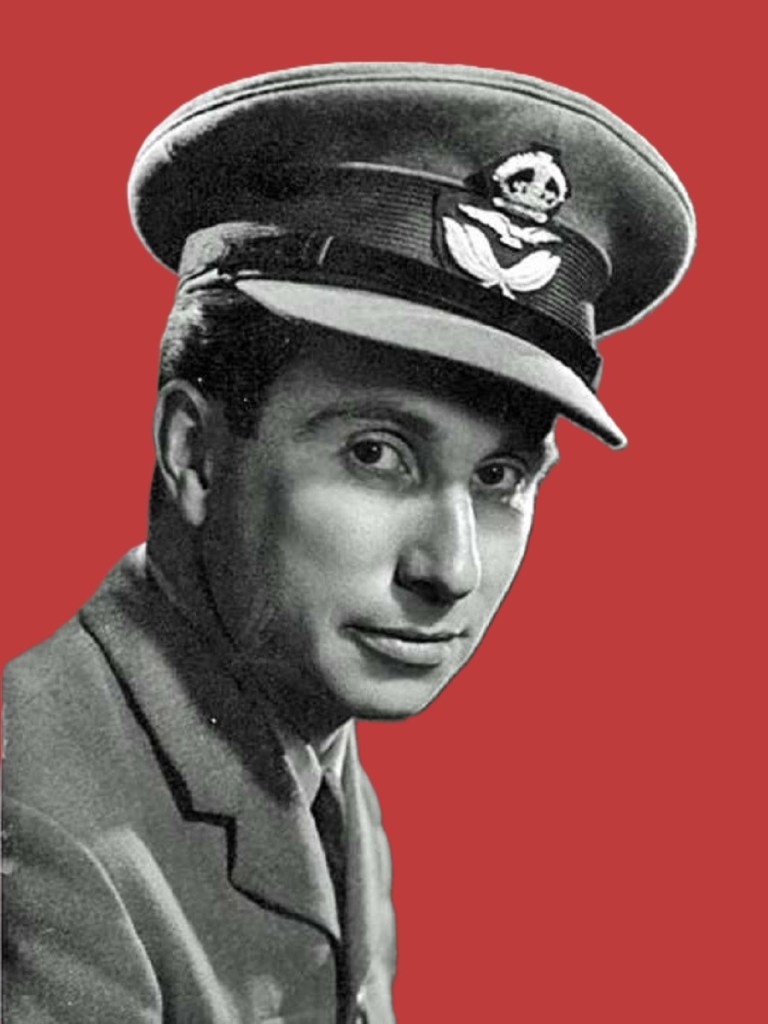
On 17 August 1940, as the Battle of Britain raged above southern England, Pilot Officer William Meade Lindsley “Billy” Fiske III died in a hospital in Chichester. He was just 29 years old. An American citizen serving in the Royal Air Force, Fiske had been badly burned when his Hawker Hurricane was hit by German fire during combat the previous day. His death made him the first American citizen to die while serving with the Royal Air Force during the Second World War, and he became one of the most remarkable American volunteers of the Battle of Britain.
Fiske was an unlikely candidate for military heroism. Born in Brooklyn, New York, on 4 June 1911, he grew up in Chicago in a wealthy family and was educated partly in Europe. His great passion was sport, particularly bobsleigh. At only 16, he represented the United States at the 1928 Winter Olympics in St. Moritz, Switzerland, helping the American team win the gold medal. Four years later, at the 1932 Winter Olympics in Lake Placid, he won another gold medal.
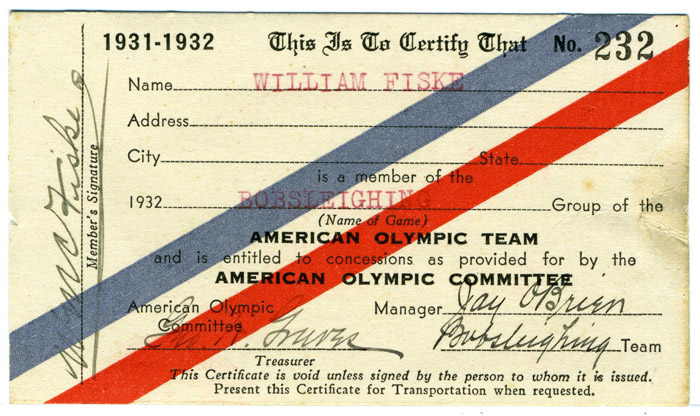
His achievement made him one of the outstanding figures in the early history of American winter sport, and he remained the youngest Olympic Winter Games gold medallist until 1992.
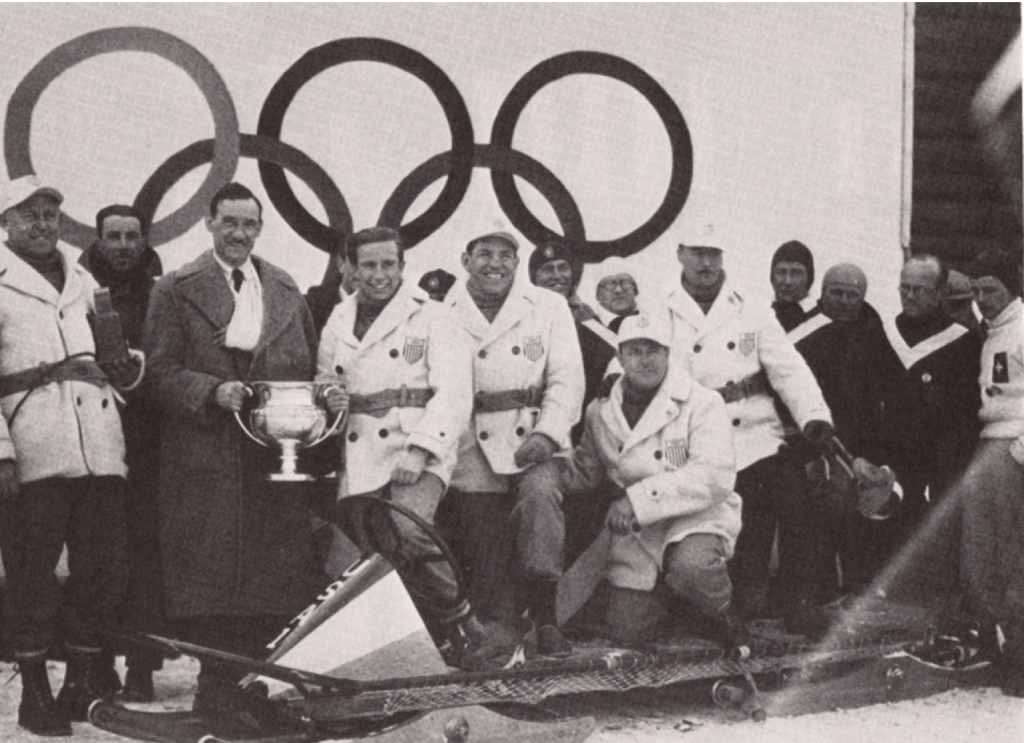
Fiske’s athletic triumphs did not end in Switzerland. At the 1932 Winter Olympics in Lake Placid, New York, he was chosen to carry the American flag during the opening ceremony and went on to captain the four-man bobsled team to another spectacular gold medal. Beyond bobsledding, Fiske was consumed by an obsession with automotive speed. He raced in the grueling 24 Hours of Le Mans when he was only nineteen years old and earned the prestigious Outer Circuit Banking Badge at Brooklands by piloting a supercharged “Blower” Bentley at an average speed of over 121 miles per hour. Yet, his integrity matched his talent. When asked to lead the American bobsled team at the 1936 Winter Olympics in Garmisch-Partenkirchen, Fiske firmly declined, relinquishing his spot out of a principled opposition to the Nazi regime ruling Germany.
Fiske was also an accomplished pilot. By the outbreak of the Second World War, he was working in the banking world in New York, but he had strong connections with Britain and was unwilling to remain a passive observer as Nazi Germany threatened Europe. When Britain declared war on Germany in September 1939, Fiske returned to Britain and sought to join the RAF.
His decision was particularly significant because the United States was still neutral. An American citizen could not simply enlist in Britain’s armed forces without potentially facing legal consequences at home. Moreover, the RAF was not actively seeking American volunteers. Fiske therefore concealed his nationality and presented himself as a Canadian in order to get around the restrictions. He eventually joined the Royal Air Force Volunteer Reserve and underwent further flying training despite already being an experienced pilot.
Fiske’s determination was captured in his diary, where he wrote that he believed he could claim to be the first United States citizen to join the RAF in England after the outbreak of hostilities. He was commissioned as an acting pilot officer in April 1940 and, in July, was posted to No. 601 Squadron at RAF Tangmere in Sussex. The unit, officially the County of London Squadron of the Royal Auxiliary Air Force, had acquired a reputation as the “Millionaires’ Squadron” because many of its members came from privileged backgrounds. Fiske, however, quickly demonstrated that he was much more than a wealthy sportsman seeking adventure.
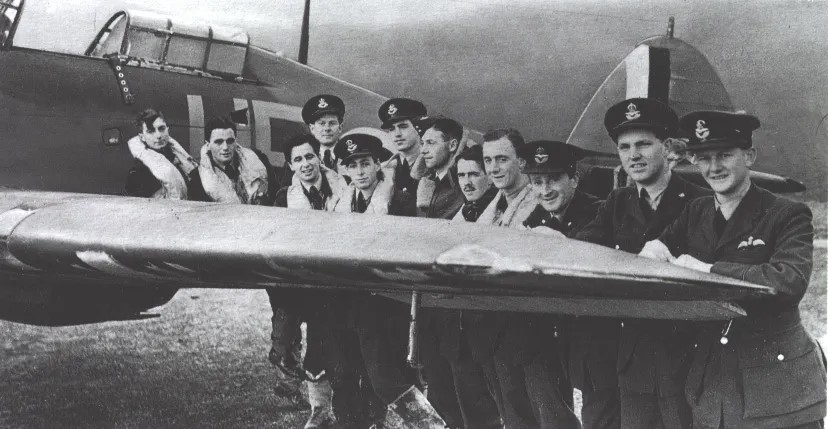
The timing of his arrival could hardly have been more dramatic. Britain was entering the most dangerous phase of the war. France had fallen, German forces dominated much of Western Europe, and Adolf Hitler’s government was preparing for the possibility of an invasion of Britain. Before such an invasion could take place, however, the Luftwaffe needed to gain control of the skies. The result was the Battle of Britain, the enormous aerial campaign fought during the summer and autumn of 1940.
Fiske entered this struggle at its height. Between 20 July and 16 August, he flew 42 operational sorties, sometimes undertaking several missions in a single day. He flew patrols over the English Channel and southern England, confronting German fighters and bombers in some of the most dangerous air combat of the war. The RAF Museum records that he flew four sorties on 8 August alone, spending more than five hours in the air. (RAF Museum)
On 13 August, Fiske claimed enemy aircraft during a series of fierce engagements, although some of his claims were subsequently recorded differently in official combat reports. What is beyond dispute is that he was repeatedly exposed to combat and rapidly became an experienced operational pilot. His colleagues also came to appreciate his character and flying ability. The initial suspicion that an affluent American sportsman might be a lightweight quickly disappeared. He proved himself under fire.
Then came 16 August 1940.
No. 601 Squadron was scrambled against a German formation that included Junkers Ju 87 Stuka dive-bombers. The Stukas were attacking targets in the area around Tangmere, and the RAF fighters engaged them over southern England. The fighting was intense. The squadron succeeded in destroying several German aircraft, but Fiske’s Hurricane, P3358, was struck by enemy fire. The damage was severe, and the aircraft’s fuel system was compromised.
Fiske could have abandoned the Hurricane by bailing out. Instead, he attempted to bring the damaged aircraft back to Tangmere. His hands and ankles were badly burned, and the Hurricane caught fire as he approached the airfield. Nevertheless, he managed to nurse the aircraft home and make a wheels-up landing. The decision almost certainly saved the aircraft, which was repaired and returned to service within days.
Fiske himself was not so fortunate.
Ground personnel rushed to the burning Hurricane and pulled him from the cockpit. He had suffered devastating burns, and he was taken for medical treatment before being transferred to hospital in Chichester. At first there was some hope that he might survive. But his injuries were too severe. On 17 August 1940, the American Olympic champion and RAF pilot died from his wounds and shock.
He was 29 years old.
Fiske’s death resonated far beyond the RAF. America was still officially neutral, and the United States would not enter the war until the Japanese attack on Pearl Harbor in December 1941. Nevertheless, Americans such as Fiske had already crossed the Atlantic to fight Nazi Germany. His death therefore carried enormous symbolic importance. He had not been conscripted. He had not been ordered to Britain by the American government. He had voluntarily placed himself in danger because he believed that Britain was fighting a battle that mattered to the entire democratic world.
His funeral was held at the church of St Mary and St Blaise at Boxgrove, near RAF Tangmere. His coffin was draped with both the Union Jack and the Stars and Stripes, a striking representation of the allegiance that had defined his final years. He was buried in the churchyard, where his grave remains a reminder of the international character of the Battle of Britain.
The British government also recognised the significance of his sacrifice. In 1941, a memorial plaque dedicated to Fiske was unveiled in the crypt of St Paul’s Cathedral. Its inscription described him as “An American citizen who died that England might live.” The words reflected the extraordinary circumstances of his service: an American who had voluntarily fought for Britain at a time when his own country was still outside the war.
There is an important distinction, however, in describing Fiske as the “first American serviceman killed in action” in the Second World War. More precisely, he was the first American citizen to die while serving with the RAF in the Second World War. He was not serving in the United States armed forces, which would not enter the European war until 1941, and he died of wounds sustained in combat rather than being killed instantly in action. The RAF Museum identifies him specifically as the first American citizen to die while serving with the RAF.
That distinction does nothing to diminish his sacrifice. If anything, it places it in its proper historical context.
Billy Fiske had already achieved more by the age of 29 than most people could hope to accomplish in a lifetime. He had twice won Olympic gold, built a successful career and enjoyed the privileges that came with wealth and social standing. He could have remained safely in the United States while Europe descended into war. Instead, he deliberately returned to Britain and found a way to serve in its air force.
His story is therefore about more than the glamour of fighter pilots or the mythology of the Battle of Britain. It is a story about individual choice. Before the United States officially entered the Second World War, Fiske had already decided that neutrality was not enough for him. He crossed the Atlantic, joined the RAF under a borrowed nationality, trained again despite his previous experience, and flew into combat over England.
On 16 August 1940, he brought a burning aircraft home rather than abandon it. The Hurricane survived. Billy Fiske did not.
The following day, at the age of 29, his life came to an end. Yet his legacy endured. He became one of the American volunteers who helped defend Britain during its darkest hour and a symbol of the close bond that would soon develop between Britain and the United States.
Billy Fiske did not live to see America enter the war, nor did he witness the eventual defeat of Nazi Germany. He never knew how his decision would be remembered. But his grave at Boxgrove and his memorial at St Paul’s preserve the memory of an American who, before his country officially entered the conflict, chose to fight alongside Britain.
He had no obligation to do so.
He simply believed it was the right thing to do.
sources
https://www.nationalww2museum.org/war/articles/billy-fiske-fighter-pilot
https://www.rafbf.org/news-and-stories/raf-history/squadrons-battle-britain-no-601-squadron
https://en.wikipedia.org/wiki/Billy_Fiske


Leave a Reply