The Freckleton air disaster remains one of the most devastating aviation tragedies of the Second World War—not because it was the result of enemy action, but because a catastrophic accident brought the dangers of wartime aviation directly into the heart of a peaceful Lancashire village.
On Wednesday, 23 August 1944, an American B-24 Liberator bomber crashed into the village of Freckleton, near Preston, Lancashire. In a matter of seconds, the aircraft destroyed part of the village school and a nearby American military snack bar. Sixty-one people lost their lives, including 38 children between the ages of four and six. The disaster left a permanent scar on Freckleton and demonstrated, with terrible clarity, the risks faced by civilians living alongside Britain’s enormous wartime military infrastructure.
Base Air Depot 2
To understand how the disaster unfolded, it is necessary to understand the importance of the nearby Warton Aerodrome.
During the Second World War, Warton was home to United States Army Air Forces (USAAF) Base Air Depot No. 2 (BAD 2), one of the largest American aviation facilities in Britain. The enormous complex was responsible for assembling, modifying, repairing and maintaining aircraft before they were transferred to operational units.
Thousands of American servicemen passed through the base, while the surrounding villages became closely connected to the American military presence. Freckleton, only a short distance from Warton, was particularly familiar with the Americans stationed there. Servicemen visited local shops and pubs, children became accustomed to seeing American uniforms in the village, and relationships developed between the military community and local residents.
The Americans were therefore not strangers when tragedy struck. They were part of everyday life in Freckleton.
That made what happened on 23 August 1944 all the more devastating.
The Fateful Flight
That morning, the weather over Lancashire deteriorated rapidly. A powerful thunderstorm developed, bringing torrential rain, violent winds, lightning and extremely poor visibility.
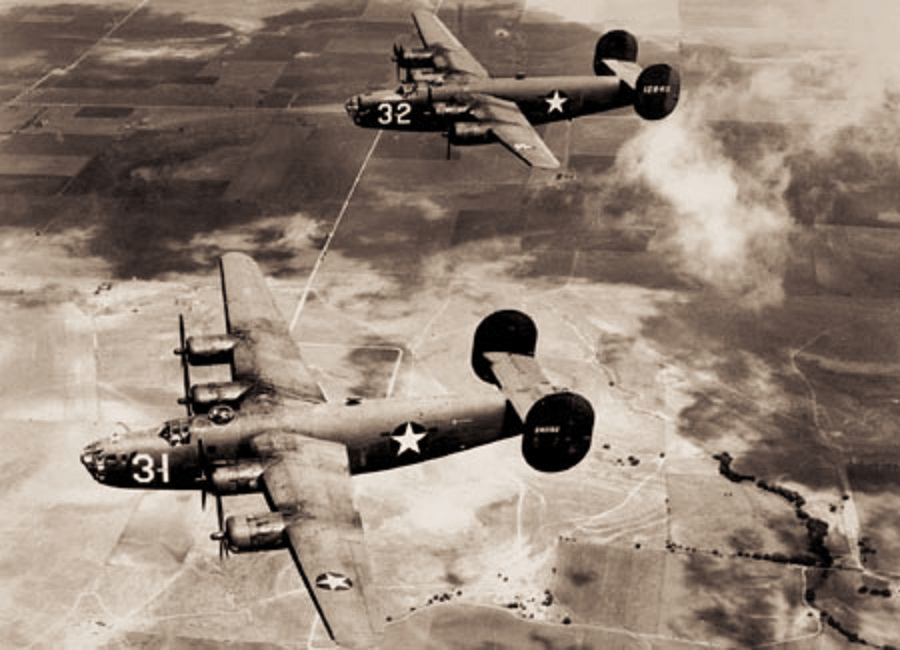
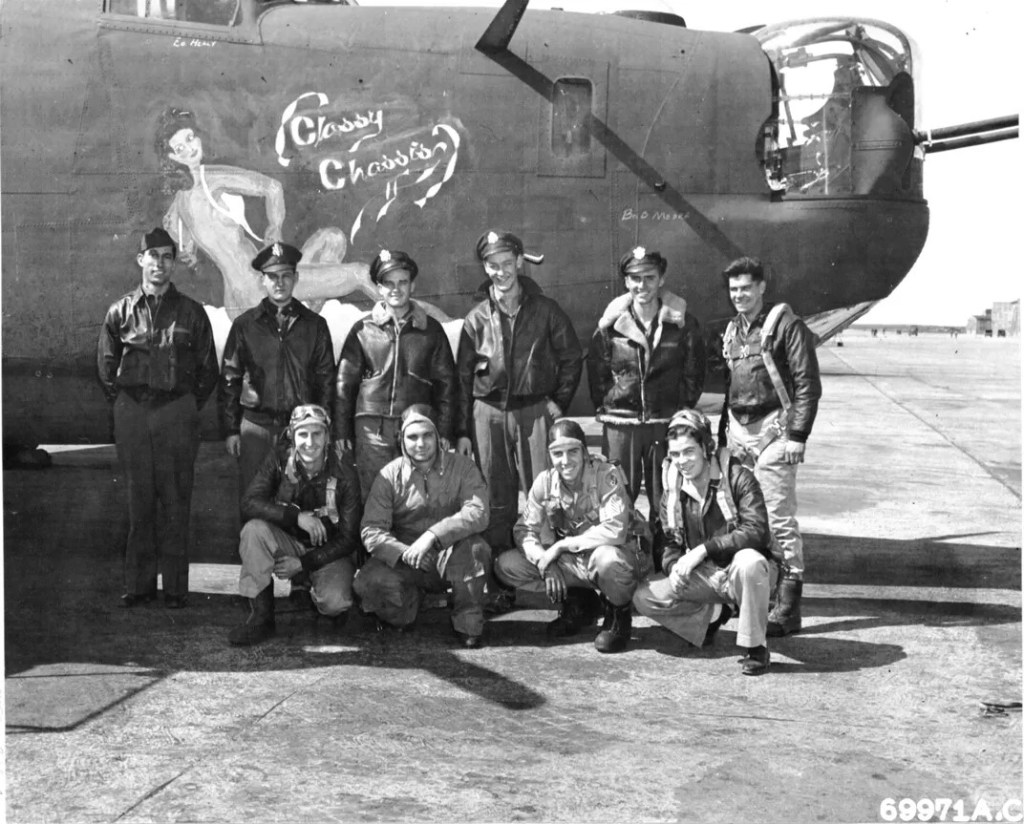
At Warton, a B-24H Liberator, serial number 42-50291, known as Classy Chassis II, was preparing for a test flight following maintenance. On board were pilot First Lieutenant John C. Bloemendal, co-pilot Second Lieutenant Jimmy Michael, and flight engineer Technical Sergeant Thomas D. Robbins.
The aircraft took off despite the worsening weather. Shortly afterwards, conditions became so severe that the flight was ordered to return to Warton.
Bloemendal turned the heavily laden four-engine bomber back towards the airfield. But the storm had become extraordinarily violent. As the B-24 approached the village, it encountered a powerful downdraft associated with the storm.
The aircraft rapidly lost altitude.
Rain was falling so heavily that visibility was almost nonexistent. The pilots were confronted with violent turbulence and rapidly changing air currents, leaving them with little opportunity to recover the aircraft.
The bomber was now dangerously low over Freckleton.
The Crash
At approximately 10:47 a.m., the B-24 came down over the village.
It struck trees and obstacles before tearing into the area around the village school. The aircraft smashed into the Holy Trinity Church of England School, where children were attending their morning lessons.
The consequences were catastrophic.
The bomber’s fuel tanks ruptured on impact, and aviation fuel ignited almost immediately. Flames and burning debris swept through the building. The infant section of the school was devastated, trapping children and teachers beneath the wreckage.
The aircraft also destroyed the nearby American military snack bar, where servicemen and civilian employees had been taking a morning break.
Within seconds, a familiar village landscape had been transformed into a scene of fire, twisted metal, rubble and desperate screams.
The Children of Freckleton
The greatest loss occurred inside the school.
Thirty-eight children, aged between four and six, were killed. Their teachers, Devina Cherrington and Ruby Evans, also died.
Only a small number of children in the classroom survived.
For Freckleton, the scale of the loss was almost impossible to comprehend. Parents who had sent their children to school that morning expecting to collect them later in the day instead faced the unimaginable task of identifying their sons and daughters.
The disaster did not simply claim individual lives. It struck at the heart of the village’s youngest generation.
The Rescue
Almost immediately after the crash, people began running towards the burning wreckage.
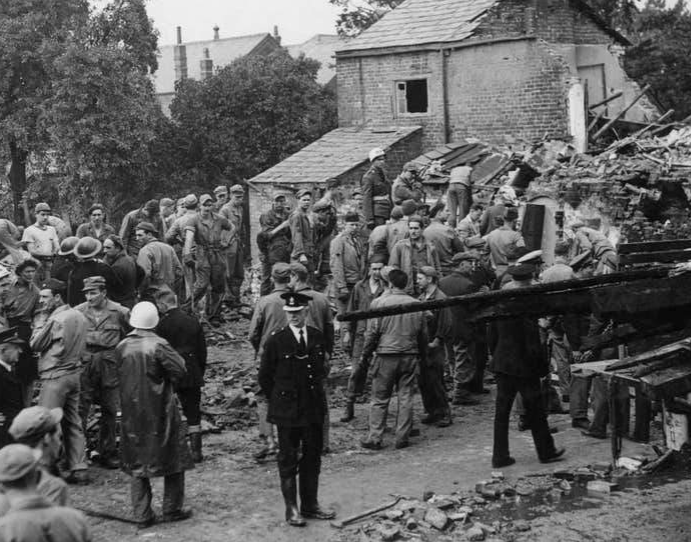
Local residents, air-raid wardens, police officers, firefighters and American servicemen from Warton rushed to the scene. Men worked with their bare hands, shovels and whatever tools they could find, attempting to reach those trapped beneath the debris.
The Americans stationed at Warton were particularly quick to respond. They had lost comrades in the disaster, but they were also confronted with the deaths of children they had seen around the village.
The rescue effort continued amid intense heat, smoke and the danger of collapsing structures.
For the rescuers, there was no distinction between British civilian and American serviceman. Everyone worked together.
Sixty-One Dead
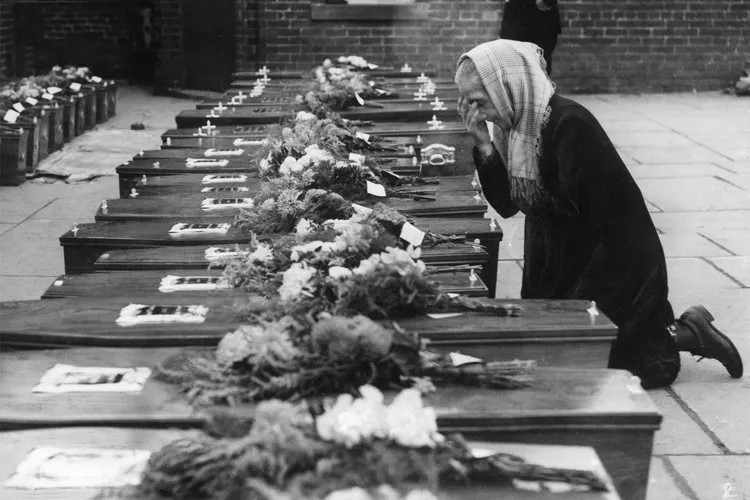
When the scale of the disaster became clear, 61 people had lost their lives.
The victims included:
- 38 children, aged between four and six.
- Two teachers, Devina Cherrington and Ruby Evans.
- Fourteen people killed in and around the snack bar and surrounding area.
- Three members of the B-24 crew—First Lieutenant John C. Bloemendal, Second Lieutenant Jimmy Michael and Technical Sergeant Thomas D. Robbins.
- Four American servicemen who were inside the snack bar.
The numbers alone, however, cannot convey the human tragedy.
Behind each number was a name, a family and a life abruptly destroyed.
For the parents of Freckleton, 23 August 1944 would become a date that could never be separated from the loss of their children.
The Investigation
An investigation was launched by the American and British authorities to determine why the bomber had crashed.
Questions inevitably arose about mechanical failure, pilot error and the decision to conduct the flight in such severe weather. However, investigators ultimately attributed the disaster primarily to the extreme meteorological conditions.
The B-24 had encountered a violent downdraft, associated with the severe thunderstorm, which forced the aircraft rapidly towards the ground. In modern meteorological terminology, the phenomenon is often described as resembling a microburst, although the terminology and understanding of such weather phenomena were considerably less developed in 1944.
The disaster was therefore not the result of enemy action or deliberate human intent. It was a terrible combination of a heavily laden aircraft, almost impossible weather conditions and a rapidly developing atmospheric phenomenon from which the crew had insufficient altitude to recover.
A Village in Mourning
The funerals took place on 26 August 1944.
Freckleton came together to mourn its dead. The coffins of the children were carried through the village, accompanied by grieving parents, relatives, neighbours and American servicemen from Warton.
The presence of the American servicemen was particularly poignant. The men of BAD 2 had lost their own comrades, but they were also mourning the children and civilians whose lives had been destroyed by one of their aircraft.
Many of the children were buried together in Holy Trinity Churchyard. Their graves became a permanent reminder of the tragedy.
The community that had lived alongside the American military presence suddenly found itself united with those servicemen by an experience of shared grief.
A Lasting Bond
In the aftermath of the disaster, American personnel at Warton helped the village in practical ways, including raising funds for the community and contributing towards rebuilding and memorial efforts.
The tragedy created a bond between Freckleton and the American military community that endured long after the Second World War had ended.
The Freckleton air disaster is sometimes overshadowed by the much larger tragedies of the Second World War: the bombing of cities, the battles fought across Europe and the millions of lives lost in the Holocaust and other theatres of war.
Yet its significance lies precisely in its scale.
This was not a battlefield. There were no enemy aircraft overhead and no bombs deliberately aimed at the village.
Instead, the war came to Freckleton through an accident.
The children who died on 23 August 1944 had no part in the war. They were simply attending school on an ordinary Wednesday morning when the storm and the bomber converged over their village.
That is perhaps what makes the Freckleton disaster so haunting.
The Second World War was fought on distant battlefields, but its dangers were never confined to them. Across Britain, civilians lived beside airfields, factories, ammunition depots and military installations that were essential to the Allied war effort. Every aircraft taking off carried the possibility of catastrophe.
In Freckleton, that possibility became reality.
On that August morning in 1944, 61 people died, including 38 young children. Their deaths remain one of the darkest episodes in the history of wartime Lancashire and a solemn reminder that even far from the front lines, ordinary people could become victims of a war they had never chosen.
More than eight decades later, the names of the children, teachers, civilians and American servicemen who died should not be forgotten.
They were not merely casualties in a wartime accident.
They were 61 individual lives, each with a family, a future and a story that ended far too soon.
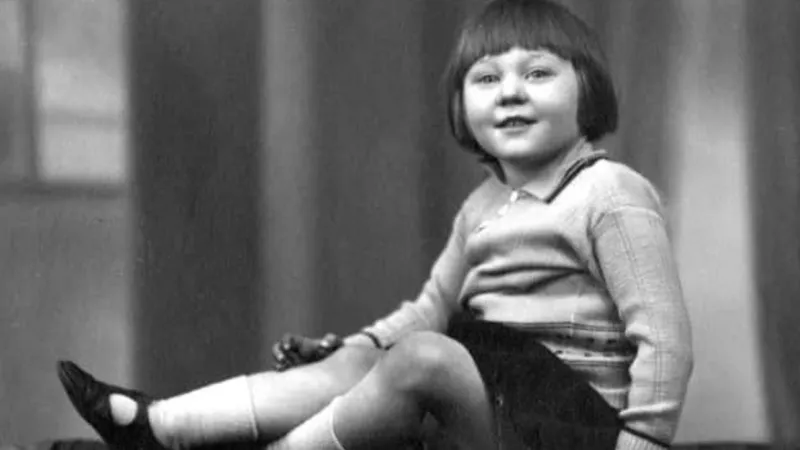
Ruby Currell (née Madden): Only four years old at the time, Ruby recalled the morning sky turning pitch black before a deafening bang shook the building. Acting on wartime drills, she instinctively dove beneath her tiny wooden desk. She watched in horror as a classmate fell from her seat and her teacher slumped over. The desk saved her from being crushed by the collapsing brick roof, though she suffered horrific burns that left her hospitalized until February of the following year. For the rest of her long life, the sound of thunder remained an intense trigger. Ruby dedicated much of her later adulthood to visiting memorials, viewing herself as a lifetime “spokesperson” keeping the memories of her 38 lost classmates alive
Louisa Hulme: A 64-year-old veteran teacher, Hulme was in charge of the infants that morning. When the aircraft hit, she did everything she could to shield the children from the falling, flaming debris. She survived the initial impact but sustained critical, full-body burns. While fighting for her life in the hospital, her final request to the doctors and clergy was to be buried in the communal grave right alongside her students. She passed away two days later on 25 August, and her final wish was honored
sources
https://en.wikipedia.org/wiki/Freckleton_Air_Disaster
https://www.bbc.com/news/articles/cwy3lvje2xgo
https://www.lan-opc.org.uk/Freckleton/disaster.html
https://www.lan-opc.org.uk/Freckleton/disaster.html
Donation
Your readership is what makes my site a success, and I am truly passionate about providing you with valuable content. I have been doing this at no cost and will continue to do so. Your voluntary donation of $2 or more, if you are able, would be a significant contribution to the continuation of my work. However, I fully understand if you’re not in a position to do so. Your support, in any form, is greatly appreciated. Thank you. To donate, click on the credit/debit card icon of the card you will use. If you want to donate more than $2, just add a higher number in the box left from the PayPal link. Your generosity is greatly appreciated. Many thanks.
$2.00


Leave a Reply