Juan Pujol García
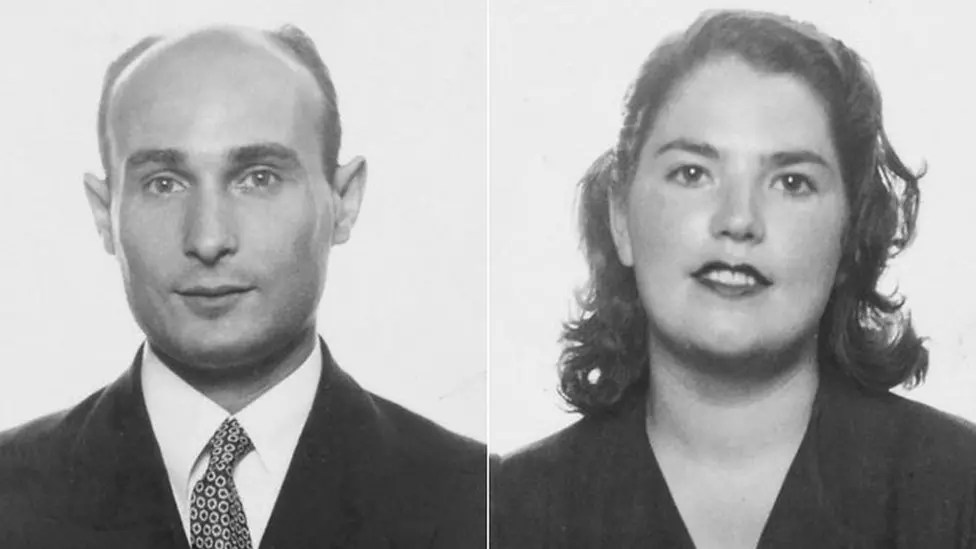
Double agent Juan Pujol García (codenamed “Garbo”) alongside his wife, Araceli González Carballo (BBC)
Juan Pujol García was a chicken farmer who became a Spanish spy and worked as a double agent loyal to the United Kingdom against Nazi Germany during World War II, by relocating to Britain to carry out fictitious spying activities for the Germans.
García was born in Barcelona, Spain, on Valentine’s Day in 1912 to Joan Pujol, owner of a cotton factory, and Mercedes García Guijarro. Although Juan García was sent to boarding school as a child, he came from a very close family. At the school, pupils were only allowed out on Sundays and only in the company of a visitor. His father made sure he was there every Sunday.
The Spanish government reduced compulsory military service from twelve months to six months for special conditional service (i.e., university). During the 1931 military overhaul, Juan Pujol García served his six months.
In 1940, García, watching the rise of the Nazis, decided he must contribute ”for the good of humanity.” He headed for the British Embassy in Madrid to state his case. The snickers were in the air, and the Embassy rejected García’s offer to spy on the Nazis.
Juan Pujol García took it upon himself to do whatever he could to help the war effort. His disguise would be that of a fanatical pro-Nazi Spanish government official. It was a false identity, and it was effective for him to gain access to the inner circles as a German agent. He presented his superiors with stories he wrote from imagination, using newspapers, train schedules, and radio to create reports about spies and British military movements. The Nazis wanted him to move to England and recruit more spies for the cause. Instead, García moved to Lisbon and created fictitious agents.
News reached British operatives about a spy in Portugal sending information to the Nazis. García announced himself and his work, impressing the United Kingdom. The Allies gave him credibility when the Germans spent resources on tracking down an imaginary convoy. They moved Juan Pujol García and his family to Britain, had him work for M15, gave him the code name “Garbo,” and assigned him a handler, Tomás Harris. British Intelligence realized García’s wife was so unhappy and threatening to blow up his identity that they staged a fake detention for Juan just to keep her placated. Then García, with the help of M15 spent the rest of the war concocting believable propaganda for the Germans to pursue. In return, the Germans funded the mythical 27 agents helping them.
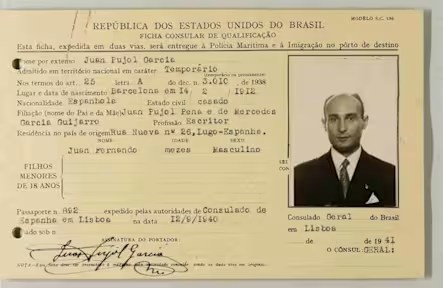
Juan Pujol Garcia, also known as Agent Garbo, circa 1940. (Credit: The National Archives UK)
Juan Pujol García played a key role in Operation Fortitude’s success. The program was developed to mislead the Germans about the scale of the Normandy invasion. The Germans received believable information that the main attack would be in the Pas-de-Calais and planned accordingly.
García was a wizard at creating false reports. However, he occasionally slipped up. One example was telling the Nazis he found a man in Scotland who would sell his soul for a liter of wine. If it were true, it should have been for a liter of scotch or beer. Scotland at the time had one wine, if you could call it that. Luckily, the Germans didn’t catch that one!
Before the war’s end, Juan Pujol García received the highest distinction for his services from both the Allies and the Nazis.
In 1948, Juan Pujol García put plans in motion to fake his own death. Using malaria in Angola, he informed his old friend and former MI5 handler to spread the word of his expiration. It was a ruse to escape his past, and it worked. The news even reached his wife and child to their shock. Eventually, he contacted his wife and three children, and they relocated to Caracas, Venezuela. He has lived anonymously as a kindly bookshop owner. Life in Venezuela became too difficult for his family. The marriage broke up, and the wife and their three children returned to Spain. By 1984, author/military historian Nigel West (pen name Rupert Allason) tracked him down and found him again. That cleared the way for him to travel to the 40th Anniversary celebration of D-Day and mingle with his fellow Allied veterans. At the age of 76, in Caracas on October 10, 1988, Juan Pujol García quietly passed away.
Sources:
https://en.wikipedia.org/wiki/Juan_Pujol_Garc%C3%ADa
https://www.history.com/articles/spy-double-agent-death-hoax-world-war-2


Leave a Reply