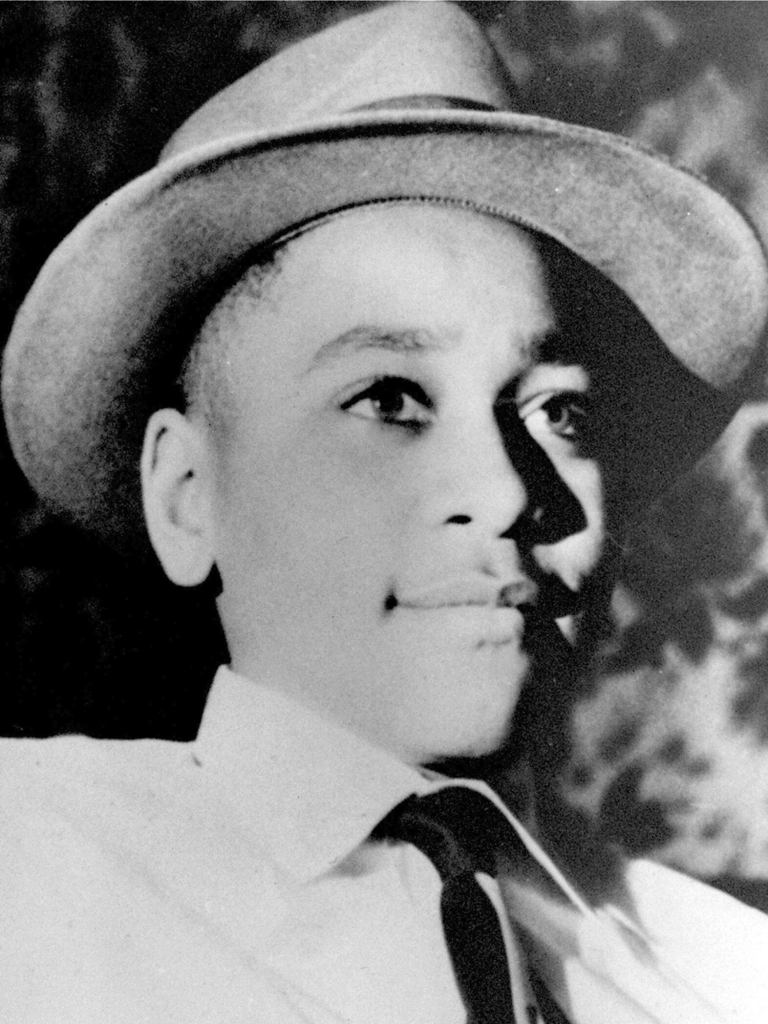
There are moments in history when the violence of an age becomes concentrated into the life of a single human being. Emmett Louis Till was fourteen years old when that happened to him.
He was a child from Chicago who travelled south in the summer of 1955 to visit relatives in Mississippi. He arrived carrying the ordinary hopes and energy of a boy on holiday. He could not have known that within weeks he would be dead, that his body would become evidence of a society built upon racial terror, or that photographs of his battered face would help awaken a nation.
Nor could he have known that his name would become one of the most enduring names in the history of the American Civil Rights Movement.
Emmett Till’s murder was not an isolated act of violence. It emerged from a world in which racial segregation was enforced not merely through laws, but through fear. In the American South, the system of Jim Crow dictated where Black people could live, work, eat, study, travel, and even how they were expected to behave in the presence of white people. Beneath this system lay the ever-present threat of violence.
For generations, Black Americans had been lynched, beaten, threatened, and murdered with little fear of legal consequences for their attackers. The law was frequently either unwilling or unable to protect them. Sometimes it was the law itself that enforced their subordination.
Emmett Till walked into that world in August 1955.
A Fourteen-Year-Old Boy
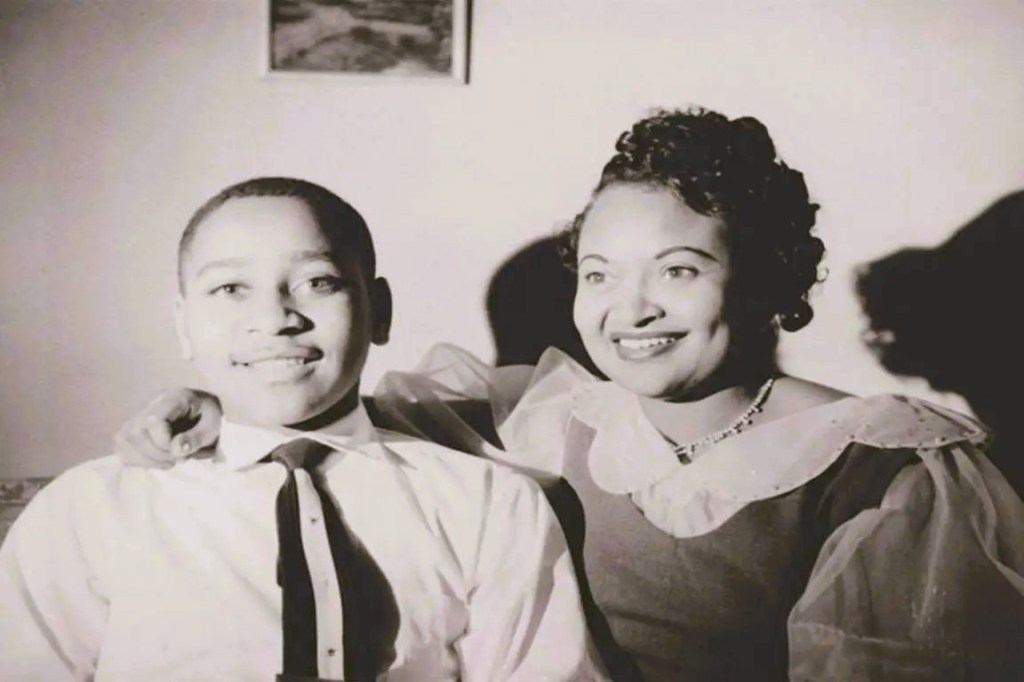
Emmett was born on 25 July 1941 in Chicago, Illinois, to Mamie Till-Mobley and Louis Till. He grew up on the South Side of Chicago, where Black life was shaped by racism and discrimination but where the rigid racial customs of the Deep South were not imposed in quite the same way.
He was described as lively, confident, mischievous, and full of personality. Like countless fourteen-year-olds, he was still discovering the world.
His mother understood that Mississippi was different.
She knew the dangers that awaited her son. She warned him about the racial rules of the South and told him to be careful. A Black boy could not necessarily behave in Mississippi as he might in Chicago. A gesture, a word, or even an accusation could have consequences.
But warnings cannot prepare a child for murder.
In August 1955, Emmett travelled to Mississippi to stay with relatives. It was supposed to be a visit—a few weeks away from home, surrounded by family and the rural landscape of the Delta.
Instead, it became a journey into the darkest realities of American racism.
The Store in Money
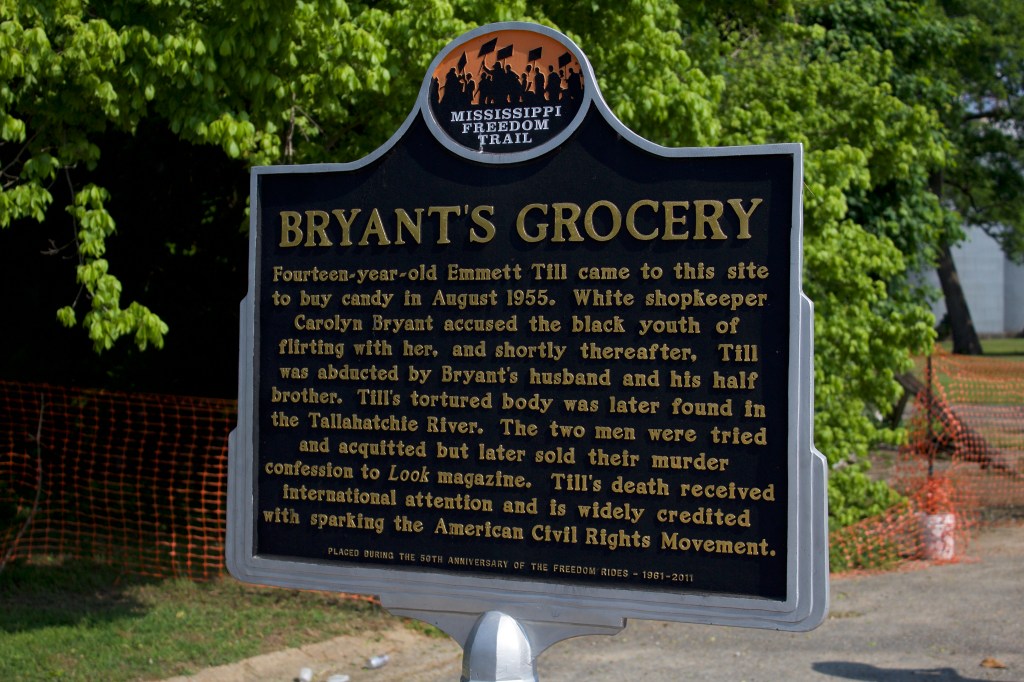
On 24 August, Emmett entered Bryant’s Grocery and Meat Market in the small Mississippi community of Money.
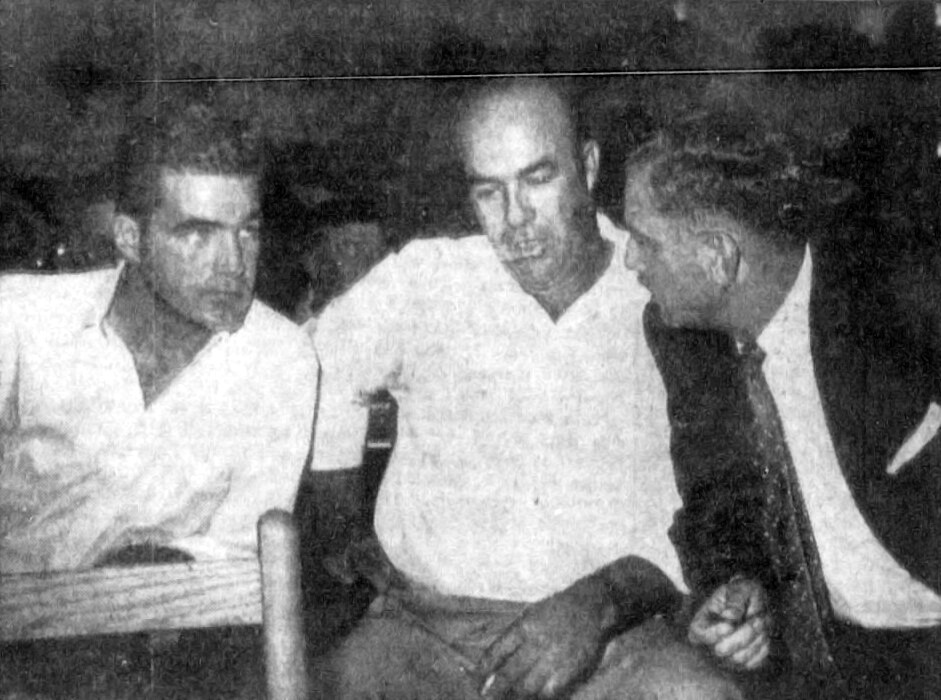
The store was owned by Roy Bryant and his wife, Carolyn Bryant.
Something happened between Emmett and Carolyn Bryant inside the store. Precisely what happened remains contested. Over the years, the story was repeatedly retold, embellished, and transformed. Carolyn Bryant accused Emmett of behaving improperly toward her, and her allegations became the justification for what followed.
Later historical research has challenged some of the sensational details that circulated after the murder. It is therefore important not to repeat those claims as established fact.
But the uncertainty surrounding that brief encounter should never obscure the certainty of what came afterward.
Emmett was fourteen.
He was Black.
The person who accused him was white.
And in Mississippi in 1955, that racial imbalance could be deadly.
The allegation became more than an accusation. Within days, it became a death sentence imposed outside any legitimate court of law.
The Night They Came for Him
In the early hours of 28 August, Roy Bryant and his half-brother, J. W. Milam, arrived at the home where Emmett was staying.
They woke him.
They took him from his relatives.
They carried him away into the darkness.
His great-uncle, Moses Wright, later testified that he had pleaded with the men to leave the boy alone. Wright was an elderly Black man living under the same system of racial terror that now threatened his young relative.
The men ignored him.
What happened next was an act of extraordinary brutality.
Emmett was beaten and murdered. His body was taken to the Tallahatchie River, where it was weighted down with a cotton-gin fan and thrown into the water.
For three days, his family did not know where he was.
Then his body was found.
The boy who had left Chicago alive was brought back from the Mississippi River almost unrecognizable.
And that is where his mother’s courage changed the course of the story.
“Let the World See”
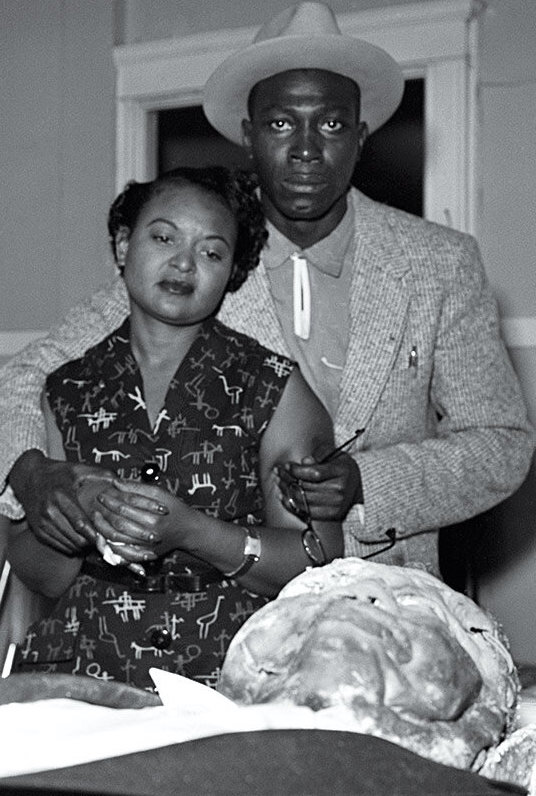
When Emmett’s body was returned to Chicago, Mamie Till-Mobley was confronted with a sight no mother should ever have to witness.
Her son had been so brutally mutilated that identification was difficult.
She could have chosen a private funeral. She could have protected herself, her family, and her community from the horror of public attention.
Instead, she made a decision that would reverberate through American history.
She demanded an open-casket funeral.
She wanted the world to see what had happened to her son.
The photographs were devastating.
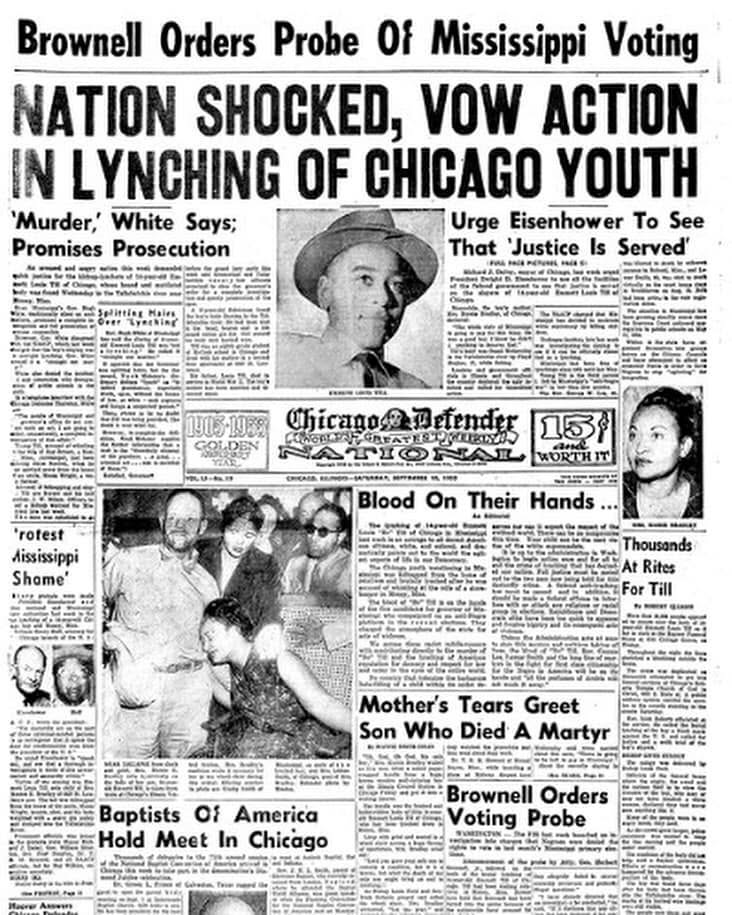
Published by Black newspapers and magazines, including Jet, they showed the mutilated face of a fourteen-year-old child. Millions of Americans who had never personally witnessed the consequences of racial terror were confronted with them in stark photographic form.
The photographs stripped away abstraction.
Racism was no longer merely a political argument.
It had a face.
It was the face of a child.
Mamie Till-Mobley understood something profound: if America could look directly at what had been done to Emmett and still remain silent, then the problem was deeper than prejudice. It was a moral catastrophe.
Her grief became testimony.
Her son’s body became evidence.
And the world began to look.
The Trial
Roy Bryant and J. W. Milam were arrested and charged with murder.
The trial began in September 1955 in Sumner, Mississippi.
The courtroom was segregated. The jury was composed entirely of white men.
One of the most courageous witnesses was Moses Wright, Emmett’s great-uncle.
Wright had lived under the threat of racial violence for decades. Yet he entered the courtroom and identified Bryant and Milam as the men who had taken his great-nephew.
It was an extraordinary act of courage.
In a society where Black testimony was routinely dismissed or devalued, an elderly Black man stood before an all-white jury and pointed directly at the men accused of taking a child from his home.
The evidence was powerful.
But the racial order surrounding the courtroom was more powerful still.
After a short deliberation, the jury returned its verdict.
Not guilty.
The men who had been accused of murdering Emmett Till walked out of the courthouse as free men.
There would be no conviction.
No prison sentence.
No justice for the boy whose body had been pulled from the river.
The verdict exposed something that the murder itself had already revealed: in the Mississippi of 1955, the legal system did not protect Black lives equally.
Justice Denied—and Then Mocked
The injustice did not end with the acquittal.
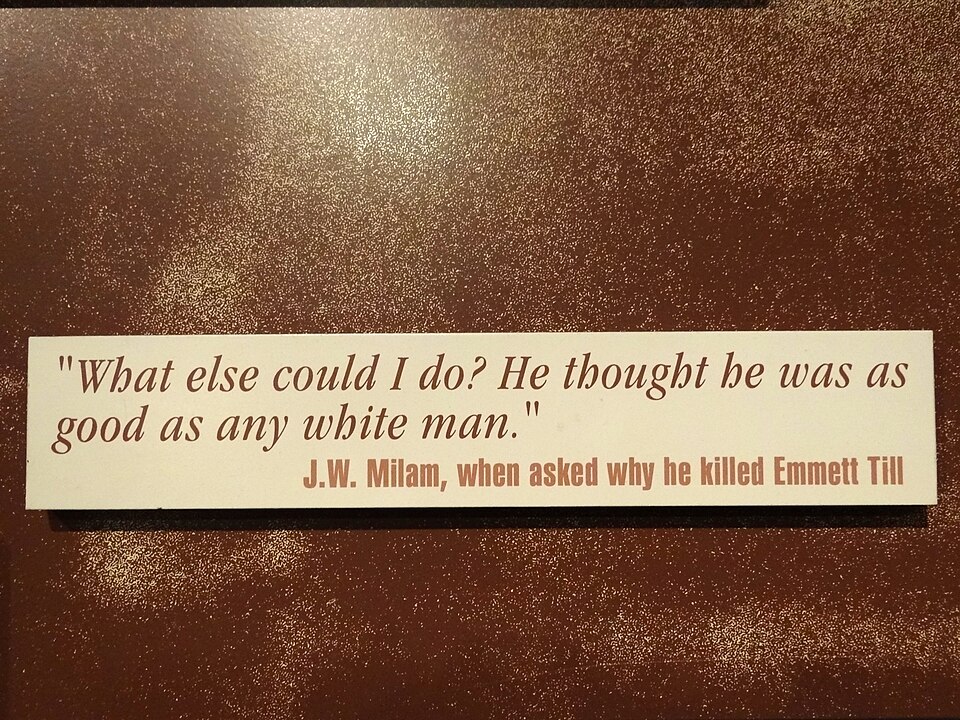
In January 1956, Look magazine published an interview with Bryant and Milam in which they described their role in Emmett’s murder.
Because they had already been acquitted, they could not be tried again for the same crime.
The men had escaped justice not because the truth was unknowable, but because the system had failed to punish them.
The confession made the verdict even more grotesque.
America had witnessed a child being taken from his bed, murdered, and thrown into a river.
America had witnessed the trial.
America had heard the testimony.
And then America watched the accused men walk free.
For Black Americans, the message was unmistakable.
The life of a Black child could be taken with almost complete impunity.
A Murder That Became a Movement
Emmett Till did not create the Civil Rights Movement.
That movement had existed long before he was murdered. Black Americans had resisted slavery, segregation, disenfranchisement, and racial violence for generations. Organizations, churches, journalists, lawyers, teachers, workers, students, and ordinary families had spent decades challenging white supremacy.
But Emmett’s murder became a powerful catalyst.
His death occurred at a critical moment in American history.
Only months later, Rosa Parks refused to surrender her seat on a Montgomery bus. The Montgomery Bus Boycott followed, bringing Martin Luther King Jr. to national prominence and demonstrating the enormous potential of organized mass resistance.
Across the country, young Black Americans were growing increasingly unwilling to accept the racial order imposed upon them.
Emmett Till became part of that awakening.
His photograph was seen by people who would later become activists.
His story was discussed in churches, homes, schools, newspapers, and community meetings.
He represented the terrifying possibility that any Black child could become a victim.
But he also represented something else.
The refusal to remain silent.
The Meaning of His Murder
To understand Emmett Till’s death solely as an act of individual hatred is to miss its deeper significance.
His murder belonged to the long history of racial terror in America.
Lynching had been used for decades as a weapon of social control. It was not simply about killing an individual. It was about sending a message to an entire community.
The message was one of fear:
Know your place.
Do not challenge the racial order.
Do not expect protection from the law.
We can hurt you, and nothing may happen to us.
Emmett’s murder demonstrated that this culture of terror had survived into the modern era.
The horror was not only that a fourteen-year-old boy had been killed.
It was that his killers could believe they had the right to kill him.
It was that a jury could acquit them.
It was that a society could have constructed the conditions in which such a crime was possible.
And it was that countless other Black Americans had experienced similar violence without their names ever becoming known beyond their communities.
Emmett Till’s story therefore stands for thousands of forgotten victims as well as for himself.
The Mother Who Refused Silence
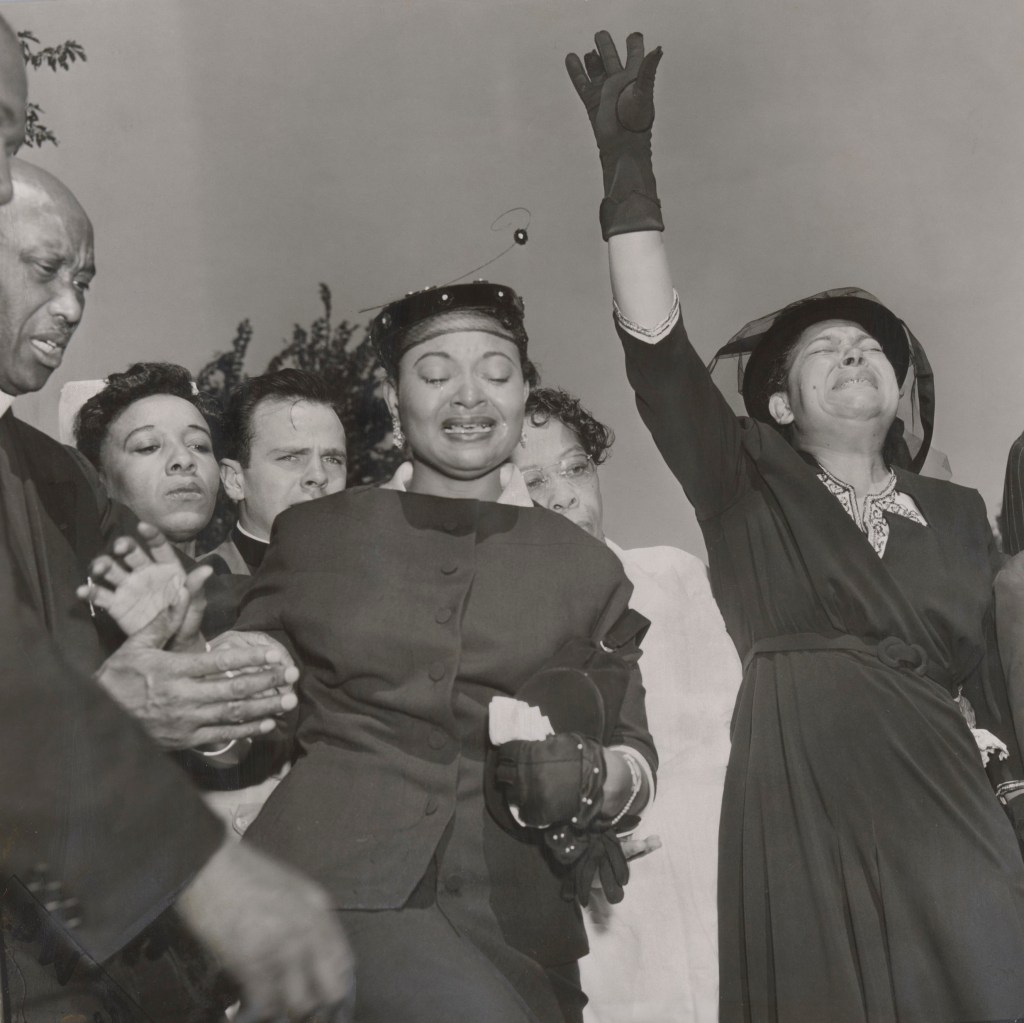
Perhaps the most powerful figure in the story is not one of the politicians, lawyers, activists, or civil rights leaders who would later become famous.
It is Mamie Till-Mobley.
She was a mother who lost her child.
She could not bring Emmett back.
She could not undo the violence.
She could not force the Mississippi jury to change its verdict.
But she could refuse to allow his death to disappear.
By insisting upon an open-casket funeral, she turned private mourning into public witness.
Her decision carried enormous emotional courage. She knew what people would see. She knew what the photographs would reveal. She knew that her son’s suffering would become part of the national conversation.
Yet she understood that silence would serve those who had killed him.
So she chose visibility.
She chose remembrance.
She chose to make America look.
In doing so, Mamie Till-Mobley became an important figure in the history of civil rights, even though she had never sought such a role.
She was simply a mother demanding that the world acknowledge what had happened to her son.
A Case That Would Not Die
The passage of time did not erase Emmett Till.
His name continued to appear whenever Americans confronted the history of racial violence. Artists, writers, historians, activists, and educators returned repeatedly to his story.
The case was reopened by federal investigators decades later, although no one was ultimately prosecuted successfully for his murder.
The fact that no criminal conviction was secured cannot change the historical record.
Justice in a courtroom and truth in history are not always the same thing.
The men accused of killing Emmett were acquitted.
But they could not erase what happened.
They could not erase the photographs.
They could not erase the testimony.
They could not erase Mamie Till-Mobley’s grief.
And they could not erase Emmett’s name.
Remembering Emmett
In 2023, the Emmett Till and Mamie Till-Mobley National Monument was established to preserve and interpret places associated with their story.
The creation of the monument was significant because historical memory is not automatic. Places disappear. Buildings decay. Witnesses die. Memories fade.
And sometimes people deliberately try to erase uncomfortable history.
The places connected to Emmett Till therefore serve a purpose beyond commemoration. They remind visitors that the events of 1955 happened to real people, in real places, under a real system of racial oppression.
History is not merely something contained in textbooks.
It happened in bedrooms.
In grocery stores.
In courthouses.
Beside rivers.
In funeral homes.
And sometimes the distance between the past and the present is not as great as we would like to believe.
The Boy Who Became a Symbol
Emmett Till never had the opportunity to become an adult.
He never went to college.
He never built a career.
He never married.
He never grew old.
He never discovered what kind of man he might have become.
History took all of that from him.
Instead, he became something he never asked to be: a symbol.
But perhaps the most important way to remember Emmett Till is to resist allowing the symbol to replace the child.
Before he became an icon of the Civil Rights Movement, he was simply Emmett.
A fourteen-year-old boy.
A son.
A nephew.
A cousin.
A friend.
A child who should have been allowed to live.
That is the tragedy at the heart of his story.
His significance does not come from the fact that he died and subsequently became famous.
His significance comes from the fact that he should never have died at all.
The River Remembers
On that August morning in 1955, the Mississippi River carried away the body of a fourteen-year-old boy.
It could not carry away his story.
His murder exposed the violence beneath the surface of segregation. His mother’s courage forced America to confront it. The photographs ensured that millions could no longer pretend they did not know.
Emmett Till’s death became one of the defining images of an America struggling with its own conscience.
The men responsible were not convicted.
The system that allowed them to escape punishment did not collapse overnight.
Racism did not disappear.
But something changed.
People saw.
People remembered.
And people began to act.
The Civil Rights Movement would soon fill the streets of Montgomery, Birmingham, Selma, Washington, and countless other American communities. Children would march. Students would sit at lunch counters. Freedom Riders would board buses. Protesters would face police dogs, fire hoses, arrests, beatings, and sometimes death.
Through it all, the memory of Emmett Till remained.
His story carried a terrible question:
How many more children must die before a nation decides that their lives matter?
More than seven decades later, that question still echoes.
Emmett Till was fourteen years old when hatred took his life.
But hatred did not have the final word.
His mother refused to let it.
The photographs refused to let it.
The witnesses refused to let it.
And history refused to let America forget.
Emmett Till’s life was tragically short.
His legacy was not.
On 28 August 1955, fourteen-year-old Emmett Louis Till was brutally murdered in the Mississippi Delta. His killing was not simply the murder of a child; it was an act of racial terror carried out within a society in which segregation, intimidation, and violence were used to enforce white supremacy. The subsequent failure of the American justice system to punish his killers transformed Till into one of the most enduring symbols of the struggle for racial equality in the United States. His death helped galvanize the emerging Civil Rights Movement and forced millions of Americans to confront the brutal realities of racism in the Jim Crow South.
A Black Boy from Chicago
Emmett Till was born on 25 July 1941 in Chicago, Illinois, to Mamie Till-Mobley and Louis Till. He grew up in a predominantly Black neighborhood on Chicago’s South Side and was accustomed to a very different social environment from that of the segregated American South.
In August 1955, Emmett travelled to Mississippi to visit relatives. His mother understood the dangers he might encounter there. The South operated under the Jim Crow system, which enforced racial segregation and denied African Americans many of the rights and opportunities enjoyed by white Americans. Black people were expected to observe an elaborate and often humiliating set of racial rules governing how they behaved toward white people. Violating those unwritten rules could have deadly consequences.
Emmett was only fourteen years old. He was a child visiting a part of the country where racial customs were considerably more rigid and dangerous than those he knew in Chicago. His mother warned him to be careful.
The Encounter at Bryant’s Grocery
On 24 August 1955, Emmett visited Bryant’s Grocery and Meat Market in Money, Mississippi, a small community in the Mississippi Delta. The store was operated by Roy Bryant and his wife, Carolyn Bryant.
What happened inside the store became the subject of competing accounts, rumors, and later historical investigation. Carolyn Bryant accused Emmett of behaving improperly toward her. The allegation that he had whistled at, flirted with, or otherwise propositioned a white woman became the justification used for the violence that followed.
It is important to distinguish the allegation from established fact. The precise details of the encounter remain disputed, and later accounts demonstrated that some of the most sensational claims made about Emmett were unreliable. What is beyond dispute is that an unarmed fourteen-year-old Black child was subsequently kidnapped from his relatives’ home by white men and murdered.
The incident therefore needs to be understood within the broader system of racial terror. In the Jim Crow South, accusations by white people against Black people could carry enormous consequences regardless of whether the allegations were true. Black men in particular were frequently portrayed as threats to white women, a racist stereotype that had been used for decades to justify intimidation, assault, and lynching.
The Kidnapping and Murder
In the early hours of 28 August, Roy Bryant and his half-brother, J. W. Milam, went to the home where Emmett was staying. They took him from his bed and forced him to accompany them.
The two men subjected the boy to horrific violence. Emmett was beaten, shot, and mutilated before his body was thrown into the Tallahatchie River. His attackers attached a large cotton-gin fan to his body with barbed wire in an attempt to weigh him down. His remains were discovered several days later.
The brutality of the crime was characteristic of racial terror lynching. Lynching was not simply an act of individual violence. Historically, it functioned as a method of enforcing racial hierarchy through fear. Thousands of Black Americans were murdered by white mobs and individuals, while perpetrators were frequently protected by local authorities, juries, or communities. The Equal Justice Initiative has documented nearly 6,500 racial-terror lynchings between 1865 and 1950, while noting that many more attacks were never recorded.
Emmett Till’s murder occurred during the final decade of the Jim Crow era, but it belonged to this much longer history.
Mamie Till-Mobley’s Decision
When Emmett’s body was returned to Chicago, his mother faced an unbearable decision. Rather than allowing her son’s death to be hidden from public view, Mamie Till-Mobley insisted that his funeral be held in an open casket.
She wanted people to see what had been done to her son.
Thousands of mourners came to view Emmett’s body in Chicago, while photographs of his mutilated face were published in the African American press, including Jet magazine and the Chicago Defender. The photographs confronted Americans with something that descriptions alone could not adequately communicate: this was what racial hatred had done to a fourteen-year-old child.
Mamie Till-Mobley’s decision transformed private grief into a public indictment of racial violence. She understood that if Emmett’s death were treated as an isolated crime, it could be forgotten. By allowing the world to see the evidence, she made his murder impossible to ignore.
The Trial
The murder generated national and international attention. Bryant and Milam were arrested and charged with kidnapping and murder.
Their trial took place in September 1955 in Sumner, Mississippi. The prosecution presented evidence linking the two men to Emmett’s kidnapping, including testimony from Emmett’s great-uncle, Moses Wright, who identified Bryant and Milam as the men who had taken his nephew. The prosecution also presented evidence concerning the discovery and identification of Emmett’s body.
Yet the trial took place within the deeply segregated society of Mississippi. The jury was composed entirely of white men. After relatively brief deliberation, the jury returned a verdict of not guilty.
The acquittal was devastating but, in the context of racial injustice in the American South, sadly unsurprising. The justice system had failed to protect a Black child, failed to punish those responsible for his murder, and effectively communicated that white perpetrators could kill Black people without fearing meaningful legal consequences.
The verdict produced outrage across the United States and internationally. The case became a powerful illustration of the enormous gap between America’s constitutional ideals of equality and the reality experienced by millions of African Americans.
The Killers’ Confession
The injustice became even more disturbing several months later.
In January 1956, Look magazine published an interview with Bryant and Milam in which the two men described their involvement in Emmett’s murder. They had already been acquitted, meaning they could not be tried again for the same crime because of the constitutional protection against double jeopardy.
Their public confession demonstrated the extraordinary failure of the justice system. The men had effectively admitted responsibility after a jury had declared them not guilty. They nevertheless escaped criminal punishment for Emmett’s murder.
The case therefore became more than a story about two murderers. It became evidence of a system in which racial prejudice could determine whose lives were valued and whose deaths could be ignored.
A Catalyst for the Civil Rights Movement
Emmett Till did not single-handedly create the Civil Rights Movement. African Americans had been fighting racial discrimination for generations through organizations, churches, newspapers, legal challenges, boycotts, labor activism, and community organizing.
Nevertheless, his murder became a crucial catalyst.
Only months after Till’s death, Rosa Parks refused to surrender her seat on a Montgomery bus, helping trigger the Montgomery Bus Boycott. Civil rights activists including John Lewis, Medgar Evers, and others belonged to a generation profoundly affected by the violence and injustice surrounding the Till case. Historians have subsequently described how the murder and acquittal helped inspire a new determination to challenge segregation.
For many young African Americans, Emmett Till represented something deeply personal. He was not an abstract political figure. He was a child—a boy who should have been able to travel, visit relatives, laugh, and grow into adulthood. Instead, he became a victim of a society that placed racial hierarchy above human life.
His murder helped demonstrate that waiting patiently for justice was not enough. The system itself needed to change.
The Meaning of Lynching
The word “lynching” is important because it places Till’s murder within a specific history.
Lynching was a form of extrajudicial violence designed to terrorize Black communities and enforce white supremacy. It existed outside legitimate law while frequently benefiting from the indifference or cooperation of those responsible for enforcing the law.
The objective was not merely to kill one person. The larger message was directed at an entire community: resistance could be met with violence, and the authorities might not protect you.
That message had been reinforced across generations. According to the Equal Justice Initiative, racial terror lynchings were used to maintain Black political, social, and economic subordination. Thousands of victims were killed, while many perpetrators escaped accountability.
Emmett Till’s murder therefore represented the continuation of a much older system of racial terror, even though the national response helped mark the beginning of a new era of resistance.
The Long Search for Justice
For decades, the Till family continued to live with the consequences of the crime. The case was periodically revisited, and in the twenty-first century investigators again examined the circumstances surrounding the murder.
The Federal Bureau of Investigation reopened its investigation in 2005, fifty years after Emmett’s death. Later investigations also examined new allegations and evidence. However, no one was ultimately convicted for Emmett’s murder.
The absence of a criminal conviction does not mean that the historical truth is uncertain. The murder of Emmett Till is extensively documented. What remains painfully significant is the contrast between the overwhelming evidence of what happened and the inability of the American justice system in 1955 to hold his killers accountable.
Remembering Emmett Till
Emmett Till’s story has continued to influence American culture, politics, literature, and the struggle for racial justice. His name has become synonymous with the dangers of racism and the terrible consequences of racial hatred.
In July 2023, the Emmett Till and Mamie Till-Mobley National Monument was established, including significant sites connected to the story. The monument recognizes not only Emmett’s murder but also his mother’s extraordinary role in ensuring that the world would remember what had happened to her son.
The preservation of these places matters because historical memory is itself contested. Even memorial markers connected to Till’s story have been vandalized, shot at, stolen, or thrown into the river. Such acts demonstrate that the history represented by Emmett Till remains uncomfortable for some people.
Conclusion
The lynching of Emmett Till was one of the defining racial crimes of twentieth-century America. A fourteen-year-old boy travelled from Chicago to Mississippi and was murdered because a racist social order treated even an alleged breach of its racial customs as an offense punishable by death.
His killers were acquitted by an all-white jury and later publicly confessed, yet never faced punishment for the murder. That failure exposed the profound injustice of the Jim Crow system and helped convince a generation of African Americans that fundamental change could no longer be postponed.
Yet Emmett Till’s legacy is ultimately about more than the circumstances of his death. It is also about the courage of his mother, Mamie Till-Mobley, who refused to let her son’s murder disappear into silence. By insisting that the world see what had been done to him, she transformed her personal grief into a demand for justice.
Emmett Till should therefore be remembered not merely as a victim, but as a symbol of the human cost of racism—and of the determination of ordinary people to confront it. His murder helped awaken a nation to realities that many had preferred not to see. The Civil Rights Movement would go on to challenge segregation, disenfranchisement, and racial violence on an unprecedented scale.
The photographs of Emmett Till’s mutilated body shocked America in 1955. More than seven decades later, his name still demands that America remember the consequences of racial hatred, the danger of indifference, and the necessity of justice.
Sources:
https://nmaahc.si.edu/explore/stories/emmett-tills-death-inspired-movement
https://www.fbi.gov/history/cases-and-criminals/emmett-till
https://americanhistory.si.edu/explore/exhibitions/reckoning-with-remembrance
https://www.britannica.com/biography/Emmett-Till


Leave a Reply