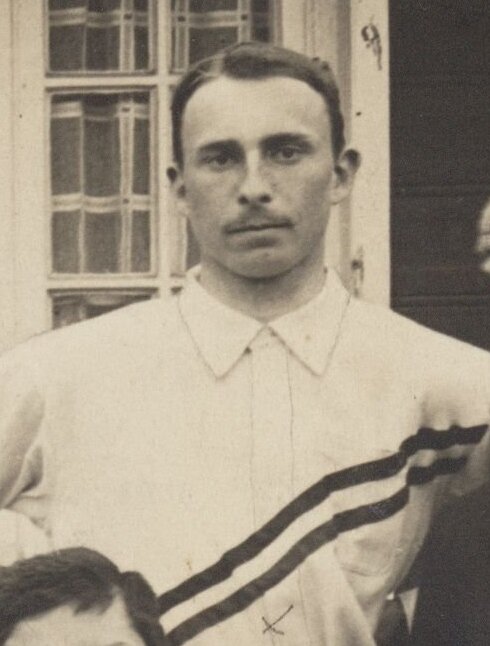
Eddy de Neve occupies a unique place in the history of Dutch football. On 30 April 1905, he became the first great scoring hero of the Dutch national team, scoring all four goals in the Netherlands’ historic 4–1 victory over Belgium in Antwerp. For a brief moment, he seemed destined for sporting greatness.
Eddy de Neve was born in either 1882 or 1885 in Batavia, in the Dutch East Indies, the son of Eduard Karel Alexander de Neve, a major in the Royal Dutch East Indies Army, and Johanna Christina Fokker. His childhood was marked by an early loss. When Eddy was only nine or ten years old, his father died, after which the family returned to the Netherlands.
A Pioneer of Dutch Football
In The Hague, De Neve developed a passion for the emerging sport of football and joined the local club Quick. After entering the Royal Netherlands Army, he continued playing, representing Velocitas Breda, a club associated with the Royal Military Academy in Breda. In 1905, he moved to HBS Craeyenhout in The Hague, and his return proved an immediate success. In his first season with the club, De Neve helped HBS win the Dutch national championship.
His greatest place in Dutch sporting history, however, came on the international stage.
On 30 April 1905, De Neve was selected for the Netherlands in what is regarded as the country’s first official international football match. The opponent was Belgium, and the match was played for the Coupe Vanden Abeele in Antwerp. What followed was a remarkable individual performance.
The match remained level until the 80th minute, when De Neve scored the opening goal for the Netherlands. Six minutes later, Dutch defender Ben Stom inadvertently put the ball into his own goal, bringing Belgium level at 1–1 after 90 minutes.
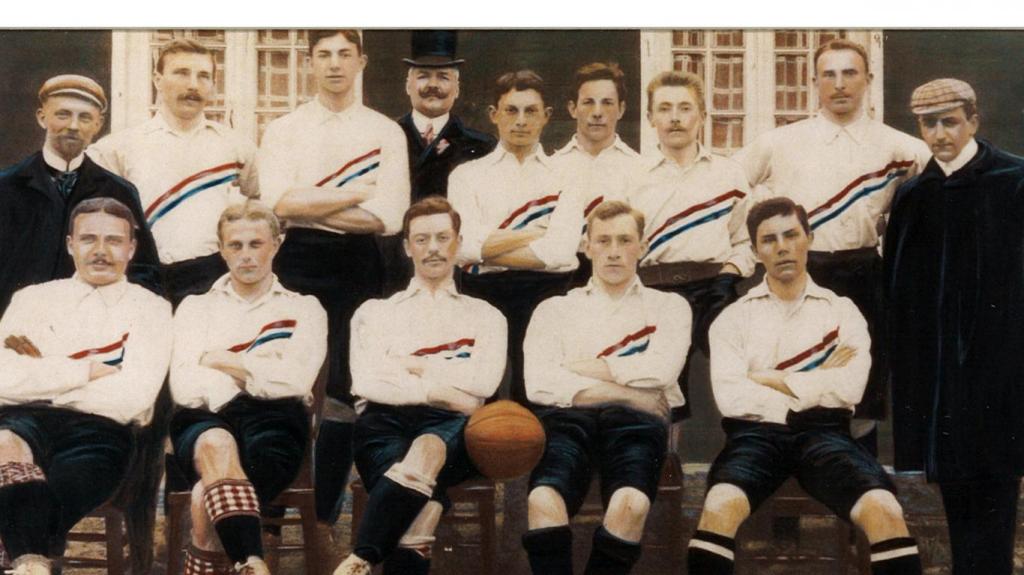
Extra time transformed the match into the Eddy de Neve show.
De Neve scored three further goals, finding the net in the 106th, 117th and 119th minutes. When the final whistle sounded, the Netherlands had won 4–1, and all four Dutch goals had been scored by the same player. For a country making its international debut, it was an extraordinary beginning—and De Neve instantly became one of the most celebrated figures in Dutch football.
Two weeks later, on 14 May 1905, he again faced Belgium, this time in Rotterdam. The Netherlands won 4–0, with De Neve scoring twice. His third and final international appearance came on 13 May 1906, again against Belgium, although on this occasion the Netherlands lost 3–2.
De Neve finished his international career with six goals in only three appearances. His scoring record was extraordinary for its time, and he remained the Netherlands’ leading international goalscorer until 21 March 1909. On that day, Edu Snethlage, playing for De Neve’s former club Quick, scored his seventh international goal against Belgium and finally surpassed him.
Yet De Neve’s football career was already coming to an end.
A knee injury, combined with his military obligations and his return to the Dutch East Indies, forced him to retire from football in 1907. His international career had lasted barely a year, but his impact was considerable. He had been one of the first great goal scorers in Dutch international football and had played a central role in establishing the Netherlands on the international football map.
More than three decades later, De Neve published his memoirs, Koning Voetbal (King Football), in 1938. The book appeared in the year that the Dutch East Indies participated in the 1938 FIFA World Cup, providing De Neve with an opportunity to reflect on the pioneering days of the sport.
Military Service and Return to the East Indies
De Neve’s life was not confined to football. He pursued a military career in the Royal Netherlands Army and was promoted to the rank of first lieutenant on 27 July 1909. Only two months later, however, he was honourably discharged.
That same year, tragedy struck his family again. His brother Gilles was killed on the island of Sumba in the Dutch East Indies. Contemporary accounts reported that he had been eaten by cannibals, although such descriptions must be treated cautiously, as colonial-era accounts frequently portrayed Indigenous peoples through sensationalised and deeply prejudiced language.
After leaving the army, De Neve remained in the Dutch East Indies, where he worked for a number of Dutch companies and plantations. His life there proved considerably less successful than his football career. Despite his earlier fame, he struggled financially and found it difficult to establish the stable life that his sporting achievements might have suggested.
Marriage and Family
In 1913, De Neve became engaged to Daisy Maud Green while in the Italian port city of Genoa. The following year, on 14 August 1914, they married at Lubuk Sinapeng in the Dutch East Indies.
The couple had one son, Gilles Pieter Cornelis de Neve, who became known as Gilles Jr.
The marriage, however, did not endure. After twelve years together, Eddy and Daisy divorced. Daisy Maud and their son returned to The Hague, while De Neve remained behind in the Dutch East Indies.
The contrast between De Neve’s public fame and private circumstances was striking. He had once stood at the centre of Dutch football history, scoring all four goals in his country’s first international victory and becoming the Netherlands’ first great international goalscorer. Yet his later life was marked by financial difficulties, family tragedy, the collapse of his marriage, and increasing distance from the country where his sporting legend had been created.
Eddy de Neve’s football career had been remarkably brief, but its significance far outlasted its duration. In an era when international football was still in its infancy, he helped create a tradition that would eventually become one of the defining elements of Dutch sporting culture. His four-goal performance against Belgium in 1905 became part of Dutch football folklore, while his six goals in three internationals established a scoring record that stood for several years.
Behind that pioneering sporting achievement, however, was a far more complicated life: one shaped by colonial society, military service, personal loss, financial hardship and family separation. De Neve’s story is therefore more than that of an early football star. It is the story of a man who helped write the opening chapter of Dutch international football, only to see his own life move far away from the glory that had once surrounded his name.
The Japanese Occupation
The Japanese invasion of the Dutch East Indies in early 1942 brought the destruction of Dutch colonial rule.
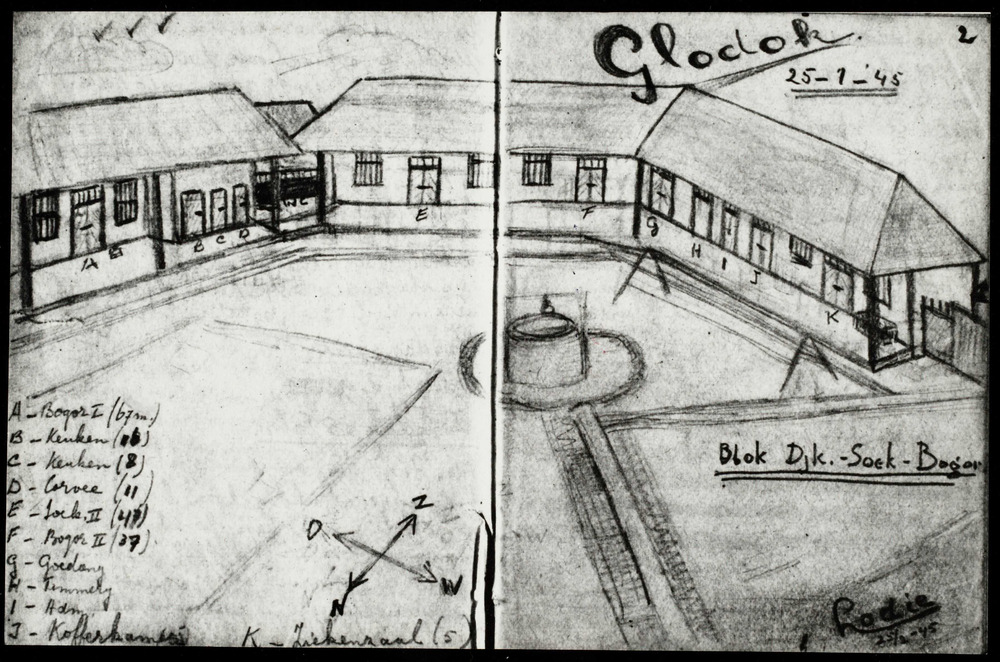
After the Japanese conquest, Dutch civilians and many people of mixed European and Indonesian backgrounds were interned. Conditions in the camps deteriorated as the occupation continued. By 1943, the Japanese authorities were tightening their control over civilian camps, with increasingly severe restrictions, overcrowding, inadequate food and deteriorating medical conditions.
Death in Buitenzorg
Buitenzorg was an important colonial city south of Batavia. During the Japanese occupation, however, the familiar world of Dutch colonial society had been transformed by military rule, internment and repression.
De Neve’s death there on 30 August 1943 was therefore not simply the death of an elderly former footballer. He was one of thousands of civilians caught up in the Japanese occupation of the Dutch East Indies.
Eddy’s son ,Gilles Pieter Cornelis de Neve was born on 12 June 1915 in Buitenzorg lived in The Hague in 1940. After travelling through France, Spain and Portugal, he arrived in England on 13 September 1941 and joined the Royal Air Force.
Between 27 April and 13 July 1943, Gilles underwent fighter training with No. 61 Operational Training Unit (61 OTU). On 22 July, he was transferred to No. 322 (Dutch) Squadron of the RAF.
Gilles de Neve was one of 18 Dutch pilots of No. 322 Squadron who did not survive the war. On 16 January 1944, he was killed when his Spitfire crashed near Hawkinge in Kent. He was buried at Hawkinge Cemetery in Folkestone.
Sources
https://www.knvb.nl/node/66188
https://en.wikipedia.org/wiki/Eddy_de_Neve
https://eu-football.info/_player.php?id=4420
https://oorlogsgravenstichting.nl/personen/109572/gilles-pieter-cornelis-de-neve
https://digitaalmonument.museumengelandvaarders.nl/namen/lveqew-sgoyfu-ugwb2n


Leave a Reply