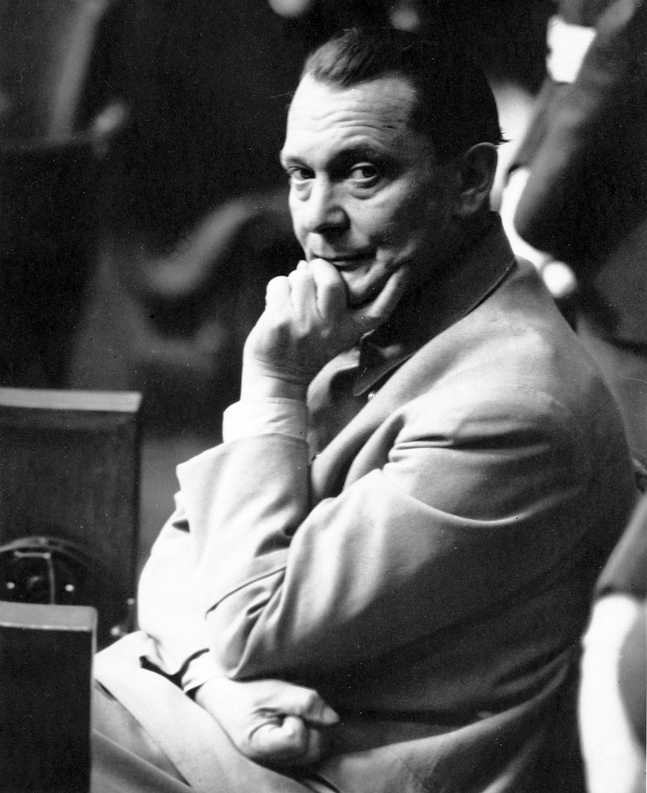
Hermann Göring: The Rise and Fall of Hitler’s Most Powerful Lieutenant
Hermann Wilhelm Göring was one of the most influential, flamboyant, and ruthless figures in Nazi Germany. A decorated fighter pilot from the First World War, he became one of Adolf Hitler’s earliest political allies, the founder of the Gestapo’s predecessor, the commander-in-chief of the Luftwaffe, and the man who helped transform the Nazi Party from a radical political movement into an instrument of state terror. He accumulated extraordinary wealth, surrounded himself with stolen art and luxurious possessions, and occupied a position of immense authority within a regime responsible for the Holocaust and the devastation of Europe. Yet the man who once appeared destined to succeed Hitler ultimately became a symbol of the corruption, vanity, and moral bankruptcy of the Third Reich.
Göring was not merely a subordinate who followed orders. He was an enthusiastic participant in the construction of the Nazi dictatorship, a principal architect of its rearmament, and a senior official whose authority extended into the persecution and dispossession of Germany’s Jewish population. His signature appeared on documents that helped prepare the machinery of genocide. His responsibility was not diminished by his occasional disagreements with Hitler, his extravagant lifestyle, or his attempts to portray himself after the war as a conventional nationalist who had been overtaken by more radical men. Göring helped create the system that eventually consumed millions of lives.
His story is also one of contradictions. He possessed courage as a combat pilot but helped build a regime that persecuted and murdered millions. He enjoyed the privileges of aristocratic society while championing a political movement that claimed to represent the German people. He cultivated an image of strength and authority while increasingly retreating into a world of drugs, extravagance, and self-indulgence. At the end of his life, when confronted with the evidence of Nazi crimes, he attempted to defend his actions while distancing himself from the full horror of the regime he had helped establish.
To understand Hermann Göring is to examine not only the rise of one man but also the transformation of personal ambition, political opportunism, and ideological hatred into instruments of unprecedented destruction.
1. The Making of a German Nationalist
Hermann Wilhelm Göring was born on 12 January 1893 in Rosenheim, Bavaria, in the German Empire. His father, Heinrich Ernst Göring, was a former cavalry officer and colonial administrator who had served as Germany’s first Reichskommissar in German South West Africa, now Namibia. His mother, Franziska Tiefenbrunn, came from a Bavarian family. Hermann spent part of his early childhood away from his parents, living with a godfather and his family at a castle in the Bavarian countryside.
He grew up in a society deeply influenced by military tradition, social hierarchy, and nationalism. The German Empire, unified under Prussian leadership in 1871, placed considerable prestige upon its armed forces. Military service was widely regarded as an honourable calling, and young men from respectable families were encouraged to cultivate discipline, obedience, and patriotic devotion.
Göring embraced this environment. He attended military schools and entered the German Army before the First World War, eventually serving as an infantry officer. When war broke out in August 1914, he was initially involved in ground operations. However, health problems and his growing interest in military aviation led him towards the newly developing air service.
At the time, military aviation was still in its infancy. Aircraft were fragile machines, their engines unreliable and their capabilities limited. Pilots flew in open cockpits, exposed to the elements and to enemy fire. Aerial combat was dangerous, unpredictable, and often brutally short. Nevertheless, it offered ambitious young officers an opportunity to achieve fame beyond the traditional battlefields.
For Göring, aviation would become the defining experience of his early life.
2. The Fighter Pilot of the First World War
Göring transferred to the German air service and became a fighter pilot, eventually serving with the famous Jagdgeschwader 1, the fighter formation associated with Manfred von Richthofen, the celebrated Red Baron.
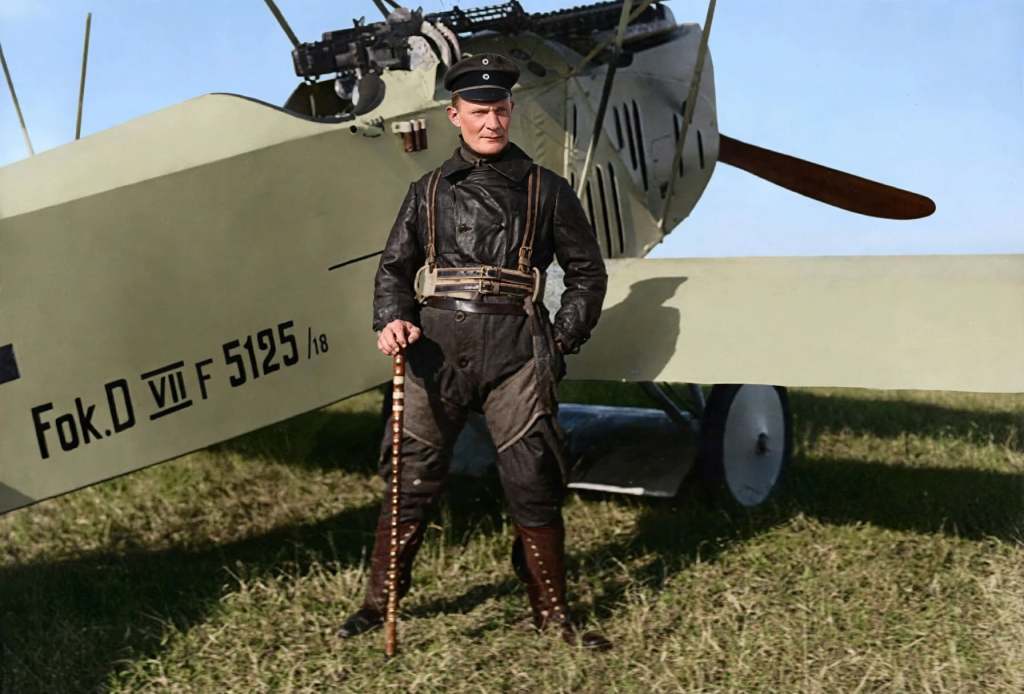
Richthofen was killed in April 1918, and Göring eventually assumed command of the unit. By then, Göring had established himself as an experienced combat pilot and had received Germany’s highest military decoration, the Pour le Mérite, commonly known as the Blue Max. He finished the war credited with 22 aerial victories.
His wartime record gave him something invaluable in the political struggles that followed: a reputation as a decorated national hero. In a country traumatised by defeat, military humiliation, revolution, and economic instability, the image of the courageous fighter pilot possessed considerable symbolic power.
Yet Germany’s defeat in November 1918 left Göring bitter and resentful. Like many former officers, he struggled to reconcile his military experience with the collapse of the imperial order. The German Revolution brought down the monarchy, while the Treaty of Versailles imposed severe military restrictions and territorial losses upon the defeated country.
The treaty also became a focal point for nationalist anger. Far-right political movements portrayed Germany’s defeat not simply as the result of military exhaustion and strategic failure but as the consequence of betrayal by politicians, socialists, and Jews. The so-called Dolchstoßlegende, or stab-in-the-back myth, falsely suggested that Germany’s army had remained undefeated in the field and had been betrayed by civilians at home.
Göring absorbed the nationalist resentment that flourished in this atmosphere. The defeat of 1918 became a wound that helped shape his political identity. His military career had provided him with status, but the postwar world threatened to deprive him of the society and privileges in which he had been raised.
He would eventually find a political movement that promised to restore Germany’s military power, destroy the democratic republic, and place men like himself at the centre of national life.
That movement was led by Adolf Hitler.
3. The Beer Hall Putsch and the Road to Hitler
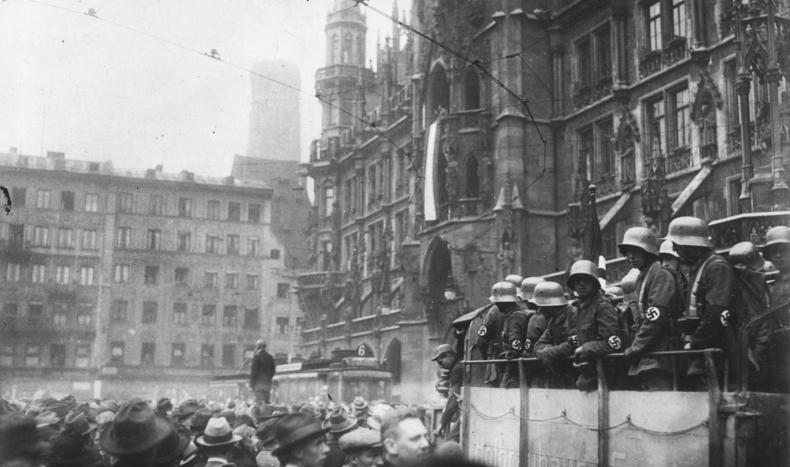
Göring encountered Hitler in the early 1920s, when the Nazi Party was still a relatively small extremist organisation based in Bavaria. Hitler offered a radical answer to Germany’s postwar grievances: the destruction of parliamentary democracy, the repudiation of Versailles, the restoration of German military power, and the creation of a racially defined national community. Antisemitism was not incidental to this programme. It was one of its central ideological foundations.
Göring joined the Nazi Party in 1922 and soon became an important figure within its paramilitary organisation, the Sturmabteilung, better known as the SA or Storm Troopers. His military reputation, aristocratic background, and social connections made him useful to Hitler, who wanted to persuade conservative Germans that Nazism was more than a movement of street fighters and political agitators.
Göring’s relationship with Hitler was built upon mutual advantage. Hitler gained a respected former military officer who could lend credibility to his movement; Göring found a leader who promised to restore the national order he believed Germany had lost.
On 8–9 November 1923, Göring participated in the Beer Hall Putsch, Hitler’s attempted seizure of power in Munich. The coup collapsed, and the authorities moved against the conspirators. During the confrontation, Göring was seriously wounded by a gunshot to the groin. He escaped arrest and fled Germany, eventually reaching Austria and later Sweden.
The wound would have consequences far beyond the immediate aftermath of the failed coup. Göring suffered severe pain and underwent treatment, including exposure to morphine and other drugs. His subsequent dependence on morphine became a serious problem. During his time in Sweden, he received psychiatric treatment and was hospitalised.
His exile also revealed the fragility beneath his public image. The decorated airman and aspiring political leader found himself physically incapacitated, dependent on drugs, and separated from the political movement that had given his ambitions direction.
When an amnesty eventually allowed him to return to Germany, Göring resumed his political activities. He also gradually rebuilt his position within the Nazi Party. His loyalty to Hitler remained intact, although his career would increasingly be shaped by calculation, personal ambition, and the pursuit of power.
4. The Respectable Face of Nazism
By the late 1920s, the Nazi Party was seeking a path from political extremism to national power. The economic crisis that followed the Wall Street Crash of October 1929 transformed its prospects. Unemployment, business failures, political instability, and widespread fear of communism created fertile ground for radical movements.
Göring proved particularly useful during this period. He possessed social manners and connections that many of Hitler’s other followers lacked. He could move among industrialists, military figures, wealthy conservatives, and aristocrats without appearing entirely out of place.
In the 1928 Reichstag elections, he became one of the first twelve Nazi deputies elected to the German parliament. His role was not simply to deliver speeches or attack political opponents. He helped present the Nazi movement to sections of the establishment that might otherwise have regarded Hitler as an irresponsible demagogue.
The strategy worked. As the Nazis expanded their electoral support, conservative politicians increasingly believed that Hitler could be brought into government and controlled. Some industrialists supported the movement because they feared communism and militant labour politics. Others saw an opportunity to weaken organised labour and dismantle democratic restraints on executive power.
Göring helped bridge the distance between Hitler’s radical movement and the conservative elites whose cooperation would make a dictatorship possible.
On 30 January 1933, President Paul von Hindenburg appointed Hitler chancellor of Germany. The appointment was not the inevitable outcome of German history. It was a political decision made by people who believed they could use Hitler for their own purposes.
Göring was among the principal beneficiaries. He entered the new political order with a position of considerable influence, and he would soon help dismantle the very democratic institutions through which he had entered public life.
The former fighter pilot had found his way back into the cockpit. This time, however, he was not fighting over the trenches of the First World War. He was helping to destroy the German republic from within.
5. Terror as an Instrument of Government
After Hitler became chancellor, the Nazis moved rapidly to eliminate political opposition. The Reichstag fire of 27 February 1933 provided the pretext for emergency measures against communists and other perceived enemies. The following day, President Hindenburg signed the Reichstag Fire Decree, suspending fundamental civil liberties and enabling widespread arrests.
Göring, who had become Prussian interior minister in 1933, played a central role in the repression that followed. Prussia was Germany’s largest state, and control of its police forces gave him enormous practical power. He used that authority to attack political opponents, purge officials regarded as unreliable, and expand the use of political policing.
In April 1933, a political police organisation was established in Prussia that became the nucleus of the Gestapo, the Nazi secret state police. Göring was instrumental in its early development, although the organisation would later come under Heinrich Himmler’s control.
He also encouraged the recruitment of Nazi loyalists into the police and gave political auxiliaries considerable latitude to pursue opponents. Communist activists, social democrats, trade unionists, and other critics were arrested, intimidated, and subjected to violence. The early concentration camps became places where the regime could imprison and brutalise people outside the protections of normal legal procedure.
This was one of Göring’s most consequential contributions to the dictatorship. He helped convert the police from an institution intended to uphold public law into an instrument for defending a political regime against its enemies.
The destruction of democracy did not occur through one dramatic act alone. It was achieved through decrees, administrative appointments, arrests, intimidation, and the gradual removal of legal safeguards. Göring understood how power could be exercised through state institutions, and he used his office to make repression systematic.
On 30 June 1934, Hitler ordered a purge of the SA leadership and other perceived opponents, an operation known as the Night of the Long Knives. Göring was among the senior figures involved in the preparations and execution of the purge. He played a significant role in the repression in Prussia, while the SS and other Nazi forces carried out killings elsewhere.
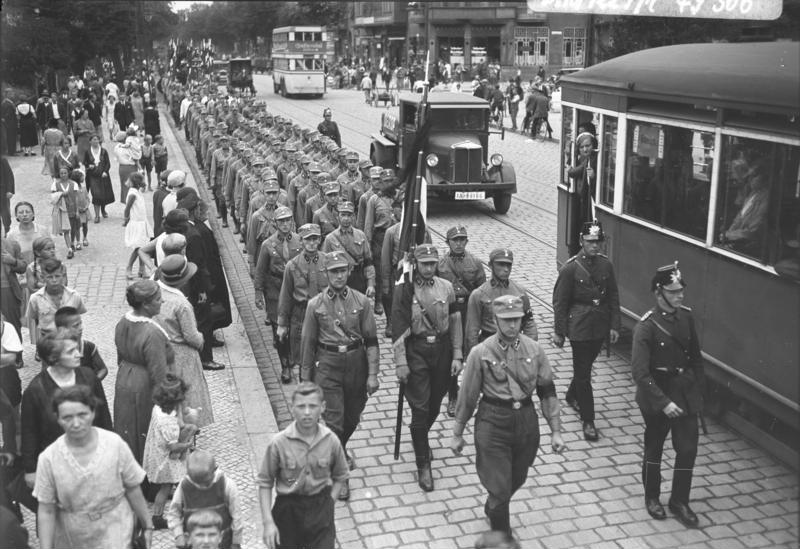
SA-Propagandamarsch in Spandau
Among those murdered was Ernst Röhm, the SA chief, whose organisation had become increasingly difficult for Hitler to control. The purge also targeted other political opponents and individuals who represented threats to the Nazi leadership.
The murders demonstrated that the regime was prepared to kill even its own associates when their continued existence threatened the interests of Hitler and his inner circle.
Göring emerged from the purge with his position strengthened. He had helped Hitler consolidate power, and the elimination of rivals cleared the way for the further centralisation of the dictatorship.
There was nothing accidental about this transformation. Göring was not a passive administrator swept along by events. He was one of the men who made political terror an effective instrument of government.
6. The Reichsmarschall: Power, Wealth, and Extravagance
As the Nazi dictatorship consolidated its authority, Göring accumulated offices and privileges. He became president of the Reichstag, held senior positions in the Prussian government, and eventually acquired control over major areas of economic policy and military rearmament.
In 1935, he was appointed commander-in-chief of the newly established Luftwaffe, the German air force. The following year, Hitler placed him in charge of the Four Year Plan, an economic programme intended to prepare Germany for war and reduce its dependence on foreign supplies.
His influence reached its symbolic height in 1940, when Hitler created the rank of Reichsmarschall specifically for him. It placed Göring above the other German field marshals and underscored his position as one of the most powerful figures in the Third Reich.
Yet his authority was accompanied by extraordinary self-indulgence.
Göring cultivated an extravagant public persona. He wore elaborate uniforms, accumulated medals, and enjoyed hunting, banquets, expensive furnishings, and magnificent residences. His appetite for luxury became notorious even within a regime that rewarded corruption and personal enrichment.
His country estate, Carinhall, named after his first wife, Carin, was developed into a vast hunting lodge and repository for his art collection. Located north of Berlin, it contained valuable paintings, sculptures, tapestries, and other objects gathered from across Europe.
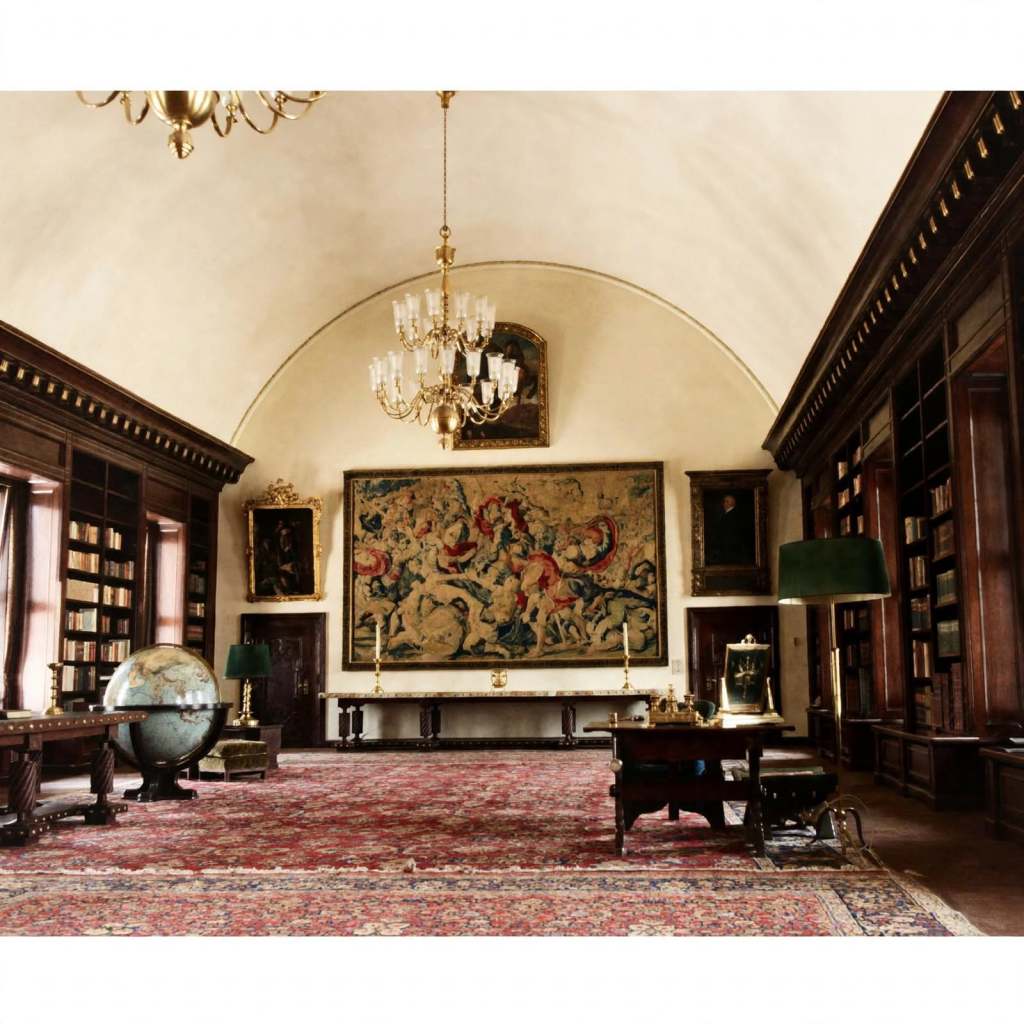
Some works were purchased, but many entered his collection through confiscation, coercion, or outright plunder. Jewish families dispossessed by Nazi persecution were among the victims. Their homes, businesses, and possessions were seized while they were driven from economic life, forced into hiding, deported, or murdered.
The contrast was grotesque. As Jewish families faced exclusion, dispossession, and the threat of annihilation, Göring filled his residences with objects that represented wealth, status, and cultural prestige.
He was not simply a collector who happened to live under a criminal regime. He was a senior official whose authority helped make systematic dispossession possible, and he personally benefited from the process.
The scale of his lifestyle also exposed the hypocrisy of Nazi claims to national sacrifice. Ordinary Germans faced rationing and increasing hardship as the war progressed, while Göring indulged his appetite for luxury and surrounded himself with the spoils of conquest.
His excesses did not make him an outsider within the Nazi system. They were part of the system’s culture of privilege, in which loyalty to Hitler could be rewarded with enormous personal wealth.
7. The Persecution and Plunder of Germany’s Jews
Göring’s responsibility for the persecution of Jews is sometimes obscured by his reputation as an air force commander or by the more prominent roles played by Heinrich Himmler, Reinhard Heydrich, and Adolf Eichmann in the machinery of mass murder.
The documentary record, however, places him firmly among the senior officials who coordinated and implemented anti-Jewish policy.
The Nazi persecution of German Jews began immediately after Hitler took power. The April 1933 boycott of Jewish businesses, the exclusion of Jews from many professions, and the progressive removal of civil rights established a pattern of escalating discrimination. The Nuremberg Laws of 1935 stripped Jews of German citizenship rights and prohibited marriages and sexual relations between Jews and people classified as German or of related blood.
Göring’s government offices helped turn antisemitic ideology into enforceable state policy. His authority over economic affairs was especially important because the regime sought to remove Jews from German commercial life and transfer their property to non-Jewish ownership.
This process, known as Aryanisation, was not merely a campaign of discrimination. It was a programme of economic dispossession. Jewish business owners were pressured to sell at artificially low prices or lost their enterprises through coercion. Their ability to earn a living was progressively destroyed, while others profited from their exclusion.
Following the November 1938 pogrom known as Kristallnacht, the regime intensified its assault. Synagogues were burned, Jewish homes and businesses were attacked, thousands of Jewish men were arrested and sent to concentration camps, and Jewish communities were subjected to further restrictions.
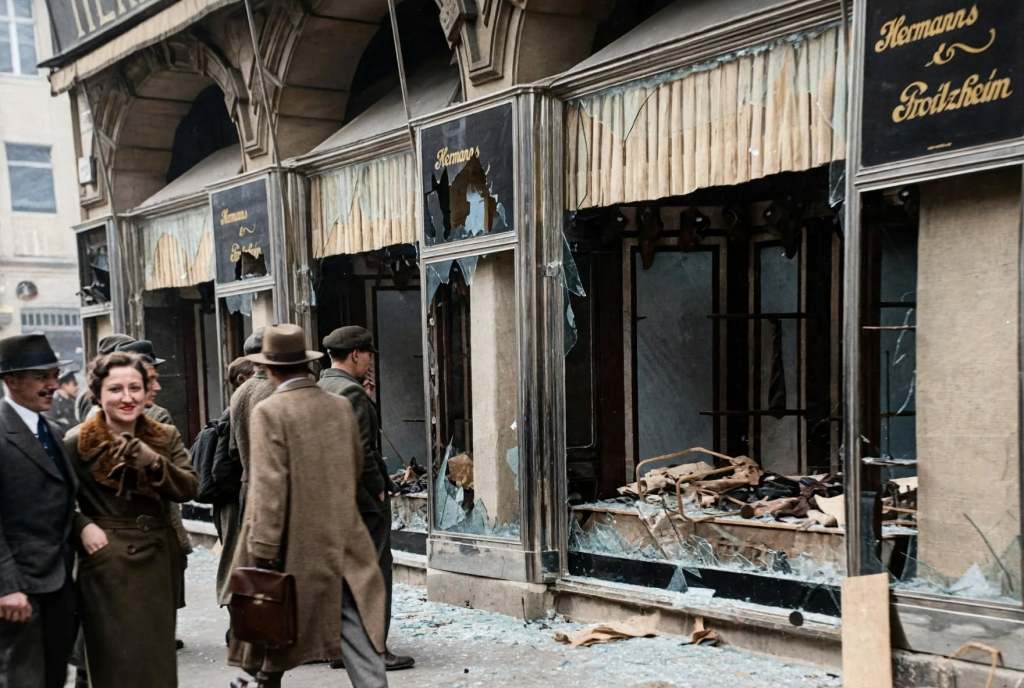
Göring presided over a meeting of senior officials on 12 November 1938 to discuss the consequences of the pogrom. Rather than condemning the destruction, the regime focused on how to exploit it, force Jews to pay for the damage, and accelerate their exclusion from economic life. A collective financial penalty of one billion Reichsmarks was imposed on German Jews.
The meeting exposed the bureaucratic character of Nazi persecution. Violence that had been unleashed in the streets was converted into administrative policy, financial penalties, and further legal discrimination.
Göring was not the sole author of these measures, but he was one of the officials who ensured that persecution served the regime’s economic and political objectives.
His role became even more consequential during the war. On 31 July 1941, he issued a written directive to Heydrich, head of the Reich Security Main Office, authorising preparations for a comprehensive solution to what the Nazis called the Jewish question in the German sphere of influence in Europe. The order instructed Heydrich to submit a plan for the organisational, practical, and financial preparations necessary to carry out the policy.
The document is central to understanding Göring’s place in the Holocaust. It connected the highest levels of the German state to the coordination of a continent-wide programme directed against Europe’s Jews.
The wording of the directive reflected the regime’s characteristic use of administrative language to conceal the human reality of its intentions. Behind the phrases about organisation and preparation stood a process that would culminate in the systematic murder of approximately six million Jewish men, women, and children.
Göring did not personally direct every deportation or killing operation. Nor was he the principal operational organiser of the extermination camps. Those responsibilities were distributed among other agencies and officials, particularly within the SS and security police. But his senior position, his economic authority, and his written authorisation placed him among the regime’s most important participants in the policy that led to genocide.
He cannot be separated from that responsibility simply because others carried out the killings more directly.
8. The Four Year Plan and the Preparation for War
In October 1936, Hitler appointed Göring commissioner of the Four Year Plan, giving him sweeping authority over Germany’s economic preparations for war. The objective was to make the country ready for a major military conflict within four years while reducing its dependence on imported raw materials.
Göring was not an economic theorist of particular distinction, and his administration frequently suffered from overlapping responsibilities, bureaucratic rivalry, and unrealistic objectives. Nevertheless, he possessed the political authority to push the German economy towards rearmament.
The programme prioritised the production of steel, synthetic fuel, synthetic rubber, and other materials essential to military operations. It also promoted the development of substitutes for imported commodities and sought to organise labour and industrial resources around the needs of the armed forces.
These policies were part of a broader transformation. The Nazi regime was not simply rebuilding German military power for defensive purposes. Hitler intended to overturn the European settlement established after the First World War and acquire territory in which the regime could pursue its racial and imperial ambitions.
Göring became one of the principal administrators of this project.
His position also strengthened his personal power. He could intervene in industrial affairs, influence investment decisions, and reward individuals and companies that cooperated with the regime. Economic policy became another means through which he cultivated allies and accumulated influence.
The Four Year Plan also had a darker dimension. Germany’s preparations for prolonged war increasingly depended upon exploitation, forced labour, and the seizure of resources from conquered territories. The economic empire that Göring helped construct would eventually draw upon the labour and possessions of people whom the Nazi regime regarded as enemies or racially inferior.
As German power expanded, the distinction between economic policy and organised plunder became increasingly difficult to maintain. Göring occupied a central position in both.
9. The Luftwaffe and the Road to World War II
Göring’s appointment as commander-in-chief of the Luftwaffe in 1935 fulfilled a longstanding ambition. The Treaty of Versailles had prohibited Germany from maintaining a military air force, but Hitler openly repudiated those restrictions as the Nazi government accelerated its rearmament programme.
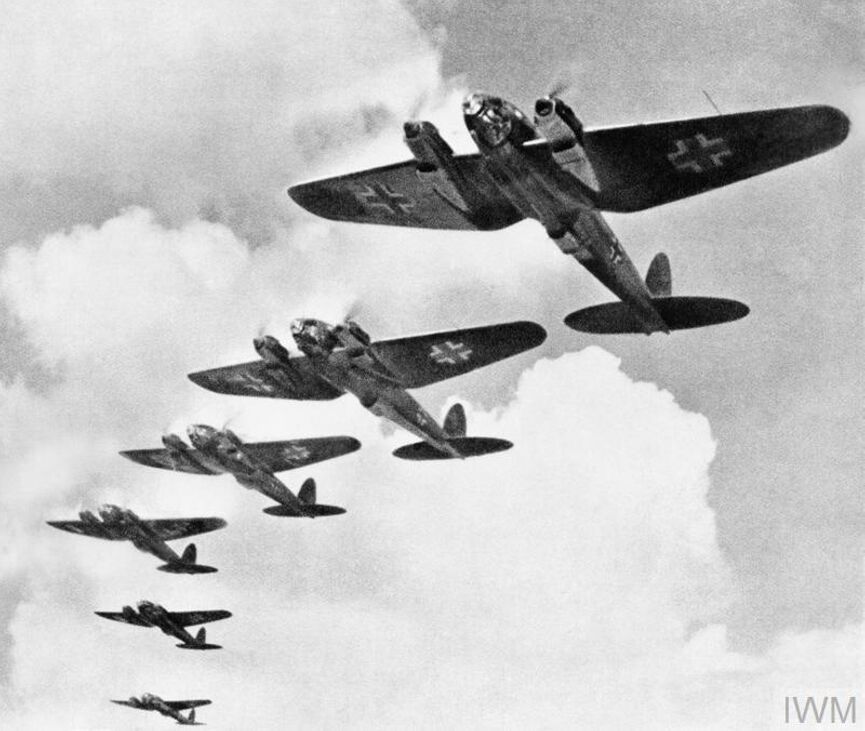
The new Luftwaffe was intended to be a decisive instrument of modern warfare. German aircraft supported the intervention in the Spanish Civil War, where Nazi Germany assisted Francisco Franco’s Nationalist forces. The bombing of Guernica by German and Italian aircraft in April 1937 became one of the most notorious symbols of the destruction that modern air power could inflict upon civilian populations.
Göring’s command also became central to Hitler’s foreign policy. The Luftwaffe served as a visible demonstration of Germany’s renewed military strength and formed an essential component of the regime’s plans for territorial expansion.
In March 1938, German troops entered Austria in the Anschluss, the annexation of Austria into the German Reich. Göring played an important role in the political manoeuvring that accompanied the operation, helping to pressure Austrian leaders and coordinate the transfer of power.
Later that year, he participated in the diplomatic and political process surrounding the Sudetenland crisis. The Munich Agreement of September 1938 allowed Germany to annex the predominantly German-speaking border regions of Czechoslovakia. Although Göring sometimes favoured diplomatic and economic pressure over immediate military confrontation, he was no principled opponent of Nazi expansionism.
His preferences were largely practical. He understood that a major war could expose the weaknesses of German industry and the armed forces before rearmament was complete. But his caution should not be mistaken for opposition to Hitler’s objectives.
When Germany invaded Poland on 1 September 1939, the European war began. The Luftwaffe played a major role in the campaign, attacking Polish military positions, transport networks, and cities. German forces then turned west, invading Denmark and Norway in April 1940 and France and the Low Countries in May.
The rapid German victories of 1939 and 1940 appeared to vindicate the strategy of rearmament. German air power, combined with armoured forces and coordinated ground operations, contributed significantly to the collapse of several European armies.
Göring’s standing rose with these victories. Hitler trusted him, and the German public saw him as one of the principal architects of military success.
The confidence was justified only in part. The Luftwaffe was powerful, but it was not invincible. Its limitations would become painfully clear when Germany encountered an enemy it could not defeat quickly.
10. The Battle of Britain: The First Great Setback
In the summer of 1940, after the fall of France, Hitler turned his attention to Britain. The British government under Winston Churchill refused to seek peace, and Germany began preparations for an invasion across the English Channel.
Before an invasion could take place, the Luftwaffe needed to establish air superiority over southern England and the Channel. Göring was entrusted with achieving this objective.
The ensuing Battle of Britain became one of the defining confrontations of the Second World War.
From July through October 1940, German aircraft attacked British shipping, airfields, radar installations, aircraft factories, and eventually cities. The Royal Air Force fought to prevent the Luftwaffe from gaining control of the skies.
At first, Göring believed that German air power could overwhelm the British defences. He had good reason to recognise the Luftwaffe’s strength, but he underestimated the resilience of the RAF, the importance of Britain’s integrated radar and command system, and the difficulties German aircraft faced when operating over southern England.
The German air force also suffered from significant operational disadvantages. Many German fighters had limited endurance over Britain, while British pilots could often parachute or crash-land over home territory and return to duty if they survived. German aircrew who were shot down and survived were generally captured.
As the fighting continued, Göring became increasingly frustrated. He changed priorities and tactics, sometimes demanding results that his commanders and crews could not deliver. The decision to shift the bombing campaign towards British cities, particularly after attacks on Berlin and the escalation of reciprocal bombing, gave British air defences opportunities to recover from pressure on their airfields.
The Luftwaffe failed to destroy Fighter Command or establish the air superiority necessary for an invasion. In September 1940, Hitler postponed Operation Sea Lion indefinitely.
For Göring, the failure was a serious blow to his reputation. He had promised Hitler that the Luftwaffe could defeat Britain, yet the RAF survived.
The significance extended beyond personal embarrassment. Britain remained in the war, providing a base for future Allied operations and a symbol of resistance to Nazi domination.
The failure also exposed a fundamental weakness in the German leadership: its tendency to confuse early victories with proof of military superiority. Göring had presided over an impressive air force, but he could not turn that strength into the decisive victory Hitler demanded.
11. The Eastern Front and the War of Annihilation
On 22 June 1941, Germany launched Operation Barbarossa, the invasion of the Soviet Union. It was the largest military invasion in history and was conceived not merely as a campaign to defeat another state but as a war of conquest, racial domination, and ideological extermination.
Göring’s economic and military responsibilities made him a central figure in preparations for the eastern campaign. German planners expected to seize agricultural land, oil, minerals, and other resources while reorganising the occupied territories to serve the Reich.
The war against the Soviet Union was inseparable from Nazi racial ideology. German leaders regarded much of the Soviet population as racially inferior and treated the conquest of eastern Europe as an opportunity to acquire territory for German settlement. Jews were targeted for extermination, while Soviet prisoners of war and civilians suffered mass starvation, forced labour, deportation, and murder.
Göring’s Four Year Plan apparatus was deeply involved in the exploitation of the occupied territories. His economic organisation helped formulate plans that placed German requirements above the survival of local populations. The resulting policies contributed to widespread starvation and the deaths of millions of civilians and prisoners of war.
The economic ambitions of the regime were not separate from its violence. The seizure of food and raw materials was intended to sustain Germany and its armed forces, even when German planners understood that their policies would cause mass death among the people under occupation.
Göring’s responsibilities therefore extended beyond the Luftwaffe. He was one of the senior officials involved in organising the economic foundations of the war in the east.
Meanwhile, the campaign began to expose the limits of German military power. The Soviet Union did not collapse as quickly as Hitler expected. German forces advanced deep into Soviet territory, but their supply lines stretched, the weather deteriorated, and Soviet resistance intensified.
The German defeat before Moscow in the winter of 1941–42 demonstrated that the war would not be a short campaign. The conflict became a prolonged struggle of attrition, increasingly demanding resources that Germany could not sustain indefinitely.
Göring’s reputation suffered further as the Luftwaffe struggled to meet the expanding demands of the eastern front. His influence remained immense, but his promises increasingly diverged from military reality.
12. Stalingrad: The Collapse of Göring’s Credibility
The Battle of Stalingrad became the most devastating demonstration of the limits of Göring’s authority.
In late 1942, German forces were trapped inside the city and its surrounding areas by a Soviet counteroffensive. The German Sixth Army, commanded by Friedrich Paulus, faced encirclement, dwindling supplies, and deteriorating conditions.
Hitler refused to authorise a withdrawal. Instead, he insisted that the trapped army be supplied by air until a relief operation could break through.
Göring assured Hitler that the Luftwaffe could deliver the necessary quantities of food, ammunition, fuel, and medical supplies. It was a promise that the air force could not fulfil.
The weather was severe, Soviet forces controlled much of the surrounding airspace, and German transport aircraft were unable to deliver enough supplies to sustain the encircled troops. Aircraft were lost, airfields fell under pressure, and the besieged army’s condition deteriorated.
The Sixth Army had required a substantial and consistent flow of supplies. The Luftwaffe delivered only a fraction of what was needed.
By late January and early February 1943, the German position had become hopeless. Paulus surrendered, and the remaining German forces capitulated. Hundreds of thousands of Axis troops had been killed, captured, or wounded during the campaign, including large numbers of Romanian and other allied personnel.
The defeat was a military catastrophe. It destroyed an entire German field army and marked a decisive turning point on the Eastern Front.
Göring’s assurances had helped reinforce Hitler’s refusal to face reality. Although the decision to hold Stalingrad was Hitler’s, Göring’s promise of an effective airlift gave the German leader grounds to persist with an untenable strategy.
His credibility never fully recovered. The man who had once presided over the triumphant Luftwaffe was increasingly associated with inflated claims and failed promises.
Yet failure did not immediately cost Göring his position. His relationship with Hitler, his seniority within the Nazi hierarchy, and the complex rivalries among the regime’s leading figures allowed him to remain influential.
He continued to hold power even as the military situation deteriorated.
13. The Holocaust and the Machinery of Extermination
The Holocaust developed through a combination of ideological commitment, state policy, military conquest, bureaucratic coordination, and organised killing. Its implementation involved numerous institutions, including the SS, the security police, civilian occupation administrations, railway authorities, and economic agencies.
Göring was not the principal operational commander of the extermination camps, but his place within this system was significant.
His July 1941 directive to Heydrich was one of the documents demonstrating the involvement of the highest Nazi authorities in coordinating a comprehensive anti-Jewish policy across German-controlled Europe. As the regime moved from persecution and mass dispossession towards systematic extermination, senior officials helped establish the administrative framework within which the killing programme proceeded.
The mass murder of Jews began on a vast scale following the invasion of the Soviet Union. German mobile killing units, known as Einsatzgruppen, worked alongside other German forces and local collaborators to carry out mass shootings. In occupied Poland and elsewhere, ghettos, deportations, forced labour, and killing centres became components of a continent-wide process of persecution and murder.
At the Wannsee Conference in January 1942, Heydrich coordinated senior officials from several German government departments in discussing the implementation of the so-called Final Solution. Göring was not present at the meeting, but his earlier directive had established Heydrich’s authority to prepare the wider programme.
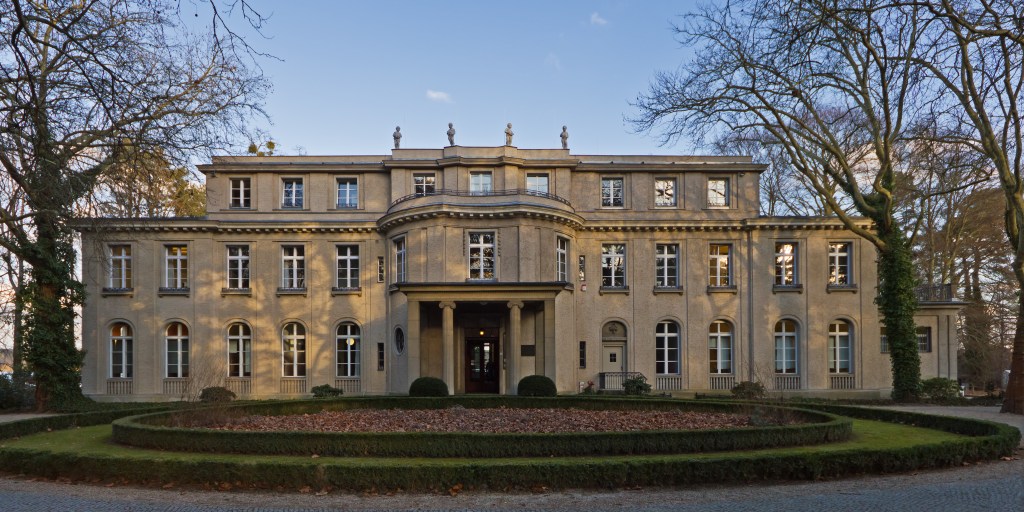
The Holocaust cannot be reduced to the actions of one individual or one organisation. It was made possible by the cooperation of officials who provided administrative authority, transport, labour, property confiscation, intelligence, and enforcement.
Göring’s responsibility arose from his own decisions and his position within the regime. He helped establish the machinery of dictatorship, participated in the dispossession of Jews, and authorised preparations for the policy that led to their systematic murder.
His actions were not those of a man who merely knew that atrocities were occurring. He was one of the senior officials whose authority helped the regime organise the persecution and destruction of Europe’s Jewish population.
The distinction matters because responsibility for genocide is not limited to those who personally operate a weapon or stand beside a mass grave. It also belongs to those who use the institutions of the state to make mass murder possible.
14. Plunder on a Continental Scale
Göring’s role in the economic exploitation of occupied Europe also included the systematic seizure of cultural property.
The Nazis looted artworks, furniture, jewellery, and other valuables from occupied territories, particularly from Jewish families who had been forced to flee, imprisoned, deported, or murdered. The confiscation of Jewish property was often presented through bureaucratic terminology that concealed the coercion and violence involved.
Göring became one of the principal beneficiaries of this plunder.
His collection grew substantially during the war. He acquired paintings by celebrated European artists and surrounded himself with objects taken from private collections and occupied territories. He used his influence to obtain works that interested him and sometimes competed with other Nazi leaders, including Hitler, for valuable pieces.
This competition revealed the regime’s internal character. Even as German forces waged a war that killed millions, its senior officials fought over paintings, furnishings, and other symbols of prestige.
The plunder was not simply an incidental consequence of military occupation. It was part of a broader programme in which the Nazi state stripped conquered populations of their property and redistributed it to German institutions, officials, and beneficiaries.
Jewish collectors were particularly vulnerable. Their collections could be seized under discriminatory regulations, transferred through forced sales, or confiscated after their owners were deported.
Göring’s art collection therefore represented more than personal extravagance. It embodied the connection between racial persecution, economic dispossession, and private enrichment.
When the Allies advanced into Germany, investigators recovered substantial quantities of looted cultural property. Some objects were returned to their rightful owners or their heirs, although the recovery and restitution of Nazi-looted art became a long and complicated process.
Göring’s collection remains an important example of how senior Nazi officials profited from a system that destroyed the lives and livelihoods of its victims.
15. The Fall of the Reich
By 1944, Germany’s military position was deteriorating on every major front. The Soviet Union was advancing westward, while Allied forces had landed in Normandy on 6 June. German cities were subjected to increasingly destructive bombing campaigns, and the Luftwaffe struggled to defend the Reich against the combined air power of Britain and the United States.
Göring’s prestige declined alongside the fortunes of the air force. The Luftwaffe suffered from shortages of experienced pilots, fuel, and other essential resources. German aircraft production remained substantial, but production alone could not compensate for the loss of trained personnel, the destruction of infrastructure, and the overwhelming numerical superiority of Allied aviation.
The failed defence of German airspace exposed the weakness of the organisation Göring had commanded for almost a decade.
His personal relationship with Hitler also deteriorated. Hitler became increasingly suspicious of senior subordinates, while Göring’s extravagant lifestyle and reputation for incompetence made him an obvious target for criticism.
On 20 July 1944, a group of German military officers and civilian conspirators attempted to assassinate Hitler. The plot failed, and the regime responded with mass arrests and executions. Göring was not a central figure in the conspiracy; his political survival depended upon his continued loyalty to Hitler.
As Germany approached defeat, however, the question of succession became unavoidable.
Hitler had designated Göring as his successor in a decree issued in 1939. For years, Göring had occupied a position that appeared to make him the natural heir to the Nazi leader.
But the relationship between the two men was no longer secure. Hitler increasingly isolated himself in his headquarters, while Göring spent much of his time away from Berlin.
In April 1945, Soviet troops entered the German capital and the collapse of the Third Reich became imminent. Hitler was confined to his bunker beneath the Reich Chancellery, surrounded by a shrinking circle of loyalists.
On 23 April, Göring sent a message from Bavaria asking whether he should assume leadership of the Reich in accordance with Hitler’s earlier decree. Göring’s communication was conditional and can be understood as an attempt to clarify whether he should exercise the authority previously assigned to him.
Hitler interpreted it as a challenge. Under the influence of Martin Bormann and other members of his inner circle, he ordered Göring’s arrest and stripped him of his offices and succession rights.
The man who had once been presented as Hitler’s most likely successor was now a prisoner of the regime he had helped build.
The collapse continued. Hitler committed suicide on 30 April 1945, and German forces surrendered unconditionally in May. Göring was taken into American custody on 7 May 1945, bringing his political career to an end.
The Third Reich had lasted just twelve years. It had destroyed democratic government in Germany, launched a war of conquest, and participated in the systematic murder of millions. Göring had been one of its most powerful architects.
16. Nuremberg: The Defendant in the Dock
Following his capture, Göring was interrogated by Allied authorities and eventually brought before the International Military Tribunal at Nuremberg. The trial of the major Nazi war criminals opened in November 1945 and continued until the autumn of 1946.
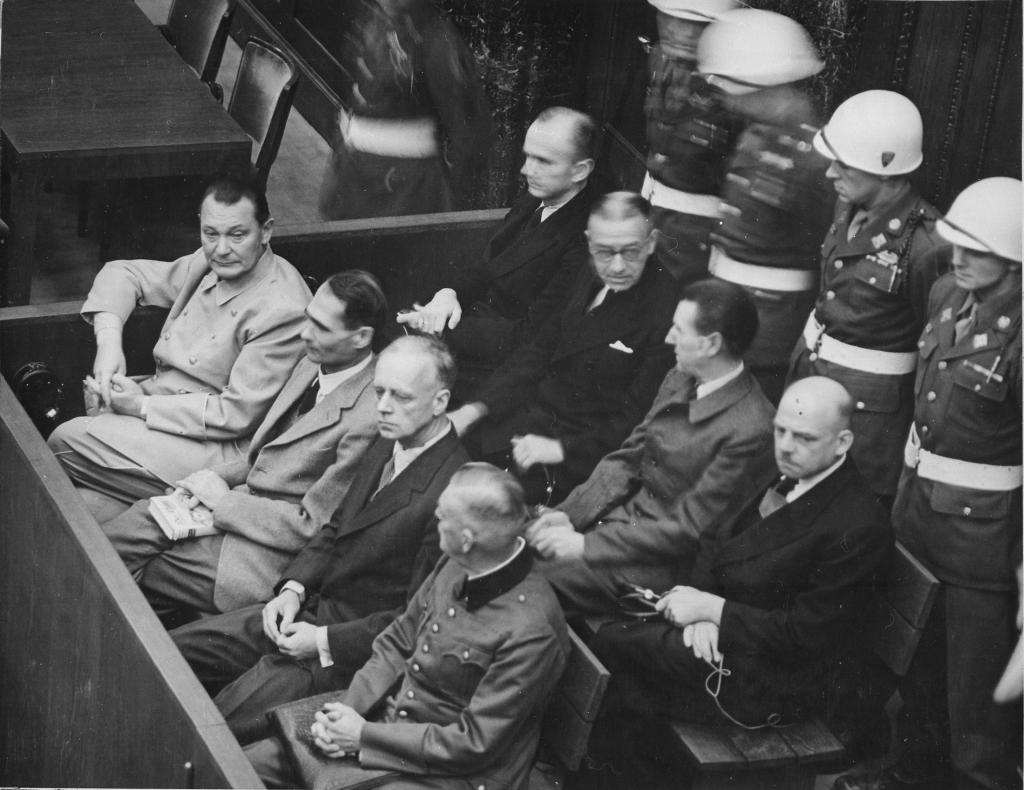
Göring was the most senior Nazi official among the defendants. Hitler, Joseph Goebbels, and Heinrich Himmler had all died before they could be tried. Göring therefore became the principal representative of the defeated regime in the courtroom.
The proceedings were unprecedented. For the first time, leading officials of a defeated state were brought before an international tribunal to answer for crimes committed in the name of their government.
The prosecution presented extensive documentary evidence, including orders, official correspondence, speeches, and records of government meetings. These documents demonstrated that the war and the persecution of civilians had not simply emerged from the uncontrolled actions of individual soldiers. They had been planned, administered, and implemented through the institutions of the Nazi state.
Göring approached the trial with confidence. He was intelligent, articulate, and experienced in political argument. Rather than appearing as a broken man, he often attempted to dominate proceedings through his testimony and cross-examination.
He defended Hitler, justified Germany’s expansionism, and sought to portray the regime’s actions as legitimate exercises of state authority. He also tried to distinguish between political responsibility and direct involvement in particular atrocities.
The courtroom became a final stage on which he could display his personality. His confidence and rhetorical skill sometimes unsettled the prosecution, but they could not erase the documentary record.
One of the most significant issues concerned his role in the persecution of the Jews. The prosecution introduced evidence of his July 1941 directive to Heydrich, along with documentation of the regime’s economic exploitation and anti-Jewish policies.
Göring could argue about the interpretation of particular phrases, the division of responsibilities among agencies, or the extent of his knowledge of specific killing operations. He could not plausibly present himself as a marginal figure in the regime’s machinery of persecution.
The trial also revealed the moral evasions common among senior Nazi defendants. They frequently acknowledged that terrible things had occurred while attempting to minimise their own responsibility. Authority was claimed when it brought prestige and power; responsibility was denied when the consequences became undeniable.
Göring’s performance was more forceful than that of many of his fellow defendants, but it did not fundamentally alter the evidence against him.
17. The Verdict and the Last Night
On 1 October 1946, the International Military Tribunal found Göring guilty on all four counts of the indictment: conspiracy to commit crimes against peace, crimes against peace, war crimes, and crimes against humanity.
He was sentenced to death by hanging. The sentence reflected the tribunal’s conclusion that he had been a leading participant in the planning and execution of aggressive war and in the wider criminal policies of the Nazi regime.
Göring appealed against the sentence and sought execution by firing squad, arguing that a soldier should not die by hanging. The request was refused.
His execution was scheduled for 16 October 1946. In the hours before the sentence was to be carried out, however, Göring managed to obtain a concealed cyanide capsule. He died by suicide in his prison cell on the night of 15 October.
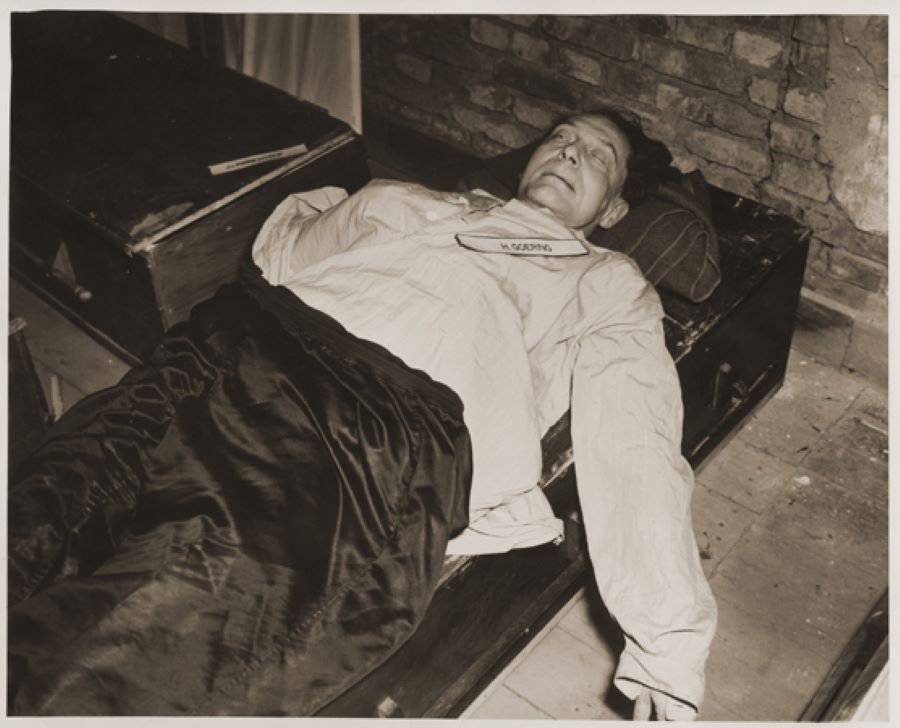
The Historical Mystery: How Did He Get the Poison?
How a high-profile prisoner under 24-hour guard in a high-security facility obtained a glass cyanide capsule remains one of the most debated aspects of the Nuremberg trials. Historians and investigators have offered several primary theories over the decades:
| Theory | Mechanism / Details | Historical Consensus |
| Self-Concealment (The Official Explanation) | Göring’s letter asserted he hid the capsule in a jar of cream or inside his personal luggage, retrieving it when his belongings were brought to him shortly before the execution. | Plausible, given the lax oversight when handling prisoners’ personal effects prior to execution, though disputed as potentially cover-up rhetoric. |
| The American Guard (Herbert Stivers) | In 2005, a former U.S. Army private, Herbert Stivers, confessed that he had unwittingly passed a pen containing a “fountain pen medicine” to Göring on behalf of a German woman he had met. | Considered plausible by some historians, but unverifiable due to lack of corroborating physical evidence. |
| Sympathetic / Bribed Personnel | A guard, doctor, or Allied officer brought the capsule to Göring out of sympathy, bribery, or to prevent a public hanging. | Frequently circulated in popular accounts, but supported mainly by circumstantial evidence. |
The following morning, ten other condemned Nazi defendants were hanged. Göring had escaped the gallows, but not the judgment of history.
His death was the final act of a man who had spent much of his life cultivating an image of control, authority, and superiority. Even at the end, he had sought to determine the manner of his own fate.
But suicide did not erase the verdict. The evidence presented at Nuremberg remained, documenting his role in a regime that had inflicted extraordinary suffering upon Europe.
18. Hermann Göring’s Historical Legacy
Hermann Göring occupies a distinctive place in the history of Nazi Germany because his career connected so many different aspects of the regime. He was a decorated war hero, a political organiser, an architect of police repression, a senior economic administrator, a military commander, a participant in the persecution of Jews, and a beneficiary of the plunder of occupied Europe.
His life also demonstrates the danger of confusing personal charisma or military distinction with moral character.
Göring had genuine abilities. He was politically adept, socially accomplished, and capable of navigating complicated bureaucratic and personal rivalries. He understood how to cultivate powerful allies and how to use state institutions to consolidate his own authority.
Those abilities were placed in the service of a criminal political project.
His responsibility for the Holocaust must be understood in that context. He was not the official who designed every detail of the extermination programme, nor was he the commander who personally supervised the killing centres. His role was different, but it was nonetheless substantial. He helped construct the dictatorship, authorised preparations for the comprehensive persecution of Europe’s Jews, and participated in the economic and administrative systems that made Nazi domination possible.
The fact that other men carried out particular crimes does not absolve those who gave orders, created the institutions, or ensured that the machinery continued to function.
Göring’s career also illustrates how dictatorship can attract and reward people whose ambitions are not necessarily identical. Some Nazi officials were driven by fanatical ideological conviction; others pursued career advancement, wealth, revenge, or personal power. These motives could coexist within the same individual.
Göring combined ideological commitment with extraordinary self-interest. He embraced the nationalist and antisemitic foundations of Nazism while using his position to accumulate offices, possessions, and privileges. His vanity did not make him less dangerous. It helped reveal the rewards that the system offered to those who served it.
His relationship with Hitler was similarly revealing. Göring remained loyal for years, but his loyalty did not guarantee security. When Hitler believed that his authority was being challenged, he discarded the man who had been among his earliest and most important associates.
The dictatorship that Göring had helped establish ultimately offered him no protection. He was stripped of power, imprisoned, tried, and condemned by the victorious Allies.
His final escape from execution did not turn him into a tragic figure. It left him a convicted war criminal who had avoided the punishment imposed by the tribunal.
Hermann Göring’s significance lies not simply in his rise and fall, but in the range of crimes and institutions with which his career was intertwined. He helped transform political extremism into state power, state power into organised persecution, and conquest into a system of exploitation. His authority was exercised through offices, decrees, military commands, and economic plans, but the consequences were measured in destroyed communities, dispossessed families, occupied nations, and murdered human beings.
The decorated fighter pilot of 1918 became one of the principal figures of a regime that plunged Europe into war. The man who promised national revival helped preside over national ruin. The collector who surrounded himself with the spoils of conquest left behind a record of dispossession and complicity. The supposed heir to Hitler ended his life in a prison cell, awaiting execution for the crimes of the regime he had helped create.
History remembers Göring not as the heroic airman he once imagined himself to be, nor as the grand successor he expected to become, but as one of the senior architects of Nazi Germany’s dictatorship and a principal convicted criminal of the Third Reich.
His life is a reminder that mass atrocities are not produced by ideology alone. They require people willing to convert hatred into policy, ambition into authority, and bureaucracy into an instrument of destruction. Göring was one of those people. His place in history is inseparable from the consequences of the power he chose to wield.
Sources:
- United States Holocaust Memorial Museum — Hermann Göring and his role in the Holocaust.
- International Military Tribunal at Nuremberg — Trial transcripts and documentary evidence.
- Deutsches Historisches Museum — Hermann Göring: biographical chronology.
Donation
Your readership is what makes my site a success, and I am truly passionate about providing you with valuable content. I have been doing this at no cost and will continue to do so. Your voluntary donation of $2 or more, if you are able, would be a significant contribution to the continuation of my work. However, I fully understand if you’re not in a position to do so. Your support, in any form, is greatly appreciated. Thank you. To donate, click on the credit/debit card icon of the card you will use. If you want to donate more than $2, just add a higher number in the box left from the PayPal link. Your generosity is greatly appreciated. Many thanks.
$2.00


Leave a Reply