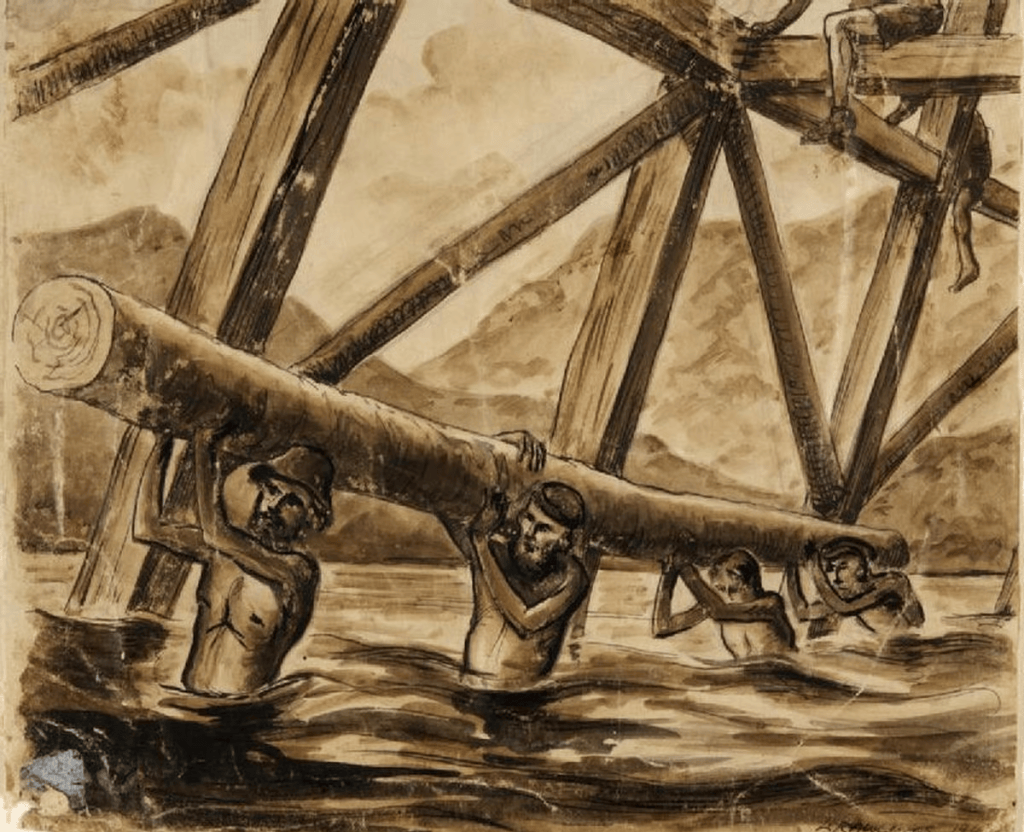
“A railway built with steel, but paid for in human lives.”
The Burma Railway, often known as the Death Railway, was one of the most notorious construction projects of the Second World War. Built by the Japanese Empire between Burma (now Myanmar) and Thailand, it was intended to provide a strategic land route connecting Japanese-occupied territories in Southeast Asia. Its construction, however, became synonymous with forced labour, starvation, disease, brutality and the deaths of tens of thousands of Allied prisoners of war and an even larger number of Asian civilian labourers.
The railway was not simply an engineering undertaking carried out under difficult wartime conditions. It was a project in which human beings were treated as expendable resources, their lives sacrificed to military necessity. Behind every mile of track lay a story of suffering: men working in tropical heat, prisoners collapsing from exhaustion, labourers dying from cholera and malaria, and survivors struggling to endure another day in an environment designed to extract as much work as possible from bodies that were already failing.
The railway remains one of the most enduring symbols of the human cost of the war in Asia. Its history is not only about Japanese military ambition or the suffering of Allied prisoners. It is also about the largely forgotten Asian men and women whose labour and lives made its construction possible.
The strategic ambition behind the railway
The origins of the Burma Railway lay in Japan’s rapid expansion across Southeast Asia during the early years of the Second World War.
Following the attack on Pearl Harbor on 7 December 1941, Japan launched a series of offensives that brought vast territories under its control. British Malaya fell, Singapore surrendered in February 1942, and Japanese forces advanced into Burma, threatening British positions in India and cutting important supply routes to Chinese forces fighting Japan.
Burma was strategically important because it provided access to China. The loss of the Burma Road in 1942 severely complicated Allied efforts to supply the Chinese Nationalist government under Chiang Kai-shek. Although the Allies continued to seek alternative supply routes, transporting military equipment, fuel and food across difficult terrain became increasingly challenging.
The Japanese military therefore sought a more reliable overland connection between Thailand and Burma. Existing maritime supply routes were vulnerable to Allied submarines and air attacks, while transporting supplies overland through the mountainous, densely forested border region presented enormous engineering difficulties.
The proposed railway would run approximately 415 kilometres (258 miles), connecting Ban Pong in Thailand with Thanbyuzayat in Burma. It would cross rivers, mountains, jungle and areas where roads were practically nonexistent.
The Japanese had considered the project before the war, but its construction was widely regarded as an immense challenge. Under ordinary circumstances, surveying, clearing the terrain, building bridges and laying track would have required years of work, substantial machinery and a large, properly supplied workforce.
The Japanese military had neither the time nor the inclination to accept those limitations.
Construction began in 1942. The objective was to complete the line as quickly as possible, regardless of the human cost.
The railway was eventually completed in October 1943, an extraordinary engineering achievement when considered in isolation. Yet its completion concealed a catastrophe: the workforce had been subjected to conditions that caused mass death on a scale that transformed the railway into one of the war’s most infamous monuments to forced labour.
The men who were forced to build it
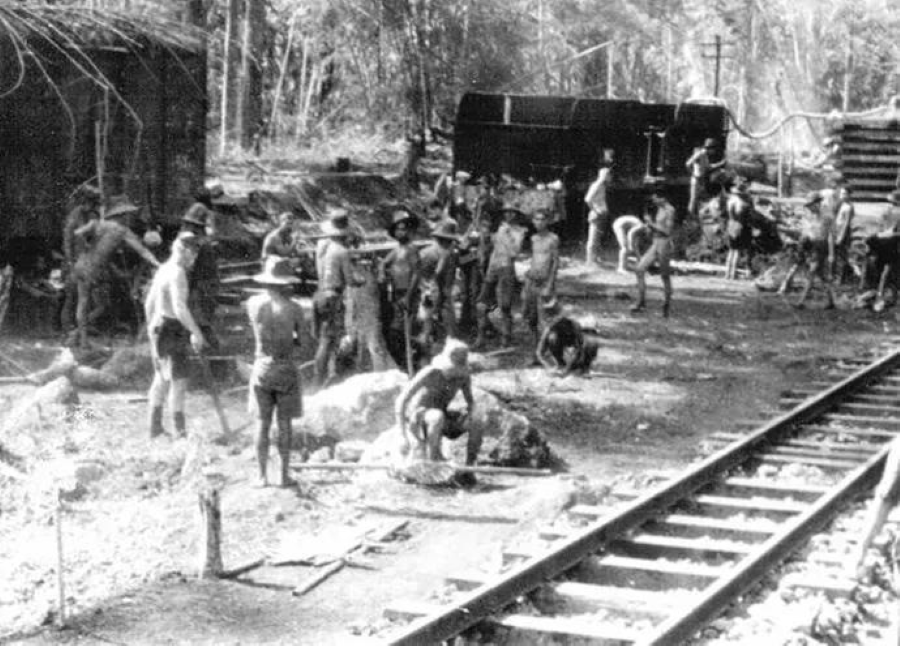
The workforce consisted principally of two groups: Allied prisoners of war and Asian civilian labourers known collectively by the Japanese term rōmusha. Both groups endured terrible conditions, but their experiences were not identical, and their suffering has not always received equal attention in historical accounts.
Approximately 60,000 Allied prisoners of war worked on the railway. They included British, Australian, Dutch and American servicemen, many of whom had been captured during the Japanese offensives of 1941 and 1942, particularly following the surrender of Singapore and the collapse of Allied resistance in the Dutch East Indies.
Alongside them were approximately 200,000 Asian labourers, although estimates vary. They included Burmese, Malayans, Tamils, Javanese, Thais and other people recruited or coerced into working on the project. Some were promised wages and decent conditions. Others were conscripted, deceived, threatened or transported far from their homes.
For many Asian labourers, the circumstances were particularly desperate. Records were incomplete, their identities were frequently not documented, and their deaths were often not recorded with the care given to those of Allied military personnel. Their families might never learn what had happened to them.
The railway’s death toll is therefore difficult to establish with precision. Approximately 12,000–13,000 Allied prisoners of war died during its construction, while estimates for Asian civilian deaths vary considerably, commonly ranging from about 75,000 to more than 90,000. Some estimates are higher or lower, depending on which labour groups and periods are included.
The figures are staggering, but statistics can obscure the reality they represent.
Every death belonged to an individual. A young soldier who had expected to return to his family. A Burmese labourer who had left his village in search of wages, or had been compelled to leave it. A Tamil worker separated from his family in Malaya. A Dutch serviceman who had survived the collapse of the colonial army only to find himself facing another ordeal.
They were people with names, relationships, memories and futures. The railway reduced them to a workforce, and the demands of the project made their survival secondary to the construction schedule.
That distinction is essential to understanding the tragedy. The men did not simply die because railway construction was difficult. They died because those responsible for the project imposed intolerable conditions, failed to provide adequate food and medical care, and frequently used violence to force exhausted and sick people to continue working.
The journey into captivity
For many Allied prisoners, the ordeal began long before they reached the railway camps.
The fall of Singapore on 15 February 1942 had delivered approximately 80,000 British, Indian and Australian troops into Japanese captivity, although not all were subsequently sent to work on the railway. Many of those who were selected had already experienced defeat, confinement and inadequate food.
Prisoners were moved between camps and staging points before being dispatched to Thailand or Burma. Transport could be overcrowded, hot and poorly ventilated. Once they reached their destination, some parties had to march long distances to remote work sites, carrying their belongings through terrain that was difficult even for healthy men.
The Japanese military’s plans for the railway developed as the war progressed. By 1943, the pressure to finish the line had intensified. Prisoners who had initially been held elsewhere were transferred into the construction workforce, including men who were already ill or physically weakened.
They arrived expecting captivity. Many had no idea how much worse it could become.
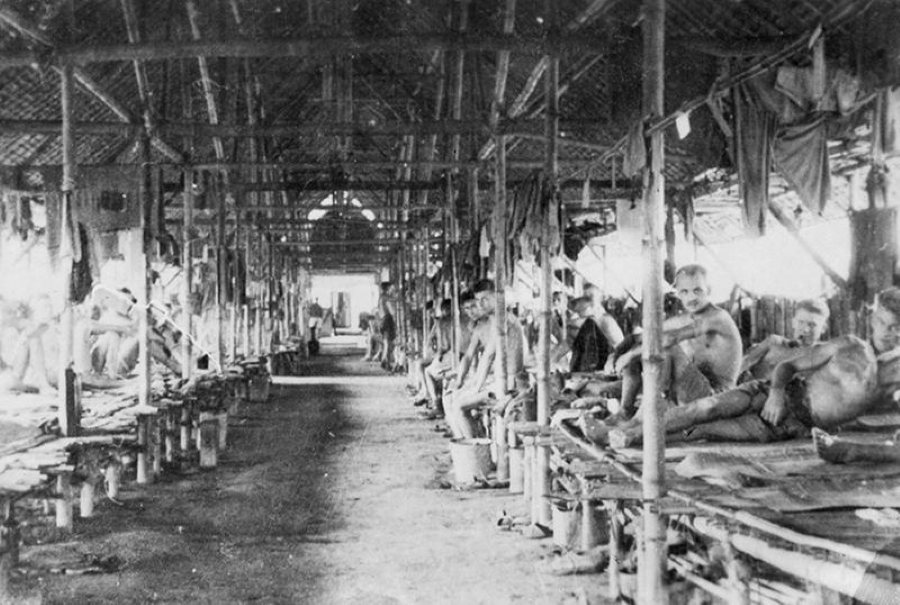
The railway camps were scattered along the route, sometimes far from established settlements and adequate supply lines. Medical facilities were rudimentary, food was scarce, and the tropical environment provided little relief from the demands of forced labour.
There was no reliable assurance that a man who became seriously ill would be allowed to rest. In many camps, the sick were still expected to work. A prisoner who could no longer meet the demands of his captors risked punishment, while the consequences of refusing orders could be severe.
The journey into the jungle was, for many, the beginning of a prolonged struggle to remain alive.
Building a railway with human muscle
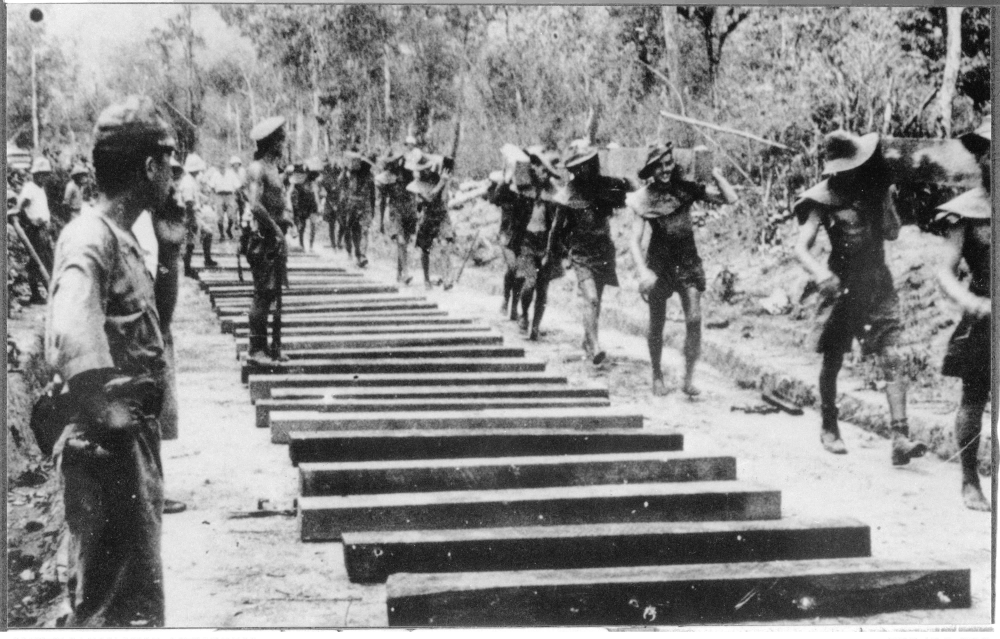
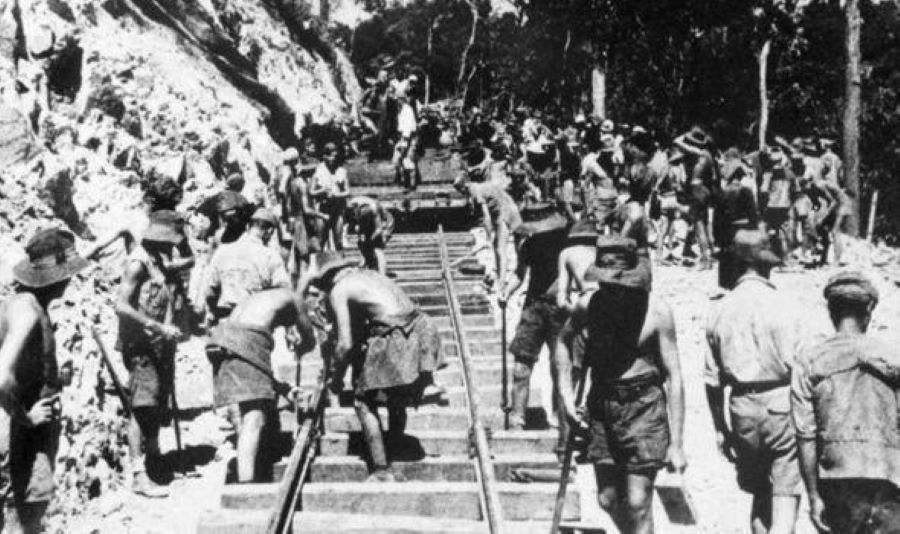
The railway required the construction of embankments, cuttings, bridges, culverts and hundreds of other structures across difficult terrain. The workforce had to clear dense vegetation, remove earth and rock, level the track bed and transport heavy materials, frequently using little more than basic hand tools and physical strength.
Machinery was limited. Where rock had to be removed, workers used hammers, chisels and drills. Explosives were employed where available, but much of the work remained manual. Timber for bridges was cut from the surrounding forest, while sleepers and rails had to be carried into position.
The tropical climate made every task harder. Heavy rain turned paths into mud, flooded work sites and complicated the movement of supplies. Heat and humidity drained the strength of already malnourished men. Insects, contaminated water and poor sanitation created ideal conditions for disease.
The railway was constructed from both ends, with work progressing simultaneously in Thailand and Burma. The Japanese established numerous camps along the route, pushing different working parties to complete their assigned sections.
The pressure increased as the deadline approached. The construction programme became associated with the order speedo: work faster, work longer, finish the railway.
Working parties could be driven through the day and into the night. Sleep was interrupted by work schedules, illness, hunger and the demands of camp life. Men who had already spent hours digging rock or carrying sleepers might be ordered to continue long after their strength had been exhausted.
The timetable was treated as an imperative. The physical limits of the workforce were not.
The central cruelty of the project was captured in accounts of the construction: the railway would be completed even if the line was marked by crosses. The deadline was fixed, while the lives required to meet it were treated as replaceable.
Hellfire Pass: Cutting a path through the rock
One of the most notorious sections of the railway was Hellfire Pass, known to the Japanese as Konyu Cutting, in western Thailand.
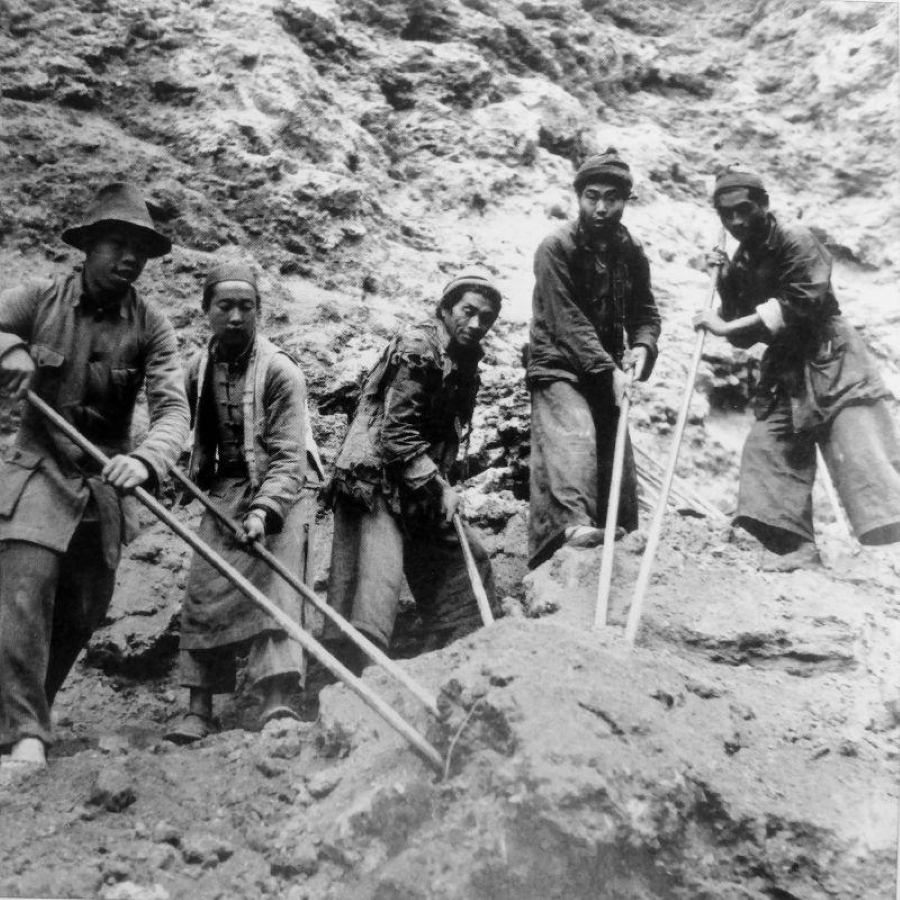
Here, workers had to cut a passage through solid rock to create a route for the track. The task required immense physical effort, made worse by inadequate tools, malnutrition and relentless pressure to complete the work.
Prisoners used hammers and chisels, drills and other tools to break through the rock. The work was slow and exhausting. Dust filled the air, while the noise of metal striking stone echoed through the cutting. Men laboured for hours, often under the threat of violence if their output was judged insufficient.
At the height of the construction effort, some prisoners worked for as long as 18 hours a day. When darkness fell, bamboo fires illuminated the cutting, casting flickering shadows across the rock face and the exhausted men below.
The spectacle gave Hellfire Pass its name.
Imagine standing there in the darkness. The light is uneven. The air is thick with dust and sweat. Your hands are blistered, your muscles ache, and hunger has become a constant companion. Around you, men struggle to lift their tools, while others work in silence because they no longer have the strength to speak.
There is no comforting knowledge that the work will end when the shift is over. There is only the next order, the next blow of the hammer and the uncertainty of whether your body will endure another night.
The cutting became one of the most powerful symbols of the railway’s cruelty. Approximately 700 Allied prisoners died in connection with the work at Hellfire Pass, according to commonly cited estimates.
Today, the rock cutting remains a place of remembrance. Visitors can walk through the pass and follow sections of the former railway route. The physical landscape helps convey the scale of the undertaking, but no surviving cutting, however imposing, can fully communicate what it meant to build it under those conditions.
The rock remains. The men who broke it open are gone.
A war fought against disease and starvation
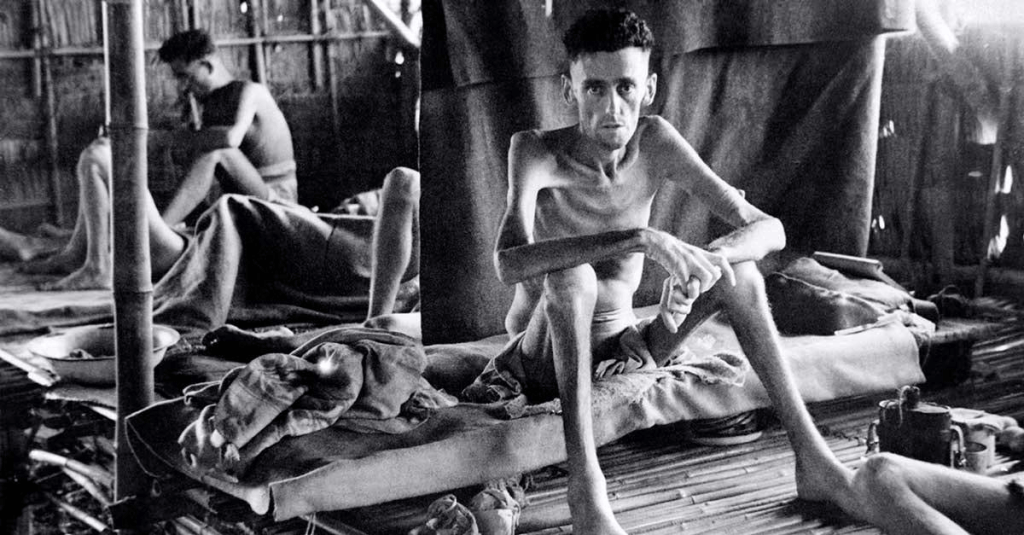
The railway’s victims did not die from overwork alone. Disease and malnutrition were among the principal causes of death, and the conditions of captivity made recovery extraordinarily difficult.
Food rations were inadequate for men performing heavy manual labour. Meals often consisted largely of rice, sometimes accompanied by small quantities of vegetables or other ingredients. The diet lacked the nutritional balance needed to sustain the body through prolonged physical exertion.
As the months passed, prisoners lost weight and muscle. Their bodies became less capable of resisting infection, healing wounds or regulating their temperature. Even minor illnesses could develop into life-threatening conditions.
Beriberi, caused by a deficiency of vitamin B1, could damage the nervous system and heart. Dysentery caused severe diarrhoea and dehydration. Malaria brought recurring fever and weakness. Cholera could kill rapidly, while tropical ulcers could develop into extensive, painful wounds that resisted treatment.
The overcrowded camps and inadequate sanitation made the spread of disease difficult to control. Clean water was not always available, and medical supplies were desperately limited.
A prisoner who contracted several illnesses at once faced a particularly bleak prospect. Malnutrition weakened his immune system; infection further reduced his ability to eat and work; and continued labour accelerated his physical deterioration.
The cycle was relentless.
The Allied medical personnel imprisoned alongside the workers attempted to treat their fellow captives with whatever resources they could obtain. They improvised treatments, rationed medicines, operated under primitive conditions and struggled to decide which patients could be saved when there was not enough equipment or medication for everyone.
Among the doctors who became associated with this work was Australian Lieutenant Colonel Edward “Weary” Dunlop, a surgeon whose leadership and determination helped sustain prisoners during the railway ordeal.
Dunlop and other medical officers worked under extraordinary pressure. They could not reverse the system that was making their patients ill, and they often lacked the basic supplies that would have been available in a properly equipped hospital. Yet they continued to care for the men, sometimes at considerable personal risk.
The medical officers’ work was an act of resistance in its own way. They could not stop the railway from being built, but they fought to prevent the men building it from dying.
The Japanese guards and the machinery of brutality
The treatment of prisoners varied between camps and individuals, but beatings, threats and other forms of physical abuse were widespread. Japanese and Korean guards enforced the work schedules, and some used extreme violence against prisoners they believed were disobedient or insufficiently productive.
A man too ill to stand might be ordered to work. Someone who collapsed could be struck or kicked. Prisoners who failed to meet a quota risked punishment regardless of whether they had the physical strength to complete the task.
The imbalance of power was absolute. The guards controlled food, movement, work and punishment. The prisoners had little meaningful opportunity to refuse orders or seek protection.
It is important not to reduce every Japanese serviceman to a single stereotype, or to imply that all guards behaved identically. Historical accounts document differences in individual conduct, and some people offered assistance to prisoners. Such distinctions, however, do not diminish the responsibility of the military authorities for the conditions under which the railway was built.
The railway was a military project, organised and driven by an occupying power. The systematic exploitation of captive labour, the failure to provide adequate provisions and medical care, and the use of violence to enforce production were not incidental inconveniences. They were central to the way the project was carried out.
The prisoners’ suffering was also not an accidental by-product of an otherwise neutral engineering achievement. The Japanese military demanded a railway on an accelerated schedule and imposed the human cost on those who could not escape its authority.
The line was completed. Thousands of men were dead.
That outcome should never be described simply as the price of progress.
The forgotten victims: The Asian labourers
For decades, much of the public memory of the Burma Railway concentrated on Allied prisoners of war. Their stories were recorded in diaries, letters, memoirs, photographs and testimony after liberation. Their families campaigned for recognition, and veterans’ organisations ensured that the railway remained part of the national memory of Australia, Britain and the Netherlands.
The Asian labourers who died during its construction were often less visible.
They were not a single, uniform group. Some were recruited through promises of wages and employment; others were coerced or deceived. Many were transported far from their homes, separated from their families and placed in conditions in which survival became increasingly difficult.
The term rōmusha covered a diverse workforce, and the circumstances of recruitment differed across the occupied territories. It would therefore be misleading to assume that every labourer experienced precisely the same treatment. What united them was their vulnerability to a system in which Japanese military requirements took precedence over their welfare.
The mortality among these workers was devastating. Estimates commonly place Asian labourer deaths at approximately 75,000 or more, although the precise number remains uncertain because records are incomplete and the workforce changed over time.
The lack of reliable records has consequences beyond historical statistics. It means that many victims cannot be identified individually. Their families may never have received confirmation of their deaths, and their stories may never have been written down.
There is a painful injustice in this imbalance of remembrance. The Allied prisoners were victims of the same railway system, but their experiences have generally been documented more thoroughly than those of the Asian civilians who worked beside them.
Remembering the railway properly requires us to acknowledge both.
The story cannot be told solely through the experiences of European and Australian soldiers. The Burmese labourer who died of disease, the Tamil worker who never returned to Malaya, and the Javanese man who disappeared into an unfamiliar jungle were no less human, and their suffering was no less significant.
Their relative absence from the historical record must not become a second disappearance.
The quiet courage of the prisoners
Amid the brutality, the railway also produced extraordinary examples of courage, solidarity and ingenuity.
Prisoners shared food when they had little themselves. Men who were still able to walk supported those whose legs could barely carry them. Medical officers improvised treatments, while fellow prisoners tried to protect the sick from the demands of the guards.
Some concealed food or medicine. Others found ways to communicate with the outside world, despite the danger involved. Prisoners made drawings and kept diaries, preserving evidence of their experiences at considerable personal risk.
Artists such as Ronald Searle, Jack Bridger Chalker and others recorded the realities of captivity through sketches and paintings. With paper and conventional art materials scarce, prisoners improvised, creating a visual record that would later help the world understand what had happened.
These acts mattered because the Japanese military sought to control not only the prisoners’ bodies but also their daily lives. Maintaining a sense of dignity, helping another man survive, or recording an event for posterity were ways of preserving something that the camp system could not entirely destroy.
There were also differences in how people responded to their circumstances. Some prisoners became withdrawn or despairing. Others relied on humour, discipline, friendship or a fierce determination to survive. No single response can adequately describe the experience of thousands of individuals facing prolonged hunger, disease and uncertainty.
Nor should survival be treated as proof that one man was stronger or more courageous than another. Many who died fought desperately to remain alive. The difference between survival and death could depend on illness, the camp to which someone was assigned, access to medical treatment or the simple chance of being in the wrong place at the wrong time.
The courage of the survivors deserves recognition. So does the suffering of those who did not survive.
The railway is completed
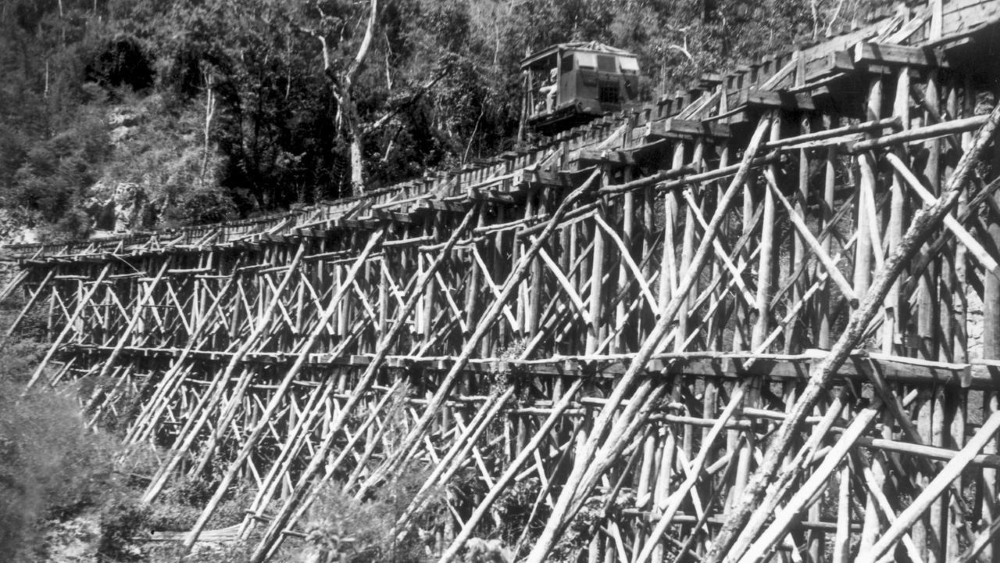
On October,17 1943, the railway was completed. The line connected the Thai rail network near Nong Pladuk with Thanbyuzayat in Burma, creating a route approximately 415 kilometres long.
The Japanese military had achieved its objective. Supplies, equipment and reinforcements could be transported overland to support its forces in Burma and prepare for further operations against the Allies.
From an engineering perspective, the project was remarkable. A railway had been constructed across difficult terrain in roughly a year, using limited machinery and an enormous workforce.
But the achievement cannot be separated from the methods employed to obtain it.
The line had been built by prisoners and civilian labourers who were denied adequate food, medical care and humane working conditions. Its completion was accompanied by the deaths of tens of thousands of people. The railway represented not merely an exercise in military logistics, but a profound failure to recognise the basic worth of human life.
Even after the last sections of track had been laid, the suffering did not immediately end. Many prisoners remained ill and severely malnourished. Some were transferred elsewhere, while others continued to be held in camps. The physical consequences of captivity would remain with survivors long after liberation.
The railway was completed in October 1943, but the men who had built it could not simply return to their former lives.
The Bridge over the River Kwai
The Burma Railway’s most famous landmark became the bridge over the Mae Klong River near Kanchanaburi, in Thailand.
The bridge is frequently associated with the railway’s entire history, although it represents only one part of a much larger construction project. It became internationally familiar through Pierre Boulle’s 1952 novel The Bridge over the River Kwai and the 1957 film directed by David Lean.
The film brought the railway to a worldwide audience, but popular representations of the story have sometimes obscured its historical complexity. The bridge itself is not the entire railway, and the experiences of the prisoners and Asian labourers extended far beyond this one location.
The surviving bridge also reflects the railway’s complicated physical history. The original structures were damaged during Allied bombing raids, and parts were subsequently repaired or reconstructed. What visitors see today is therefore not an untouched relic of 1943.
The distinction matters because the railway has become both a historical site and a cultural symbol. For many people, the name evokes a familiar film, a famous melody and a bridge over a river. Behind that image lies a much larger story of forced labour, disease and death.
The popular image can open the door to history, but it should not be allowed to replace it.
The end of the war and the question of justice
Japan’s surrender in August 1945 brought the war to an end and eventually secured the liberation of the surviving prisoners. For those who had endured the railway, freedom did not mean an immediate return to health.
Many survivors were physically debilitated. Some suffered from chronic illness, lasting injuries and psychological trauma. Others carried the memories of friends who had died beside them, often without adequate medical care or even the opportunity for a proper burial.
After the war, Allied authorities investigated abuses committed against prisoners and civilians throughout the Japanese empire. The Burma Railway became an important part of the evidence examined in war crimes proceedings.
Japanese servicemen were prosecuted for crimes associated with the railway, and some were convicted and executed. These trials established individual criminal responsibility for particular acts of abuse, although no court proceeding could adequately account for every death or every instance of suffering.
The question of responsibility extends beyond the actions of individual guards. The railway had been commissioned for military purposes, and the conditions under which it was constructed arose from decisions made by those who controlled the project. The pursuit of military objectives did not excuse the mistreatment of prisoners or the exploitation of civilians.
Justice after the war was necessarily incomplete. Some perpetrators escaped prosecution, evidence was limited, and the full experiences of many Asian labourers remained undocumented.
For survivors, legal proceedings could establish that crimes had been committed, but they could not restore the dead. No verdict could return a father to his children or a son to his parents. No sentence could erase the memories of men who had watched their companions deteriorate and die.
Justice could acknowledge the wrong. It could not undo it.
A railway that became a memorial
Today, the railway survives in sections in Thailand, while other portions have been abandoned, dismantled or reclaimed by vegetation. Memorials, museums and cemeteries preserve the memory of those who died.
The Kanchanaburi War Cemetery contains the graves of thousands of Allied servicemen who died in captivity, including men who worked on the railway. Another Commonwealth war cemetery stands at Thanbyuzayat in Myanmar, near the railway’s western terminus.
The Hellfire Pass Memorial Museum and walking trail provide visitors with an opportunity to examine the surviving landscape and learn about the prisoners who worked there. The memorials are important not simply because they commemorate military personnel, but because they connect historical evidence to places where the suffering actually occurred.
A name carved into a headstone can be more powerful than a casualty figure. It restores individuality to someone who might otherwise become one of thousands in a statistical account.
Yet the memorial landscape also reminds us of the difficulty of commemoration. Many Allied prisoners have identifiable graves, but numerous Asian labourers were buried without lasting markers or died in circumstances that left no reliable record of their identities.
Their absence is part of the history too.
Remembering them requires more than a general acknowledgement that Asian civilians also suffered. It requires continuing historical research, careful use of evidence and a willingness to recognise that the best-documented victims are not necessarily the only ones whose stories deserve to be told.
Conclusion: The human cost of the Death Railway
The Burma Railway was completed in approximately twelve months. Its tracks carried military supplies, its bridges crossed rivers and ravines, and its existence served the strategic ambitions of the Japanese empire.
But its history cannot be measured by kilometres of track or the speed with which engineers overcame the terrain.
It must also be measured in lives lost, families shattered, bodies broken by malnutrition and disease, and survivors who returned home carrying memories they could never entirely leave behind.
The railway demonstrates what happens when human beings are reduced to instruments of military policy. Prisoners became units of labour. Civilian workers became a means of meeting production targets. Sickness became an inconvenience, exhaustion an obstacle, and death an acceptable consequence of completing the project.
The rails did not distinguish between nationalities. British, Australian, Dutch and American prisoners suffered alongside Burmese, Malay, Tamil, Javanese and other Asian labourers. Their circumstances differed, but the railway bound their experiences together in a common history of exploitation.
Nor should the story be reduced to suffering alone. The courage of the medical officers, the solidarity among prisoners, the determination of survivors and the efforts of those who preserved testimony demonstrate that cruelty did not extinguish human dignity. Even in conditions designed to break them, people continued to care for one another.
That, too, deserves remembrance.
The Burma Railway remains in places where trains still pass over old bridges and through sections of the original route. To a traveller, the tracks may appear ordinary. Steel rails, wooden sleepers, a bridge spanning a river: familiar features of railway infrastructure.
But beneath that ordinary appearance lies an extraordinary human story.
The railway was built to move supplies for an empire at war. It became a monument to the suffering of those forced to build it.
And perhaps that is the most important distinction of all: the railway was completed, but the lives sacrificed to construct it were never replaceable.
The tracks remain. The dead do not return. The responsibility of remembering them belongs to those who come after.
Sources:
https://www.onthisday.com/photos/death-railway-completed
https://en.wikipedia.org/wiki/Burma_Railway
https://anzacportal.dva.gov.au/wars-and-missions/ww2/pows/burma-thailand-railway
https://warfarehistorynetwork.com/article/building-burmas-notorious-death-railway
https://www.nam.ac.uk/whats-on/their-own-words-diary-death-railway
https://www.nma.gov.au/defining-moments/resources/burma-thailand-railway


Leave a Reply