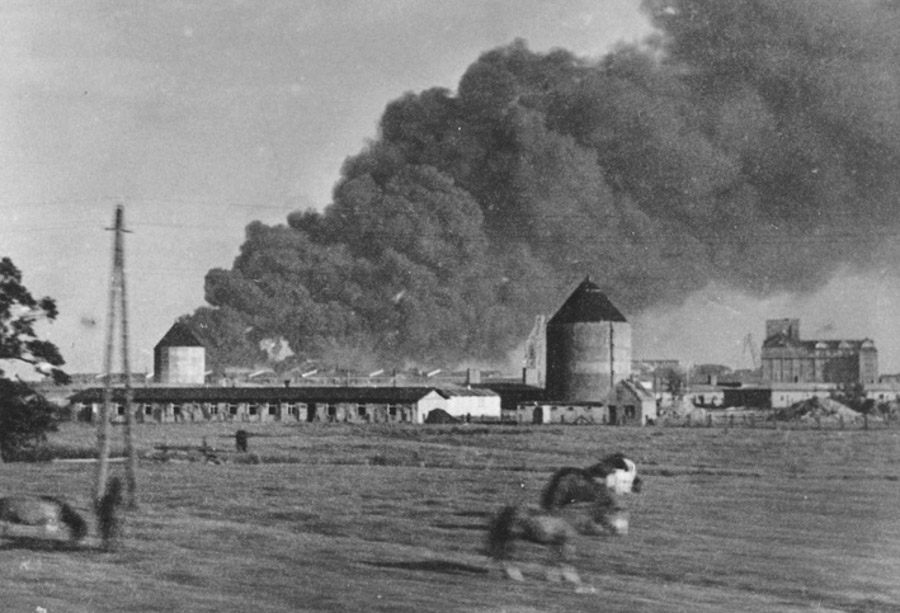
Established on September 17, 1944, the Alter Banter Weg concentration camp was a satellite camp (Aussenlager) of the larger Neuengamme concentration camp system. Situated in the strategic North Sea port city of Wilhelmshaven, Germany—a primary hub for the Nazi Kriegsmarine (Navy)—the camp existed for less than seven months. Yet, its short, brutal operational lifespan encapsulates the desperation of the collapsing Third Reich, the brutal exploitation of forced and slave labor in heavy industry, and the horrific human toll of the regime’s final evacuation marches.
Origins and Purpose: Labor for the Kriegsmarine
By the autumn of 1944, Nazi Germany was reeling under Allied air raids and the relentless advance of Allied and Soviet armies. Despite severe infrastructural devastation, the regime doubled down on naval production, heavily prioritizing the manufacture of “pocket submarines” (midget submarines like the Seehund) and other coastal defense technologies to stave off defeat.
To meet this desperate labor shortage, the SS established the Alter Banter Weg camp inside disused Hitler Youth barracks on the outskirts of Wilhelmshaven. The camp held over 1,000 male prisoners at any given time, predominantly political prisoners, resistance fighters, and forced laborers drawn from across occupied Europe. Statistically, the inmate population was heavily multinational: roughly 60 percent were French (including many political deportees and members of the French Resistance), about 20 percent were Soviet citizens, and the remaining balance included Poles, Germans, and other nationalities.
Daily Life and Forced Labor
Inmates at Alter Banter Weg faced catastrophic living and working conditions. Housed in cramped, unhygienic barracks bordered by security towers, the prisoners were forced to march four to five kilometers daily through the heavily bombed city to the sprawling Kriegsmarine Arsenal.
Inside isolated workshops within the naval industrial complex, prisoners performed grueling, high-precision slave labor under the supervision of brutal guards and military overseers. The work involved manufacturing components for midget submarines under constant threat of Allied bombing raids. Because the military installations were prime targets for Royal Air Force (RAF) and United States Army Air Forces (USAAF) bombers, the prisoners faced a cruel paradox: they were forced to build instruments of war for a collapsing regime while simultaneously enduring the friendly fire of the very Allies trying to liberate them, with little to no shelter during air raids.
Malnutrition, industrial accidents, exhaustion, and disease decimated the camp population. Medical care was virtually nonexistent, and those who fell too ill or weak to work were frequently subjected to violent abuse or sent back to the main Neuengamme camp (or extermination facilities) to die.
Evacuation and the Final Tragedy
As British forces closed in on northwestern Germany in the spring of 1945, the SS moved to erase evidence of the camp and evacuate the remaining prisoners. By late March 1945, over 1,100 prisoners remained at Alter Banter Weg.
Between April 3 and April 5, 1945, the camp was hurriedly liquidated. The evacuation mirrored the chaotic, lethal death marches unfolding across the dying Reich:
- The Train Transport: Roughly 400 prisoners who were deemed “unable to march” were crammed onto open or closed railway cars. This transport met a tragic fate on April 7, 1945, when the train was strafed and bombed near Lüneburg, resulting in horrific casualties among the already starved and defenseless inmates.
- The Maritime Evacuation: Other groups of prisoners were marched toward ports, forced onto barges or tugboats (such as the Rheinfels), and moved via the Kiel Canal and Baltic Sea under harrowing conditions. Many suffered through strafing attacks, starvation, and exposure before final liberations occurred as late as May 1945—days after Germany’s unconditional surrender.
Memory and Historical Legacy
For decades after the war, the specific history of the Alter Banter Weg satellite camp was overshadowed by the broader narrative of major concentration camps. However, through the tireless work of local historians, the Neuengamme Concentration Camp Memorial, and international archives, the site has been meticulously documented.
Today, the history of Alter Banter Weg is preserved to ensure that the victims—particularly foreign political prisoners and forced laborers whose lives were commodified by Nazi military production—are not forgotten. Permanent exhibitions, such as those at the Küstenmuseum (Coastal Museum) in Wilhelmshaven, alongside memorial stones and cemetery plaques, stand as solemn reminders of the human cost exacted by totalitarianism on the shores of the North Sea.
Sources:
https://www.frankfallaarchive.org/prisons/alter-banter-weg-concentration-camp
https://www.tracesofwar.com/sights/26234/Memorial-Satellite-Camp-Wilhelmshaven.htm


Leave a Reply