
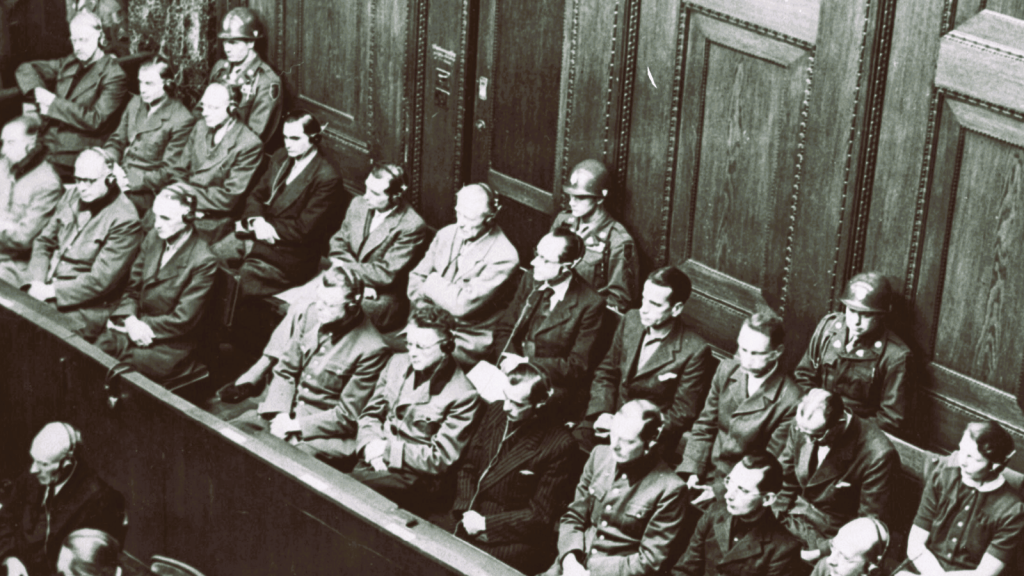
The Doctors’ Trial, officially known as United States of America v. Karl Brandt, et al., was the first of 12 subsequent Nuremberg Trials held after World War II. These trials were conducted to bring Nazi war criminals to justice for their roles in the Holocaust and other war crimes. The Doctors’ Trial specifically focused on medical professionals who were involved in Nazi human experimentation and euthanasia programs.
The Medical Case, U.S.A. vs. Karl Brandt et al. (also known as the Doctors’ Trial), was prosecuted in 1946-47 against twenty-three doctors and administrators accused of organizing and participating in war crimes and crimes against humanity in the form of medical experiments and medical procedures inflicted on prisoners and civilians.
Karl Brandt, the lead defendant, was the senior medical official of the German government during World War II; other defendants included senior doctors and administrators in the armed forces and SS. They were indicted on four counts: 1. conspiracy to commit war crimes and crimes against humanity; 2. war crimes (i.e., crimes against persons protected by the laws of war, such as prisoners of war); 3. crimes against humanity (including persons not protected by the laws of war); and 4. membership in a criminal organization (the SS).

The specific crimes charged included more than twelve series of medical experiments concerning the effects of and treatments for high altitude conditions, freezing, malaria, poison gas, sulfanilamide, bone, muscle, and nerve regeneration, bone transplantation, saltwater consumption, epidemic jaundice, sterilization, typhus, poisons, and incendiary bombs.
These experiments were conducted on concentration camp inmates. Other crimes involved the killing of Jews for anatomical research, the killing of tubercular Poles, and the euthanasia of sick and disabled civilians in Germany and occupied territories. The defendants were charged with ordering, supervising, or coordinating criminal activities, as well as participating in them directly. The fourth count concerned membership in the SS (Schuttzstaffeln) of the Nazi regime.
Karl Brandt and six other defendants were convicted, sentenced to death, and executed; nine defendants were convicted and sentenced to terms in prison, and seven defendants were acquitted.
The material presented in this project includes case file documents (the briefs and document books created and used in the course of the trial), evidence file documents (the evidentiary documents from which the prosecution, and occasionally the defendants, derived their exhibits), and the trial transcript.
The trial documents and evidence file documents related to Case 1 amount to approximately 2800 documents and 13,000 pages of material.
Indictments
(25 Oct. 1946)
Four counts:
Conspiracy to commit war crimes against humanity: The ordering, planning, and organization of the war crimes and crimes against humanity charged in counts two and three. Charged against all of the defendants. The tribunal decided not to convict on this charge.
War crimes: Charged against all defendants. 15 guilty, 8 acquitted.
Crimes against humanity: Charged against all defendants. 15 guilty, 8 acquitted.
Membership in a criminal organization: Membership in the SS. Charged against K. Brandt, Genzken, Gebhardt, R. Brandt, Mrugowsky, Poppendick, Sievers, Brack, Hoven, and Fischer. All were found guilty.
Experiments and other “medical” crimes itemized in counts 2 and 3:
High-altitude experiments. March – August 1942. Conducted for the German Air Force to investigate the effect of high-altitude flying; experiments were performed at the Dachau camp using a low-pressure chamber. Charged against Becker-Freyseng, K. Brandt, R. Brandt, Gebhardt, Handloser, Mrugowsky, Poppendick, Romberg, Ruff, Schroeder, Sievers, and Weltz. Charges against K. Brandt, Handloser, Mrugowsky, and Poppendick were withdrawn. R. Brandt and Sievers were convicted.
Freezing experiments. August 1942 – May 1943. Conducted primarily for the German Air Force to investigate treatments for persons who had been severely chilled, using prisoners at the Dachau camp. Charged against Becker-Freyseng, K. Brandt, R. Brandt, Gebhardt, Handloser, Mrugowsky, Poppendick, Schroeder, Sievers, and Weltz. Becker-Freyseng, K. Brandt, Gebhardt, Mrugowsky, Poppendick, and Weltz were acquitted; R. Brandt, Handloser, Schroeder, and Sievers were convicted.
Malaria experiments. February 1942 – April 1945. Conducted to test immunization for and treatment of malaria; experiments were conducted on more than 1000 prisoners at Dachau. Charged against Blome, K. Brandt, R. Brandt, Gebhardt, Handloser, Mrugowsky, Poppendick, Rostock, and Sievers. (Evidence was also presented against Rose, but no judgment was reached.) No decision was made concerning Mrugowsky. Blome, K. Brandt, R. Brandt, Gebhardt, Handloser, Poppendick, and Rostock were acquitted; Sievers was convicted.
Mustard (“lost”) gas experiments. September 1939 – April 1945. Conducted for the benefit of the German armed forces to investigate the treatment of injuries caused by Lost (mustard) gas; experiments were performed at Sachsenhausen, Natzweiler, and other camps. Charged against Blome, K. Brandt, R. Brandt, Gebhardt, Handloser, Rostock, and Sievers. Blome, Gebhardt, Handloser, and Rostock were acquitted; K. Brandt, R. Brandt, and Sievers were convicted.
Sulfanilamide experiments. July 1942 – September 1943. Conducted for the benefit of the German armed forces to test the effectiveness of sulfanilamide and other drugs as treatments for infected wounds, experiments were performed at Ravensbrueck. Charged against Becker-Freyseng, Blome, K. Brandt, R. Brandt, Fischer, Gebhardt, Genzken, Handloser, Mrugowsky, Oberheuser, Poppendick, Rostock, and Schroeder. Charges against Becker-Freyseng, Blome, and Schroeder were withdrawn. No judgment was reached concerning R. Brandt. Genzken, Poppendick, and Rostock were acquitted; K. Brandt, Fischer, Gebhardt, Handloser, Mrugowsky, and Oberheuser were convicted.
Bone, muscle, and nerve regeneration, and bone transplant experiments. September 1942 – December 1943. Conducted for the benefit of German armed forces, using Polish inmates at the Ravensbrueck camp. Charged against K. Brandt, R. Brandt, Fischer, Gebhardt, Handloser, Oberheuser, and Rostock. Charges against R. Brandt withdrawn. K. Brandt, Handloser, and Rostock were acquitted; Fischer, Gebhardt, and Oberheuser were convicted.
Seawater experiments. July – September 1944. Conducted for the German Air Force and Navy to test methods of making seawater drinkable; experiments were performed at Dachau. Charged against Becker-Freyseng, Beiglboeck, K. Brandt, R. Brandt, Gebhardt, Handloser, Mrugowsky, Poppendick, Rostock, Schaefer, Schroeder, and Sievers. The charge against Mrugowsky was withdrawn. K. Brandt, R. Brandt, Handloser, Poppendick, Rostock, and Schaefer were acquitted; Becker-Freyseng, Beiglboeck, Gebhardt, Schroeder, and Sievers were convicted.
Epidemic jaundice experiments. June 1943 – January 1945. Conducted for the benefit of the German armed forces to investigate causes of and inoculations against epidemic jaundice, experiments were performed on Polish prisoners at Sachsenhausen and Natzweiler camps. Charged against Becker-Freyseng, K. Brandt, R. Brandt, Gebhardt, Handloser, Mrugowsky, Poppendick, Rose, Rostock, Schroeder, and Sievers. Charges against Becker-Freyseng, Rose, and Sievers were withdrawn. R. Brandt, Gebhardt, Handloser, Mrugowsky, Poppendick, Rostock, and Schroeder were acquitted; K. Brandt was convicted.
Typhus (“spotted fever”) and other vaccine experiments. December 1941 – February 1945. Conducted for the benefit of the German armed forces to test the effectiveness of vaccines against typhus, smallpox, cholera, and other diseases, experiments were performed at Buchenwald and Natzweiler. Charged against Becker-Freyseng, K. Brandt, R. Brandt, Gebhardt, Genzken, Handloser, Hoven, Mrugowsky, Poppendick, Rose, Rostock, Schroeder, and Sievers. Becker-Freyseng, K. Brandt, Gebhardt, Poppendick, and Rostock were acquitted; R. Brandt, Genzken, Handloser, Hoven, Mrugowsky, Rose, Schroeder, and Sievers were convicted.
Poison experiments. December 1943 and September – October 1944. Conducted to investigate the effect of various poisons, including poison in food and poisoned bullets; experiments were performed at Buchenwald (food) and Sachsenhausen (bullets). Charged against Gebhardt, Genzken, Mrugowsky, and Poppendick. Gebhardt, Genzken, and Poppendick were acquitted; Mrugowsky was convicted.
Incendiary bomb experiments. November 1943 – January 1944. Conducted to test pharmaceutical treatments for phosphorus burns; experiments were performed at Buchenwald, involving the infliction of burns by materials from incendiary bombs. Charged against Gebhardt, Genzken, Mrugowsky, and Poppendick. All were acquitted.
Sterilization experiments. March 1941 – January 1945. Conducted to develop methods of rapid, large-scale sterilization in order to ensure the eventual elimination of “enemy” populations while keeping captive workers as a labor force during the war. Experiments were planned and/or conducted at Auschwitz, Ravensbrueck, and elsewhere, employing drugs, x-rays, and surgery. Charged against Brack, K. Brandt, R. Brandt, Gebhardt, Mrugowsky, Oberheuser, Pokorny, and Poppendick. The charges against Mrugowsky and Oberheuser were withdrawn. K. Brandt, Pokorny, and Poppendick were acquitted; Brack, R. Brandt, and Gebhardt were convicted.
Skeleton collection. June 1943 – September 1944. Conducted to complete a skeleton collection for an anatomical research project at the Reich University of Strasbourg; one hundred twelve Jews at Auschwitz were killed for the purpose. Charged against R. Brandt and Sievers; both were convicted.
Tubercular Polish nationals. May 1942 – January 1944. Polish nationals alleged to have incurable tuberculosis were imprisoned or killed on the pretext of protecting the health of Germans in Poland. Charged against Blome and R. Brandt; both were acquitted.
Euthanasia. September 1939 – April 1945. Involved the secret killing of the aged, insane, incurably ill, deformed children, and others, beginning at asylums in Germany and later in the camps and occupied territories. Charged against Blome, Brack, K. Brandt, and Hoven. Blome was acquitted; Brack, K. Brandt, and Hoven were convicted.
Other charges:
Phenol (gas oedema) experiments. 1942 – 1944. Conducted to investigate whether levels of phenol in gas oedema serum caused fatalities among wounded soldiers; experiments were performed on prisoners at Buchenwald. Charged against Handloser, Hoven, and Mrugowsky. Handloser was acquitted; Hoven and Mrugowsky were convicted.
Phlegmon experiments. 1942. Conducted test treatments for sepsis and related diseases in coordination with sulfanilamide experiments at Ravensbrueck; experiments were performed at Dachau and Auschwitz. Charged against Fischer, Oberheuser, and Poppendick; all were acquitted.
Polygal experiments. 1943 – 1944. Conducted to test the effectiveness of polygal, a blood coagulant, for the treatment of wounds. Charged against Blome, Handloser, Poppendick, and Sievers. Blome, Handloser, and Poppendick were acquitted; Sievers was convicted.
Planning, organization, and administration (of 1-15 above)
Conspiracy: Count 1.
Membership: Count 4.

After almost 140 days of proceedings, including the testimony of 85 witnesses and the submission of nearly 1,500 documents, the American judges pronounced their verdict on August 20, 1947. Sixteen of the doctors were found guilty. Seven were sentenced to death. They were executed on June 2, 1948.
Below are just some brief biographies of the seven. They don’t deserve their full stories to be told.
Karl Brandt was a German physician and a significant figure in the Nazi medical establishment, infamous for his role in the Aktion T4 euthanasia program and other medical atrocities during the Holocaust. Here’s a brief overview of his life and execution:
Early Life and Career
- Born: January 8, 1904, in Mülheim, Germany.
- Education: Studied medicine and became a doctor.
- Rise in the Nazi Party: Joined the Nazi Party in 1932 and quickly rose through the ranks due to his medical expertise and loyalty to Adolf Hitler.
Role in the Nazi Regime
- Personal Physician to Hitler: Appointed as one of Adolf Hitler’s personal physicians.
- Aktion T4 Program: Co-head of the Aktion T4 program, which was responsible for the systematic killing of individuals deemed “unworthy of life,” including the disabled and mentally ill. This program is considered a precursor to the Holocaust.
- Reich Commissioner for Health and Sanitation: Appointed in 1942, giving him significant influence over Nazi medical policy and practices.
War Crimes and Trial
- Arrest: Captured by Allied forces at the end of World War II.
- Nuremberg Doctors’ Trial: Tried at the Nuremberg Military Tribunals in the “Doctors’ Trial,” officially known as the United States of America v. Karl Brandt et al.
- Charges: Indicted on counts of war crimes, crimes against humanity, and membership in a criminal organization (the SS).
- Conviction: Found guilty on multiple counts, including the charge of participating in medical experiments without consent and involvement in the euthanasia program.
Execution
- Date: June 2, 1948.
- Method: Hanged at Landsberg Prison in Bavaria, Germany.
Karl Gebhardt was a prominent Nazi physician and war criminal notorious for his involvement in human experimentation during World War II. He was executed following his conviction at the Nuremberg Doctors’ Trial. Here is a brief overview of his life and execution:
Early Life and Career
- Born: November 23, 1897, in Haag in Oberbayern, Germany.
- Education and Medical Career: Trained as a surgeon, Gebhardt became a prominent figure in the medical field, eventually becoming a professor and director of the Hohenlychen Sanatorium.
Role in the Nazi Regime
- SS Membership: Joined the SS and rose to the rank of Gruppenführer (Major General).
- Personal Physician to Heinrich Himmler: Served as one of the individual physicians to the SS leader.
- President of the German Red Cross: Held a significant leadership role within the organization.
War Crimes and Human Experimentation
- Medical Experiments: Conducted brutal medical experiments on prisoners at Ravensbrück and Auschwitz concentration camps. These experiments included testing the effects of sulfanilamide drugs on wounds and the transplantation of bone, muscle, and nerves.
- Involvement in Nazi Euthanasia Program: Participated in the Aktion T4 program, which involved the systematic killing of individuals deemed “unworthy of life.”
Nuremberg Doctors’ Trial
- Arrest and Trial: Captured by Allied forces and brought to trial in the first of the subsequent Nuremberg Trials, known as the Doctors’ Trial.
- Charges: Indicted on multiple counts, including war crimes, crimes against humanity, and participation in human experimentation.
- Verdict: Found guilty on all charges.
Execution
- Date: June 2, 1948.
- Method: Hanged at Landsberg Prison in Bavaria, Germany.
Rudolf Brandt was a high-ranking Nazi official and a key participant in war crimes during World War II. Here is an overview of his life and execution:
Early Life and Career
- Born: June 2, 1909, in Frankfurt (Oder), Germany.
- Education: Studied law and political science, earning a doctorate in law.
- Nazi Party Involvement: Joined the Nazi Party in 1932 and the SS in 1933.
Role in the Nazi Regime
- Personal Staff of Heinrich Himmler: Served as a personal administrative officer and chief of the personal staff of Heinrich Himmler, the head of the SS.
- SS Rank: Rose to the rank of SS-Standartenführer (Colonel).
- Document Management: Responsible for handling many of the documents related to the administration and operation of the SS, including orders for various atrocities.
War Crimes and Human Experimentation
- Involvement in Atrocities: Played a significant role in the planning and execution of various war crimes, including the Holocaust.
- Human Experimentation: Facilitated and coordinated medical experiments on concentration camp prisoners, including those conducted by infamous doctors like Josef Mengele and Karl Gebhardt.
Nuremberg Doctors’ Trial
- Arrest and Trial: Captured by Allied forces after the war and brought to trial at the Nuremberg Doctors’ Trial.
- Charges: Indicted on multiple counts, including war crimes, crimes against humanity, and participation in medical experiments without consent.
- Verdict: Found guilty on all charges.
Execution
- Date: June 2, 1948.
- Method: Hanged at Landsberg Prison in Bavaria, Germany, on his 39th birthday.
Joachim Mrugowsky was a prominent Nazi physician and war criminal involved in medical atrocities during World War II. Here is an overview of his life and execution:
Early Life and Career
- Born: August 15, 1905, in Rathenow, Germany.
- Education: Studied medicine and microbiology, earning his doctorate.
- Academic and Professional Career: Became a professor and later head of the Hygiene Institute at the University of Berlin.
Role in the Nazi Regime
- SS Membership: Joined the SS in 1930 and the Nazi Party in 1931.
- Chief Hygienist of the Waffen-SS: Appointed as the Chief Hygienist, responsible for overseeing the health and sanitation of SS personnel.
- Medical Experiments: Involved in various medical experiments conducted on prisoners in concentration camps, mainly focusing on infectious diseases and the effects of toxic substances.
War Crimes and Human Experimentation
- Typhus Experiments: Conducted experiments involving the injection of typhus-infected blood into concentration camp inmates.
- Phosgene Gas Experiments: Participated in experiments to test the effects of phosgene gas, a chemical weapon, on human subjects.
- Epidemic Prevention: His role included efforts that led to the death and suffering of countless prisoners under the guise of “epidemic prevention.”
Nuremberg Doctors’ Trial
- Arrest and Trial: Captured by Allied forces at the end of the war and brought to trial in the Nuremberg Doctors’ Trial.
- Charges: Indicted on multiple counts, including war crimes, crimes against humanity, and participation in non-consensual medical experiments.
- Verdict: Found guilty on all charges.
Execution
- Date: June 2, 1948.
- Method: Hanged at Landsberg Prison in Bavaria, Germany.

Wolfram Sievers was a prominent Nazi official involved in human experimentation and other war crimes during World War II. Here’s an overview of his life and execution:
Early Life and Career
- Born: July 10, 1905, in Hildesheim, Germany.
- Education and Early Activities: Initially studied music and philosophy. He joined the Artaman League, a nationalist agricultural movement, and later the Nazi Party.
Role in the Nazi Regime
- Ahnenerbe: In 1935, Sievers became the managing director of the Ahnenerbe, an SS organization dedicated to researching the cultural and historical heritage of the Aryan race. Under his management, the Ahnenerbe expanded its activities to include human experimentation.
- SS Rank: Rose to the rank of SS-Standartenführer (Colonel).
War Crimes and Human Experimentation
- Human Experiments: Sievers was responsible for overseeing numerous inhumane medical experiments on concentration camp prisoners. These included experiments on the effects of mustard gas, treatments for typhus, and various surgical procedures performed without anesthesia.
- Skeleton Collection: He was involved in a project to create a collection of Jewish skeletons for anatomical study, which led to the murder of 86 Jewish prisoners at the Natzweiler-Struthof concentration camp.
Nuremberg Doctors’ Trial
- Arrest and Trial: Captured by Allied forces after the war, Sievers was tried in the Nuremberg Doctors’ Trial.
- Charges: Indicted on multiple counts, including war crimes, crimes against humanity, and membership in a criminal organization (the SS).
- Verdict: Found guilty on all charges.
Execution
- Date: June 2, 1948.
- Method: Hanged at Landsberg Prison in Bavaria, Germany.
Waldemar Hoven was a Nazi physician who played a significant role in medical atrocities during World War II. Here’s an overview of his life and execution:
Early Life and Career
- Born: February 10, 1903, in Freiburg im Breisgau, Germany.
- Education: Studied medicine and became a doctor.
- Nazi Party Involvement: Joined the Nazi Party and the SS, rising through the ranks due to his medical background and ideological alignment.
Role in the Nazi Regime
- Position: SS Hauptsturmführer (Captain) and chief physician at Buchenwald concentration camp.
- Medical Experiments: Conducted brutal and unethical medical experiments on prisoners, including the testing of various drugs and poisons.
- Euthanasia Program: Actively participated in the selection and execution of prisoners deemed unfit for work, often administering lethal injections himself.
War Crimes and Human Experimentation
- Human Experiments: Involved in numerous medical experiments that caused immense suffering and death among the camp inmates. These included testing the effects of various toxins and pathogens.
- Selections and Executions: Directly responsible for the deaths of many prisoners through selections for execution and administration of fatal doses of drugs.
Nuremberg Doctors’ Trial
- Arrest and Trial: Captured by Allied forces after the war and brought to trial in the Nuremberg Doctors’ Trial.
- Charges: Indicted on multiple counts, including war crimes, crimes against humanity, and conducting medical experiments without consent.
- Verdict: Found guilty on all charges.
Execution
- Date: June 2, 1948.
- Method: Hanged at Landsberg Prison in Bavaria.

Viktor Brack was a high-ranking Nazi official involved in the systematic euthanasia program and medical experiments during World War II. Here is an overview of his life and execution:
Early Life and Career
- Born: November 9, 1904, in Haaren, Germany.
- Education: Studied engineering and later entered the political realm.
- Nazi Party Involvement: Joined the Nazi Party in 1929 and the SS in 1931.
Role in the Nazi Regime
- Position: Chief of Office II in the Chancellery of the Führer (Kanzlei des Führers), where he played a key role in the organization and administration of the Nazi euthanasia program.
- T4 Euthanasia Program: Brack was one of the main architects of the Aktion T4 program, which was responsible for the systematic murder of individuals deemed “unworthy of life,” including the disabled and mentally ill.
- Medical Experiments: Involved in various unethical medical experiments on concentration camp prisoners, including sterilization experiments.
War Crimes and Human Experimentation
- Aktion T4: Oversaw the euthanasia program that resulted in the deaths of approximately 70,000 individuals through methods such as gas chambers, lethal injections, and starvation.
- Involvement in Sterilization Experiments: Worked on methods to sterilize large populations efficiently as part of the Nazis’ racial hygiene policies.
Nuremberg Doctors’ Trial
- Arrest and Trial: Captured by Allied forces after the war and brought to trial in the Nuremberg Doctors’ Trial.
- Charges: Indicted on multiple counts, including war crimes, crimes against humanity, and participation in medical experiments without consent.
- Verdict: Found guilty on all charges.
Execution
- Date: June 2, 1948.
- Method: Hanged at Landsberg Prison in Bavaria, Germany.
Sources
https://nuremberg.law.harvard.edu/nmt_1_intro
https://www.jewishvirtuallibrary.org/background-and-overview-of-the-doctors-trial

Donation
Your readership is what makes my site a success, and I am truly passionate about providing you with valuable content. I have been doing this at no cost and will continue to do so. Your voluntary donation of $2 or more, if you are able, would be a significant contribution to the continuation of my work. However, I fully understand if you’re not in a position to do so. Your support, in any form, is greatly appreciated. Thank you. To donate, click on the credit/debit card icon of the card you will use. If you want to donate more than $2, just add a higher number in the box left from the PayPal link. Your generosity is greatly appreciated. Many thanks.
$2.00
 History of Sorts
Leave a comment