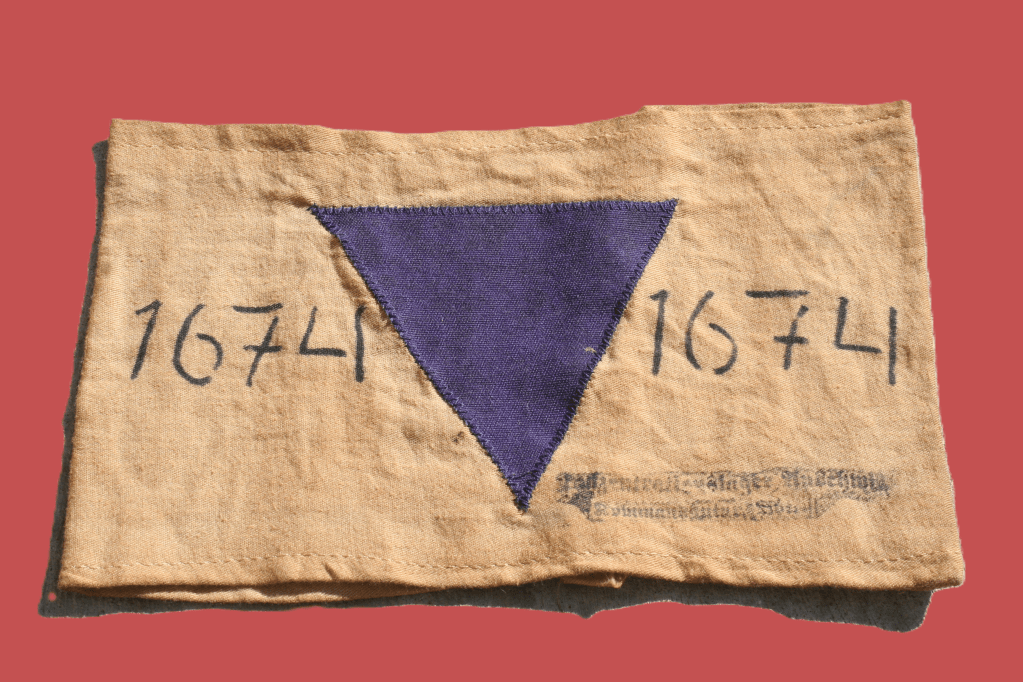
The Nazi regime, targeted numerous groups during its reign from 1933 to 1945. Among those persecuted were Jehovah’s Witnesses, a Christian denomination whose beliefs and practices placed them in direct opposition to Nazi ideology. Unlike many other victims of the regime, Jehovah’s Witnesses were not targeted based on race or ethnicity, but because of their religious convictions, especially their refusal to swear allegiance to the state, serve in the military, or participate in Nazi rituals. Their persecution represents a striking example of how totalitarian regimes suppress individual conscience and religious freedom.
One of the regime’s first actions was the forced closure of the Watch Tower Society office in Magdeburg, on April 24, 1933, the central hub for Jehovah’s Witnesses in Germany. This marked the beginning of a broader campaign of oppression that included bans on their literature, arrests, and imprisonment in concentration camps. The Witnesses’ steadfast refusal to salute Hitler or support the war effort placed them in direct opposition to the Nazi ideology, making them one of the first religious groups targeted by the regime.
Jehovah’s Witnesses, known as Bible Students in the early 20th century, were a small but vocal group in Germany, numbering around 20,000 at the time the Nazis rose to power. Their religious teachings emphasized strict neutrality in political matters and obedience to God’s laws over human laws. As such, they refused to give the Hitler salute, join the Nazi Party, or participate in any form of militarism. These stances were interpreted by the Nazi regime as subversive and unpatriotic, prompting immediate hostility.
The persecution of Jehovah’s Witnesses began almost as soon as Hitler took power in 1933. Their literature was banned, their meetings were disrupted, and many were arrested. The Gestapo targeted them systematically, raiding homes, confiscating religious material, and detaining members. The regime intensified its efforts in 1935 when the religion was officially banned throughout Germany. Jehovah’s Witnesses continued their preaching work underground, often at great personal risk.
One of the most distinctive aspects of the persecution was the way Jehovah’s Witnesses were treated in concentration camps. Unlike many other prisoners, Witnesses were given a chance to recant their faith and secure release by signing a document renouncing their beliefs and pledging loyalty to the regime.
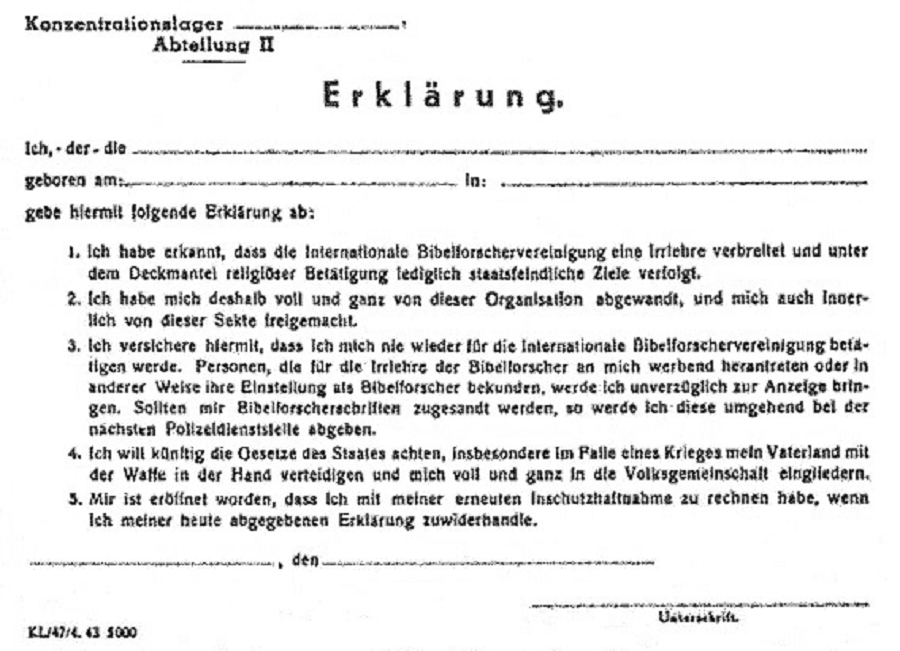
Most refused. Their steadfastness impressed even their captors, who sometimes used them for trusted tasks because of their reputation for honesty and reliability. Despite this, Witnesses endured brutal treatment, including forced labor, solitary confinement, and execution.
Women and children were not spared. Children were taken from their families and placed in Nazi reeducation institutions or foster care. Women who continued to teach their children Jehovah’s Witness beliefs were imprisoned. Families were torn apart, and community structures dismantled, yet their faith remained remarkably resilient.
By the end of World War II, it is estimated that around 10,000 Jehovah’s Witnesses had been imprisoned in Nazi Germany, and approximately 1,600 died in custody, including through execution. Their purple triangle badge—used to identify them in concentration camps—became a symbol of religious persecution and courage under totalitarian rule.
The story of Jehovah’s Witnesses during the Nazi era is significant for several reasons. It highlights the importance of religious freedom and the courage required to stand by one’s beliefs in the face of state violence. It also serves as a reminder of how easily authoritarian regimes can criminalize peaceful dissent. While they were a relatively small group, the Witnesses’ example of nonviolent resistance continues to be studied and honored today, particularly in discussions of human rights and the limits of state power.
In conclusion, the persecution of Jehovah’s Witnesses in Nazi Germany illustrates the regime’s intolerance of any ideological deviation, no matter how peaceful. Their experience stands as a powerful testimony to the human spirit’s capacity for integrity and resistance in the darkest of times.
1. Franz Wohlfahrt (Austria)
Franz Wohlfahrt was a young Austrian Jehovah’s Witness who was arrested at just 17 years old for refusing to serve in the German military. In 1940, when he stood before a Nazi judge and was given the option to sign a declaration renouncing his faith, he refused. He was sentenced to death for conscientious objection. In a letter to his family before his execution, he wrote:
“I am happy and content with everything. I do not fear death… Jehovah is my strength and my refuge.”
Franz was executed by guillotine in Berlin on March 5, 1940. His faith and calm resistance remain among the most striking examples of Witness bravery.
2. Helene Gotthold (Germany)
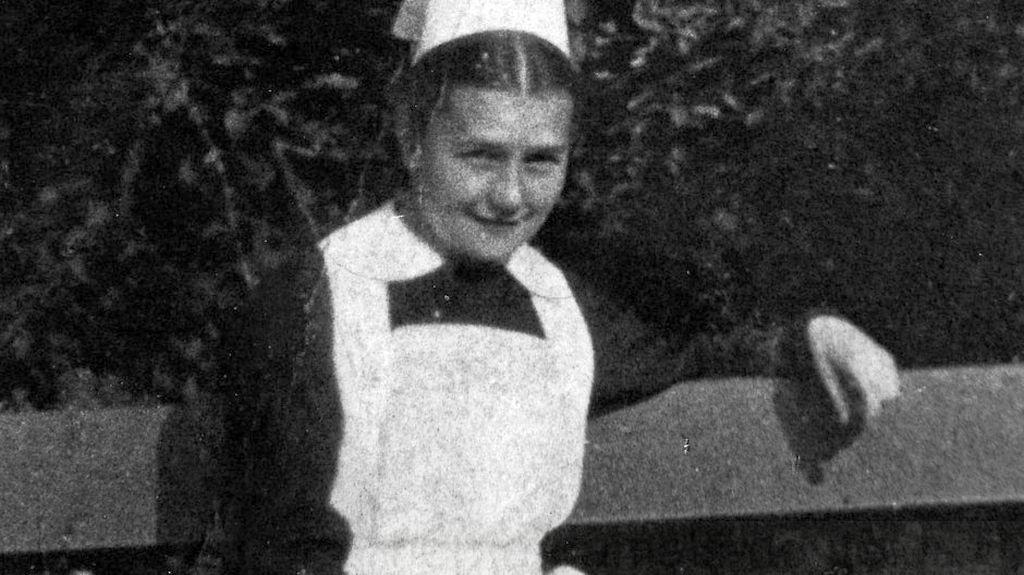
Helene Gotthold was a mother and a devout Jehovah’s Witness. She continued her ministry work even after the religion was banned. She was arrested multiple times and spent years in prison. In December 1944, she was executed by beheading in Berlin’s Plötzensee Prison. Her last words were reportedly:
“I die for God, for my faith, and I do not regret it.”
Her execution was part of a wave of killings during the final years of the war as the regime became more desperate and punitive.
3. August Dickmann (Germany)
August Dickmann was the first Jehovah’s Witness publicly executed by the Nazis. He refused military service at the Sachsenhausen concentration camp and was shot by firing squad on September 15, 1939, in front of other prisoners as a warning. Nazi authorities tried to use his death to intimidate others, but it had the opposite effect—many Witnesses became even more resolved in their beliefs.
4. Emma Arnold (Germany)
Emma Arnold was a Jehovah’s Witness who was imprisoned in Ravensbrück, a concentration camp for women. She recalled in her postwar testimony:
“We were forced to stand for hours in the snow… Some women fell down, but the guards beat them until they stood. Still, we sang Kingdom songs quietly. They couldn’t take our faith.”
Her story is one of hundreds from women who were subjected to brutal treatment but continued to support each other spiritually behind barbed wire.
5. The Kusserow Family (Germany)
The Kusserow family of Bad Lippspringe, Germany, were devout Jehovah’s Witnesses, and many members were arrested. Two sons, Wilhelm and Wolfgang Kusserow, were executed for refusing to serve in the military. The family endured repeated raids, confiscation of property, and imprisonment. Their home became a secret meeting place for underground religious activity until the entire family was eventually scattered across prisons and camps.
sources
https://encyclopedia.ushmm.org/content/en/id-card/franz-wohlfahrt
https://en.wikipedia.org/wiki/Persecution_of_Jehovah%27s_Witnesses_in_Nazi_Germany
https://encyclopedia.ushmm.org/content/en/article/nazi-persecution-of-jehovahs-witnesses
https://hmd.org.uk/learn-about-the-holocaust-and-genocides/nazi-persecution/jehovahs-witnesses
Please support us so we can continue our important work.
Donation
Your readership is what makes my site a success, and I am truly passionate about providing you with valuable content. I have been doing this at no cost and will continue to do so. Your voluntary donation of $2 or more, if you are able, would be a significant contribution to the continuation of my work. However, I fully understand if you’re not in a position to do so. Your support, in any form, is greatly appreciated. Thank you. To donate, click on the credit/debit card icon of the card you will use. If you want to donate more than $2, just add a higher number in the box left from the PayPal link. Your generosity is greatly appreciated. Many thanks.
$2.00
 History of Sorts
Leave a comment