It is a well-known fact—that the Dutch, like the British, French, and Portuguese, were a colonial power for centuries. The Dutch influence is still noticeable around the globe.
One of the Dutch colonies was Surinam, a small country but considerably larger than the Netherlands, in South America between Guyana (former British Guyana) and French Guyana.


A fact that many Dutch historians appear to overlook or ignore is that the Dutch were one of the biggest slave traders in the world. Slaves were also used in Surinam by the Dutch for the rich colonial occupiers until 1 July 1863, when the Dutch, like other European countries, abolished slavery.
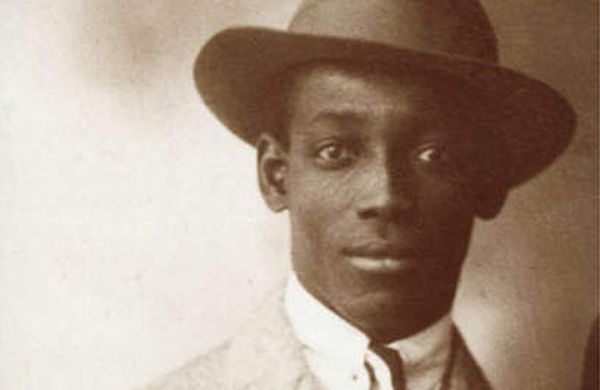
Cornelis Gerhard Anton de Kom was born on 22 February 1898 in Paramaribo, Suriname. He died on 24 April 1945 in Sandbostel, Germany. He was the son of a former slave.
De Kom was born in Paramaribo, Suriname, to farmer Adolf de Kom and Judith Jacoba Dulder. His father was born a slave. As was not uncommon, his surname is a reversal of the slave owner’s name, who was called Mok.
De Kom finished primary and secondary school and obtained a diploma in bookkeeping. He worked for the Balata Compagnieën Suriname en Guyana. On 29 July 1920, he resigned and left for Haiti, where he worked for the Societé Commerciale Hollandaise Transatlantique. In 1921, he departed for the Netherlands.
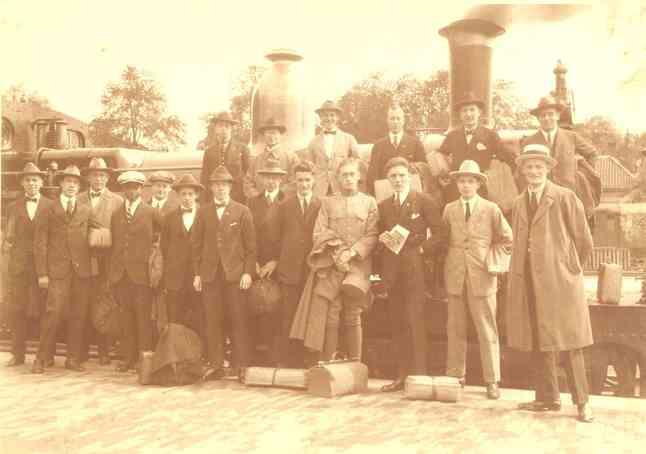
De Kom volunteered for the Huzaren, a Dutch cavalry regiment, for one year. In 1922 he started working for a consultancy in The Hague. A year later, due to reorganising the consultancy, he was unemployed. He then became a sales representative selling coffee, tea and tobacco for a company in The Hague. There he met his future wife, Nel. In addition to his work, he was actively involved in numerous left-wing organizations, including nationalist Indonesian student associations and Links Richten (Aim Left).
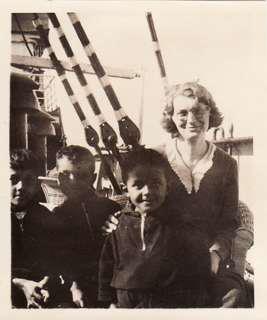
De Kom and his family left for Suriname on 20 December 1932 and arrived on 4 January 1933. From that moment on, he was watched closely by the colonial authorities. He started a consultancy at his parents’ house. Where the people from Surinam could complain about the poor living conditions they were subject to. The colonial occupiers saw him as a threat and were afraid he might cause a revolt.
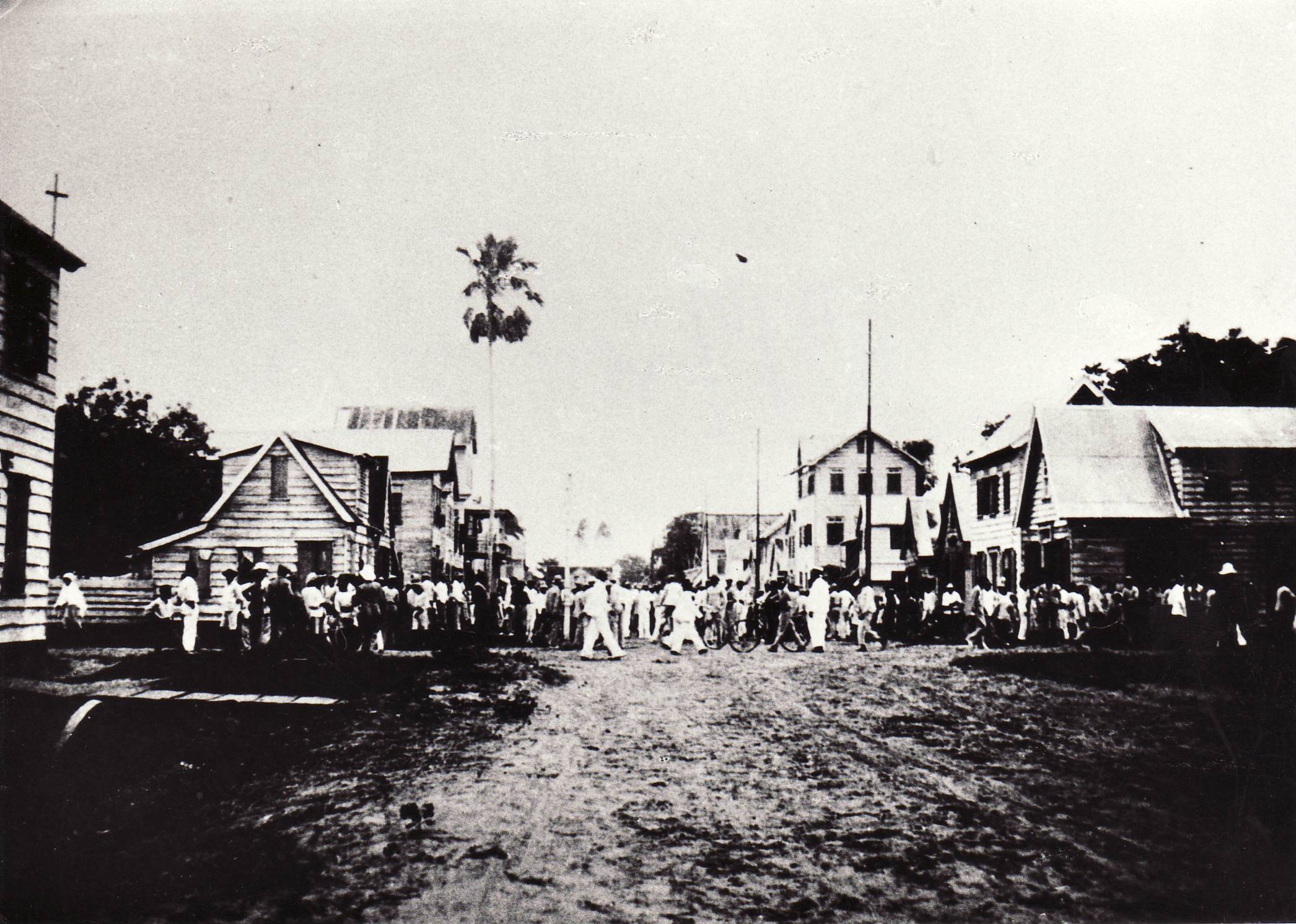
On 1 February, De Kom was arrested, while en route to the governor’s office with a large group of followers. On 3 and 4 February, his followers gathered at the front of the Attorney General’s office to demand De Kom’s release. On 7 February, a large crowd gathered on the Oranjeplein (currently called the Onafhankelijkheidsplein). Rumour had it that De Kom was about to be released. When the crowd refused to leave the square, police opened fire, killing two people and wounding 30.
On 10 May, De Kom was sent to the Netherlands without trial and exiled from his native country. He was unemployed and continued writing his book, Wij slaven van Suriname (We Slaves of Suriname), which was published in a censored form in 1934.

De Kom participated in demonstrations for the unemployed, travelled abroad with a group as a tap dancer, and was drafted for Werkverschaffing (unemployment relief work), a program similar to the American WPA, in 1939. He gave lectures for leftist groups, mainly communists, about colonialism and racial discrimination.
After the German invasion in 1940, De Kom joined the Dutch resistance, especially the communist party in The Hague. He wrote articles for the underground paper De Vonk of the Communist Party, mainly about the terror of fascist groups in the streets of The Hague (much of their terror was directed against Jews). De Kom became a Surinamese resistance fighter and anti-colonialist author. On 7 August 1944, he was arrested. He was imprisoned at the Oranje Hotel in Scheveningen and transferred to Camp Vught, a Dutch concentration camp.


In early September 1944, De Kom was sent to Oranienburg-Sachsenhausen, and forced to work for the Heinkel aircraft factory.

De Kom died on 24 April 1945 of tuberculosis in Camp Sandbostel near Bremervörde (between Bremen and Hamburg), a satellite Camp of the Neuengamme Concentration Camp.


He was buried in a mass grave. In 1960, his remains were found and brought to the Netherlands. There he was buried at the Cemetery of Honours in Loenen.
De Kom was married to a Dutch woman, Petronella Borsboom. They had four children. Their son, Cees de Kom, lives in Suriname.

The University of Suriname was renamed The Anton de Kom University of Suriname in honour of De Kom.
The University of Suriname also erected a statue in honour of Anton de Kom on the campus.


Anton de Kom was listed in De Grootste Nederlander (The Greatest Dutchman/Dutchwoman) as #102 out of 202 people.
In Amsterdam Zuidoost a square is named after him, the Anton de Komplein. It features a sculpture of Anton de Kom as a monument to his life and works, sculpted by Jikke van Loon.

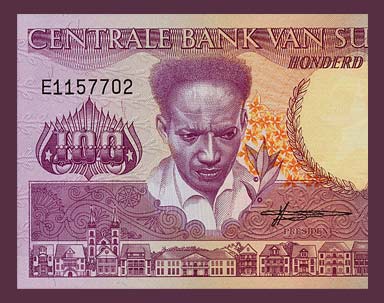
The Surinam government print money bills in honour of De Kom.
Photographs courtesy of the Family archives


 History of Sorts
Leave a comment