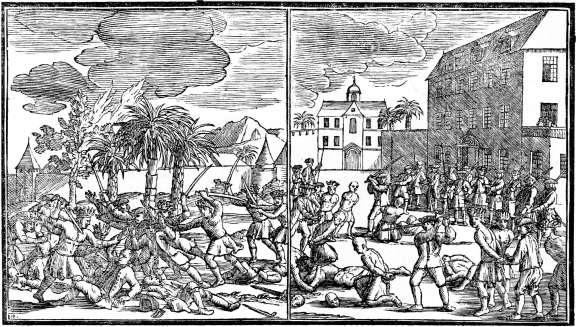
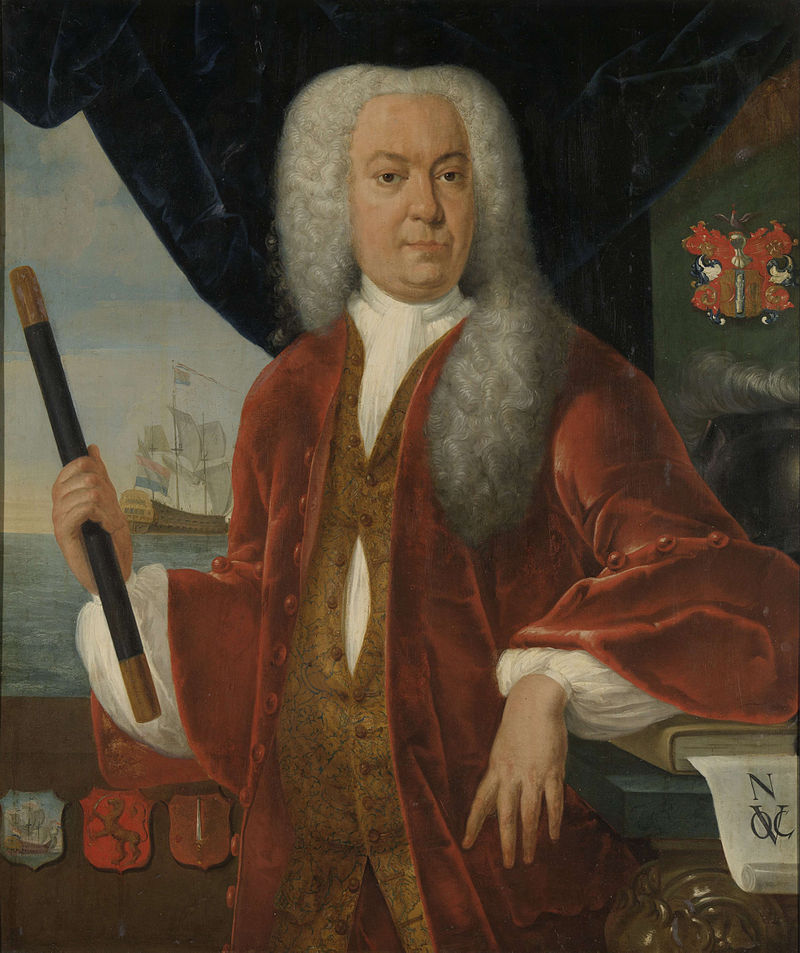
In September 1740, as unrest rose among the Chinese population in Batavia(nowadays Jakarta in Indonesia), spurred by government repression and declining sugar prices, Governor-General Adriaan Valckenier declared that any uprising would be met with deadly force.
On 7 October, hundreds of ethnic Chinese, many of them sugar mill workers, killed 50 Dutch soldiers, leading Dutch troops to confiscate all weapons from the Chinese populace and to place the Chinese under a curfew.
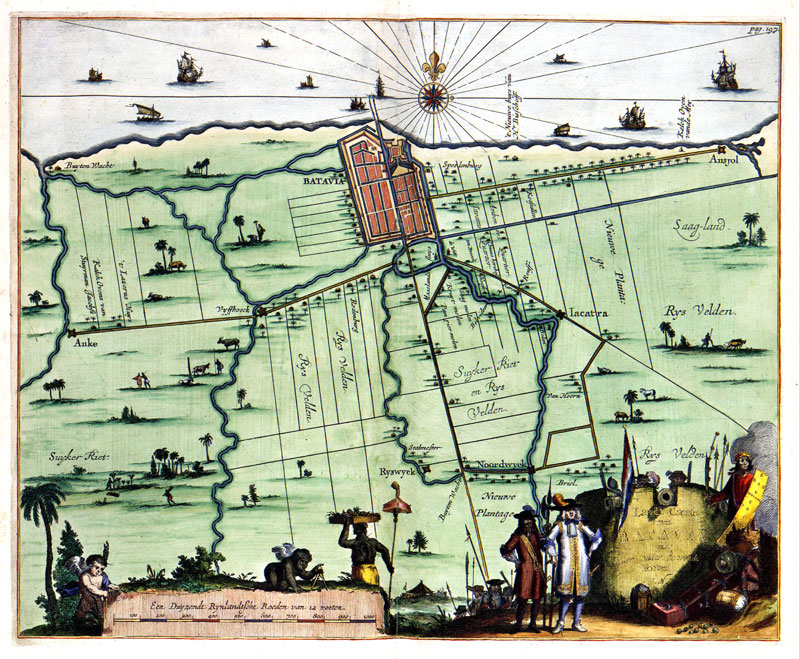
Two days later, rumours of Chinese atrocities led other Batavian ethnic groups to burn Chinese houses along Besar Stream and Dutch soldiers to fire cannon at Chinese homes.

The violence soon spread throughout Batavia, killing more Chinese. Although Valckenier declared an amnesty on 11 October, gangs of irregulars continued to hunt and kill Chinese until 22 October, when the governor-general called more forcefully for a cessation of hostilities. Outside the city walls, clashes continued between Dutch troops and rioting sugar mill workers. After several weeks of minor skirmishes, Dutch-led troops assaulted Chinese strongholds in sugar mills throughout the area.
Troops under Lieutenant Hermanus van Suchtelen and Captain Jan van Oosten, a survivor from Tanah Abang, took station in the Chinese district: Suchtelen and his men positioned themselves at the poultry market, while van Oosten’s men held a post along the nearby canal.
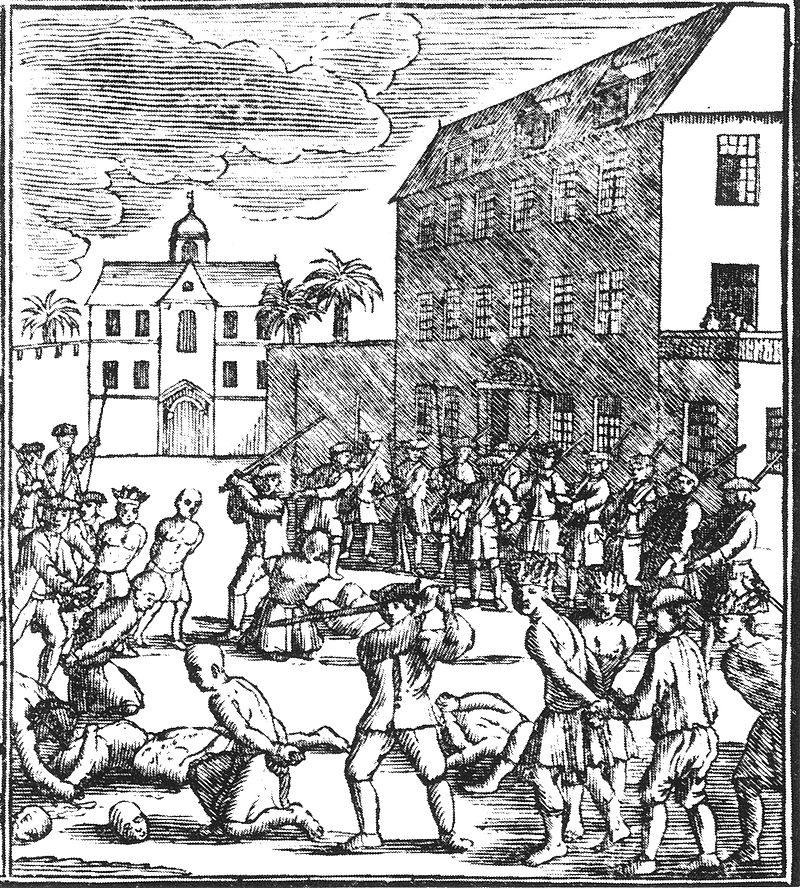
At around 5:00 p.m., the Dutch opened fire on Chinese-occupied houses with cannon, causing them to catch fire.Some Chinese died in the burning houses, while others were shot upon leaving their homes or committed suicide in desperation. Those who reached the canal near the housing district were killed by Dutch troops waiting in small boats,while other troops searched in between the rows of burning houses, killing any survivors they found.
These actions later spread throughout the city. Dutch historian Vermeulen notes that many of the perpetrators were sailors and other “irregular and bad elements” of society.During this period there was heavy looting and seizures of property.
Despite a call for peace and amnesty by the Dutch Governor-General on October 11, the violence continued all the way through October 22, when he finally forced an uneasy peace on the city. The council had posted a reward for anyone rounding up or killing a Chinese person, and the rest of the population enthusiastically pursued the rewards.
About 500 Dutch soldiers had died in the fighting. The areas outside the city were another story, and violence continued for weeks afterwards, never really stopping until a year later when the Java War broke out and lasted for another 2 years. Governor-General Adriaan Valckenier was recalled to the Netherlands and charged with atrocities pertaining to the massacre. At first cleared, Valckenier was on his way back to Batavia when he was again arrested, and spent the rest of his life (10 years!) in prison on Java awaiting conclusion of an investigation into his stewardship of the islands.

Donation
Your readership is what makes my site a success, and I am truly passionate about providing you with valuable content. I have been doing this at no cost and will continue to do so. Your voluntary donation of $2 or more, if you are able, would be a significant contribution to the continuation of my work. However, I fully understand if you’re not in a position to do so. Your support, in any form, is greatly appreciated. Thank you. To donate, click on the credit/debit card icon of the card you will use. If you want to donate more than $2, just add a higher number in the box left from the PayPal link. Your generosity is greatly appreciated. Many thanks.
$2.00

 History of Sorts
Leave a comment