 Between 1941 and 1945 approximately 37,000 prisoners, mainly political prisoners, were incarcerated for varying lengths of time in this camp, which served as both a transit and prison camp under the direct command of the SS.
The fluctuating prisoner population showed an eclectic group of people from all over the Netherlands: Jews, Jehovah’s Witnesses, prisoners of war from the Soviet Union, members of the resistance, clergy, black marketeers, clandestine butchers and smugglers.

It was a simple black & white signboard alongside the road with a few abbreviated German words. Nothing more. But for the thousands of prisoners who saw this board on their way to Polizeiliches Durchgangslager (Police Transit Camp) Amersfoort, it was their first glimpse of an unknown future.
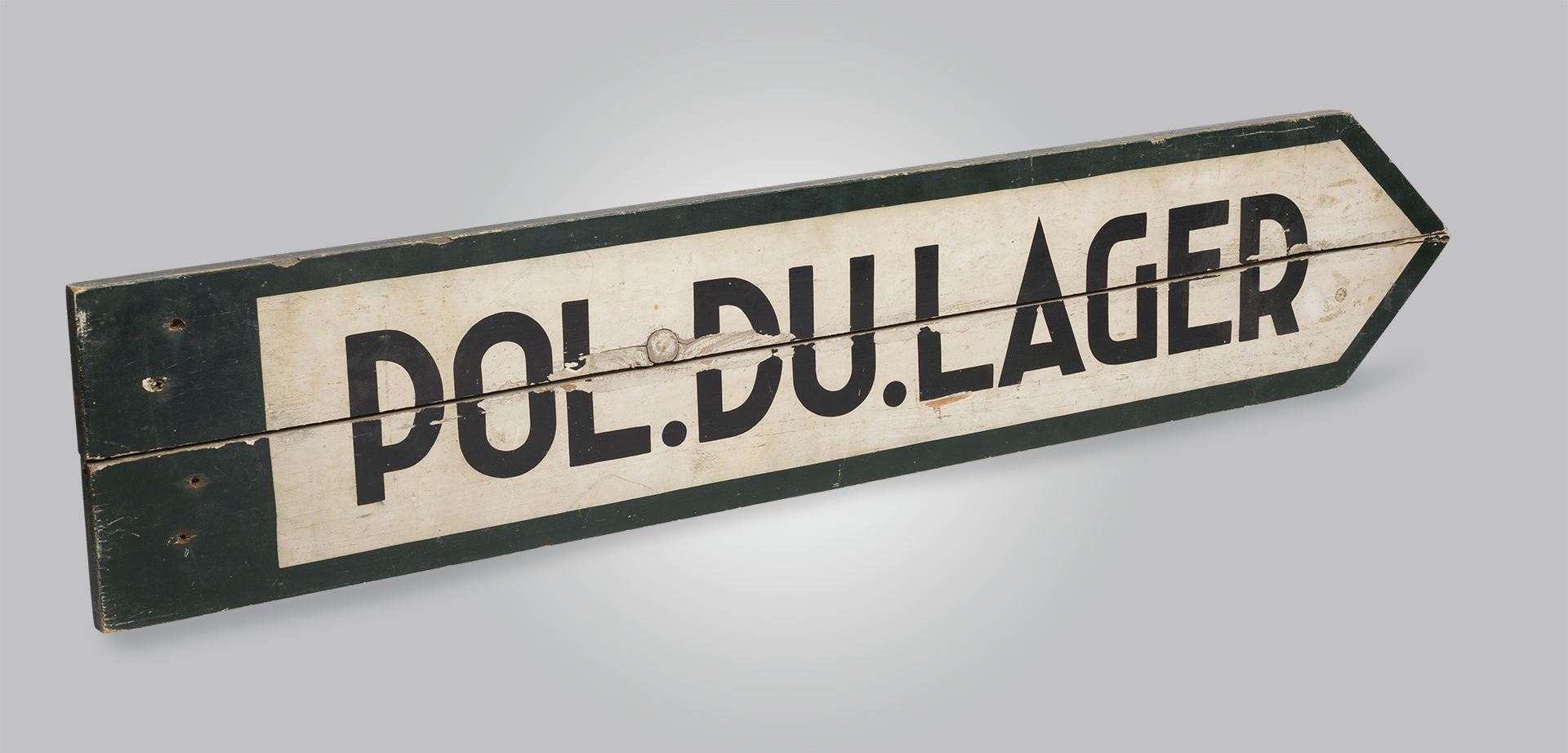
They had to walk from the main train station in Amersfoort to the outskirts of the city, where a complex of barracks called Camp Amersfoort was located from 1941 to 1945. The camp was small at first. The guards were cruel and uncertainty ruled. During the course of the war, the number of prisoners increased and in the spring of 1943 the camp was expanded. Many more prisoners could be housed after this, but neglect, hunger, abuse and murder remained the order of the day. On 19 April 1945, the camp was transferred to the Red Cross. More than 35,000 prisoners were interned in Camp Amersfoort for a brief or extended period of time.

After the re-opening in 1943, 70 Jews from Kamp Vught and 600 Jews from Kamp Westerbork of British, American and Hungarian nationality were briefly sent to Kamp Amersfoort. They were joined by contract breakers of the German Arbeitseinsatz (forced labour program), deserted Waffen SS soldiers, deserted German truck drivers of the Nationalsozialistische Kraftfahr-Korps, and lawbreaking members of the NSB (the Dutch National Socialist Movement).
This medley of prisoners was not the only feature that determined the character of Kamp Amersfoort. The extreme cruelty of the camp command made life miserable for thousands of prisoners. Despite their relatively short stay, many prisoners died from deprivations and violence at a camp where rumour has it that one could hear the screams of people being beaten up there for miles over the heath. It is more than a rumour. Jewish prisoners in particular were treated horribly, not only from guards, but fellow prisoners.

Edith and Rosa Stein, two Hebrew Catholics arrested by the SS, described what it was like arriving at Amersfoort at 3:00 in the morning on August 3, 1942:

When the vans reached the camp, they emptied their passengers who were taken over by the S.S. guards. These began to drive them, cursing and swearing, beating them on their backs with their truncheons, into a hut where they were to pass the night without having had a meal.
The hut was divided into two sections, one for men, one for women. It was separated from the main lager by a barbed-wire fence. Altogether, the lager held at that moment, about three hundred men, women and children.
The beds were iron frames arranged in a double tier, without mattresses of any kind. Our prisoners threw themselves on the bare springs trying to snatch a few minutes sleep; but few slept that night, if only because the guards kept switching the lights off and on, from time to time, as a precaution against attempts to escape, which was next to impossible in any case. Their cold harsh voices filled the prisoners with anxiety about the future and, in these circumstances, it is anxiety which can turn a prison into a hell on earth.
Both sisters died 6 days later in Auschwitz
Violence from the guards was not the only thing that prisoners had to worry about. Weakened physical conditions from overwork, very little food and poor hygiene in camp made illness and disease another frightening and lonely way to die. Yehudit Harris, a young boy in Amersfoort remembers screaming from the pain as his mother washed him with snow in the winter to rid them of lice and to protect against illness. Even the mattresses that prisoners slept on were often infested with lice, diphtheria, dysentery or T.B.
Amersfoort was a brutal place to be a prisoner and is summed up by Elie Cohen, who said that “transfer from Amersfoort to Westerbork was like going from hell to heaven”
The first camp leader was SS-Schutzhaftlagerführer I Johann Friedrich Stöver. From January 1, 1943, the camp leader was SS-Schutzhaftlagerführer II Karl Peter Berg. Berg was a very cruel man, who was described as a “predator who derived great pleasure from the agony of others”. During roll call he loved to sneak about unnoticed behind the rows of men and catch someone in some violation, such as talking or not following orders properly. With a big grin, he would torment his victim.

n 1948 the camp commandant and guards of Amersfoort were tried and convicted for their crimes. Karl Peter Berg was sentenced to death and was executed in 1949.
After the war people wanted to forget the horrors of the camp as quickly as possible and the camp was completely dismantled. Despite the fact that everything was torn down to the foundations the anguish remained tangible.
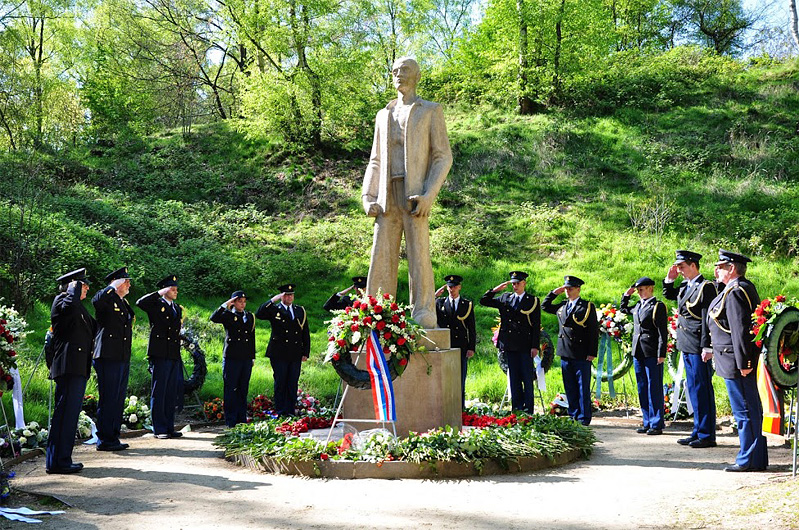
In 2004 a beautiful, modest memorial was completed, symbolizing the resurrection of the memories from the ground (from oblivion).

Donation
Your readership is what makes my site a success, and I am truly passionate about providing you with valuable content. I have been doing this at no cost and will continue to do so. Your voluntary donation of $2 or more, if you are able, would be a significant contribution to the continuation of my work. However, I fully understand if you’re not in a position to do so. Your support, in any form, is greatly appreciated. Thank you. To donate, click on the credit/debit card icon of the card you will use. If you want to donate more than $2, just add a higher number in the box left from the PayPal link. Your generosity is greatly appreciated. Many thanks.
$2.00
 History of Sorts
Leave a comment