


Ala Gertner, Róża Robota, Regina Szafirsztajn and Estera Wajcblum, more then likely these names mean nothing to you. But these 4 young women showed a bravery that would make the bravery of any hardened warrior pale in comparison.
These 4 women were all members of the Sonderkommando in Auschwitz-Birkenau
The Sonderkommando were Jewish prisoners who worked the death camps in return for special treatment and privileges. Every few months, the current sonderkommando was liquidated and the first task of their successors was to dispose of the bodies of the previous group. Since a sonderkommando usually comprised men from incoming transports, their second task often consisted of disposing of the bodies of their own families.

By 1943, the four women named above were all imprisoned in the Auschwitz Concentration Camp. Three of the women, Ala, Regina and Estera, were assigned to work in the munitions factory adjacent to Auschwitz. Recruited by Róża Robota, who worked in Auschwitz’s clothing depot (known as “Canadakommando,” these men and women had the awful task of sorting through the clothing discarded by murdered Jews)recruited them to smuggle minute quantities of gunpowder out of the factory.
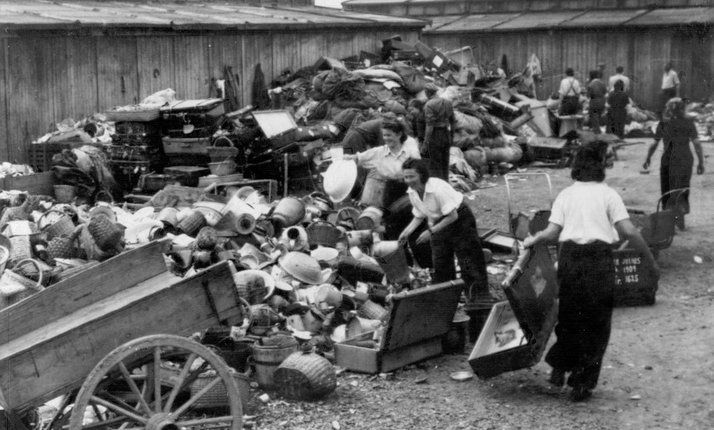
This they did, almost daily, smuggling the powder in secret pockets sewn into their camp issued dresses, even under their nails. Róża would then collect the powder, wrap it in small rags and send it through the underground network of the camp.
On October 7th, 1944, at about 3 in the afternoon, the Poles in Crematorium 1 begin the revolt. Hungarians in Crematoria 3 and 4 join in while the sonderkommando of Crematorium 2 break through the wires of the camp. An especially sadistic Nazi guard in Crematorium 1 is disarmed and stuffed into an oven to be burned alive. Small arms fire rattles from the second floor of the crematoria until the Germans bring in heavy machine guns and riddle the wooden roof.
The guards counterattack and penetrate the buildings, indiscriminately shooting at all prisoners they encounter. The sonderkommando in Crematorium 4 drag their demolition charges into the oven rooms and detonate them in a defiant suicide. The revolt is quickly suppressed and the escaped men recaptured with the help of local citizens. Approximately 200 sonderkommando are forced to lie face down outside the crematoria where they are executed with single shots to the back of the head. Some of the men are spared for interrogation, but the bodies of the 12th Sonderkommando are soon disposed of by the 13th Sonderkommando.
The men give up names, including those of some women who were engaged in smuggling gunpowder. Despite months of beatings and rape and electric shocks to their genitals, the only names given up by the women are those of already dead sonderkommando.
On January 5, 1945, the four women are hanged in front of the assembled women’s camp. Roza Robota shouts “Be strong and be brave” as the trapdoor drops.
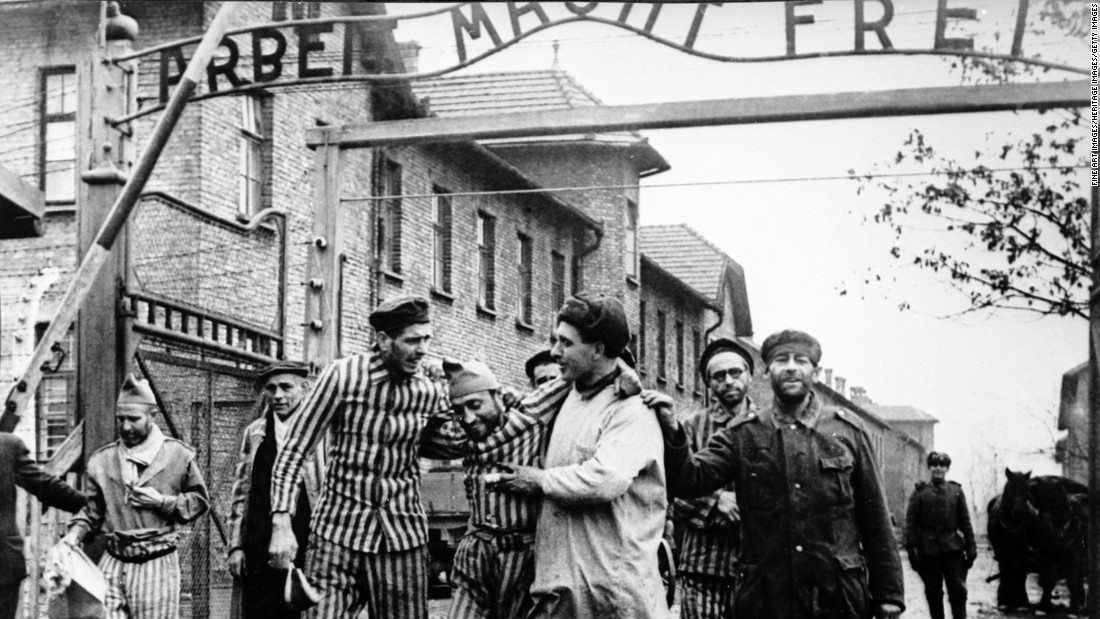
Crematorium 4 was damaged beyond repair and never used again. On November 7th, 1944, the Nazis destroyed the gas chambers to hide their crimes. Twelve days after the hanging of the four women, the camp personnel forced 56,000 prisoners on a Death March into what remained of the Third Reich; 7,500 prisoners left behind were liberated by advancing Soviet armies on January 27th.

Donation
Your readership is what makes my site a success, and I am truly passionate about providing you with valuable content. I have been doing this at no cost and will continue to do so. Your voluntary donation of $2 or more, if you are able, would be a significant contribution to the continuation of my work. However, I fully understand if you’re not in a position to do so. Your support, in any form, is greatly appreciated. Thank you. To donate, click on the credit/debit card icon of the card you will use. If you want to donate more than $2, just add a higher number in the box left from the PayPal link. Your generosity is greatly appreciated. Many thanks.
$2.00

 History of Sorts
Leave a comment