
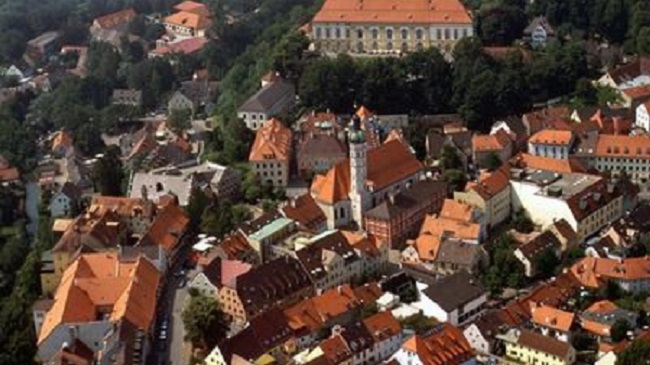
Dachau is a small picturesque town in in Upper Bavaria not too far away from Munich, but despite its pretty and even fairy tale like appearance, it will be forever associated with death and destruction.
The Dachau concentration camp was opened on March 22 1933. It was the first regular concentration camp established by the Nazi regime. Heinrich Himmler, as police president of Munich, officially described the camp as “the first concentration camp for political prisoners.

Political prisoners arrived by truck in early days of the Dachau Concentration camp.

Dachau originally held Communists, leading Socialists and other “enemies of the state” in 1933, but over time the Nazis began to send German Jews to the camp.
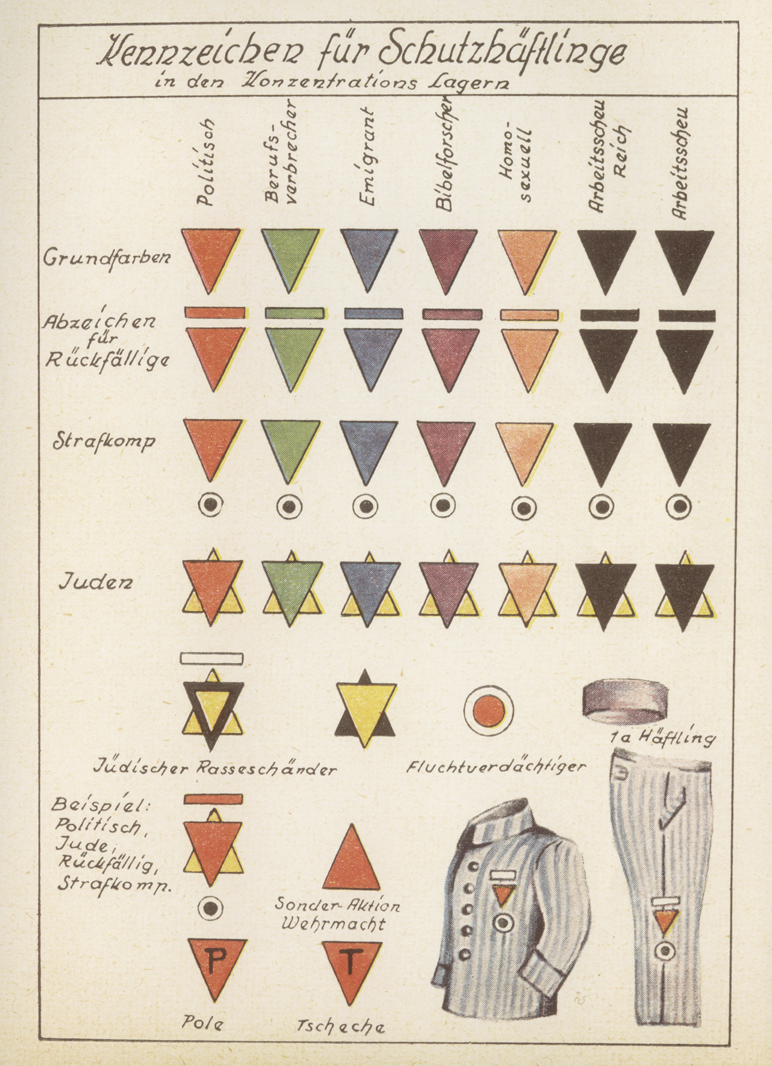
Prisoners were divided into categories. At first, they were classified by the nature of the crime for which they were accused, but eventually were classified by the specific authority-type under whose command a person was sent to camp.Political prisoners who had been arrested by the Gestapo wore a red badge, “professional” criminals sent by the Criminal Courts wore a green badge, Cri-Po prisoners arrested by the criminal police wore a brown badge, “work-shy and asocial” people sent by the welfare authorities or the Gestapo wore a black badge, Jehovah’s Witnesses arrested by the Gestapo wore a violet badge, homosexuals sent by the criminal courts wore a pink badge, emigrants arrested by the Gestapo wore a blue badge, “race polluters” arrested by the criminal court or Gestapo wore badges with a black outline, second-termers arrested by the Gestapo wore a bar matching the color of their badge, “idiots” wore a white armband with the label Blöd (Stupid), and Jews, whose incarceration in the Dachau concentration camp dramatically increased after Kristallnacht, wore a yellow badge, combined with another color.
The pictures below are from the camp and some of them are graphic, I don’t like showing graphic images but sometimes it is necessary.
Bodies in the Dachau death train

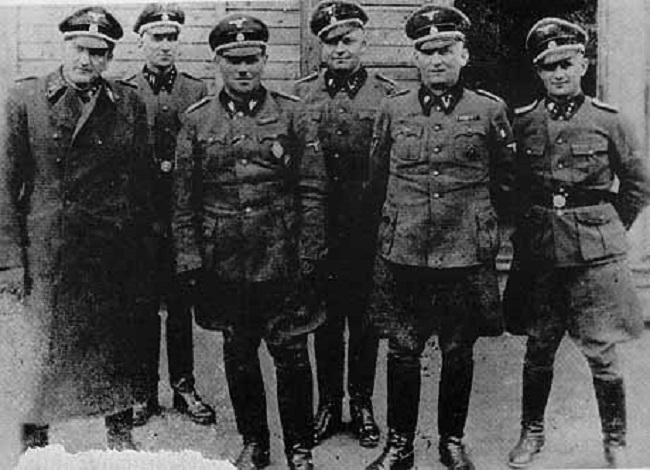
The photograph below shows six of the SS men on the staff at Dachau in 1934. Theodor Eicke, who became the second Commandant at Dachau in 1933 is the second man from the left in the back row.
American soldiers inspect the remains of concentration camp victims after the liberation of Dachau, a National Socialist concentration camp, April 29, 1945.


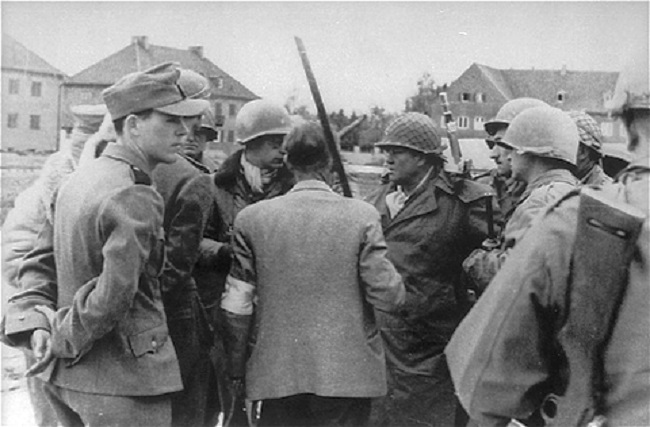
SS men confer with General Henning Linden during the capture of the Dachau concentration camp. Pictured from left to right: SS aide, camp leader Untersturmführer Heinrich Wicker (mostly hidden by the aide), Paul M. G. Lévy, a Belgian journalist (man with helmet looking to his left), Dr. Victor Maurer (back), Gen. Henning Linden (man with helmet, looking to his right) and some U.S. soldiers.
Something that has been debated and disputed after the liberation of Dachau is the execution of the SS guards,after surrender, by the US troops. By many it is seen as a war crime, I don’t subscribe to that point of view, although I do not condone it either, I can fully understand why they did it. They had just seen the worst atrocity and depravity they had ever witnessed, not surprisingly they felt the urge to bring those responsible to a swift justice.

Closeup of the bodies of SS personnel lying at the base of the tower from which American soldiers had initially come under attack by a German machine gun.

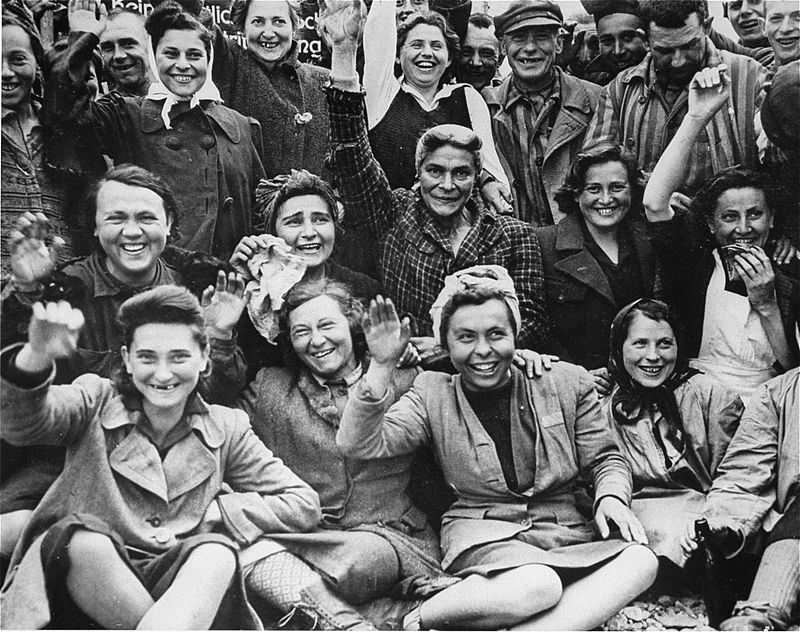
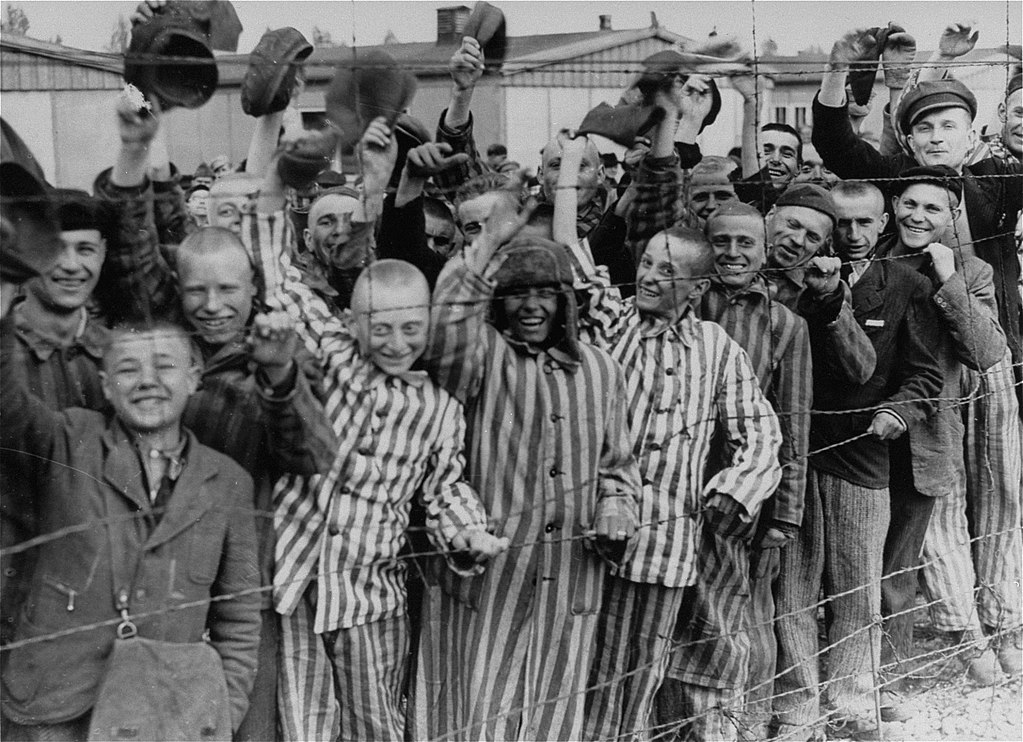
The joy of liberation

Donation
Your readership is what makes my site a success, and I am truly passionate about providing you with valuable content. I have been doing this at no cost and will continue to do so. Your voluntary donation of $2 or more, if you are able, would be a significant contribution to the continuation of my work. However, I fully understand if you’re not in a position to do so. Your support, in any form, is greatly appreciated. Thank you. To donate, click on the credit/debit card icon of the card you will use. If you want to donate more than $2, just add a higher number in the box left from the PayPal link. Your generosity is greatly appreciated. Many thanks.
$2.00
Sources
USHMM
Bundesarchiv

 History of Sorts
Leave a comment