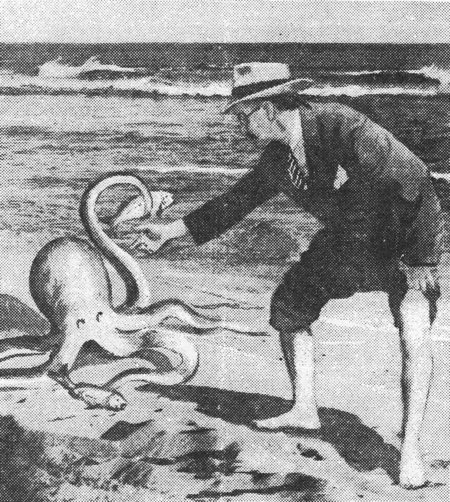
Although the world was going through one of the darkest era’s in its existence , there was still a sense of humour prevailing. For many it was this sense of humour which was all that remained of their humanity.
Below are some examples of April Fool#s day hoaxes during WWII.
On April 1 1943
The Kingsport Times (of Kingsport, Tennessee) ran a photo on its front page of what it said was Field Marshal Erwin Rommel’s “escape ship,” spotted going down the local Holston River. It said the ship had entered the Holston River by way of the Gulf of Mexico.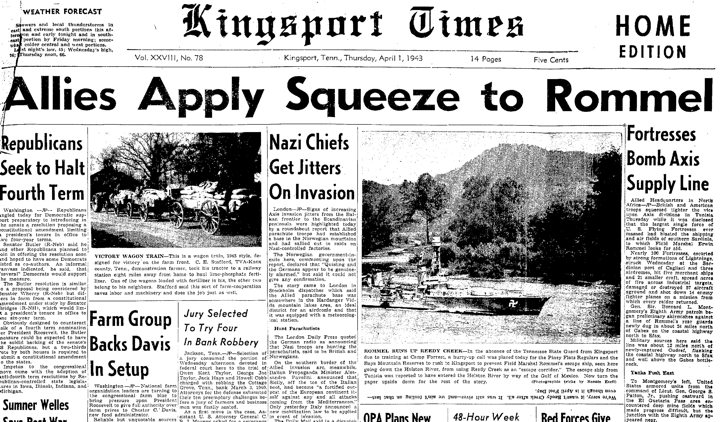
“ROMMEL RUNS UP REEDY CREEK — In the absence of the Tennessee State Guard from Kingsport due to training at Camp Forrest, a hurry-up call was placed today for the Piney Flats Regulars and the Bays Mountain Reserves to rush to Kingsport to prevent Field Marshal Rommel’s escape ship, seen here going down the Holston River, from using Reedy Creek as an “escape corridor.” The escape ship from Tunisia was reported to have entered the Holston River by way of the Gulf of Mexico. Now turn the paper upside down for the rest of the story.
(upside-down text:)
We’re sorry, it wasn’t Reedy Creek after all. It was salt river — and we ain’t fooling on that last — even though it is April Fool Day.”
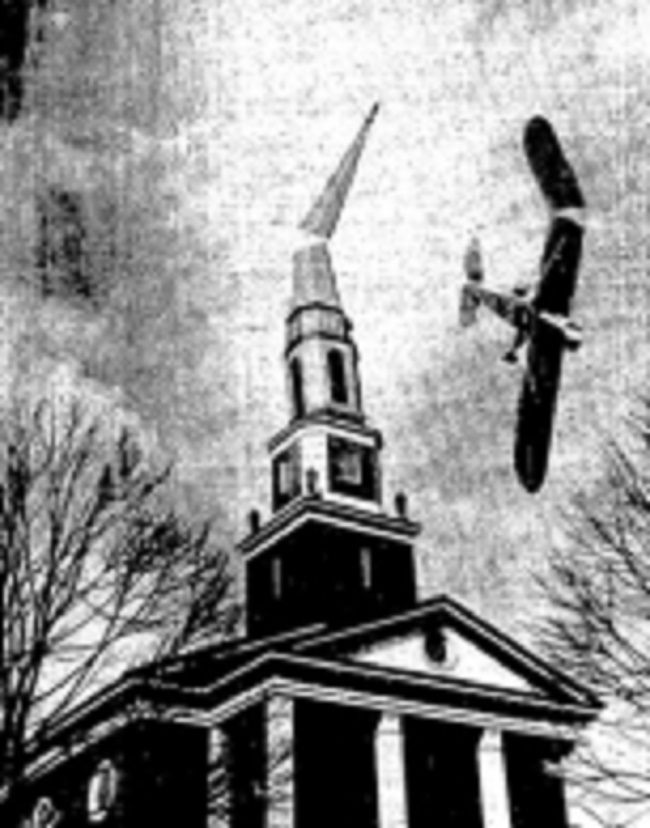
Here is what the Kingsport Times’ photographer, Ronnie Ezell, claims is the prize picture of the year (well, day anyway). He says this plane sliced the steeple at the First Presbyterian Church and despite the condition of the airplane’s wing fluttered off in the direction of Gate City. (Or maybe the photographer said he was the one who had just fluttered in from Gate City.)” [Kingsport Times (Tennessee) – Apr 1, 1942]
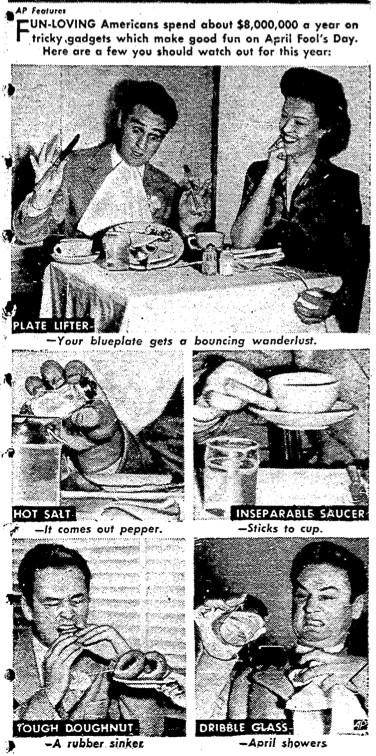
“Fun-loving Americans spend about $8,000,000 a year on tricky gadgets which make good fun on April Fool’s Day. Here are a few you should watch out for this year: Plate Lifter — Your blueplate gets a bouncing wanderlust; Hot Salt — It comes out pepper; Inseparable Saucer — Sticks to cup; Tough Doughnut — A rubber sinker; Dribble Glass — April showers.” [AP Features April 1 1944]
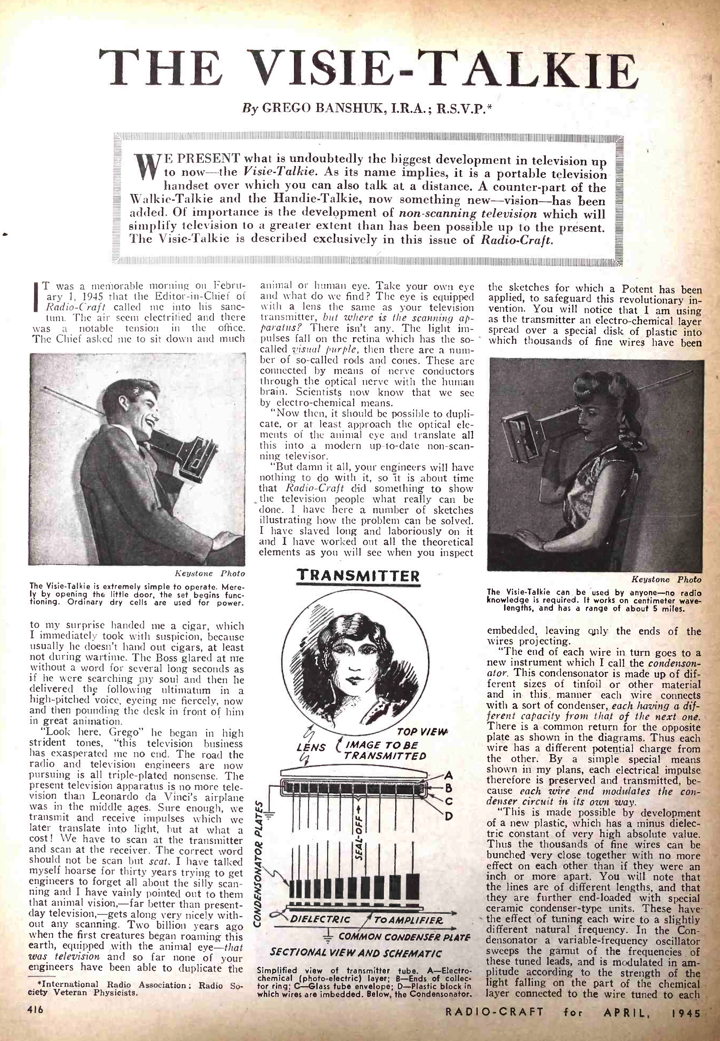
Radio-Craft magazine, in an article credited to Grego Banshuk, announced what it declared was “the biggest development in television up to now” — the Visie-Talkie. It was a portable television handset. In other words, a handheld videophone.
Banshuk explained that the device had been made possible by the invention of “non-scanning television” technology, which involved “thousands of fine wires… bunched very close together.”

Donation
Your readership is what makes my site a success, and I am truly passionate about providing you with valuable content. I have been doing this at no cost and will continue to do so. Your voluntary donation of $2 or more, if you are able, would be a significant contribution to the continuation of my work. However, I fully understand if you’re not in a position to do so. Your support, in any form, is greatly appreciated. Thank you. To donate, click on the credit/debit card icon of the card you will use. If you want to donate more than $2, just add a higher number in the box left from the PayPal link. Your generosity is greatly appreciated. Many thanks.
$2.00
Source
Museum of Hoaxes

 History of Sorts
Leave a reply to dirkdeklein Cancel reply