
Adolf Hitler often displayed toddler-like behaviour. If he didn’t get his way or if someone did something he didn’t like, he would throw a tantrum.
In 1935, the Nobel Peace Prize was awarded to Carl von Ossietzky(pictured above). He was a German pacifist. He was awarded the prize for something which happened before Hitler came to power. In 1931, Carl von Ossietzky was arrested for publishing details of Germany’s violation of the Treaty of Versailles, including the rebuilding of an air force, which would later become the Luftwaffe, and the training of pilots in the Soviet Union.
He was also a very vocal anti Nazi and was openly critical of Hitler and the Nazi regime. On 28 February 1933, he was sent to Spandau prison for “protective custody” and later on he was transferred to the Esterwegen concentration camp.
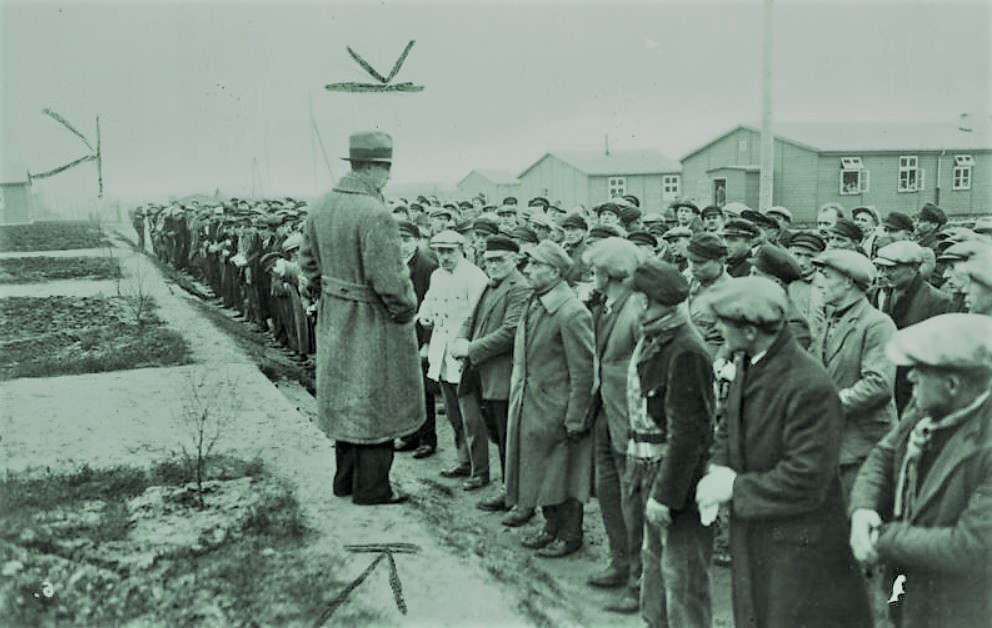
When the Nobel Foundation awarded the 1935 Nobel Peace Prize to Carl von Ossietzky (although it was actually awarded in 1936), Hitler was offended. His reaction was to issue a decree on 31 January 1937, which forbade German nationals from accepting any Nobel Prize.
This resulted in Gerhard Domagk not getting the 1939 Nobel Prize in Physiology or Medicine. Richard Kuhn was unable to receive the Nobel Prize in Chemistry in 1938, and Adolf Butenandt was prevented from accepting the Nobel Prize in Chemistry in 1939.
In 1939, the Swedish Social Democrat and Anti Fascist Erik Gottfrid Christian Brandt nominated Hitler for the Nobel Peace Prize, ironically and sarcastically. The nomination was accepted.
Below is the text of his nomination.
“To the Norwegian Nobel Committee,
I hereby humbly suggest that the Peace Prize for 1939 be awarded to the German Chancellor and Führer Adolf Hitler, a man who, in the opinion of millions of people, is a man who more than anyone in the world has deserved this highly respected reward.
Authentic documents reveal that in September 1938, world peace was in grave danger; it was only a matter of hours before a new European war could erupt. The man who, during this dangerous time, saved our part of the world from this terrible catastrophe was, without a doubt, the great leader of the German people. In the critical moment, he voluntarily did not let weapons speak, although he had the power to start a world war.
By his glowing love for peace, earlier documented in his famous book Mein Kampf – next to the Bible perhaps the best and most popular piece of literature in the world – together with his peaceful achievement – the annexation of Austria – Adolf Hitler has avoided the use of force by freeing his countrymen in Sudetenland and making his fatherland big and powerful. Probably Hitler will, if unmolested and left in peace by war mongers, pacify Europe and possibly the whole world.
Sadly, there are still a significant number of people who fail to see the greatness in Adolf Hitler’s struggle for peace. Based on this fact, I would not have found the time right to nominate Hitler as a candidate for the Nobel Peace Prize had it not been for a number of Swedish parliamentarians who had nominated another candidate, namely the British Prime Minister Neville Chamberlain. This nomination seems to be poorly thought out. Although it is true that Chamberlain, through his generous understanding of Hitler’s struggle for pacification, contributed to the preservation of world peace, the ultimate decision was Hitler´s, not Chamberlain’s. Hitler and no one else is first and foremost to be thanked for the peace which still prevails in the greater part of Europe; and this man is also the hope for peace in the future. As Chamberlain can obviously claim his share of the peace-making, he could possibly have a smaller part of the Nobel Peace Prize. But the most correct thing to do is not to put another name beside the name of Adolf Hitler and thereby throwing a shadow on him. Adolf Hitler is, by all means, the authentic God-given fighter for peace, and millions of people all over the world put their hopes in him as the Prince of Peace on earth.
Stockholm, January 27, 1939”
Brandt withdrew his nomination in February 1939 because he hadn’t expected his nomination to be taken seriously.
Imagine if he hadn’t withdrawn the nomination and Hitler had won(stranger things have happened), then Hitler would have had to break his own rule to accept his prize.

Eventually, no Nobel Peace Prize was awarded in 1939.

Donation
Your readership is what makes my site a success, and I am truly passionate about providing you with valuable content. I have been doing this at no cost and will continue to do so. Your voluntary donation of $2 or more, if you are able, would be a significant contribution to the continuation of my work. However, I fully understand if you’re not in a position to do so. Your support, in any form, is greatly appreciated. Thank you. To donate, click on the credit/debit card icon of the card you will use. If you want to donate more than $2, just add a higher number in the box left from the PayPal link. Your generosity is greatly appreciated. Many thanks.
$2.00
Source
Nobelprize.org
Quartz

 History of Sorts
Leave a reply to dirkdeklein Cancel reply