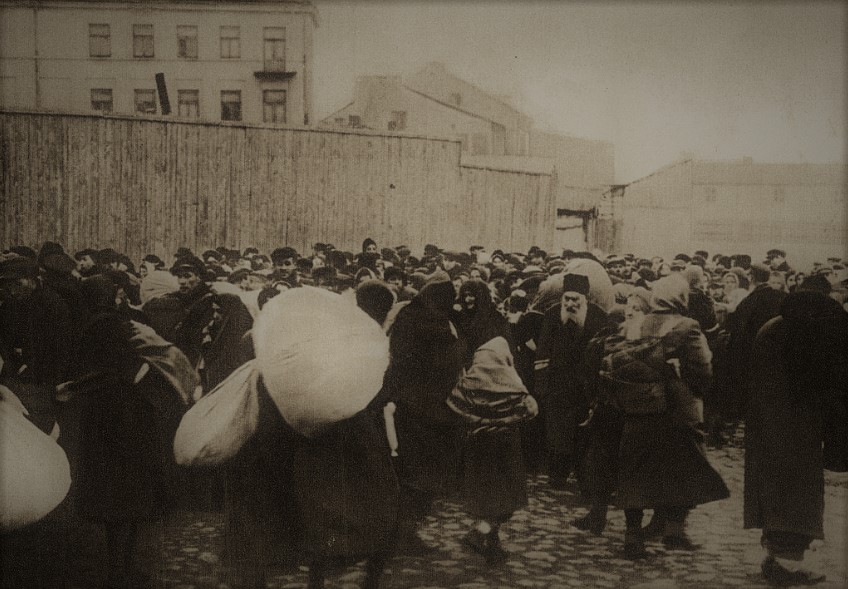
Time and time again, reports about the Holocaust were either ignored or not believed, even when the reports came from eyewitnesses like Kurt Gerstein.
Gerstein was a German SS officer and head of technical disinfection services of the Hygiene-Institut der Waffen-SS (Institute for Hygiene of the Waffen-SS). In this capacity, he would travel to Auschwitz, Belzec, and Treblinka, offering the supply of Zyklon B.

In this lies the irony that the man who supplied Belzec and Treblinka with the gas that killed so many had joined the SS to get an inside view and try to change the policies from within the organisation. In a letter to his wife, Gerstein once wrote: “I joined the SS … acting as an agent of the Confessing Church.” Because of his position, he witnessed firsthand the horrors of the Holocaust. He had given a detailed report to Swedish diplomat Göran von Otter, as well as to Swiss diplomats, members of the Roman Catholic Church who had contact with Pope Pius XII, and to the exiled Dutch government.

In February 1943, Gerstein was visited by Dutch industrialist H.J. Ubbink . Gerstein told Ubbink about the crimes he had witnessed. In a letter sent by Ubbink to Erika Arajs, Department of Justice in Nuremberg, dated September 14, 1949, Ubbink stated.
“With great indignation he told me how gassings took place using the exhaust gas from diesel engines. He gave me all the details and told me that at that time there were 9000 deaths per day in the three camps.”
Ubbink passed Gerstein’s on to a member of the Dutch Resistance, Cornelius Van der Hooft, who reluctantly because he could not believe what he heard, did write a report on March 23, 1943 titled “Tötunsanstalten in Polen” This report seems been sent to the Dutch government-in-exile because on April 24, 1943, a month after the meeting between Ubbink and Van der Hooft, another version of the report inspired by Gerstein was written. Typed on paper without an official heading and with the shortened title “Tötungsanstalten”, this version was dispatched within the Dutch government-in-exile to the British government. Eventually, it came to the attention of the United States Inter-Allied Information Committee.
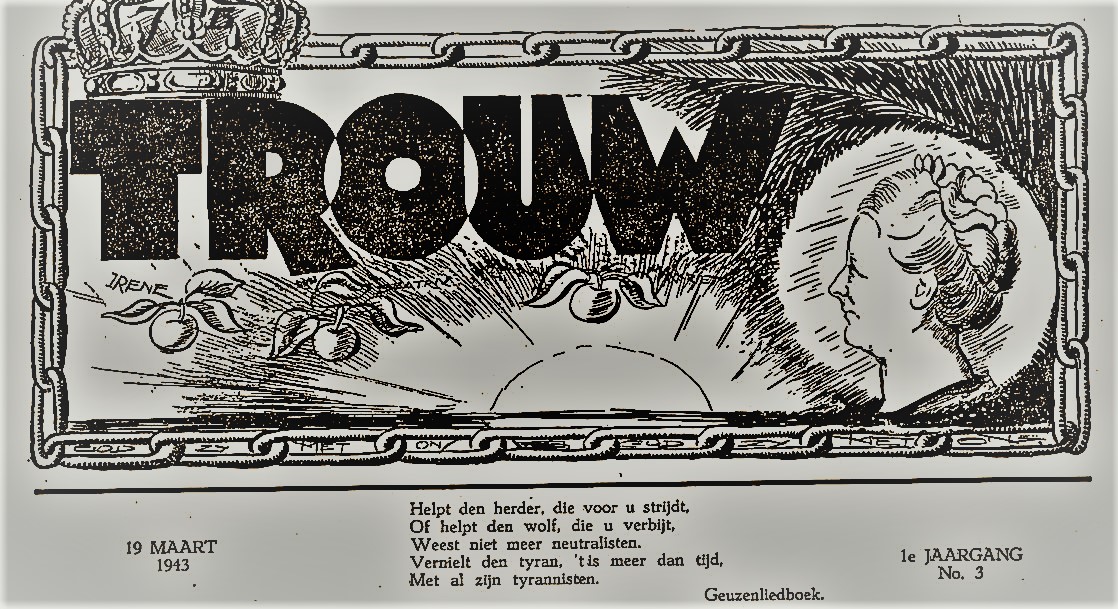
The clandestine Dutch Newspaper Trouw, which van der Hooft was associated with, also had alluded to the fate of the Dutch Jews in an article written on March 19, 1943.
“We must never forget what this oppressor [as in the German occupier] inflicts upon us, how he in his cowardly way assassinates the most noble and pure of the nation, how he makes mass arrests of our best fellow citizens and imprisons them in these evil places where cruelty and sadism reign, how he sacks our country with a brutality never before equaled in all our history, how he robs us of our valiant laborers in order to force them to work like Pharaoh made the Israelites, how coldly and in the most inhumane manner, he strips our Jewish fellow citizens and then assassinates them”
Despite all of this, no actions were taken.
Two weeks before Nazi Germany’s surrender, on April 22, 1945, Gerstein voluntarily surrendered himself to the French commandant of the occupied town of Reutlingen. He received a sympathetic reception and was transferred to a hotel residence in Rottweil. Here, he was able to write several reports, some of which were used in the Nuremberg trials.
Below is an excerpt from one of his reports, but I must warn you, it contains a very graphic description of what he witnessed.
“Then the procession starts moving. In front of a very lovely young girl, so all of them go along the alley, all naked, men, women, children, without artificial limbs. I stand together with Hauptmann Wirth at the top of the ramp between the gas chambers. Mothers with babies at their breast, they come onward, hesitate, enter the death chambers! At the corner, a strong SS man stands who, with a voice like a pastor, says to the poor people: “There is not the least chance that something will happen to you! You must only take a deep breath in the chamber, which widens the lungs; this inhalation is necessary because of the illnesses and epidemics.” On the question of what would happen to them, he answered: “Yes, of course, the men have to work, building houses and roads, but the women don’t need to work. Only if they wish, they can help with housekeeping or in the kitchen.”
For some of these poor people, this gave a little glimmer of hope, enough to go the few steps to the chambers without resistance. The majority are aware, the smell tells them of their fate! So they climb the small staircase, and then they see everything. Mothers with little children at the breast, little naked children, adults, men, women, all naked – they hesitate, but they enter the death chambers, pushed forward by those behind them or driven by the leather whips of the SS.
The majority without saying a word. A Jewess of about 40 years of age, with flaming eyes, calls down vengeance on the head of the murderers for the blood which is shed here. She gets 5 or 6 slashes with the riding crop into her face from Hauptmann Wirth personally, then she also disappears into the chamber. Many people pray. I pray with them; I press myself into a corner and shout loudly to my God and theirs. How gladly I would have entered the chamber together with them, how gladly I would have died the same death as them. Then they would have found a uniformed SS man in their chambers – the case would have been understood and treated as an accident, one man quietly missing. Still, I am not allowed to do this. First, I must tell you about my experience here.
The chambers fill. “Pack well!” – Hauptmann Wirth has ordered. The people stand on each other’s feet. 700 – 800 on 25 square meters, in 45 cubic meters! The SS physically squeezes them together, as far as is possible.
The doors close. At the same time, the others are waiting outside in the open air, naked. Someone tells me: “The same in winter!” “Yes, but they could catch their death of cold,” I say. “Yes, exactly what they are here for!” says an SS man to me in his Low German. Now I finally understand why the entire installation is called the Hackenholt Foundation. Hackenholt is the driver of the diesel engine, a little technician, and also the builder of the facility.
The people are brought to death by the diesel exhaust fumes. But the diesel doesn’t work! Hauptmann Wirth comes. One can see that he feels embarrassed that this happened just today, when I am here. That’s right, I see everything! And I wait. My stopwatch has honestly registered everything. 50 minutes, 70 minutes [?] – the diesel doesn’t start! The people are waiting in their gas chambers. In vain! One can hear them crying, sobbing… Hauptmann Wirth hits the Ukrainian who is helping Unterscharführer Hackenholt 12, 13 times in the face.
After two hours and 49 minutes, the stopwatch has registered everything well – the diesel starts. Until this moment, the people have lived in these four chambers, with 4 times 750 people occupying 4 times 45 cubic meters. Again, 25 minutes pass. Right, many are dead now. One can see that through the small window through which the electric light illuminates the chambers for a moment. After 28 minutes, only a few are still alive. Finally, after 32 minutes, everyone is dead!
From the other side, men from the work command open the wooden doors. They have been promised—even Jews—freedom, and some one-thousandth of all valuables found, for their terrible service. Like basalt pillars, the dead stand inside, pressed together in the chambers. In any event, there was no space to fall down or even bend forward. Even in death, one can still tell the families. They still hold hands, tensed in death, so that one can barely tear them apart in order to empty the chamber for the next batch. The corpses are thrown out, wet from sweat and urine, soiled by excrement, menstrual blood on their legs.
Children’s corpses fly through the air. There is no time. The riding crops of the Ukrainians lash down on the work commands. Two dozen dentists open mouths with hooks and look for gold. Gold to the left, without gold to the right. Other dentists break gold teeth and crowns out of jaws with pliers and hammers.
Among all this, Hauptmann Wirth is running around. He is in his element. Some workers search the genitals and anus of the corpses for gold, diamonds, and valuables. Wirth calls me to him: “Lift this can full of gold teeth, that is only from yesterday and the day before yesterday!” In an incredibly vulgar and incorrect diction, he said to me: “You won’t believe what we find in gold and diamonds every day” – he pronounced it (in German Brillanten) with two L – “and in dollars. But see for yourself!” And now he led me to a jeweller who managed all these treasures and let me see them. Then someone showed me a former head of the Kaufhaus des Westens in Berlin, and a violinist: “That was a Hauptmann of the Austrian Army, knight of the Iron Cross 1st class who is now camp elder of the Jewish work command!”
The naked corpses were carried on wooden stretchers to pits only a few meters away, measuring 100 x 20 x 12 meters. After a few days, the corpses welled up, and a short time later, they collapsed, so that one could throw a new layer of bodies upon them. Then ten centimeters of sand were spread over the pit, so that a few heads and arms still rose from it here and there. At such a place, I saw Jews climbing over the corpses and working. One told me that by mistake, those who arrived dead had not been stripped. Of course, this has to be done later because of the valuables which otherwise they would take with them into the grave.”
————-
Gerstein was later moved to the Cherche-Midi military prison, where he was treated as a Nazi war criminal. On July 25, 1945, he was found dead in his cell after an alleged suicide.
Sources
https://journals.openedition.org/
https://www.jewishvirtuallibrary.org/
Trouw
WikiPedia

 History of Sorts
Leave a comment