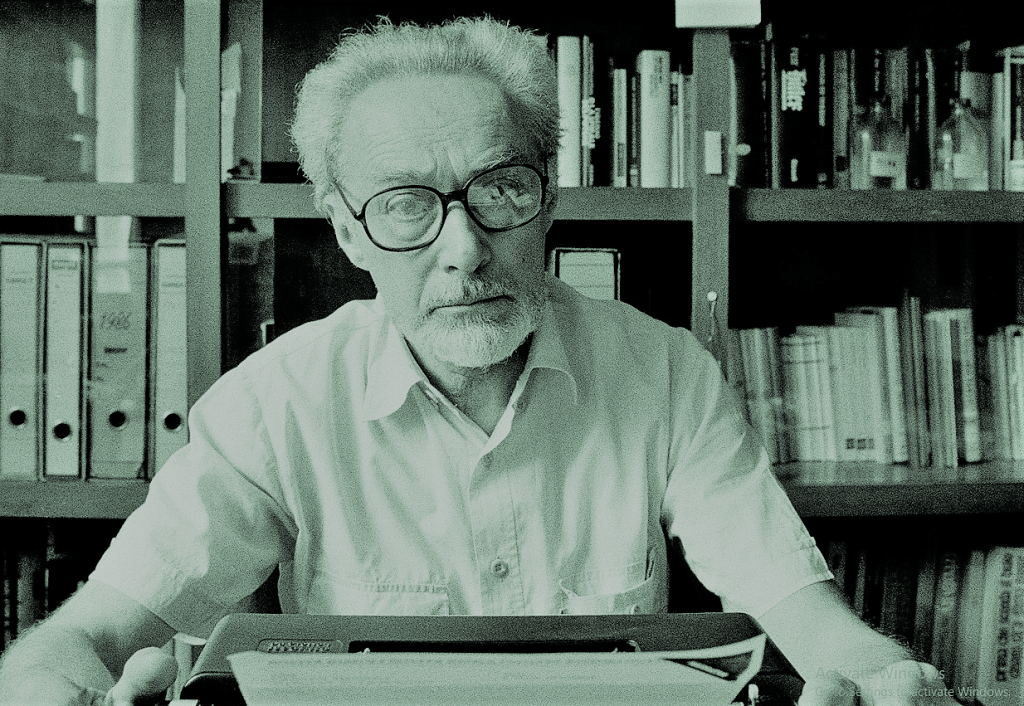
On this day in 1919, Primo Levi was born. He was an Italian-Jewish chemist, partisan, writer, and Holocaust survivor. He has written many books and essays. He died on 11 April 1987 from injuries sustained in a fall from a third-story apartment landing. His death was initially ruled a suicide, but after some careful consideration, it was suggested that the fall was accidental due to the absence of a suicide note, there were no witnesses, and he was on medication that could have affected his blood pressure and caused him to fall accidentally.
To celebrate the great man’s birthday, below are some of his words of wisdom and warning of lessons not yet learned.
“We must be listened to: above and beyond our personal experience, we have collectively witnessed a fundamental unexpected event, fundamental precisely because unexpected, not foreseen by anyone. It happened, therefore it can happen again: this is the core of what we have to say. It can happen, and it can happen everywhere.”
“Monsters exist, but they are too few in number to be truly dangerous. More dangerous are the common men, the functionaries ready to believe and to act without asking questions.”
“Perfection belongs to narrated events, not to those we live.”
“Auschwitz is outside of us, but it is all around us, in the air. The plague has died away, but the infection still lingers and it would be foolish to deny it. Rejection of human solidarity, obtuse and cynical indifference to the suffering of others, abdication of the intellect and of moral sense to the principle of authority, and above all, at the root of everything, a sweeping tide of cowardice, a colossal cowardice which masks itself as warring virtue, love of country and faith in an idea.”
“I am constantly amazed by man‘s inhumanity to man.”
“For human nature is such that grief and pain – even simultaneously suffered – do not add up as a whole in our consciousness, but hide, the lesser behind the greater according to a definite law of perspective. It is providential and is our means of surviving in the camp. And this is the reason why so often in free life one hears it said that man is never content. In fact it is not a question of a human incapacity for a state of absolute happiness, but of an ever-insufficient knowledge of the complex nature of the state of unhappiness; so that the single name of the major cause is given to all its causes, which are composite and set out in an order of urgency. And if the most immediate cause of stress comes to an end, you are grievously amazed to see that another one lies behind; and in reality a whole series of others.
So that as soon as the cold, which throughout the winter had seemed our only enemy, had ceased, we became aware of the hunger; and repeating the same error, we now say: “If it was not for the hunger!…”
Sources
 History of Sorts
Leave a comment