+++++++++++++++++++CONTAINS GRAPHIC IMAGES+++++++++++++++++++
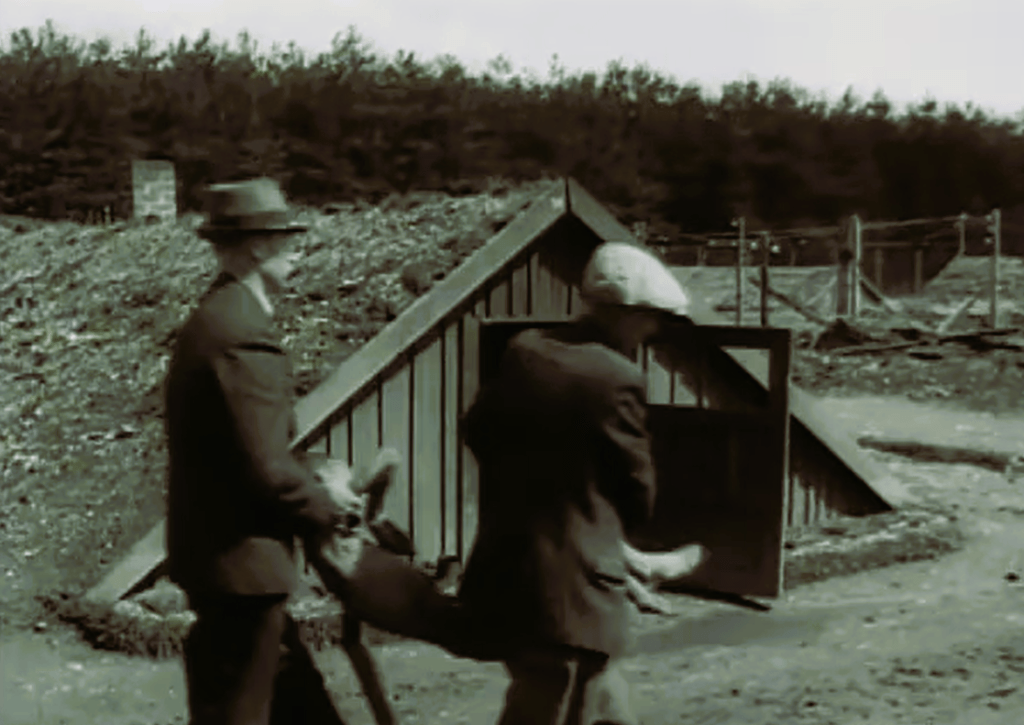
The Kaufering IV—Hurlach Subcamp was one of 169 subcamps belonging to the Dachau Concentration Camp system. It had several names—KZ Schwabmünchen/Kaufering IV or KZ Hurlach. Whatever we call it, it did not matter as it was a place of evil.
The camp was liberated at the end of April 1945 by a unit of the 143rd Reg. Inf. of the 36th Inf. On 29 April, there were 3,000 prisoners in the camp.
At the turn of the year (1944/45), the Kaufering IV—Hurlach subcamp was converted into the death camp of the camp complex and placed under quarantine, initially with around 1,400 prisoners and in April 1945 over 3,000 prisoners. Running rampant were Intestinal diseases, oedema, scabies, weakness, typhus and pulmonary tuberculosis. There was hardly any medicine, bandages or medical instruments, and even a lack of laundry. An interned doctor wrote that for his medical work, he was limited to issuing death certificates and labelling the corpses. 100 to 200 people died every week in the camp alone. When the US Army liberated the subcamp, the soldiers encountered the still-smoking rubble of the huts, which had been set on fire by the SS upon their departure. In these, they found 360 dead, who were possibly burned alive. It is believed that J.D. Salinger, author of The Catcher In The Rye, was one of the liberators. His daughter Margaret Salinger recalled her father telling her:
“You never really get the smell of burning flesh out of your nose entirely, no matter how long you live.”
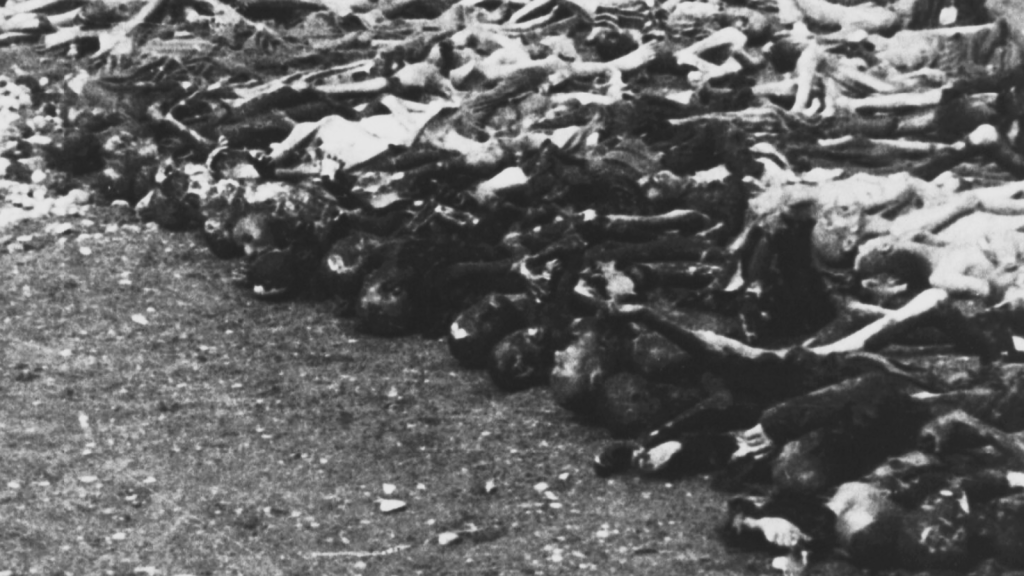
During the evacuation, the prisoners were loaded onto a train as they were too sick to walk towards Dachau on the nearby track. This train had been used by the SS as cover for an anti-aircraft platoon and was hit by an Allied low-flying attack, killing 180 prisoners. The train returned to Kaufering to unload the dead on the railway embankment.
On the morning of 27 April 1945, the camp doctor, Max Blancke, ordered the SS to set fire to the Kaufering IV Concentration Camp and the prisoners who were unable to walk. The American army reached the camp a few hours later. The liberation was portrayed in Steven Spielberg’s Band of Brothers.
When the 12th Armored Division and 101st Airborne Division arrived at Kaufering IV on 27/28 April, respectively, the soldiers discovered some 500 dead inmates. In the days that followed—the US Army units ordered the local townspeople to bury the dead.
Sources
https://blog.jewishphilly.org/jd-salinger
https://de-academic.com/dic.nsf/dewiki/730753
https://collections.ushmm.org/search/catalog/pa1065919

Donation
Your readership is what makes my site a success, and I am truly passionate about providing you with valuable content. I have been doing this at no cost and will continue to do so. Your voluntary donation of $2 or more, if you are able, would be a significant contribution to the continuation of my work. However, I fully understand if you’re not in a position to do so. Your support, in any form, is greatly appreciated. Thank you. To donate, click on the credit/debit card icon of the card you will use. If you want to donate more than $2, just add a higher number in the box left from the PayPal link. Your generosity is greatly appreciated. Many thanks.
$2.00
 History of Sorts
Leave a comment