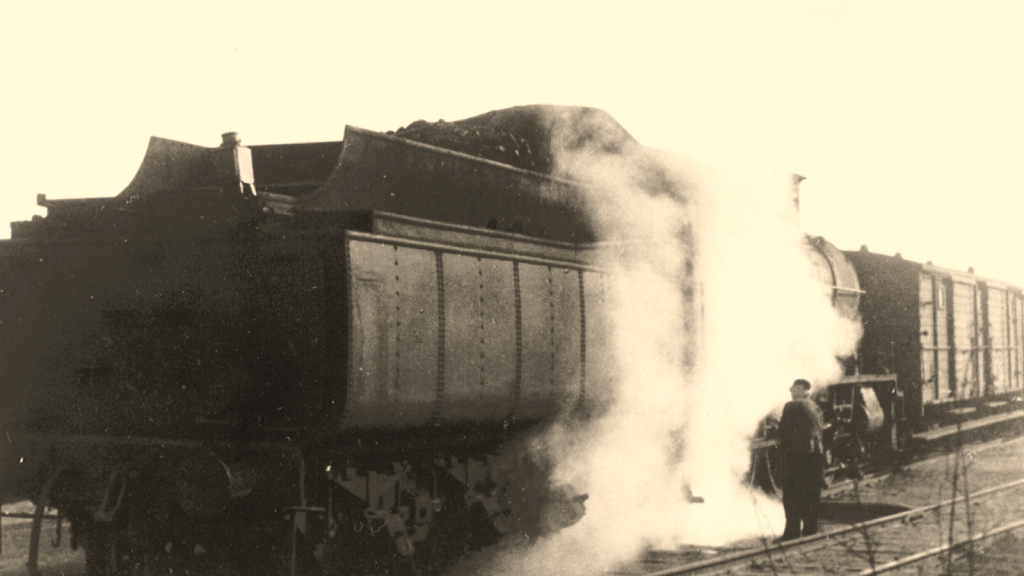
It is often said that the Holocaust by bullets, is the forgotten Holocaust, and I agree. However, in my opinion, it is not the only forgotten Holocaust. I believe the actual deportation would fall under that category. We all know what happened after the transports and deportation, but know very little about what happened or how they were experienced.
Elie Wiesel said of his deportation in May 1944 to Auschwitz-Birkenau:
“Life in the cattle cars was the death of my adolescence. How quickly I aged,”
Simon Grinbaud, who was deported from the Drancy transit camp in France to Auschwitz-Birkenau in September 1942, recalled:
“In such a car, which was designed to transport ‘eighteen horses’ according to the sign on the door, were a hundred of us – adults, children, sick, elderly, in indescribably crowded conditions…In every car there was a bucket with water for everyone and another bucket for toilets; so much of the water reserve was soiled as we boarded the train.”

The Nazis turned something designed and built for the betterment of society, trains, into weapons of mass destruction. These trains were not operated or driven by Nazis—but by ordinary machinists and other rail workers from the occupied countries (all occupied countries). I know there is a push nowadays in some countries to whitewash their involvement in the Holocaust. The facts are simple, the occupied countries had willing participants working with the Nazi regime. Of course, not all railway workers were complicit because some tried to do something about the transport.
I am not sure if there is any data in relation to the deaths that occurred on the trains, but undoubtedly there will have been thousands. It makes sense that the trains were filled with the elderly, pregnant women, babies, sick, and disabled people.
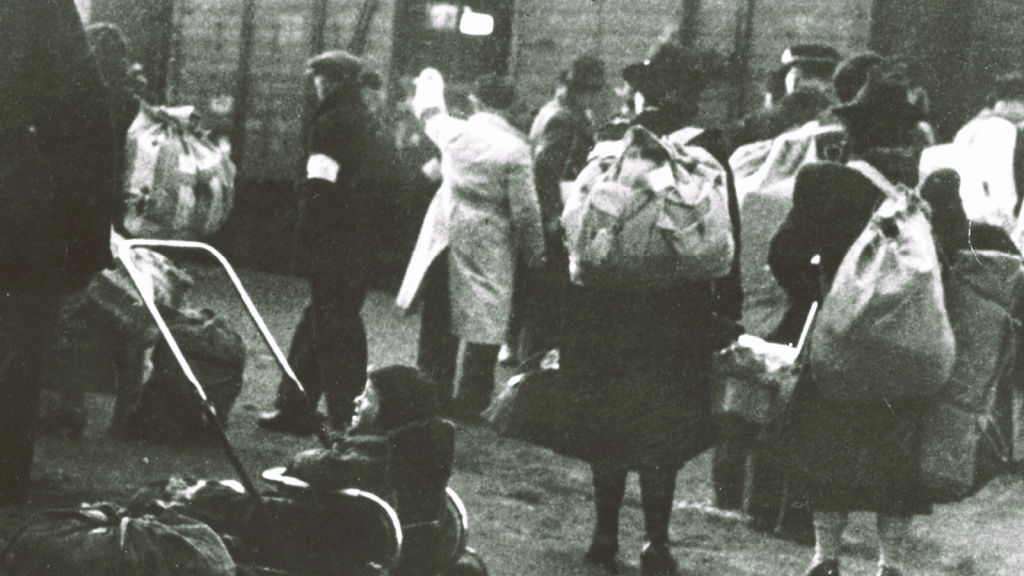
Even for the healthiest on the transports, it must have been extremely hard to be cramped in a small space, with only one bucket as a toilet, and nowhere to sit, the journeys would often take days. From France, Hungary and the Netherlands occasionally seven to eight days. From Thessaloniki in Greece, some deportees were transported around for more than two weeks on boats and trains.
The overcrowding in the cattle cars was unbearable, the feeling of suffocation overwhelming, and a desperate battle ensued to get close to the narrow window. Growing hunger and thirst magnified the anguish. The necessity to relieve themselves inside the railcar was a low point for the humiliated deportees.
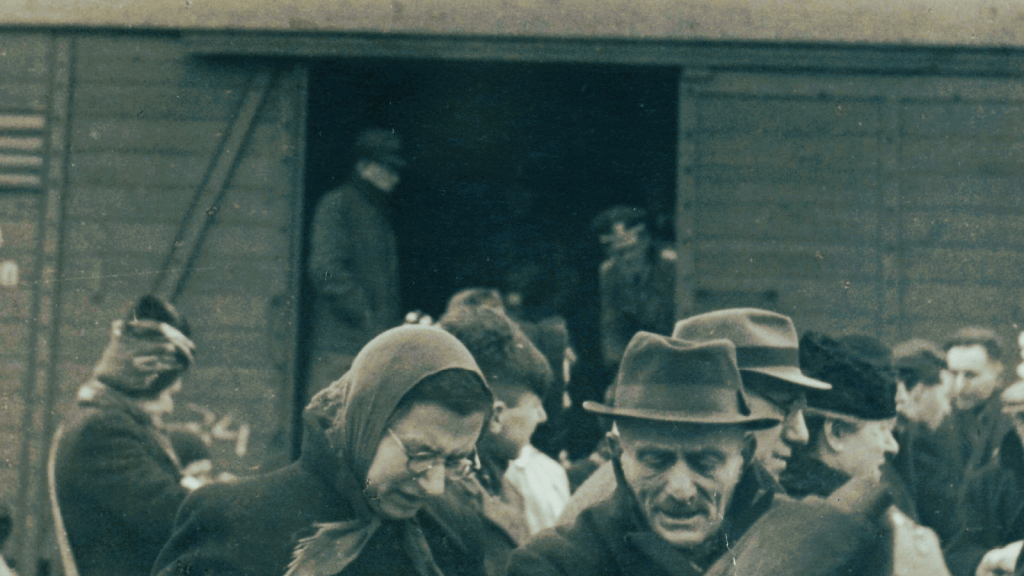
Henri Borlant was 15 when he was deported to Auschwitz-Birkenau by Convoy No. 8 from Angers, France, on 29 July 20 1942. In a later interview, he recalled:
“The journey took three days and three nights, with nothing to eat or drink. Finally, the train came to a halt in the middle of a field. You could hear men shouting and dogs barking. We got out and were told to leave our bags behind and to hurry. We were put in rows of five and made to walk the mile or so to the Birkenau camp, where we soon learned that the barbed-wire fence surrounding it was electrified. We were led to a large hut, where we were ordered to get completely undressed. In front of everyone? Yes. I was very shy. They began hitting us with batons. Others came to shave our heads and faces.
I saw my father, naked and with a shaved head. Next, we were tattooed with a number. That number was our name, our identity. I became 51 055. The French people in the camp, mostly resistance fighters or communists, had a red triangle next to their number. A letter indicating your nationality. The cruellest had green triangles to show they were ex-criminals. They were often leaders of Kommandos or labour units. We were given clothes that had been worn by people who were sick or had probably died wearing them. Our shoes were like wooden clogs. They were very hard to run in. Soon, we all had lacerated feet. We were beaten and shouted at, and given nothing to eat or drink. Trains arrived every day with more deportees.
We were told, ‘This is an extermination camp. You will only get out of here by the crematorium chimney.’ We were terrified. There was nothing we could do.”

Some were able to throw notes out of the trains, words written on scraps of paper they could find. Aron Liwerant wrote these words on a deportation train in France to his daughter, Berthe. Aron was murdered in Majdanek.
“Dear Berthe. It is already day four. I am now in the railroad car. We are surely traveling to Germany. I am also certain we are going to work. We are about 700 people, 23 railroad cars. In each car, there are two gendarmes. This is a commercial railroad car, but it is neat with benches and a heater. Of course, German railroad cars. Of course, without compartments. They put a pail in it. Imagine the impression this makes. Not everyone can use it. You have to be strong in every situation.
I hope, my child, that you receive all my letters. If you can, keep them for a memento. Dear Berthe, I enclose two lottery tickets. I don’t have a newspaper. I believe I will be able to write a letter to Aunt Paula. I hope, my child, that you will know how to behave as a free person, even though you are without your parents for now. Don’t forget that you must survive, and don’t forget to be a Jew and also a human being. Tell this also to Simon. Remain free people and observe everything with open eyes. Don’t be influenced by first impressions. Know that you cannot open up a person to look inside, at his concealed thoughts, if he has a serious face, or even if he laughs and is pleasant. I don’t mean one specific thing only, but everything that lives around you and everything you see. Both false thoughts and honest thoughts are often blurred, and you should watch how a person behaves in your presence. You don’t see the falsehoods or the honesty of a person in one day. You understand that my advice is for your benefit. Always remember these ideas. My dear child, I think this letter will be my last because we are nearing Paris. If I can – I will write again. My dear Bertshi, take care of your health, don’t drink cold drinks when you sweat so I will be able to see my healthy children once again. Tell Simon everything I have written you. Tell him to study and be a good student, because he is gifted. I am finishing my letter. Many kisses. I am going with confidence that you will grow up and be a good, healthy and smart girl.
Your Father, hoping to see you soon”

When I first read that note, it broke my heart in thousand little pieces. If I was born a few decades earlier, it could have easily been me writing a note like that.
In July 1944, the Kovno ghetto in Lithuania was liquidated, and the remaining Jews, including the Perk family, were crammed into a cattle car that had one small opening covered with barbed wire. One of the Jews in the car managed to tear the barbed wire. Kalman Perk jumped from the train, and later wrote about this experience:
“Just 14 years old, in short trousers and a shirt, I jumped from the train into a hostile world. With great anguish, I left my loved ones to their fate… We didn’t cry or kiss each other before I jumped from the car. Father just looked at me and said: “Kalman, be a ‘mensch’ (a person of integrity and honor.).” These last words were my father’s will and testament.”
Sources
https://www.yadvashem.org/yv/en/exhibitions/last-letters/1943/liwerant.asp
https://www.cheminsdememoire.gouv.fr/en/revue/young-reporters-remembrance

Donation
Your readership is what makes my site a success, and I am truly passionate about providing you with valuable content. I have been doing this at no cost and will continue to do so. Your voluntary donation of $2 or more, if you are able, would be a significant contribution to the continuation of my work. However, I fully understand if you’re not in a position to do so. Your support, in any form, is greatly appreciated. Thank you. To donate, click on the credit/debit card icon of the card you will use. If you want to donate more than $2, just add a higher number in the box left from the PayPal link. Your generosity is greatly appreciated. Many thanks.
$2.00
 History of Sorts
Leave a comment