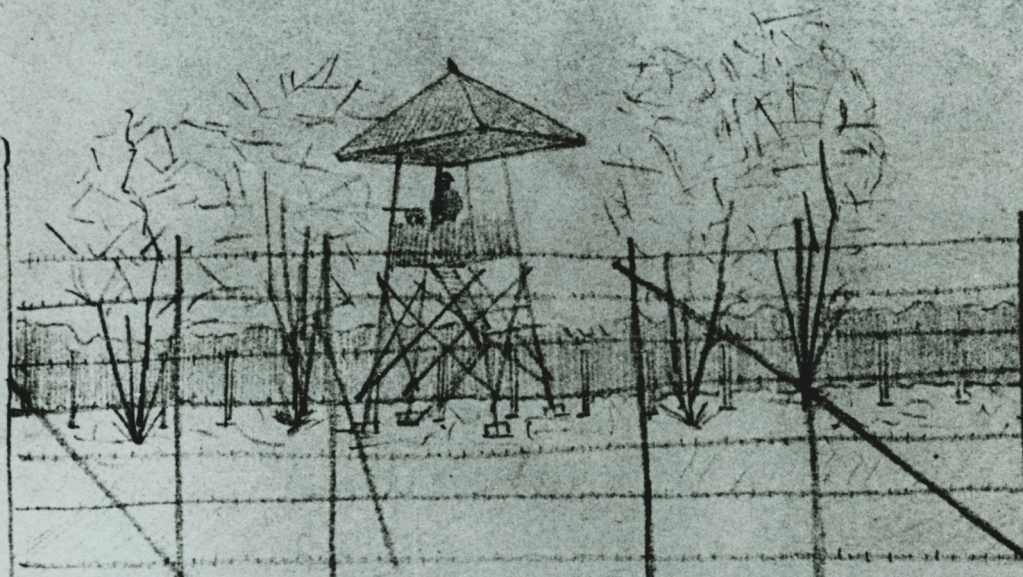
Vught Concentration Camp, also known as Kamp Vught or Herzogenbusch Concentration Camp, was a Nazi concentration camp located near the town of Vught in the Netherlands. It was the only SS concentration camp in occupied Northwest Europe.
In total, the imprisonment of approximately 32,000 people in the camp for a short or more extended period between January 1943 and September 1944. At least 749 men, women, and children died at the camp from hunger, disease, abuse, and execution. The Nazis executed 329 prisoners at the execution site outside the camp.
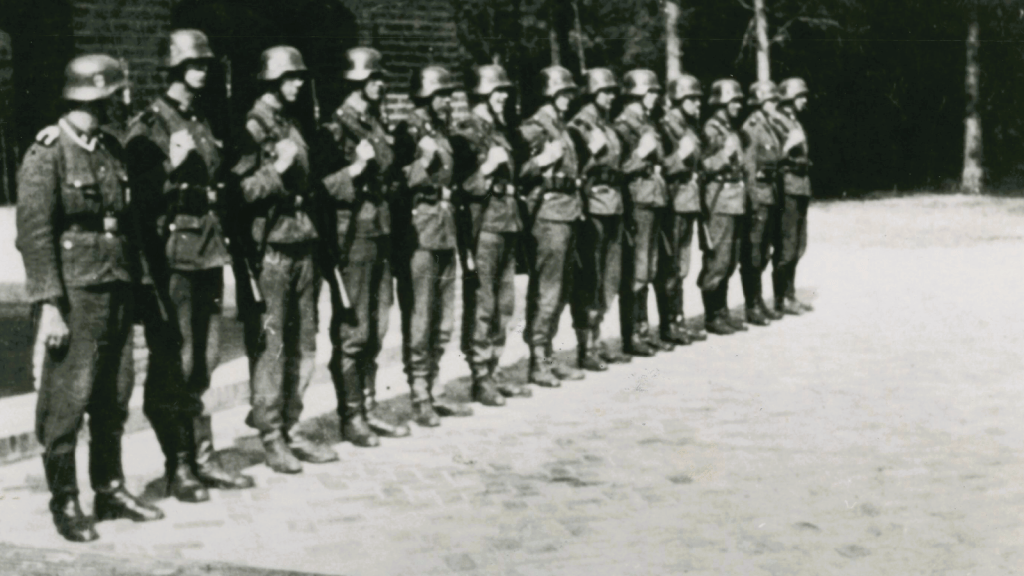
The following are details of a few of the victims.
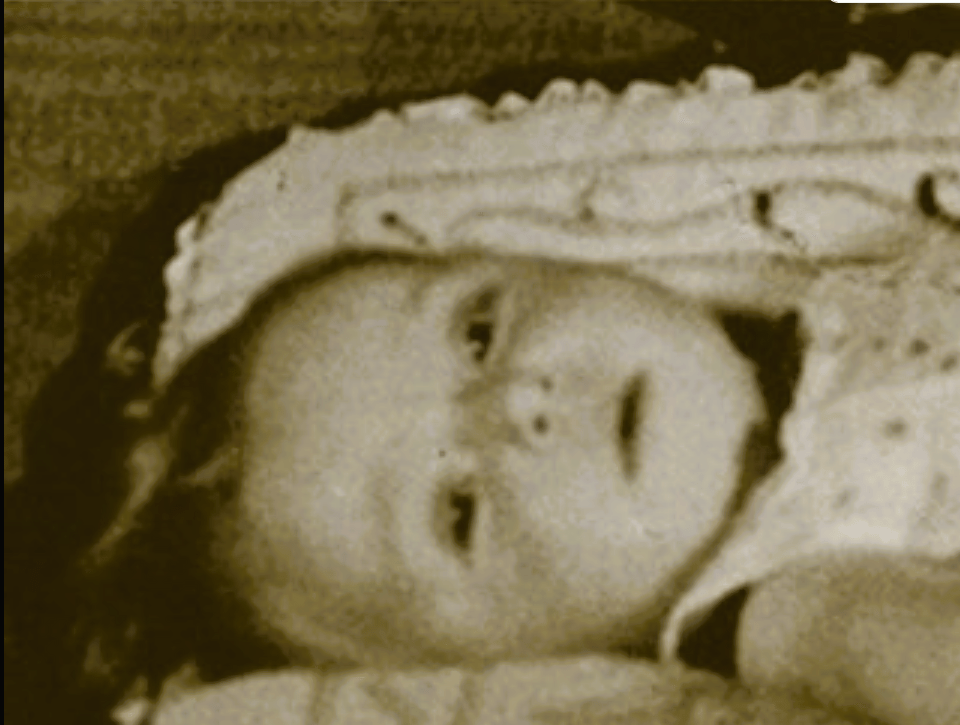
Rosalie van Baarle
Born in Amsterdam on June 22, 1941
Murdered in Camp Vught on April 12, 1943
On March 10, 1943, the Nazis imprisoned Rosalie in Camp Vught with her father, Isaac, and mother, Doortje. She died on April 12, only 21 months old. The Nazis transported and murdered her parents to Sobibor in early July 1943.
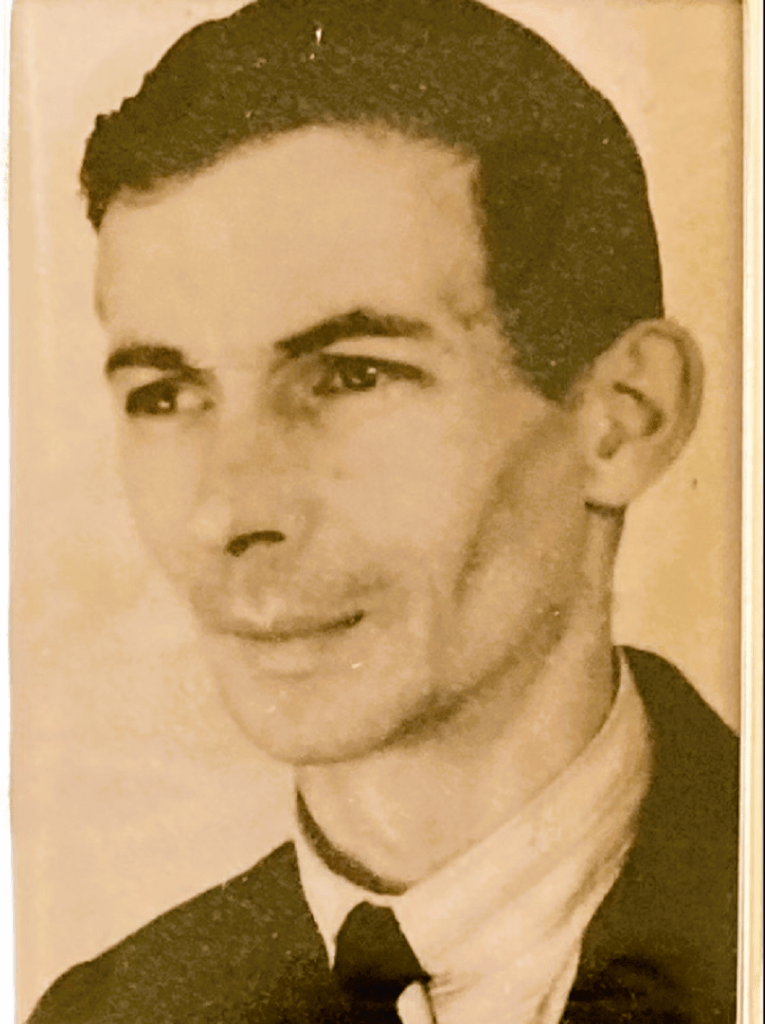
Dirk Johan Beumer
Born in Apeldoorn on September 22, 1905
Murdered in Camp Vught on September 4, 1944, at age 38
Dirk Beumer contributed to the resistance as an illegal printer. His printing shop on Sophialaan in Apeldoorn produced large amounts of unauthorized printed material. Towards the end of the summer of 1944, the SD captured Dirk. On September 4, the Naxis executed him at Camp Vught.
“Bunkerdrama”
The “Bunkerdrama” at Vught Concentration Camp referred to a tragic incident that occurred on the night of January 15-16, 1944, involving the confinement and deaths of several female prisoners. Here are key details:
A female prisoner, Fanny Philipson, complained about the confiscation of a letter from her son by the camp authorities. In response, the SS camp commander ordered the punishment of 74 female prisoners.
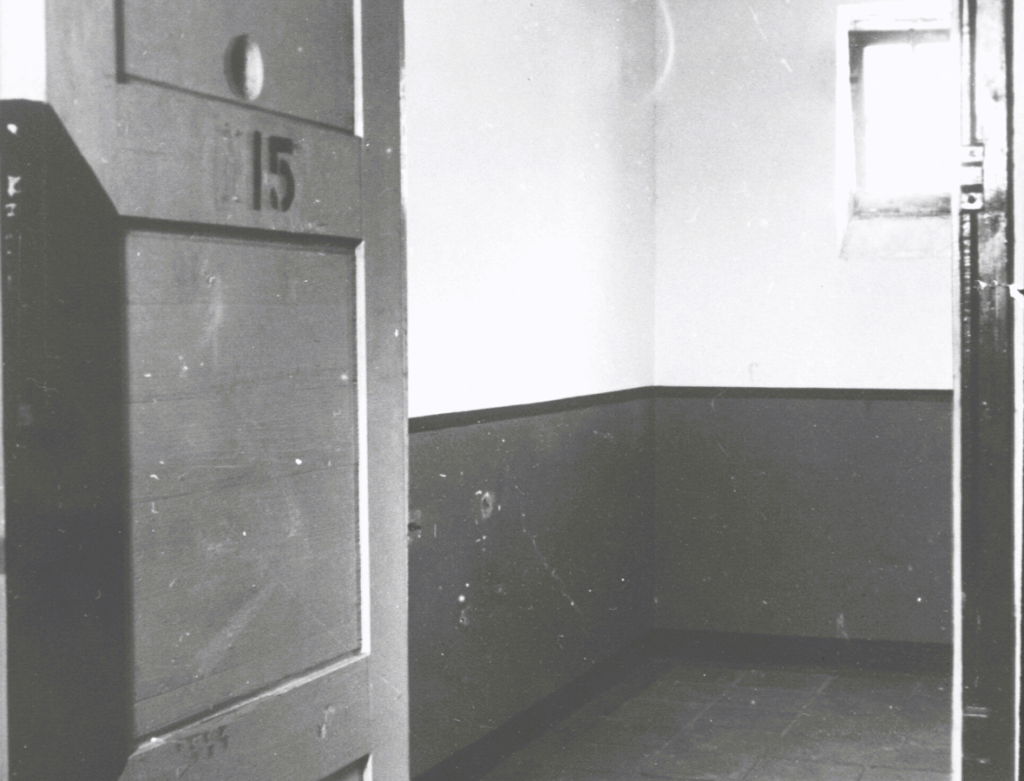
These women were locked in a tiny, windowless bunker cell designed to hold no more than a few people. The cell, measuring just a few square meters, was so overcrowded that the women had to stand pressed against each other.
Due to the lack of ventilation, many prisoners began to suffocate. When the cell door opened on the following day, 10 of the women had died from suffocation. Several other prisoners suffered from weakened conditions from the extreme conditions.
The incident caused shock and outrage among the remaining prisoners and even some of the camp personnel.
The camp commander, Adam Grünewald, was subsequently removed from his position and transferred to the Eastern Front, a reflection of internal SS disciplinary measures rather than concern for prisoner welfare.
Here are the names of the women murdered.
Lena Bagmeijer-Krant
Nelly de Bode
Maartje den Braber
Lamberta Buiteman-Huijsmans
Anna Gooszen
Mina Hartogs-Samson
Johanna van den Hoek
Lammerdina Holst
Antoinette Janssen
Huiberdina Witte-Verhagen
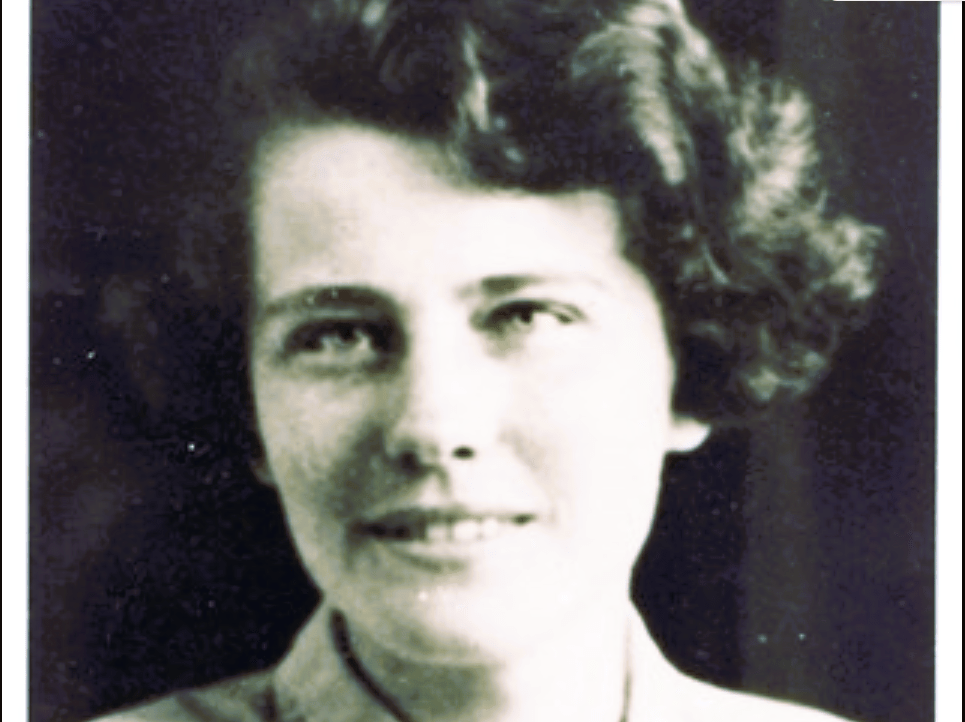
Nelly Adriana Jeannette de Bode was one of the victims of the “Bunkerdrama.”
Nelly Adriana Jeannette de Bode
Born in Heer on September 7, 1905
Murdered at Camp Vught on January 16, 1944, a victim of the bunker tragedy, 38 years old
On December 19, 1933, Nelly gave birth to a daughter, Bieneke. In 1935, she broke off the relationship with her husband. At the age of thirty, Nelly is faced with the task of raising her almost two-year-old daughter alone and starts working as an office clerk at the Employment Office in Rotterdam. She is known as a strong and modest woman who is ready for everyone.
Bieneke was six years old when the war broke out. During the bombing of Rotterdam on May 14, 1940, Nelly took Bieneke to a safe place and then helped where she could. She also ensured that an old Jewish lady could escape to England on a fishing boat.
Nelly continued to provide assistance. As the anti-Jewish measures increase, she gave her identity card to a Jewish housemate, and the photo on the identity card was also changed. Unfortunately, this change did not go unnoticed during an inspection. On November 1, 1943, Nelly was arrested at the office and transferred to the Haagsche Veer, the police headquarters. Nelly took all the blame in order to spare her roommate as much as possible. She immediately confessed and said that she gave up her identity card to spare this woman from walking aroundwith a star. On December 17, 1943, Nelly was transferred to Camp Vught. Bieneke, who turned ten years old without her mother, came to live with Nelly’s brother.
Nelly spent Christmas 1943, New Year’s Eve and New Year’s Day 1944 in barrack 23b among other female prisoners.
On Saturday evening, January 15 1944. the women are suddenly called to roll call, the entire camp management is present. After calling out their numbers, these women also go to the Bunker. Seventy-four women are squeezed into cell 115, a space seven feet wide, four feet twelve long, and seven feet high, with virtually no air supply. Nelly is also in this cell. The door opens 14 hours later
In the center of the cell is a pile of women. Around it stand and hang women who are completely unrecognizable, with soaking wet strands of hair, strangely discolored faces and torn clothes. The stench was terrible. Ten women were dead, including Nelly de Bode.inary soldier on the Eastern Front.
At the beginning of March 1944, Bieneke was told by her aunt in three short sentences that her mother had died of influenza in Camp Vught. In 1949, her history teacher talked about the bunker drama in Vught and Bieneke wonder ed whether her mother could have been there too. After a few years of research she discovered the real fate of her mother.
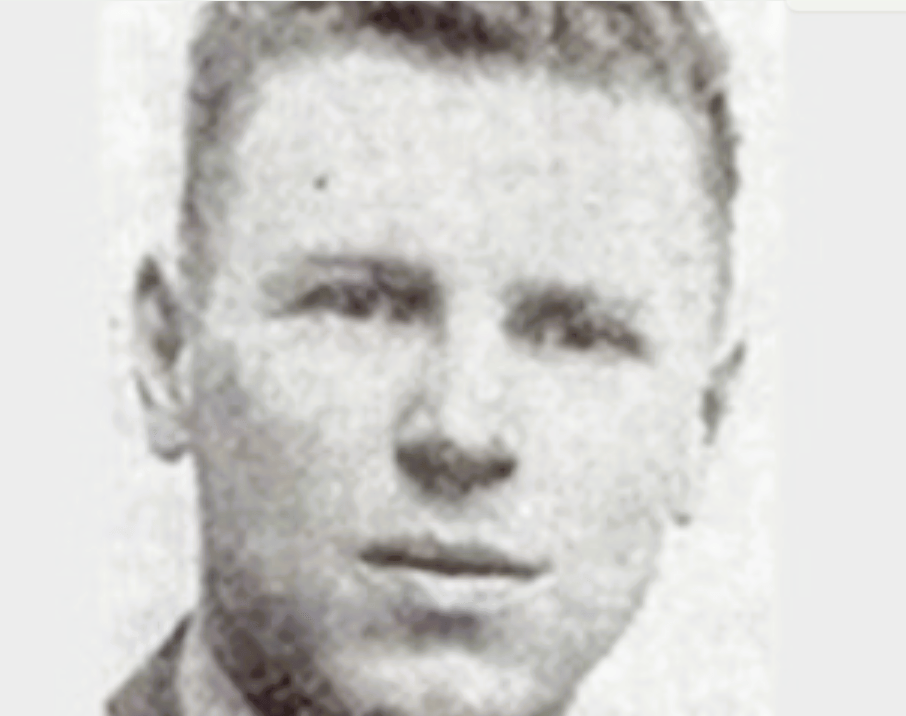
Dirk Boonstra was born on September 2, 1920, in the city of Groningen, an only child to Oege Boonstra and Anna Boonstra-Kempenaar. Dirk grows up as a friendly boy with many friends. After completing school, Dirk goes to work in his father’s company. Father Oege Boonstra is a partner in the transport company De Legro. This courier service provides freight transport between Groningen and Leeuwarden, where they frequently transport illegal goods. In the spring of 1943, Dirk came into contact with Jaap Kroon’s resistance group—the later Nulgroep—and Dirk indicated that he also wanted to help in the fight against the occupier.
Shelter House
Dirk Boonstra has a good contact within the House of Detention in Groningen, and many messages come through him to the central post of the Nulgroep. He is assigned to the finance committee when the functions within the group are strictly separated. Dirk also works for the KP (Fight Squads); He provides weapons, ammunition, uniforms, bicycle tires, gasoline, and money, among other things. Dirk’s parental home is often used as a shelter and transition home—Dirk’s mother was always willing to hide someone in need for a few nights.
When Elzinga, the head of the Special Investigations Department in Groningen, was killed—by the resistance on New Year’s Eve 1943—Dirk Boonstra and his father were arrested the next night. However, a search of the house yielded nothing because Mother Boonstra managed to throw a few bullets out the window and hide some letters under the front doormat. On January 19, Dirk received a summons to the Scholtenshuis on the Grote Markt, the feared headquarters of the SD, where arrested persons were interrogated and tortured in the attic. Dirk, under consideration, answered the summons to avoid increasing suspicion against his father. After intense interrogations, the Nazis released him on February 21, but his father remained in custody.
Although the interrogators could not prove that Dirk’s father was partly to blame for Elzinga’s death, he was still detained and transported to Haaren as a hostage. The SD continued to keep an eye on Dirk and his home for a while, and the resistance group advised him to stay out of resistance work. However, this did not please Dirk; he complained and was soon back in full force in the resistance.
Despite the fact that both his mother and his fiancée Jannette Munstra repeatedly urged Dirk to go into hiding, Dirk believed that he was not in real danger. However, on August 8, 1944, when the resistance members were busy loading a car in the garage opposite Boonstra’s house, two men in plain clothes arrived at the house, wanting to have a few coffins transported to Leeuwarden. Mrs. Boonstra directed the men to the garage, where they seized the car and immediately arrested Dirk. On August 16, 1944, the Nazis transported Dirk Boonstra to Camp Vught. The last letter from him comes from the House of Detention in Groningen and is dated August 15.
On August 18, Dirk was executed. together with twelve others, in Camp Vught as reprisal for the execution of a police lieutenant in Sneek. A solemn funeral service was held for this group of thirteen executed people in 1945 in the reformed Koepelkerk in Leeuwarden.
May the all rest in peace

Sources:
https://www.nmkampvught.nl/ontdekken/het-verhaal/vermoord-in-vught/resultaat/?letter=B
https://www.nmkampvught.nl/bunkerdrama/
Donation
I am passionate about my site and I know you all like reading my blogs. I have been doing this at no cost and will continue to do so. All I ask is for a voluntary donation of $2, however if you are not in a position to do so I can fully understand, maybe next time then. Thank you. To donate click on the credit/debit card icon of the card you will use. If you want to donate more then $2 just add a higher number in the box left from the PayPal link. Many thanks.
$2.00
 History of Sorts
Leave a comment