
Before I get into the story of Mohamed Atta, there is something I need to get off my chest. It appears that in the last few years, there has been a gradual downgrading of acts of terrorism. Terrorists are no longer called terrorists but militants. There are two definitions of a militant:
1, Engaged in warfare or combat: fighting
2. Aggressively active (as in a cause): combative.
For example, suffragettes were sometimes referred to as militants. Terrorists spread terror and violence for a political or religious cause or a combination of both. However, I thought militant was already a mild term to describe a terrorist. But to my surprise, when I googled Mohamed Atta, this was the first description that came up for him.
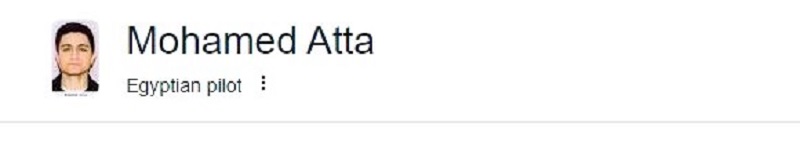
Mohamed Atta: The Architect of 9/11
Mohamed Atta, born in Egypt in 1968, emerged as the principal architect and operational leader of the September 11, 2001, terrorist attacks, one of the deadliest and most transformative events in modern history. As the hijacker of American Airlines Flight 11, Atta was responsible for piloting the plane that struck the North Tower of the World Trade Center, initiating the devastating attack that claimed nearly 3,000 lives. His role in this event (as both the leader of the hijackers and a key figure in planning the operation) marked him as one of the most infamous terrorists of the 21st century. The path that led Atta to this moment, however, was shaped by his upbringing, education, radicalization, and devotion to violent extremism.
Early Life and Education
Mohamed Mohamed el-Amir Awad el-Sayed Atta was born on September 1, 1968, in Kafr el-Sheikh, Egypt, to a middle-class family. His father was a lawyer, known for being strict and deeply traditional, while his mother came from a well-to-do family. Atta was described as a quiet, introverted child, and his early years were marked by an emphasis on academic achievement and discipline. Following his secondary education, Atta enrolled at Cairo University, where he studied architectural engineering, graduating in 1990.
His desire to further his education took him to Germany in 1992, where he enrolled at the Technical University of Hamburg-Harburg to study urban planning. His time in Germany, however, would become pivotal in shaping the man he would become. While Atta excelled academically, earning a reputation as a meticulous and disciplined student, he also experienced isolation as a foreign student in the West. This feeling of alienation, combined with his growing disillusionment with Western values, began to foster a deep resentment toward the Western world, particularly the United States.
Radicalization and Connection to al-Qaeda
In Germany, Atta fell in with a group of like-minded Islamist students who shared anti-Western and radical beliefs. As he became increasingly religious and began adopting a more extreme interpretation of Islam, Atta’s political worldview shifted dramatically. He came to believe that the Muslim world was under attack by the West, with a particular focus on American policies in the Middle East. Events like the Gulf War and the presence of U.S. military bases in Saudi Arabia—the birthplace of Islam—fueled his growing anger. His time in Hamburg was instrumental in transforming him from a quiet student into a radical Islamist.
By the late 1990s, Atta and several members of the so-called Hamburg Cell had made connections with al-Qaeda, the terrorist organization led by Osama bin Laden. Atta traveled to Afghanistan in 1999, where he attended an al-Qaeda training camp. His intelligence, discipline, and dedication made a strong impression on bin Laden, who saw in him a potential leader for one of the organization’s most ambitious plans: a coordinated series of attacks on U.S. soil.
Planning and Leading the 9/11 Attacks
In 1999, Atta was selected by al-Qaeda leadership to lead the 9/11 hijackers and began planning the operation. The plot involved hijacking four commercial airplanes and using them as weapons to strike symbolic targets in the United States: the World Trade Center, the Pentagon, and likely the U.S. Capitol or White House. Atta’s organizational skills and attention to detail made him a key figure in the planning process. He was responsible for coordinating the hijackers’ training, finances, and travel logistics, often communicating directly with al-Qaeda leaders to ensure that the plan would proceed smoothly.
Atta moved to the United States in 2000, settling in Florida, where he trained at Huffman Aviation in Venice to obtain his commercial pilot’s license.
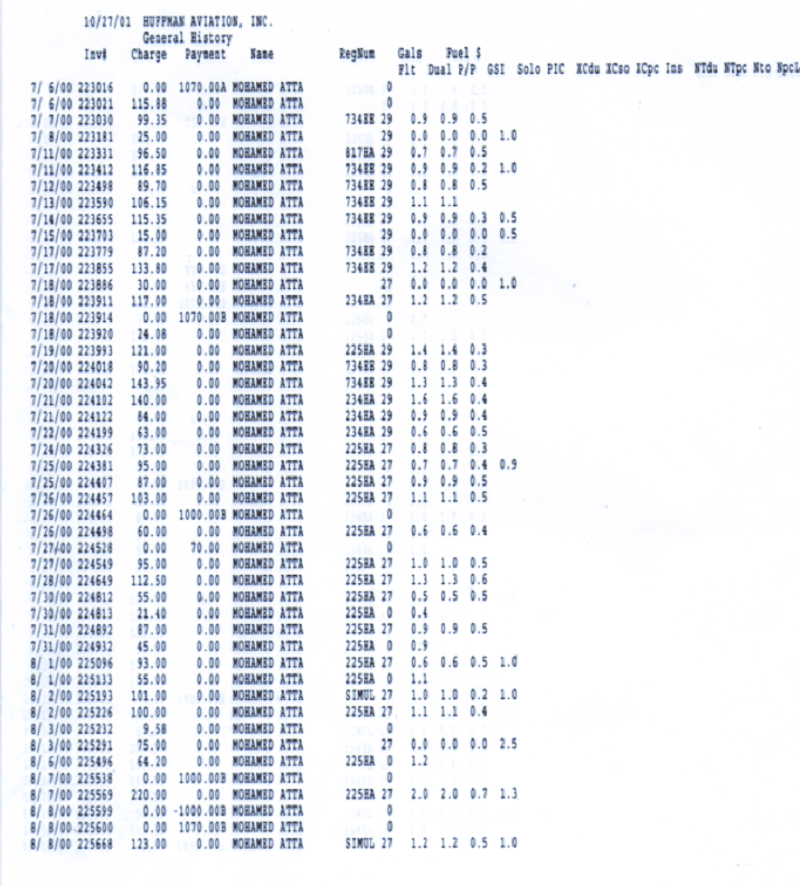
During this time, he lived a relatively low-profile life, maintaining a facade of normalcy while preparing for the mission. His meticulous planning extended to every detail, including timing, coordination between the four hijacking teams, and the final moments of the operation.
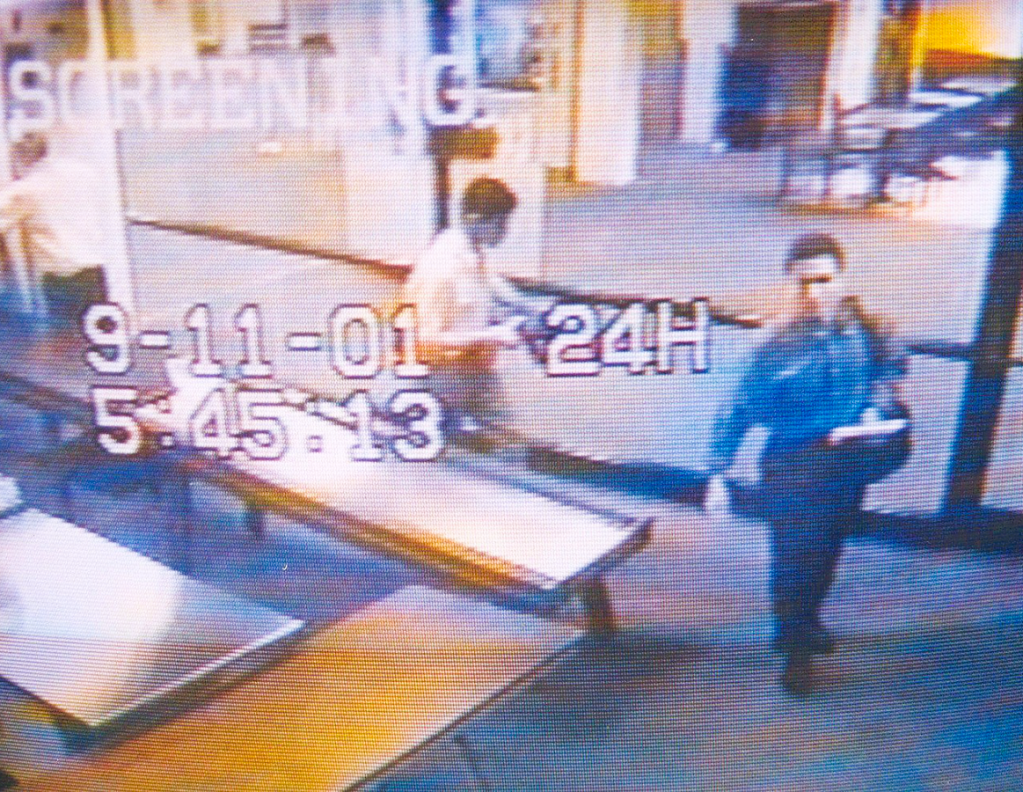
On September 11, 2001, Atta and his team boarded American Airlines Flight 11 at Logan International Airport in Boston. Shortly after takeoff, they hijacked the plane, overpowering the crew and passengers. Atta assumed control of the cockpit and, at 8:46 AM, flew the plane into the North Tower of the World Trade Center. This was the first of four coordinated attacks that day, which included the crash of another plane into the South Tower, one into the Pentagon, and a fourth plane, United Airlines Flight 93, which passengers brought down in a field in Pennsylvania before reaching its target.
Personality and Motivation
Atta’s character was shaped by a combination of personal discipline, religious conviction, and a deep-seated belief in martyrdom through jihad. Described by those who knew him as reserved, introverted, and deeply focused, he was not the typical image of a terrorist. He rarely engaged in outward displays of violence or extremism and instead carried an almost bureaucratic approach to his mission. His personality was one of cold precision, driven by an unwavering belief in his ideological cause.
His motivations stemmed from a worldview that saw the West, particularly the United States, as an enemy of Islam. He was deeply influenced by the idea that violent action was necessary to avenge what he perceived as centuries of Western oppression of the Muslim world. In his final letter, found after the attacks, Atta expressed his desire for martyrdom, viewing his death as part of a divine plan.
Legacy and Impact
Mohamed Atta’s role as the leader of the 9/11 attacks left a profound mark on global history. The attacks not only caused massive loss of life but also triggered a series of far-reaching consequences. The United States responded with the War on Terror, leading to the invasion of Afghanistan to dismantle al-Qaeda and remove the Taliban from power. Later, the invasion of Iraq in 2003, though controversial, was also part of the broader U.S. response to 9/11.
The attacks led to significant changes in global security, with heightened measures in aviation, intelligence sharing, and counterterrorism efforts worldwide. The geopolitical landscape of the Middle East was also significantly altered in the years following the attacks, and the legacy of 9/11 continues to influence U.S. foreign policy.
Conclusion
Mohamed Atta’s transformation from a quiet student in Egypt to the mastermind of the 9/11 attacks highlights the powerful influence of ideology, alienation, and radicalization. His actions on September 11, 2001, forever changed the world, leading to a reevaluation of global security and sparking conflicts that continue to shape international relations. Although Atta’s name is now synonymous with one of the darkest days in modern history, understanding the forces that drove him to commit such acts remains crucial in preventing future tragedies.
Sources
https://www.britannica.com/biography/Mohammed-Atta
https://psycnet.apa.org/record/2012-27182-006
https://www.pbs.org/wgbh/pages/frontline/shows/network/personal/
Donation
Your readership is what makes my site a success, and I am truly passionate about providing you with valuable content. I have been doing this at no cost and will continue to do so. Your voluntary donation of $2 or more, if you are able, would be a significant contribution to the continuation of my work. However, I fully understand if you’re not in a position to do so. Your support, in any form, is greatly appreciated. Thank you. To donate, click on the credit/debit card icon of the card you will use. If you want to donate more than $2, just add a higher number in the box left from the PayPal link. Your generosity is greatly appreciated. Many thanks.
$2.00
 History of Sorts
Leave a comment