
Zyklon B, a cyanide-based pesticide, became an instrument of genocide during the Holocaust, marking one of the darkest chapters in human history. Originally developed for benign purposes, its transformation into a tool for mass murder within Nazi gas chambers represents the convergence of industrial efficiency, scientific innovation, and the deliberate, systematic extermination of millions of people. This blog explores the history, development, and horrific use of Zyklon B in the extermination camps, shedding light on the devastating implications of its role in the Holocaust.
Development and Early Uses of Zyklon B
Zyklon B was first introduced in the early 1920s, developed by chemists Fritz Haber and Fritz Gerber for use as a fumigant. The primary active ingredient in Zyklon B was hydrogen cyanide (HCN), a highly toxic gas. To make the gas usable in controlled quantities, the HCN was absorbed into inert carrier materials such as diatomaceous earth, which were then shaped into small pellets. When exposed to air, these pellets released hydrogen cyanide gas. This lethal substance could kill within minutes by preventing the body from absorbing oxygen.
Initially, Zyklon B was used for pest control in various settings, including ships and buildings, and to deliver clothing and bedding. It was part of early 20th-century efforts to control disease by eliminating lice, fleas, and other vectors of typhus and other illnesses. This disinfectant role saw it used in both civilian and military contexts throughout Europe.
The product was produced by Degesch (Deutsche Gesellschaft für Schädlingsbekämpfung), a pest control company, which later came under the umbrella of the larger IG Farben conglomerate, a chemical company closely tied to Nazi Germany’s war effort. Despite its commercial origins, Zyklon B’s transition into a genocidal weapon would soon mark one of the darkest chapters of human history.

The Nazi Quest for “Efficient” Killing Methods
Nazi ideology, rooted in extreme antisemitism, racism, and eugenics, saw the Jewish population as a central threat to Germany. The Nazis also targeted other groups, including Romani people, disabled individuals, Soviet prisoners of war, political dissidents, and homosexuals. By the late 1930s and early 1940s, Nazi Germany had begun implementing policies designed to eliminate these groups through systematic murder, leading to the development of the “Final Solution” — the plan to annihilate European Jewry.
At the start of World War II, Nazi killing methods were often brutal but inefficient. Mobile Einsatzgruppen units would follow the German army and execute Jews, communists, and other “undesirables” through mass shootings. However, this method was logistically complex, mentally taxing on the soldiers involved, and considered too slow to achieve the Nazis’ genocidal goals. The SS, under Heinrich Himmler’s leadership, sought more “efficient” means of mass killing, aiming to create a system that allowed for maximum extermination with minimal effort and emotional strain on the executioners.

Early Experimentation with Gas
Nazi use of poison gas as a killing method had its roots in the T4 Euthanasia Program, where carbon monoxide was used to murder disabled people and others deemed “unworthy of life.” These gas killings took place in mental health asylums, with victims being brought into sealed rooms and exposed to carbon monoxide gas, leading to death by suffocation.
By 1941, the Nazi leadership realized that the same method of mass gassing could be adapted to exterminate Jews and other targeted groups on a much larger scale. Concentration camps such as Auschwitz-Birkenau and Majdanek were selected as sites for systematic mass extermination, and experimentation began on different methods of gas-based killing. Initially, carbon monoxide was used, but it was deemed inefficient for the vast scale of the Holocaust.
Zyklon B, initially used in Auschwitz for delousing prisoner barracks, was repurposed for human extermination. It was chosen because of its ability to release deadly cyanide gas upon exposure to air, which made it a fast-acting and relatively simple method to kill large numbers of people.
Zyklon B in the Extermination Camps
The first experimental use of Zyklon B on human beings took place in September 1941 at Auschwitz, where around 600 Soviet prisoners of war and 250 Polish prisoners were murdered. Nazi SS officers and camp officials found the experiment successful, and Zyklon B was quickly adopted as the primary agent of extermination at several camps.
The gas chambers were designed to resemble shower rooms to prevent panic among the prisoners. Victims, often told they were being taken for a shower or delousing, were crammed into the gas chambers — often thousands at a time — and the Zyklon B pellets were dropped through ceiling vents or introduced through wall openings. Once exposed to air, the pellets released hydrogen cyanide gas, which quickly filled the sealed chamber. Within 15 to 20 minutes, the prisoners would die from suffocation as the gas interfered with the body’s ability to use oxygen. Those closest to the vents died first, while those further from the gas release points suffered longer. The horror was compounded by the fact that many victims, realizing too late what was happening, would climb over each other in panic, leaving a tangle of bodies for the SS to clean up afterward.
At Auschwitz-Birkenau, the largest Nazi extermination camp, Zyklon B was responsible for the deaths of more than one million people, the vast majority of them Jews. Other camps, such as Majdanek, also employed Zyklon B. However, Auschwitz became the most notorious for its role in the mass murder of European Jewry.
Industrialization of Death
The use of Zyklon B in gas chambers marked a horrifying industrialization of death. The Nazis’ approach to mass murder was chillingly systematic and bureaucratic. Engineers, architects, and chemists all played a role in designing and implementing the most “efficient” means of extermination. The gas chambers, often disguised as ordinary buildings or showers, were carefully planned for maximum throughput — the ability to kill thousands of people in a single day. Crematoria were constructed adjacent to the gas chambers to dispose of the bodies quickly, further streamlining the extermination process.
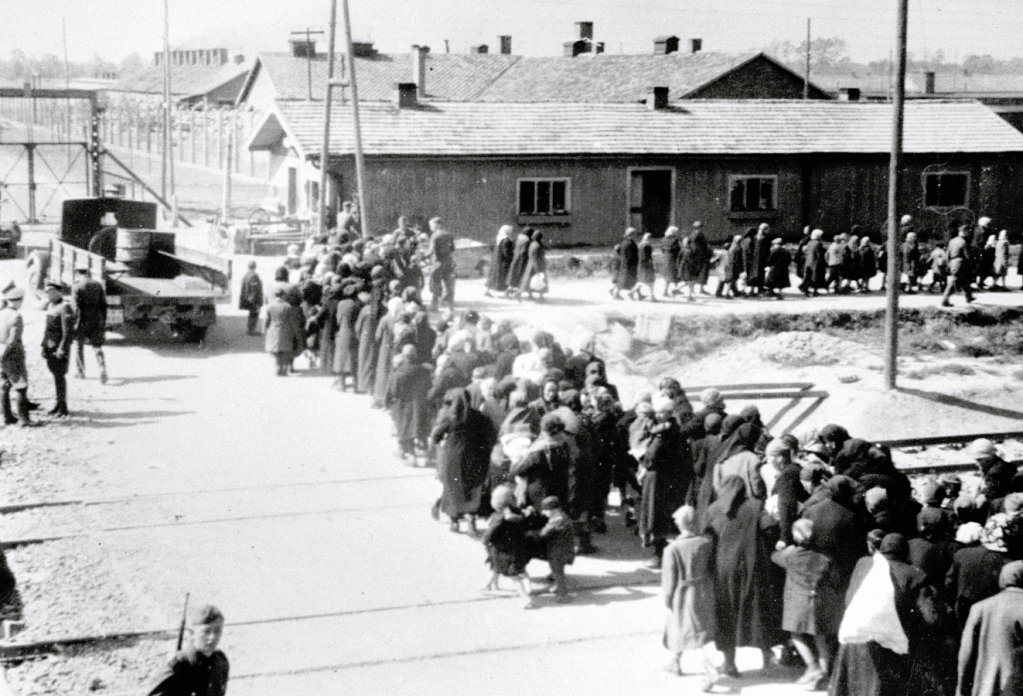
The production of Zyklon B for the Nazi death machine was also a deeply sinister collaboration between government, industry, and science. Degesch produced the gas, while companies like IG Farben, a massive chemical conglomerate, supplied key materials and profited from the sales to the SS. The manufacturers of Zyklon B knew the purpose for which the gas was being used. After the war, at the Nuremberg Trials, several company executives were tried and convicted for their role in the Holocaust.
The Aftermath and Historical Legacy
The use of Zyklon B became one of the most potent symbols of the Holocaust, representing the dehumanizing and mechanized nature of Nazi genocide. By the end of World War II, an estimated 6 million Jews had been murdered, along with millions of others deemed undesirable by the Nazi regime, including Roma, disabled individuals, and political prisoners. Zyklon B was one of the primary tools of this genocide.
After the war, many individuals responsible for the production, sale, and use of Zyklon B were brought to justice. At the Nuremberg Trials, Bruno Tesch, one of the directors of the company that produced Zyklon B, was sentenced to death for his involvement in the Holocaust. Others, such as officials from IG Farben, were also convicted of war crimes.
The Holocaust, and specifically the use of Zyklon B in gas chambers, has since been a central focus of historical scholarship, moral reflection, and education. It stands as a stark reminder of how science and industry can be perverted for horrific purposes when ethical boundaries are erased.
Zyklon B’s transformation from a commercial pesticide into a tool of mass murder reflects the perverse ingenuity of the Nazi regime. Its use in the gas chambers during the Holocaust became a symbol of industrialized death, demonstrating how technology and bureaucracy can be harnessed to perpetrate unimaginable atrocities. The legacy of Zyklon B is one of horror and a grim reminder of the consequences of unchecked hate, racism, and dehumanization. The Holocaust and the role of Zyklon B in it remains a critical chapter in history, providing enduring lessons about the importance of human rights, ethics, and the dangers of ideologies that seek to categorize and eliminate entire groups of people.
Sources
https://www.nationalarchives.gov.uk/education/resources/holocaust/trial-bruno-tesch/
https://www.britannica.com/science/Zyklon-B
https://www.auschwitz.org/en/history/auschwitz-iii/ig-farben/
https://history.evonik.com/en/predecessor-companies
https://encyclopedia.ushmm.org/content/en/photo/looking-through-the-belongings-of-massacred-jews
https://www.dw.com/en/stock-of-former-nazi-chemicals-giant-to-be-delisted/a-15327052
Donation
Your readership is what makes my site a success, and I am truly passionate about providing you with valuable content. I have been doing this at no cost and will continue to do so. Your voluntary donation of $2 or more, if you are able, would be a significant contribution to the continuation of my work. However, I fully understand if you’re not in a position to do so. Your support, in any form, is greatly appreciated. Thank you. To donate, click on the credit/debit card icon of the card you will use. If you want to donate more than $2, just add a higher number in the box left from the PayPal link. Your generosity is greatly appreciated. Many thanks.
$2.00


 History of Sorts
Leave a reply to tzipporahbatami Cancel reply