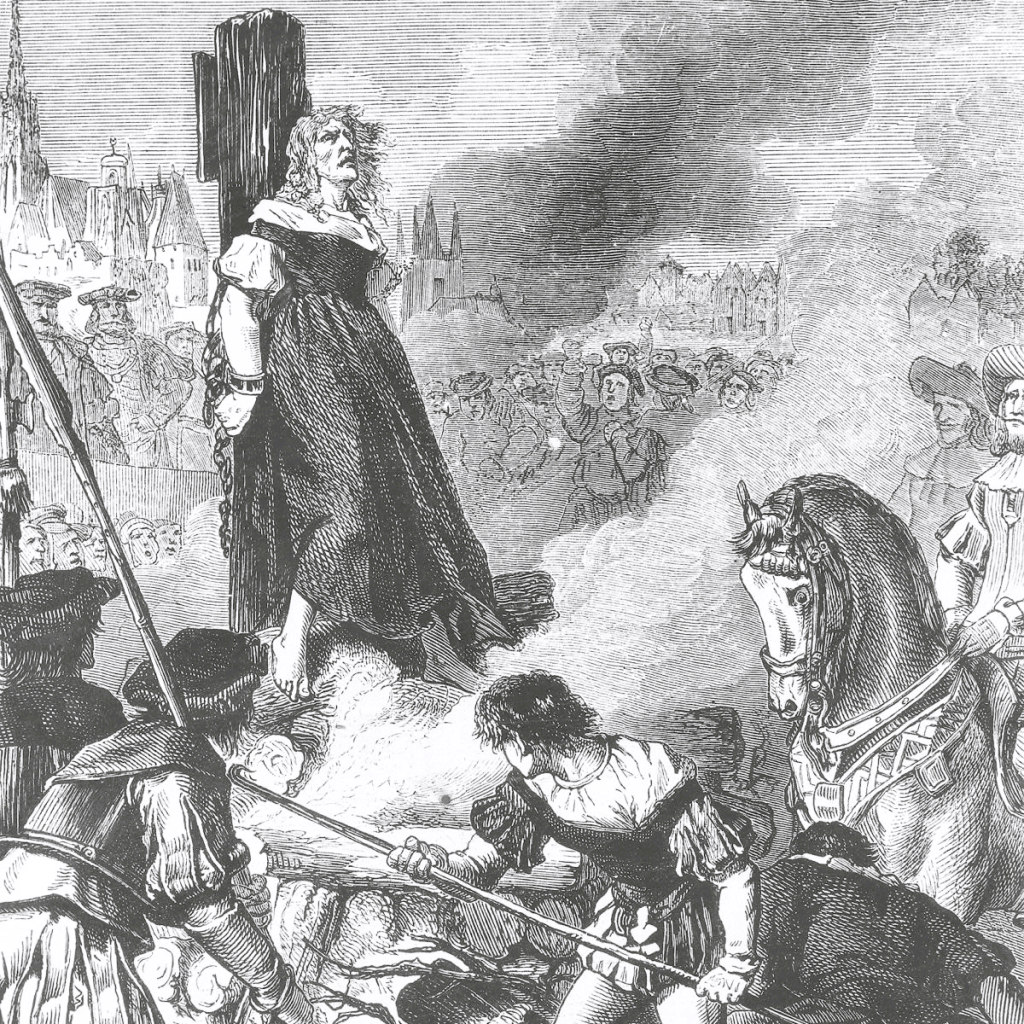
Petronella de Meath: The Tragic Story of Ireland’s First Witch Execution
Petronella de Meath, a name often overshadowed by the larger figure of Lady Alice Kyteler, stands as a poignant symbol of the brutal treatment of marginalized individuals during the medieval period. In 1324, Petronella became the first recorded person in Ireland to be executed by burning at the stake for heresy, accused of witchcraft in a case fraught with personal vendettas, gender bias, and social injustice. Her story offers a lens through which we can explore the complexities of medieval society, the power dynamics between social classes, and the darker aspects of religious zealotry. Petronella’s fate, intertwined with that of Lady Alice, underscores the vulnerability of those on the periphery of power and illuminates how the fear of heresy and witchcraft could easily be wielded as a weapon by those in authority.
The Context of the Accusations: Medieval Ireland and Lady Alice Kyteler
Petronella de Meath was a maidservant to Lady Alice Kyteler, a wealthy and well-connected noblewoman in Kilkenny. Lady Alice’s life was, by any account, controversial: she married four times, each time inheriting significant wealth, which eventually made her the subject of envy and suspicion. Following the death of her fourth husband, accusations began to emerge, primarily led by her stepchildren. These accusations centered on claims that Lady Alice had used sorcery to manipulate her husbands, kill them, and accumulate wealth. Amid these accusations, Bishop Richard de Ledrede, a fervent and inflexible church leader, took an intense interest in Lady Alice’s case. Ledrede was determined to assert the power of the Church and cleanse Kilkenny of what he perceived as heretical influences, making Lady Alice the perfect target.
Although the primary accusations of witchcraft were leveled against Lady Alice, her social standing and resources enabled her to evade immediate repercussions. Petronella de Meath, however, was an easier target. As Lady Alice’s maidservant, Petronella’s low social status made her vulnerable to coercion, exploitation, and punishment. Her position was an unfortunate one: caught in a feud where the powerful could shield themselves while those without resources bore the consequences.
Witchcraft had been treated as a misdemeanour up until shortly before this point.
But when Pope John XXII published a Papal Bull denouncing it as heresy, this opened the door to much more severe punishment.

Petronella’s Role and Forced Confession
Petronella was apprehended and accused of aiding Lady Alice in her alleged sorcery. Bishop de Ledrede, eager to substantiate his case against Lady Alice, focused on extracting a confession from Petronella, which would support his allegations. In an era when torture was a common means of securing confessions, particularly in cases of heresy, Petronella endured physical abuse that eventually led to her “confession.” Under duress, she “confessed” to a range of accusations: that Lady Alice had used dark magic, created potions to seduce and control men, and engaged in communication with demonic entities. She even admitted to participating in rituals involving sacrilegious acts and incantations. Such confessions, extracted under torture, were frequently dramatized to satisfy the demands of religious authorities and to exemplify the supposed horrors of heretical behavior.
Petronella’s confession served multiple purposes: it solidified Bishop de Ledrede’s case against Lady Alice, justified his intense pursuit of the matter, and provided a public example of the Church’s authority over perceived heretics. Tragically, Petronella’s statements, given under extreme physical and psychological pressure, sealed her fate as a scapegoat, sparing Lady Alice from the same punishment.
Execution and Public Spectacle
On November 3, 1324, Petronella de Meath was burned at the stake in Kilkenny, becoming the first known person in Ireland to suffer such a punishment for heresy. The execution was not only an act of capital punishment but a carefully orchestrated spectacle meant to instill fear and reinforce the Church’s stance on heresy. In medieval Europe, burning was considered an appropriate punishment for heretics, who were thought to corrupt the purity of the Christian faith. Fire symbolized both divine judgment and purification, and Petronella’s death was meant to serve as a stark warning to others who might be tempted toward heresy or any practices deemed subversive to the Church’s teachings.
The brutality of Petronella’s execution marked her as a victim of an unforgiving system in which those without power were often sacrificed for the sake of maintaining societal order and authority. Lady Alice, the primary figure of suspicion, managed to escape—likely through the use of her wealth and influence—leaving Petronella to bear the punishment intended for both.
Legacy and Historical Significance
The case of Petronella de Meath is a tragic reminder of how deeply embedded gender, class, and power dynamics were in the medieval justice system. Her story reveals the vulnerability of women and servants within a patriarchal society, particularly when accusations of witchcraft were used as tools for personal vendettas. As a lower-class woman, Petronella had little recourse to defend herself, nor could she appeal to the resources and protections that shielded Lady Alice. Her execution underscores how accusations of witchcraft disproportionately targeted marginalized individuals—often women, the poor, and the socially powerless—who could easily be scapegoated to serve the interests of powerful figures.
Petronella’s case also underscores the fervor with which religious authorities pursued accusations of heresy and witchcraft. Bishop de Ledrede’s role in her prosecution and execution illustrates the extremes to which religious zeal could drive individuals, especially in cases that offered the opportunity to assert ecclesiastical dominance. The public nature of Petronella’s execution was a chilling reminder of the Church’s power to control and punish, using fear to enforce religious conformity.
Petronella de Meath’s story, though obscured by time, continues to resonate as a testament to the abuses of power and the dangers faced by those living on the edges of society. She serves as a symbol of the many victims of medieval witch hunts who, through no fault of their own, became casualties of social, religious, and personal agendas. Her death marks a dark moment in Irish history and offers modern readers a perspective on the human cost of fear-driven, authoritarian rule. As the first recorded person executed for witchcraft in Ireland, Petronella de Meath’s story remains a reminder of the vulnerability of those without social or legal standing and the need for justice systems that guard against prejudice and exploitation. Her legacy, though tragic, encourages reflection on how far societies have come—and still have to go—in protecting the marginalized and ensuring fair treatment for all.
Sources
https://www.bbc.com/news/articles/cx241e9d222o
https://www.historickilkenny.com/petronella-de-meath
https://www.historickilkenny.com/alice-kyteler
https://www.brooklynmuseum.org/eascfa/dinner_party/place_settings/petronilla_de_meath
Donation
Your readership is what makes my site a success, and I am truly passionate about providing you with valuable content. I have been doing this at no cost and will continue to do so. Your voluntary donation of $2 or more, if you are able, would be a significant contribution to the continuation of my work. However, I fully understand if you’re not in a position to do so. Your support, in any form, is greatly appreciated. Thank you. To donate, click on the credit/debit card icon of the card you will use. If you want to donate more than $2, just add a higher number in the box left from the PayPal link. Your generosity is greatly appreciated. Many thanks.
$2.00
 History of Sorts
Leave a comment