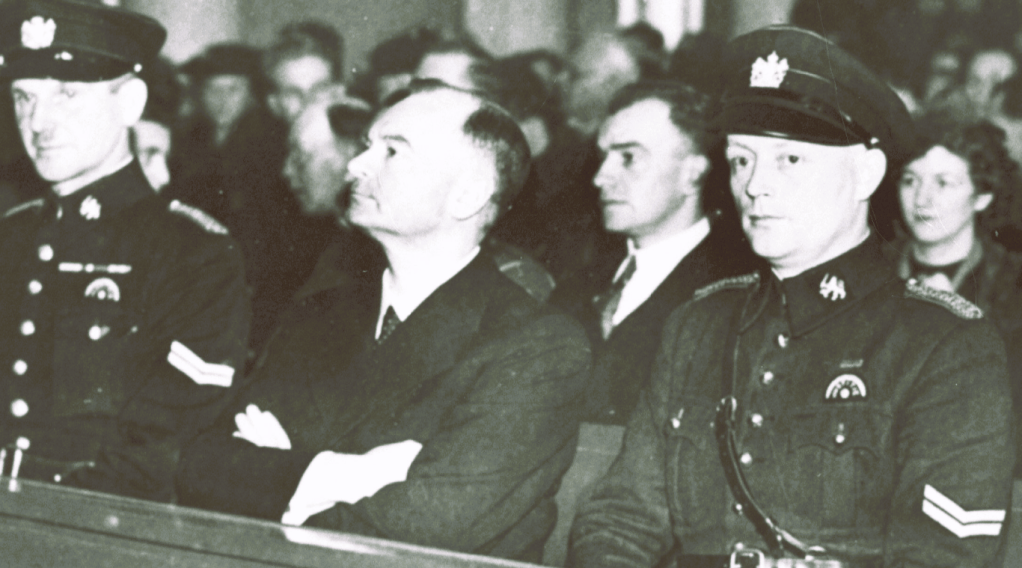
Anton Mussert (1894–1946) was a central figure in the history of Dutch collaboration during World War II. As the founder and leader of the Nationaal-Socialistische Beweging (NSB), or National Socialist Movement, Mussert became one of the most notorious symbols of Dutch cooperation with Nazi Germany. His leadership of the NSB and his role in facilitating the Holocaust in the Netherlands remain enduring stains on his legacy. Although his influence within the German occupation hierarchy was limited, his complicity in the persecution of Jews and suppression of resistance movements played a critical role in the suffering of the Dutch people.
Early Life and Rise of the NSB
Mussert, a trained civil engineer, entered politics in the early 1930s as a fervent nationalist. In 1931, he co-founded the NSB with Cornelis van Geelkerken, modeling it after Adolf Hitler’s National Socialist German Workers’ Party (NSDAP). The NSB adopted many tenets of Nazi ideology, including anti-communism, authoritarianism, and, increasingly over time, anti-Semitism.

Initially, Mussert portrayed himself as a Dutch nationalist aiming to restore the Netherlands to a position of strength in a turbulent Europe. However, as the NSB gained momentum, it became increasingly aligned with Nazi Germany, embracing the Reich’s racial doctrines and totalitarian ambitions. By the mid-1930s, the NSB had adopted explicit anti-Semitic policies, including support for measures to isolate and marginalize Jewish communities. While the party never gained significant electoral support—at its peak, it won about 8 percent of the vote in 1935—its ideological alignment with Germany became more pronounced as World War II approached.
Leadership During the Occupation
When Germany invaded and occupied the Netherlands in May 1940, Mussert saw an opportunity to advance his vision of a Dutch state integrated into Hitler’s “New Order.” He pledged his loyalty to the German occupiers, believing they would grant him leadership over the Netherlands. However, Mussert’s influence remained limited; the Germans viewed him as a useful but subordinate figure. While he was granted the title of “Leider van het Nederlandse Volk” (Leader of the Dutch People) in 1942, real power was held by the German administration.
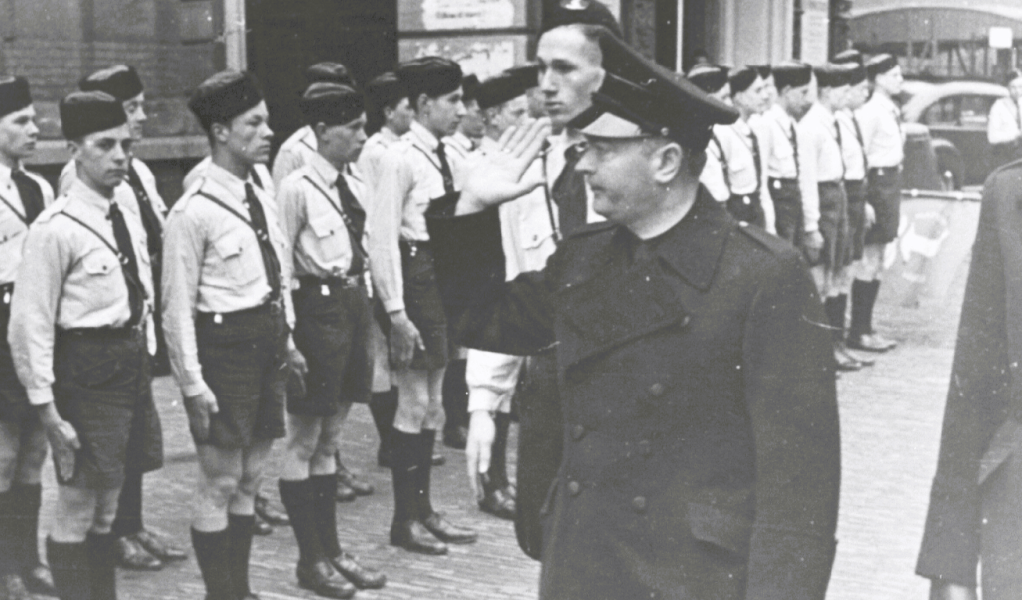
Despite his limited authority, Mussert and the NSB actively supported Nazi policies. The NSB became an essential tool for the German occupiers, aiding in the persecution of Jews, the suppression of resistance movements, and the broader goal of transforming the Netherlands into a compliant state within the Nazi empire. NSB members served in administrative roles, collaborated with the Sicherheitsdienst (SD) and Gestapo, and participated in propaganda campaigns that demonized Jews and resistance fighters.
Mussert’s Role in the Holocaust
Mussert’s complicity in the Holocaust is one of the darkest aspects of his legacy. Although he did not personally oversee deportations or extermination policies, his leadership of the NSB made him a collaborator in the Nazi campaign to eliminate the Jewish population in the Netherlands.
Under Nazi occupation, approximately 75% of the Netherlands’ Jewish population—over 100,000 people—were deported and murdered, one of the highest percentages in Western Europe. The NSB played a key role in this genocide. The party provided ideological justification for anti-Semitic policies while its members assisted in identifying, isolating, and deporting Jews.
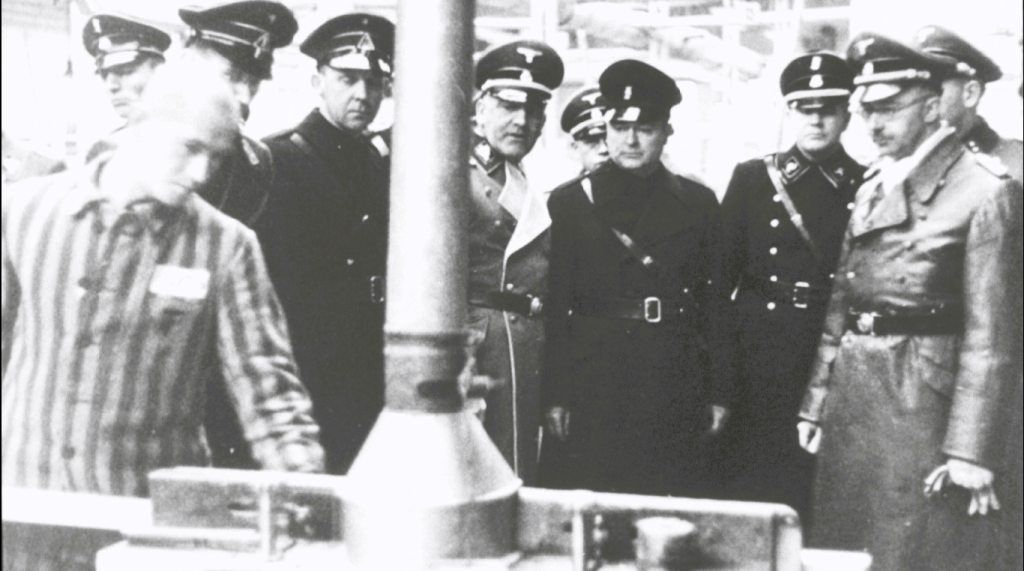
Mussert himself openly endorsed Nazi racial policies, including the exclusion of Jews from public life. While he occasionally expressed discomfort with certain German methods, such as mass deportations, these objections were largely tactical rather than moral. He feared that the harsh treatment of Jews and other Dutch citizens might undermine support for the NSB. Nevertheless, he remained a loyal collaborator, aligning his leadership with the overarching goals of the Reich.
Collapse and Reckoning
As the tide of the war turned against Germany, Mussert’s position grew increasingly precarious. The liberation of the Netherlands by Allied forces in 1945 marked the end of the NSB and the arrest of its leader. Mussert was tried for high treason in The Hague, where he was held accountable for his collaboration with the Nazis and his role in the persecution of Dutch Jews and resistance fighters. He was found guilty and sentenced to death. His execution by firing squad on May 7, 1946, at the Waalsdorpervlakte symbolized the Dutch people’s repudiation of collaboration and betrayal.
The trial of Anton Mussert was a significant moment in the Netherlands’ post-World War II reckoning with collaborators. Mussert, the founder and leader of the Dutch National Socialist Movement (NSB), faced charges of high treason for his active collaboration with Nazi Germany during the German occupation of the Netherlands (1940–1945).
Background to the Trial
After the liberation of the Netherlands in May 1945, Mussert was immediately arrested by Dutch authorities on May 7 1945. His role as a collaborator and his leadership of the NSB, which actively supported Nazi policies, made him one of the most high-profile figures in the postwar purge of collaborators.
The Charges
Mussert was charged primarily with:
High Treason: For his allegiance to Nazi Germany and his betrayal of the Dutch state.
Collaboration: Actively supporting the occupiers’ policies, including facilitating the German administration.
Propaganda for the Enemy: Promoting Nazi ideology and encouraging loyalty to the German Reich among Dutch citizens.
The Trial
The trial was held in The Hague in 1945. It was a public and highly symbolic trial, representing the Netherlands’ effort to seek justice and accountability for the horrors of the Nazi occupation. Key aspects of the trial included:
Evidence Presented:
The prosecution provided substantial evidence of Mussert’s speeches, writings, and activities that aligned with Nazi goals.
His support for German policies that led to the persecution and deportation of Jews and resistance fighters was emphasized.
Testimonies highlighted how the NSB under Mussert acted as a tool for German domination in the Netherlands.

Mussert’s Defense:
Mussert argued that he was a Dutch nationalist who had sought to protect the Netherlands under the difficult circumstances of occupation.
He claimed that his goal had been to maintain Dutch autonomy within a German-dominated Europe, portraying himself as a “patriotic realist” rather than a traitor.
However, his defense failed to convince the court, as his public actions and pro-Nazi rhetoric left little doubt of his collaboration.
Verdict and Sentence:
Mussert was arrested at the NSB office in The Hague on May 7, 1945. Following a two-day trial, he was convicted of high treason on November 28 and sentenced to death on December 12. His appeal for clemency to Queen Wilhelmina was denied. Exactly one year after his arrest, and just days before his 52nd birthday, Mussert was executed by firing squad on May 7, 1946, at the Waalsdorpervlakte near The Hague, a site where hundreds of Dutch citizens had been executed by the Nazis.
Anton Mussert’s legacy is one of betrayal and complicity in one of history’s greatest atrocities. As leader of the NSB, he facilitated the Nazi occupation of the Netherlands and contributed to the suffering of his fellow citizens. His support for Nazi ideology, including its anti-Semitic foundations, made him an accomplice to the Holocaust, even if he did not hold direct power within the German administration. His adoration for Hitler made him a weak man, basically just a cheap carbon copy of the leader of the NSDAP.
Today, Mussert is remembered not only as a failed political leader but as a cautionary figure—a reminder of the dangers of extremism, nationalism, and the willingness to betray one’s country for ideological and personal gain. His story underscores the moral and ethical failures that can arise in times of crisis, and the importance of resisting complicity in injustice, no matter the circumstances.
Sources
https://collections.ushmm.org/search/catalog/irn1004396
https://www.annefrank.org/en/timeline/119/arrest-of-nsb-leader-anton-mussert/
https://www.tracesofwar.com/articles/2681/Anton-Mussert.htm
https://en.wikipedia.org/wiki/Anton_Mussert
https://www.jstor.org/stable/24407506
https://www.findagrave.com/memorial/238669444/anton-adriaan-mussert
Donations
Your readership is what makes my site a success, and I am truly passionate about providing you with valuable content. I have been doing this at no cost and will continue to do so. Your voluntary donation of $2 or more, if you are able, would be a significant contribution to the continuation of my work. However, I fully understand if you’re not in a position to do so. Your support, in any form, is greatly appreciated. Thank you. To donate, click on the credit/debit card icon of the card you will use. If you want to donate more than $2, just add a higher number in the box left from the PayPal link. Your generosity is greatly appreciated. Many thanks.
$2.00

 History of Sorts
Leave a comment