
Before I go into the main story, I think it is good to point out the differences between Fascism and Nazism.
Key Differences Between Nazism and Fascism
Fascism and Nazism are both far-right authoritarian ideologies that share similarities, such as promoting strong centralized leadership, suppressing dissent, and glorifying the state over the individual. However, they differ in their specific focuses, origins, and ideological components:
- Ideological Origins and Focus
Fascism:
Originated in Italy under Benito Mussolini (1920s).
Emphasizes nationalism and loyalty to the state.
Focuses on creating a corporatist economic system where the state mediates between labor and capital to avoid class conflict.
Less emphasis on racial theories.
Nazism (National Socialism):
Originated in Germany under Adolf Hitler (1920s-1930s).
Combines fascism with an obsessive focus on racial purity and antisemitism.
Advocates for Aryan supremacy and seeks to eliminate groups considered “undesirable” (e.g., Jews, Romani people, disabled individuals).
Strong focus on Lebensraum (living space) and territorial expansion for the Aryan race.
- Role of Race
Fascism:
Less centered on race. While Italian Fascism had colonial and racial overtones, it did not initially promote genocide or racial extermination as core policies.
Nazism:
Racial hierarchy is central. The ideology revolves around creating a pure Aryan race, with systematic genocide (e.g., the Holocaust) as a defining feature. - Economic Policy
Fascism:
Advocates for a corporatist economy, where the state coordinates and controls various sectors without outright ownership.
Prioritizes class collaboration under the state.
Nazism:
Similar corporatist tendencies but with more emphasis on autarky (self-sufficiency) and war-driven economies.
Economic policies served the racial and expansionist goals.
- Cultural Goals
Fascism:
Aims to create a unified national culture with strong state control.
Less emphasis on ethnic or racial purity.
Nazism:
Driven by a vision of Aryan cultural and racial dominance.
Actively eliminates and erases cultures deemed inferior or threatening.
- Expansionism
Fascism:
Expansion is a means of demonstrating national strength but not necessarily tied to racial theories.
Nazism:
Expansion (Lebensraum) is tied directly to racial ideology, with a focus on conquering Eastern Europe for Aryans and enslaving or exterminating others.

De Bezem (The Broom), Weekly for Woke Netherlands, was first published in 1927. After artist Erich Wichman contributed to the magazine, it quickly gained popularity. Wichman also designed the membership pin for De Bezem. Other contributors like Haighton, Jan Baars, and Sinclair de Rochemont filled the pages with invective, anti-democratic poetry and analyses on the downfall of Dutch democracy. However, Wichman also sought to shake things up. He organized several playful actions, such as a “One-Day Campaign Against Belgium,” and disrupted a VARA radio broadcast dedicated to May Day celebrations. After Wichman’s sudden death in 1929, the magazine continued its actions, and the association attempted to organize itself better. Jan Baars was promoted as the propaganda leader and public face of the movement.
Despite the growth of the movement, De Bezem fell apart due to internal conflicts. Haighton stole the administration from Sinclair de Rochemont and continued working with Jan Baars. Both factions published their versions of De Bezem, but these two “Bezems” did not last long. Sinclair de Rochemont joined Verdinaso, led by Joris van Severen. Meanwhile, the version of De Bezem by Jan Baars and Alfred Haighton again collapsed due to Haighton’s scheming. Numerous new movements emerged from De Bezem, each claiming to be the original heirs of De Bezem and Erich Wichman.
Jan Baars founded the General Dutch Fascist League (Algemene Nederlandse Fascistenbond). Alfred Haighton collaborated with the NSNAP, led by former Bezem member Adelbert Smit. However, this “Broom Swastika” (Bezem-Hakenkruizer) also quickly disintegrated.
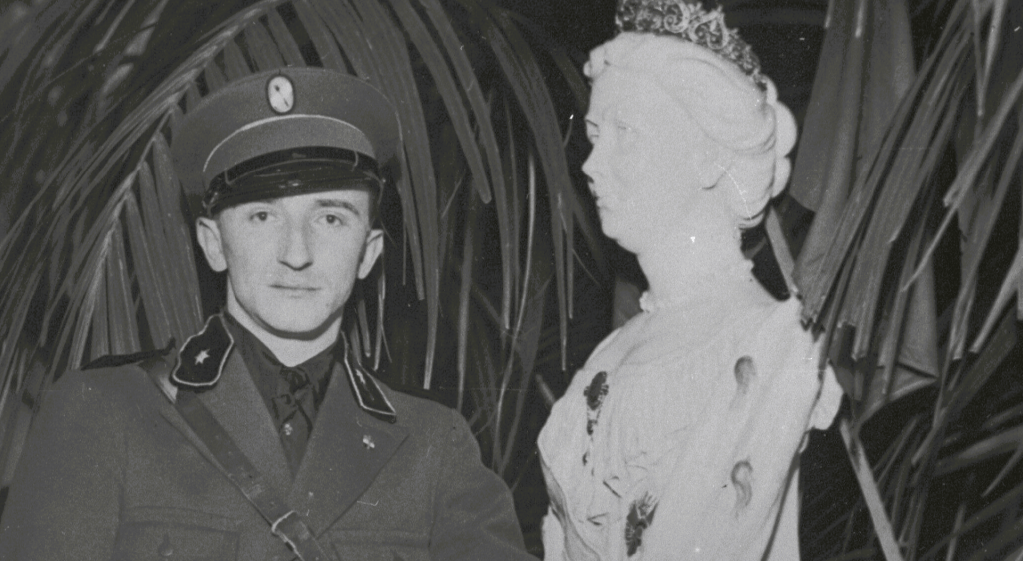
Joannes Antonius Baars: A Complex Figure in Dutch History
Joannes (Jan) Antonius Baars (1903–1989) occupies a unique and paradoxical place in Dutch history. His life, marked by political extremism, populist rhetoric, and later resistance to fascism, offers an intriguing narrative of ideological transformation and personal resilience. As a Dutch fascist leader during the 1930s, Baars embodied the volatile political landscape of interwar Europe, only to later align himself with the anti-fascist efforts of World War II.
Early Life and Political Ascendancy
Born in Amsterdam in 1903, Baars came from modest beginnings, a background that would later shape his political rhetoric. He emerged as a prominent figure in Dutch politics during the early 1930s, a time of economic hardship and social unrest. In 1932, Baars founded the General Dutch Fascist League (Algemeene Nederlandsche Fascisten Bond, ANFB), positioning it as a nationalist alternative to the growing influence of socialism and communism in the Netherlands.
Baars’s leadership style was characterized by his coarse and straightforward rhetoric, which resonated particularly with the poor and working-class segments of society. Unlike the intellectual elitism often associated with fascist movements, Baars’s approach was distinctly populist. He framed his messages in simple, relatable terms, emphasizing national pride, economic revival, and the preservation of traditional values. This approach garnered significant attention, though the ANFB never achieved the political dominance of fascist parties in neighboring Germany or Italy.
Decline of the ANFB and Departure from Politics
Despite its initial momentum, the ANFB struggled to maintain a cohesive identity and broad support. Internal divisions, coupled with the rising influence of more radical fascist factions, weakened the organization. By 1936, Baars had grown disillusioned with the direction of the ANFB and Dutch fascism as a whole. He resigned from political life and returned to his previous occupation as a market trader. This decision marked a turning point in his life, signaling a retreat from the public eye and a distancing from his earlier political affiliations.
Resistance During World War II
Baars’s later involvement in the Dutch resistance during World War II stands in stark contrast to his earlier political career. As the Nazi regime occupied the Netherlands, Baars joined the resistance movement, actively opposing the very fascist ideology he once championed. This transformation highlights a complex interplay of personal conviction and pragmatic adaptation. It also underscores the fragmented nature of political identities during times of national crisis.
Baars’s contributions to the resistance were not widely publicized during his lifetime, perhaps reflecting a deliberate effort to reconcile his controversial past with his wartime actions. Nevertheless, his participation in anti-Nazi activities added a layer of redemption to his legacy, complicating the narrative of his life as a one-dimensional fascist leader.
Legacy and Historical Interpretation
The legacy of Joannes Antonius Baars is marked by its contradictions. As a leader of the ANFB, he represents the allure and dangers of populist fascism in interwar Europe. Yet his later role in the resistance complicates any simplistic categorization of his character. Historians continue to debate the extent to which Baars’s shift from fascism to resistance was driven by ideological evolution, personal disillusionment, or pragmatic necessity.
Baars’s life serves as a cautionary tale about the fluidity of political identities and the capacity for personal transformation. His story reminds us that individuals are not static symbols of their political affiliations but are shaped by the dynamic interplay of historical, social, and personal forces.
Joannes Antonius Baars remains a contentious figure in Dutch history. His rise as a fascist leader and subsequent role in the resistance illustrates the complexities of human behavior and political life. While his early career aligns him with one of the darkest chapters of 20th-century history, his later actions offer a glimpse of redemption and the possibility of change. Understanding Baars requires a nuanced approach, one that acknowledges both his contributions and his contradictions and situates his story within the broader context of Dutch and European history.
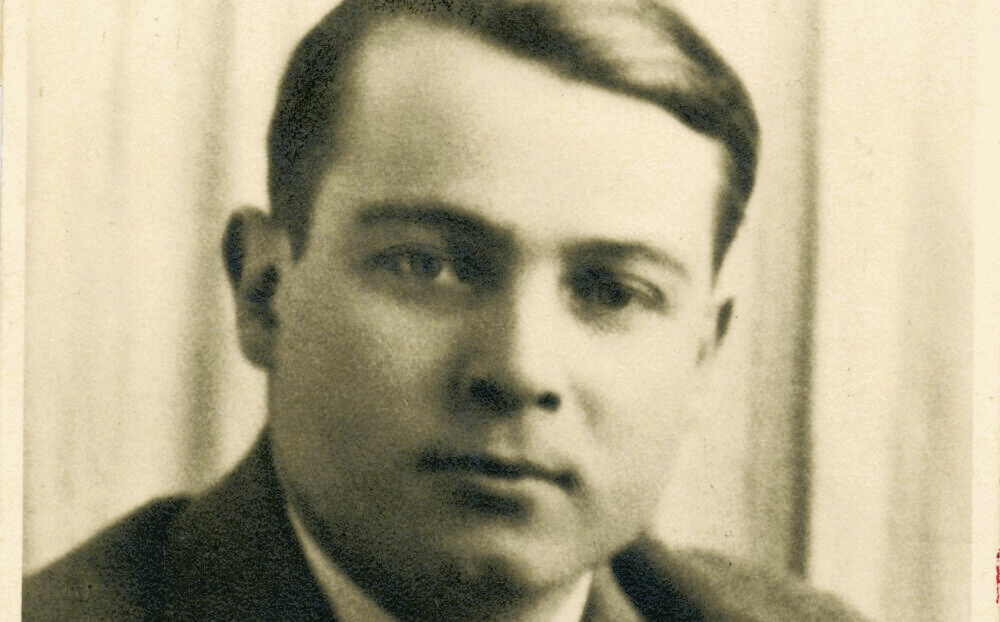
Hugues Alexandre Sinclair de Rochemont (6 January 1901 – 13 March 1942) was a Dutch fascist who later became a Nazi collaborator.
Biography
While studying Indology at Leiden University, de Rochemont became associated with the right-wing professor Gerardus Johannes Petrus Josephus Bolland (1854–1922). After leaving the university in 1924, he co-founded the Verbond van Actualisten (Union of Actualists), the Netherlands’ first fascist movement, alongside Alfred Haighton. The group participated in the 1925 general election but secured only 0.08% of the vote.
During this period, de Rochemont worked as a journalist for De Vaderlander and as a strikebreaker. In 1927, he launched De Bezem (“The Broom”). Even after splitting from Haighton in 1930, de Rochemont continued publishing De Bezem under his leadership.
After breaking ties with Haighton, de Rochemont forged connections with Belgian fascist Joris Van Severen. However, he worked mostly as a civil servant and later as an antiquarian bookseller.
By 1940, de Rochemont had fully embraced Nazism, joining both the National Front and the National Socialist Dutch Workers Party. He supported the incorporation of the Netherlands into the Third Reich.
De Rochemont’s personal life and activities were controversial. He served prison sentences for homosexuality and for attempting to assassinate Anton Mussert, leader of the Dutch National Socialist Movement (NSB). Despite these setbacks, he volunteered for the Dutch Legion of the Waffen-SS during World War II. He was killed in action near Grisi in the Soviet Union on 13 March 1942.

Coenraad Alfred Augustus Haighton (26 October 1896 – 13 April 1943) was a millionaire businessman and leader of the Netherlands’ first fascist movement.
Fascism
Born into privilege in Rotterdam, Haighton came from a wealthy and well-educated background. He studied in Los Angeles and wrote a thesis on the German philosopher Arthur Schopenhauer. Despite being physically disabled throughout his life, Haighton inherited substantial wealth from his father, a highly successful businessman who built a fortune through the lottery insurance company LOTISICO.
With financial independence secured, Haighton turned his attention to politics. In 1924, he partnered with H.A. Sinclair de Rochemont to establish the Verbond van Actualisten (Union of Actualists), a group inspired by Italian fascism.[1] However, the group disbanded in 1927. Haighton then financed the fascist journal De Bezem (“The Broom”) and founded his political organization, the Fascistische Jongeren Bond (Fascist Youth League). The movement suffered a major setback in 1932 when his close associate, Jan Baars, broke away to form the Algemeene Nederlandsche Fascisten Bond (ANFB, General Dutch Fascist League).
Nazism
Over time, Haighton became a staunch anti-Semite, which led him to align with the National Socialist Dutch Workers Party (NSNAP). However, his abrasive personality and strained relationships caused yet another political fallout.
After a brief hiatus from politics, Haighton joined Arnold Meijer’s Zwart Front (Black Front). When the Zwart Front merged into the National Front in 1940, Haighton declined to follow. Instead, he returned to the NSNAP, though he played only a minor role in its activities. In his later years, he concentrated on anti-Semitic writings and literary pursuits rather than active political engagement.
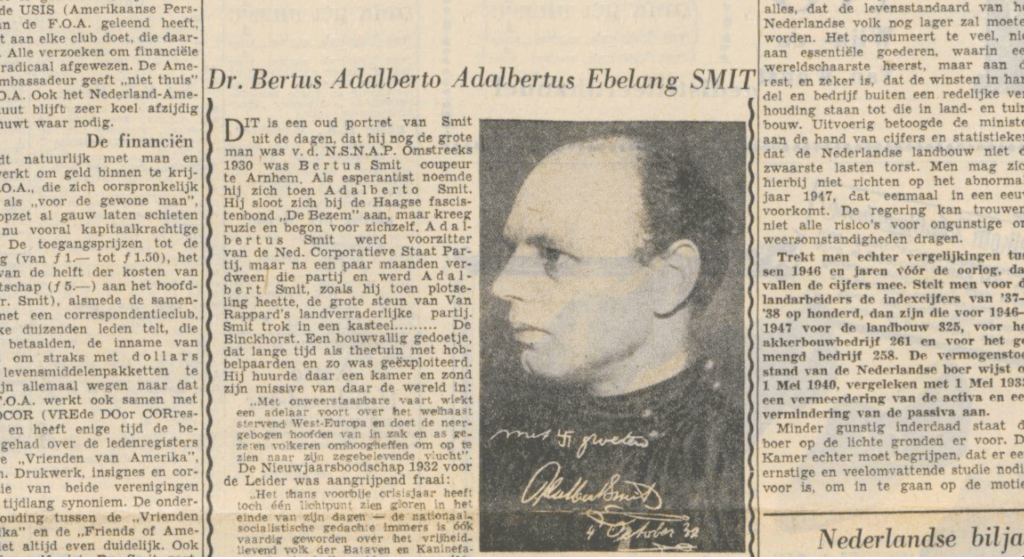
The Oranje-Fascists (OF) was the smallest fascist party to participate in the 1933 parliamentary elections. The list of this two-person party included the names of J.G.A. van Zijst and H.M. Kempenaar and only ran in electoral district III as list 1. The result was minimal: 261 votes (0.007%). The OF was the product of one of the many disputes that characterized the fascist environment. It emerged from the National Socialist Dutch Workers’ Party (NSNAP), led by Adalbert Smit and Alfred Haighton, a strongly anti-Semitic movement around the magazine De Bezem. Shortly afterward, Van Zijst became involved with the General Dutch Fascists Union and the Corporative Concentration.
Nearly all of these men came from privileged backgrounds, not unlike some politicians nowadays.
Sources
https://en.wikipedia.org/wiki/Alfred_Haighton
https://portal.ehri-project.eu/units/nl-002994-328/search?inline=true
https://nl.wikipedia.org/wiki/De_Bezem
Donations
Your readership is what makes my site a success, and I am truly passionate about providing you with valuable content. I have been doing this at no cost and will continue to do so. Your voluntary donation of $2 or more, if you are able, would be a significant contribution to the continuation of my work. However, I fully understand if you’re not in a position to do so. Your support, in any form, is greatly appreciated. Thank you. To donate, click on the credit/debit card icon of the card you will use. If you want to donate more than $2, just add a higher number in the box left from the PayPal link. Your generosity is greatly appreciated. Many thanks.
$2.00
 History of Sorts
Leave a comment