
The Dutch Hunger Winter, also known as the Hongerwinter, was a devastating famine that gripped the Netherlands during the final months of World War II, from November 1944 to April 1945. This period of extreme hardship left a profound mark on Dutch society, shaped the collective memory of the war, and offered critical insights into the consequences of famine for human health and development. The Hunger Winter’s causes, impact, and aftermath warrant a thorough exploration to understand both its historical significance and its enduring legacy.
Causes of the Dutch Hunger Winter
The Dutch Hunger Winter was the result of a confluence of political, military, and environmental factors. By late 1944, the Allied forces had made significant advances into Western Europe, liberating large parts of France and Belgium. The southern provinces of the Netherlands were also liberated, but the northern and western regions remained under Nazi occupation. The situation was further exacerbated by the failure of Operation Market Garden, an ambitious Allied attempt to capture key bridges in the Netherlands and accelerate the liberation. This failure left much of the country—including major cities such as Amsterdam, Rotterdam, and The Hague—under German control.
In response to growing Dutch resistance efforts, the Nazi occupiers imposed severe retaliatory measures. One of the most devastating of these was a transportation embargo initiated in September 1944. German authorities restricted the movement of goods and food supplies into the western Netherlands, cutting off an already strained supply chain. This embargo coincided with one of the harshest winters in recent memory, further compounding the crisis. Freezing temperatures made it difficult to transport goods through alternative means, such as waterways, and disrupted agricultural production.
Adding to these challenges was the scarcity of fuel. Coal reserves were depleted, and residents resorted to dismantling furniture, buildings, and even railway tracks to burn for warmth. These dire circumstances left urban populations particularly vulnerable, as rural areas retained some access to locally grown food.
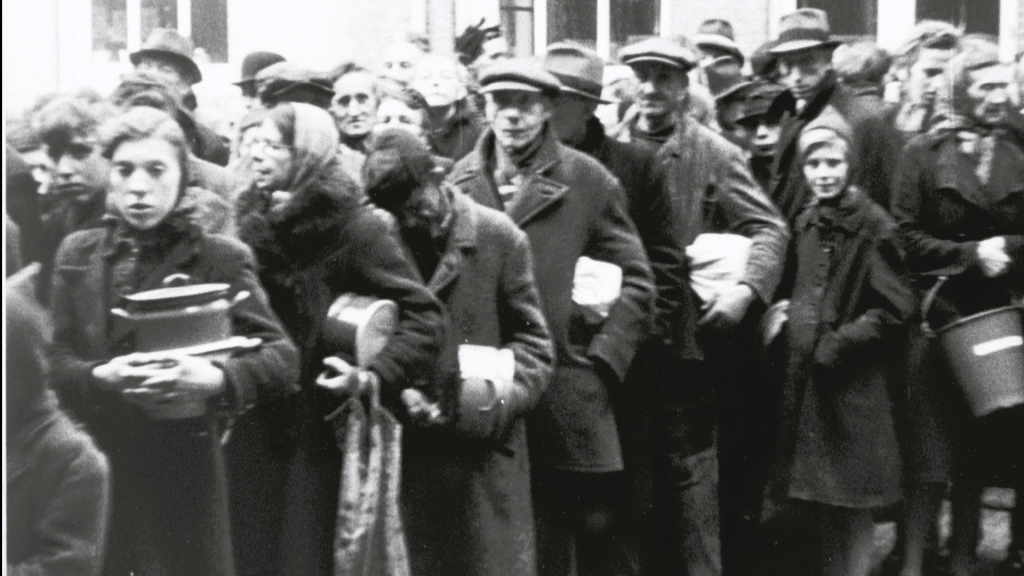
The Experience of Famine
During the Hunger Winter, the caloric intake of many residents in the affected regions plummeted to as little as 400-800 calories per day—a fraction of the recommended daily intake. People subsisted on a meager diet of tulip bulbs, sugar beets, and water soup. Bread, once a staple, became a rare luxury. Starvation led to a range of health issues, including malnutrition, immune system collapse, and increased susceptibility to diseases like tuberculosis and pneumonia. Thousands of people died from hunger and its related effects, with estimates ranging between 18,000 and 22,000 fatalities.
The social fabric of Dutch society also frayed under the strain. Looting, theft, and violence increased as people fought for survival. Yet, there were also remarkable displays of solidarity and ingenuity. Communities organized soup kitchens, and underground networks attempted to smuggle food into the cities. Despite these efforts, the suffering was immense, and the psychological scars lingered long after the famine ended.

During the Dutch famine of 1944-1945, also known as the Hunger Winter, a teenage Audrey Hepburn endured immense hardship in Nazi-occupied Netherlands. Living in Arnhem, she faced severe malnutrition, surviving on tulip bulbs and grass, which left her with lasting health issues. Amid the devastation, she witnessed atrocities, including the deportation of Jewish families, and suffered personal loss, such as the execution of her uncle by the Nazis. Despite the dangers, she supported the Dutch resistance by carrying secret messages and performing in clandestine dance recitals to raise funds. These harrowing experiences profoundly shaped her empathy and later inspired her humanitarian work as a UNICEF Goodwill Ambassador, where she advocated for children suffering from hunger and war.
Aftermath and Consequences
The liberation of the Netherlands in May 1945 brought an end to the Hunger Winter, but the effects of the famine were far-reaching. Physically, the famine left an indelible mark on the generation that endured it. Research conducted in the decades following the war revealed that individuals who were in utero during the Hunger Winter faced long-term health consequences, including higher rates of cardiovascular disease, diabetes, and mental health disorders. The phenomenon of “fetal programming” emerged as a key area of study, highlighting how malnutrition during critical periods of development could have lifelong implications.
The famine also shaped Dutch post-war policy and identity. The collective trauma of the Hunger Winter reinforced a national commitment to preventing future food shortages and bolstered support for welfare programs. It also underscored the importance of international cooperation, as relief efforts organized by the Allies—such as Operation Manna, which involved airdropping food supplies—were pivotal in alleviating the crisis.
Culturally, the Hunger Winter became a symbol of resilience and perseverance in the face of adversity. It is commemorated in literature, film, and public discourse, serving as a poignant reminder of the human cost of war and the need for vigilance against the recurrence of such tragedies.

Lessons and Legacy
The Dutch Hunger Winter remains a powerful example of the devastating impact of war on civilian populations. Its causes underscore the interconnectedness of political decisions, military strategy, and human suffering. The famine also provides valuable lessons for contemporary society, particularly in understanding the importance of food security, the vulnerabilities of urban populations in times of crisis, and the long-term consequences of nutritional deprivation.
Moreover, the Hunger Winter serves as a case study in resilience and communities’ capacity to endure and rebuild. As the Netherlands emerged from the shadow of war, it prioritized reconstruction, social welfare, and international cooperation, laying the foundation for the prosperous and equitable society it has become today.
The Dutch Hunger Winter has revealed its uniqueness in unexpected ways. Its abrupt onset and conclusion have transformed it into an unplanned yet invaluable experiment in human health. Pregnant women, in particular, were profoundly affected, and the children born during this period have carried the impact of famine throughout their lives.
As adults, these individuals were found to be a few pounds heavier than average. By middle age, they exhibited elevated levels of triglycerides and LDL cholesterol, alongside increased rates of obesity, diabetes, and schizophrenia.
By the time they reached old age, these health risks had left a measurable mark. Research led by L.H. Lumey, an epidemiologist at Columbia University, revealed striking patterns. In 2013, Lumey and his team analyzed the death records of hundreds of thousands of Dutch individuals born in the mid-1940s.
Their findings were stark: those who were in utero during the famine — collectively known as the Dutch Hunger Winter cohort — had a 10 percent higher mortality rate after 68 years compared to those born before or after the famine. “We found a 10 percent increase in mortality after 68 years,” Dr. Lumey stated.
While the patterns observed by Lumey and his colleagues are widely recognized, the underlying mechanisms remain elusive.
“How on earth can your body remember the environment it was exposed to in the womb — and retain that memory decades later?” pondered Bas Heijmans, a geneticist at Leiden University Medical Center in the Netherlands.
The Dutch Hunger Winter of 1944-1945 was a period of immense suffering that highlighted the fragility of human life under the strain of war. Its causes—rooted in the intersection of military conflict, political retribution, and environmental hardship—offer a stark warning about the consequences of neglecting civilian welfare during times of upheaval. While the immediate effects of the famine were devastating, the long-term legacy of the Hunger Winter is one of resilience, remembrance, and a commitment to ensuring that such tragedies are never repeated. By studying this chapter of history, we honor the memory of those who suffered and gain invaluable insights into the challenges and responsibilities of building a just and compassionate world.
Sources
https://www.ohsu.edu/school-of-medicine/moore-institute/dutch-famine-birth-cohort
https://pubmed.ncbi.nlm.nih.gov/11639327/
https://en.wikipedia.org/wiki/Dutch_famine_of_1944%E2%80%931945
https://www.cambridge.org/core/books/hunger-winter/introduction/B79B9D43B2DC2E7FA2C1C515D62E0677
Please donate so we can continue this important work
Donations
Your readership is what makes my site a success, and I am truly passionate about providing you with valuable content. I have been doing this at no cost and will continue to do so. Your voluntary donation of $2 or more, if you are able, would be a significant contribution to the continuation of my work. However, I fully understand if you’re not in a position to do so. Your support, in any form, is greatly appreciated. Thank you. To donate, click on the credit/debit card icon of the card you will use. If you want to donate more than $2, just add a higher number in the box left from the PayPal link. Your generosity is greatly appreciated. Many thanks.
$2.00


 History of Sorts
Leave a reply to Comment l’USAID a contribué à la prise de contrôle de l’agriculture ukrainienne par les grandes entreprises | Groupe Gaulliste Sceaux Cancel reply