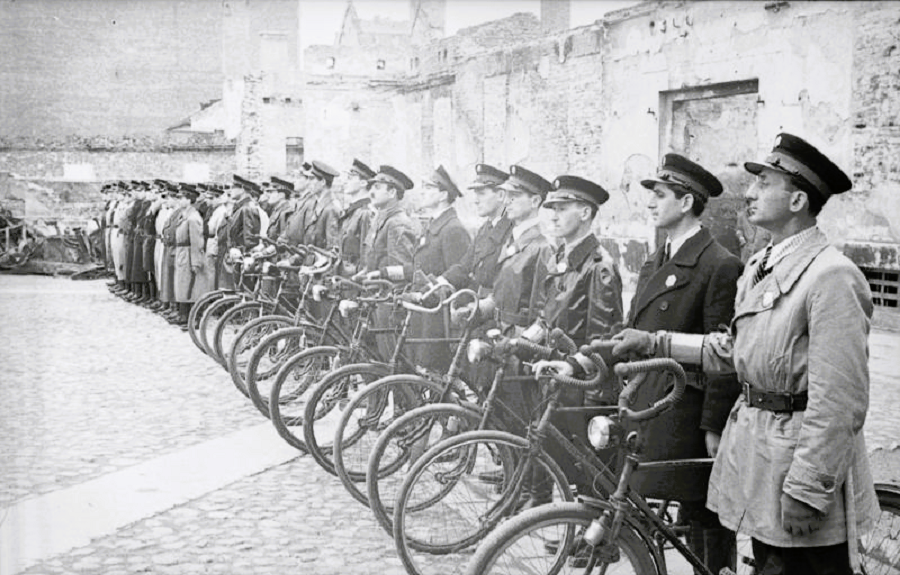
Officially known as the Jewish Organization for the Maintenance of Public Order (German: Jüdischer Ordnungsdienst; Polish: Żydowska Służba Porządkowa), Jewish police units were established under Nazi occupation in most East European ghettos. Their creation was closely tied to the establishment of ghettos, which removed Jewish populations from general police jurisdiction and necessitated an alternative system to enforce German orders.
Unlike other Nazi policies, there was no central directive from the Reich Government mandating the creation of these forces. Instead, local occupying authorities took the initiative. As a result, the composition, jurisdiction, and role of the Jewish police varied significantly across different ghettos. Smaller ghettos could only assemble a handful of officers, while larger ghettos, such as Warsaw, had a more structured force.
Structure and Role
Jewish police units were officially branches of the Judenräte (Jewish Councils), but in many cases, they were also under the direct command of local non-Jewish police authorities and the SS. This dual control led to varying degrees of independence from the Judenräte, with some police forces acting as extensions of German authority while others remained closely tied to Jewish community leadership.
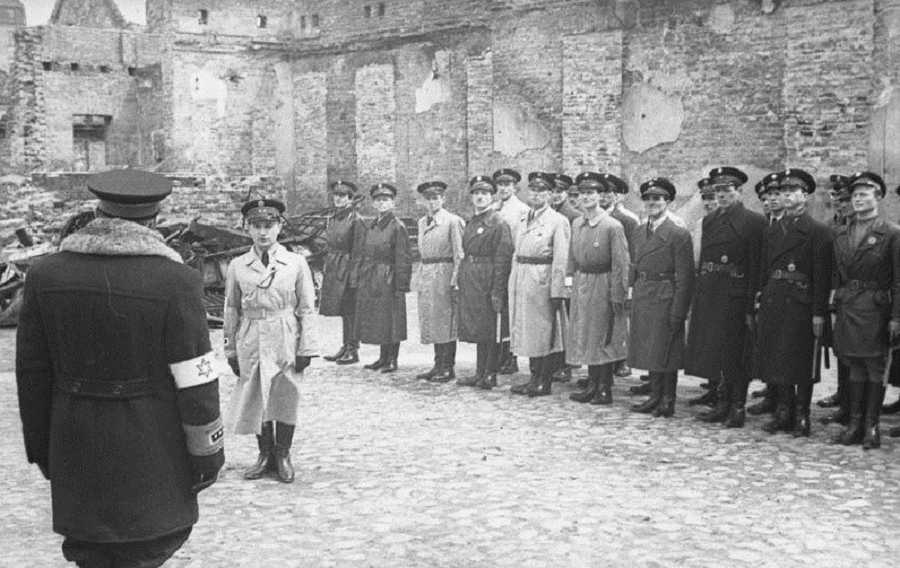
Initially, their primary duty was to maintain order and enforce German directives relayed through the Judenräte. Criminal matters and disputes between Jews and non-Jews remained under municipal jurisdiction. At first, some members of the Jewish community viewed the police force favorably, believing it could help maintain order and foster a degree of Jewish autonomy. Many recruits joined out of social motivation or a desire to aid their community.
Recruitment and Function
German authorities sought young, physically fit, and military-trained recruits with at least a high school education, though these requirements were not always strictly enforced. Many Jewish police officers were refugees from other communities, and few had prior involvement in Jewish public affairs before the war.
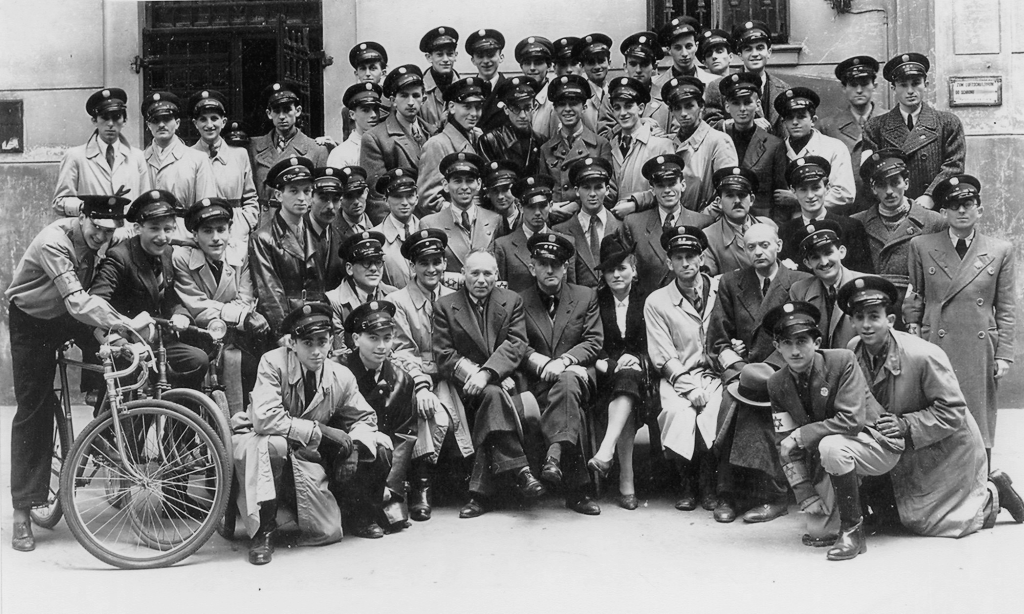
Over time, their responsibilities expanded beyond law enforcement. The Germans tasked them with:
Combatting epidemics
Quelling demonstrations
Fighting fires
Overseeing food distribution and price controls
Collecting taxes
Jewish police also helped enforce German restrictions, such as preventing smuggling and punishing those who disobeyed Nazi regulations. In larger ghettos, prisons were established, while smaller ghettos had makeshift detention centers. Sentences handed down by ghetto courts were typically carried out by the Jewish police, who, in some cases, even participated in executions ordered by the Germans.
Corruption and Declining Public Perception
While Jewish police were supposed to be paid by the Judenräte, wages were often irregular and insufficient. This led to widespread bribery, eroding moral standards and damaging their reputation. Over time, many original recruits left the force, and their positions were filled by individuals with fewer ties to the Jewish community, exacerbating tensions between police and civilians.
As standards deteriorated, the Jewish police became increasingly involved in corruption, working closely with local and German authorities for personal gain. Many officers used their positions to amass wealth, creating stark divisions between themselves and the impoverished Jewish population. This transformation led to growing resentment and, eventually, outright hostility from the community.
Participation in Deportations
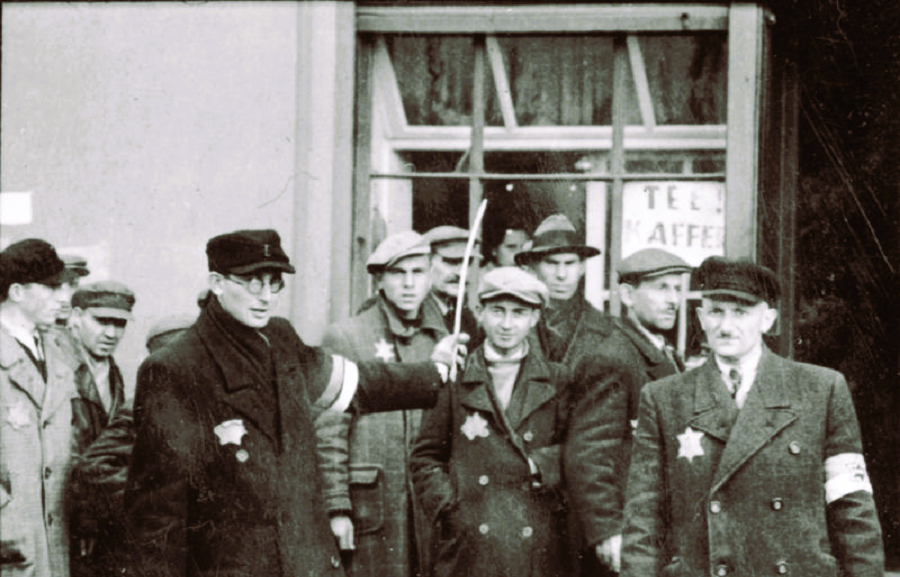
The most controversial phase in the history of the Jewish police began in 1942, with the mass deportations to extermination camps. German authorities ordered the ghetto police to assist in rounding up Jews for deportation, sometimes even participating in selection processes. In exchange, the Nazis promised immunity for the officers and their families. Those who refused to comply were either deported alongside their fellow Jews or executed on the spot.
This period marked the lowest point of public perception for the Jewish police. However, some officers attempted to mitigate the horrors of deportation by warning residents of upcoming expulsions or encouraging people to hide. In certain ghettos, police units even opposed deportation orders and joined underground resistance movements—especially in Soviet-controlled territories or regions that had been occupied by the Soviets before 1941. In contrast, in the Generalgouvernement (Nazi-occupied Poland), relations between Jewish police and resistance groups were often adversarial.
Decline and Postwar Controversy
After the mass deportations, the number of Jewish police units was drastically reduced. Officers who had once been protected from deportation found themselves and their families targeted. In some cases, Jewish underground organizations sought revenge against former police officers.
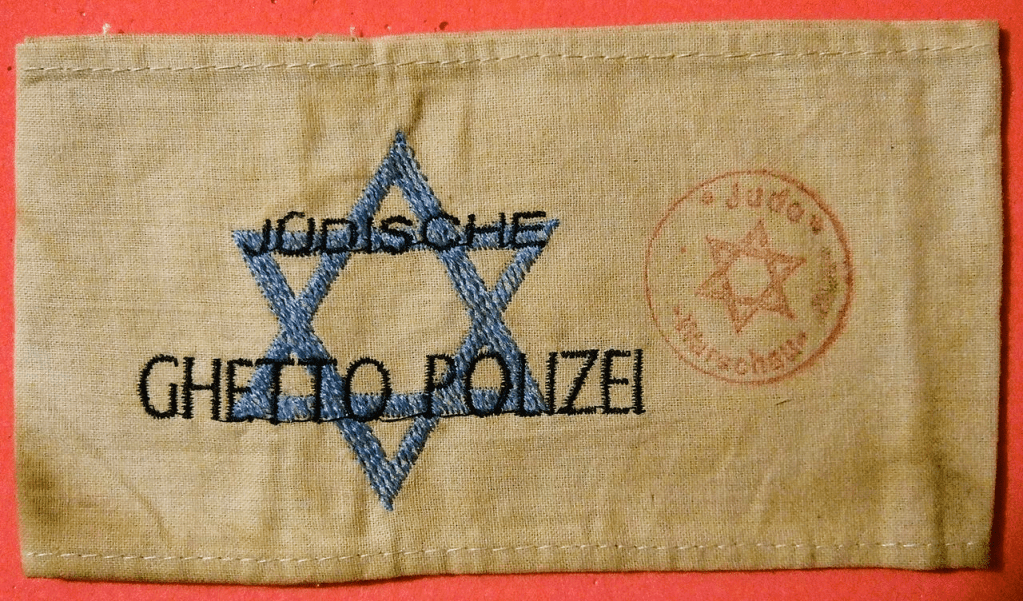
In the aftermath of the war, the role of the Jewish police became a subject of intense controversy among Holocaust survivors. Dozens of former officers were put on trial in Jewish honor courts for collaboration or misconduct. Some were expelled from Jewish communities, while others were banned from holding public office. However, some officers were cleared of wrongdoing, and after years of deliberation, formal legal action against the Jewish police was largely abandoned.
Historical Perspectives
Scholars have debated the behavior of Jewish police across different ghettos. Some argue that relationships between the police and civilians were better in smaller ghettos, while others suggest that corruption was more rampant in the Generalgouvernement than in Soviet-controlled ghettos before 1941. However, recent studies indicate that there is no clear pattern—police conduct varied widely based on individual circumstances and local conditions.
A fair evaluation of the Jewish police requires examining each ghetto’s specific context rather than making broad generalizations. Their actions, ranging from enforcing Nazi orders to aiding resistance efforts, reflect the complex and morally fraught choices faced by individuals under occupation.
sources
https://www.yadvashem.org/holocaust/this-month/july/1942-5.html
https://en.wikipedia.org/wiki/Jewish_Ghetto_Police
Please support us so we can continue our important work.
Donation
Your readership is what makes my site a success, and I am truly passionate about providing you with valuable content. I have been doing this at no cost and will continue to do so. Your voluntary donation of $2 or more, if you are able, would be a significant contribution to the continuation of my work. However, I fully understand if you’re not in a position to do so. Your support, in any form, is greatly appreciated. Thank you. To donate, click on the credit/debit card icon of the card you will use. If you want to donate more than $2, just add a higher number in the box left from the PayPal link. Your generosity is greatly appreciated. Many thanks.
$2.00
 History of Sorts
Leave a comment