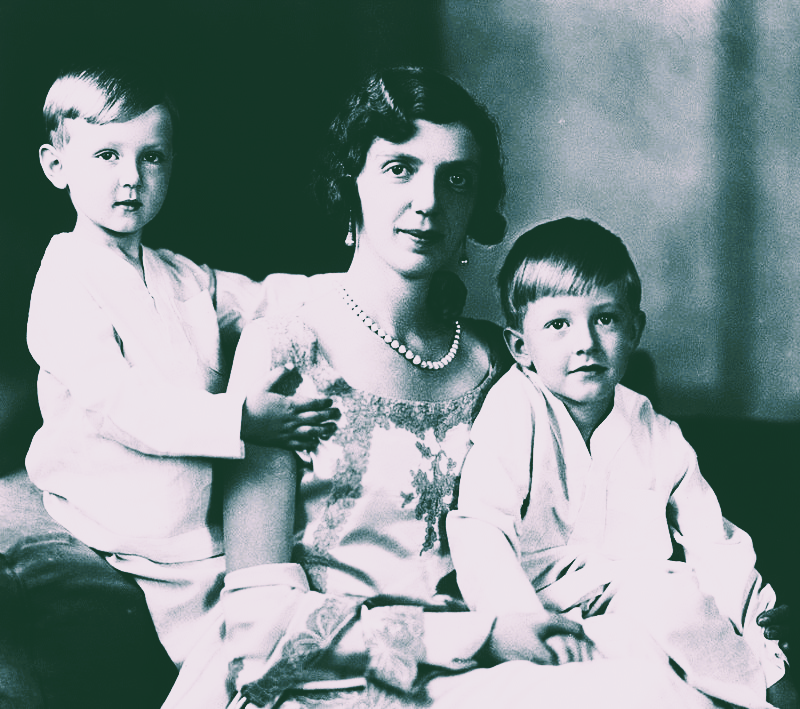
If not for the dreadful setting of this story, the title might suggest a fairy tale. However, this is anything but a fairy tale—though it is certainly a grim one.
Princess Mafalda of Savoy, born on November 19, 1902, was an Italian princess who became a tragic figure in European history. As the second daughter of King Victor Emmanuel III of Italy and Queen Elena of Montenegro, Mafalda was born into the House of Savoy, one of Europe’s most prominent royal families. Her life, however, took a dramatic and sorrowful turn during World War II, ultimately leading to her death in a Nazi concentration camp.
Early Life and Marriage
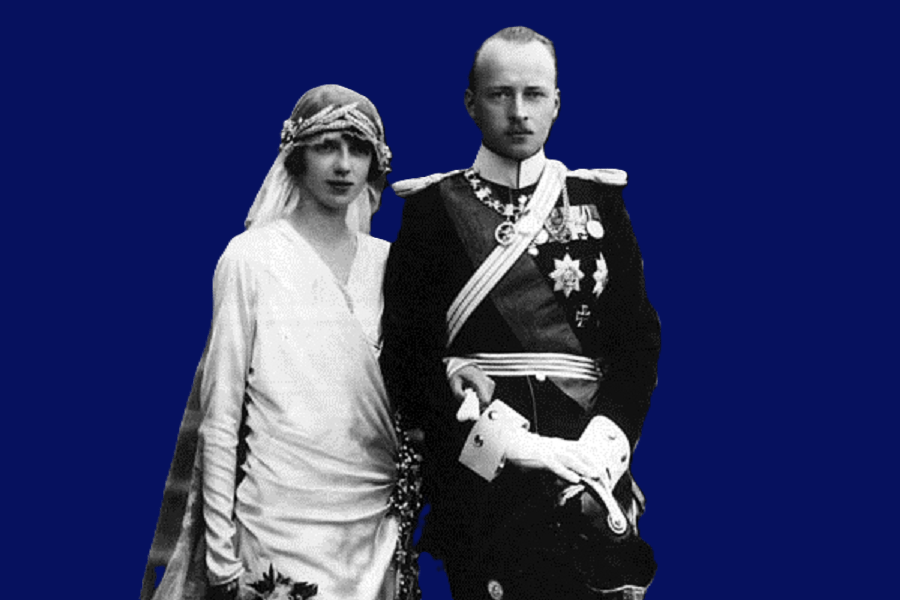
Mafalda grew up in the Italian royal court, enjoying a privileged but relatively quiet life. As a princess of Italy, she was known for her beauty, kindness, and devotion to her family. In 1925, she married Prince Philipp of Hesse, a German nobleman who had close ties to the Nazi regime. Despite this connection, Mafalda remained deeply attached to her Italian heritage and had no direct political involvement in Germany’s actions during the war. The couple had four children and lived in Germany, where Mafalda was known for her strong sense of duty and compassion.
Mafalda was a devout Catholic, while he was a non-practicing Protestant. Converting to Catholicism would have cost him his place and the Landgrave title in Hesse. The match sparked outrage in Italian society, drawing the attention of Pope Pius XI. A wedding in Rome was impossible, so Turin was chosen as the venue.
In 1925, Mafalda married Phillip in a high-profile ceremony attended by royalty from across Europe. Mussolini was among the guests, and Phillip soon became convinced that fascism was the key to Germany’s revival, believing it could help restore the monarchy. In Italy, the royal family openly supported Mussolini’s Blackshirts. Meanwhile, Phillip’s relationship with his uncle, the deposed Kaiser, remained strained, as the former emperor disapproved of his marriage to a Catholic.
World War II and Imprisonment
The outbreak of World War II placed Mafalda in a precarious position. Her father, King Victor Emmanuel III, initially aligned Italy with Nazi Germany, but in 1943, he ordered the arrest of Benito Mussolini and sought an armistice with the Allies. This move enraged Adolf Hitler, who viewed the Italian royal family as traitors. Mafalda, despite her lack of political involvement, became a target for Nazi retribution.
On September 23, 1943, she was lured to the German embassy in Rome under false pretenses. Upon her arrival, she was arrested by the Gestapo and deported to the Buchenwald concentration camp. There, she was subjected to inhumane conditions, suffering from malnutrition, illness, and emotional distress. The Nazis falsely accused her of working against Germany, using her as a scapegoat for Italy’s defection.
Death and Legacy
In August 1944, the Allies bombed a munitions factory in Buchenwald, causing severe damage to the camp. Mafalda suffered grave injuries during the attack and received inadequate medical care. She died on August 28, 1944, reportedly from an infection following an amputation. Her body was buried in secrecy, and news of her death was not widely known until after the war.
Princess Mafalda of Savoy is remembered as a tragic figure who suffered unjustly due to her royal lineage and her father’s political decisions. Her story highlights the brutality of the Nazi regime and the suffering of innocent people during World War II. Today, she is honored as a symbol of resistance and sacrifice, and her memory lives on as a poignant reminder of the horrors of war and oppression.
sources
https://www.buchenwald.de/en/geschichte/biografien/bag-ausstellung/mafalda-savoyen
https://www.histouring.com/en/historical-figure/mafalda-di-savoia/#
Please support us so we can continue our important work.
Donation
Your readership is what makes my site a success, and I am truly passionate about providing you with valuable content. I have been doing this at no cost and will continue to do so. Your voluntary donation of $2 or more, if you are able, would be a significant contribution to the continuation of my work. However, I fully understand if you’re not in a position to do so. Your support, in any form, is greatly appreciated. Thank you. To donate, click on the credit/debit card icon of the card you will use. If you want to donate more than $2, just add a higher number in the box left from the PayPal link. Your generosity is greatly appreciated. Many thanks.
$2.00
 History of Sorts
Leave a comment