
Dietrich Bonhoeffer’s final days were a profound confluence of moral courage, anguished introspection, and resolute conviction—a microcosm of his life-long struggle against tyranny and his steadfast commitment to Christian ethics in the face of Nazi oppression. His last days were not only defined by the physical confines of a prison cell and the grim ambiance of a concentration camp, but also by an inner world where faith, hope, and the torments of conscience were inextricably entwined. This essay explores the historical context, personal reflections, and enduring legacy of Bonhoeffer’s last days, highlighting how his final moments continue to inspire discussions about resistance, sacrifice, and the cost of dissent.
Historical Context and Imprisonment
In the early 1940s, as the horrors of Nazism escalated, Dietrich Bonhoeffer—a theologian, pastor, and outspoken critic of Adolf Hitler’s regime—became increasingly involved in clandestine activities aimed at undermining the Nazi state. His theological writings and his practical involvement in plots against the Nazi leadership placed him squarely in the crosshairs of an authoritarian regime determined to silence dissent. Arrested in 1943, Bonhoeffer found himself confined in various prisons and, ultimately, facing the grim reality of an impending execution.
As the war’s tide shifted and the Nazi regime faltered, Bonhoeffer’s awareness of his possible fate became more pronounced. His incarceration was marked by long hours of isolation, where the weight of his actions and the sacrifices demanded by his moral convictions bore down on him. In these constricted spaces, Bonhoeffer’s mind was a battleground where theology met the stark demands of survival and ethical resistance. Despite the relentless physical and psychological pressure, he managed to retain a focus on the broader purpose of his struggle—a faith unbowed by the presence of evil.
A Spiritual Struggle: Reflection in Isolation
In his final days, Bonhoeffer’s reflections were imbued with a deep theological and existential inquiry. He wrote and prayed, mediating on the nature of grace, redemption, and the human capacity for both suffering and transcendence. His writings from prison—though often fragmentary due to harsh conditions—reflect a mind that was working tirelessly to reconcile the seemingly insurmountable gap between divine love and human cruelty.
One of the most remarkable aspects of Bonhoeffer’s isolation was how it deepened his understanding of community, sacrifice, and hope. Even in the midst of pervasive despair, he found in scripture a source of immutable comfort and a call to persevere in the face of moral desolation. Bonhoeffer’s personal agony was paradoxically interwoven with a steadfast hope that his own sacrifice might contribute to the larger liberation of his people. It is this commitment, manifest as both a personal testament and a broader ethical stance, that continues to resonate across generations.

The Final Hours and Execution
The day of Bonhoeffer’s execution, April 9, 1945, was laden with a somber inevitability. As the SS prepared for his hanging at Flossenbürg concentration camp—a place that bore witness to countless tragedies—the weight of his life’s work seemed to converge on this single moment. By this time, Bonhoeffer had embraced the prospect of death with a philosophical clarity that belied the grim circumstances. His calm acceptance was not a surrender to despair but a manifestation of his profound commitment to truth and justice.
In those final hours, Bonhoeffer’s thoughts remained fixated on the ethical imperatives that had guided his life. Although separated from his family, his colleagues, and the familiar structures of academic and spiritual community, he continued to perceive himself as connected to a larger movement of resistance against inhumanity. His death was not simply the extinguishing of a brilliant mind but the culmination of a deliberate and courageous life—a life that had persistently defied the demands of an unjust power in pursuit of a higher moral calling.
The execution itself has been interpreted as both a symbol of Nazi brutality and a testament to the cost of resistance. In his final moments, Bonhoeffer became a martyr, his sacrifice amplifying his theological insights about the cost of freedom and the transformative power of selfless action. His death, occurring mere weeks before the end of the war, cast a long shadow over a nation on the brink of liberation—a reminder that moral courage often exacts the highest price.
Enduring Legacy and Lessons for Posterity
The legacy of Dietrich Bonhoeffer’s last days remains influential in contemporary discussions about ethics, resistance, and the role of the church in political life. His willingness to oppose an unjust regime—despite knowing it would likely lead to his death—continues to serve as an inspiring example for individuals and institutions grappling with issues of complicity, resistance, and justice. Bonhoeffer’s life, and particularly his final days, encapsulate the paradoxical nature of human existence: the possibility of grace amid horror, and the unyielding power of a conscience committed to truth.
Scholars, theologians, and civil rights advocates today invoke Bonhoeffer’s martyrdom as a clarion call to ethical engagement. His writings, especially those composed during his time in captivity, are studied as rich texts that probe the tension between divine forgiveness and the necessity of moral action in a broken world. His enduring influence is seen in the way his ideas challenge both the institutional church and secular governments to reckon with the moral dimensions of their actions and inactions.
In conclusion, the last days of Dietrich Bonhoeffer were a poignant blend of sorrow, hope, and resolute defiance—a microcosm of the eternal struggle between good and evil. Amid the gloom of his final hours, Bonhoeffer’s deep spiritual insights and unyielding commitment to justice shone as beacons of moral clarity. His martyrdom transcends the personal tragedy of a single life cut short; it is a powerful symbol of what it means to stand up for one’s convictions, no matter the cost. Through his ultimate sacrifice, Bonhoeffer has left a legacy that continues to prompt us to examine our own roles in the face of injustice, reminding us that even in the darkest of times, the light of a committed conscience can never be extinguished.
Bonhoeffer’s theory of Stupidity
“Stupidity is a more dangerous enemy of the good than malice.”
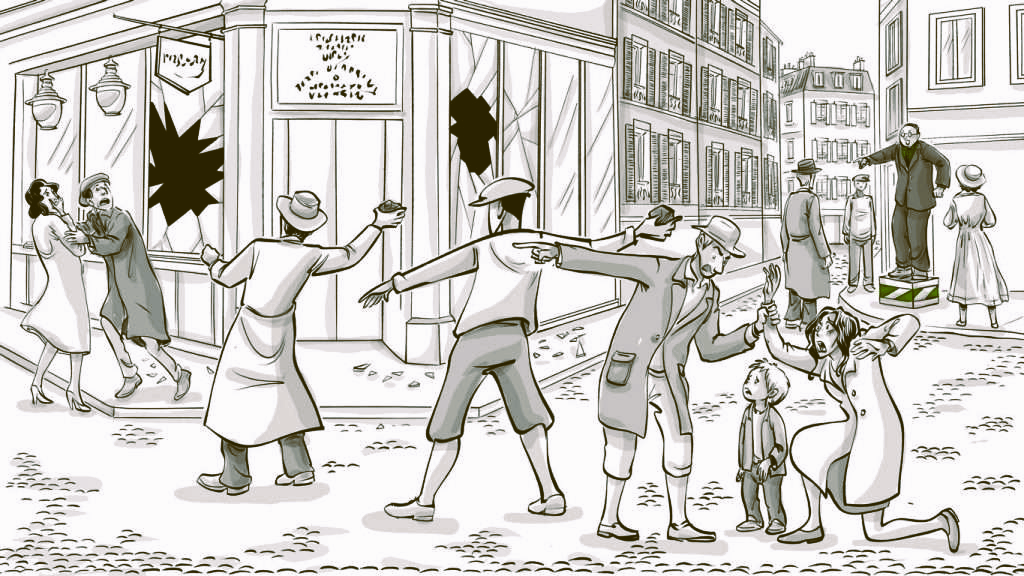
Bonhoeffer distinguishes stupidity from a lack of intelligence. A person may be highly intelligent but still act stupidly. For him, stupidity is not about cognitive ability but a failure to think critically, especially in moral and social situations. He observed that under oppressive regimes, people often surrender their capacity for independent thought, becoming tools of propaganda and groupthink.
“Stupidity is a more dangerous enemy of the good than malice.”
Why? Because while evil can be confronted and exposed, stupidity is impervious to reason. Logical arguments fall flat, and facts bounce off. The stupid person becomes irrationally confident in their views, even as they parrot slogans and ideologies handed to them by others. Bonhoeffer wrote that stupidity “is not an innate defect but something that emerges under certain conditions.”
Stupidity as a Social Phenomenon
Bonhoeffer noticed that people become more stupid in groups. He wasn’t saying that groups are always bad, but that when social pressure, fear, and authoritarianism rise, individuals often lose their personal moral compass. They give up responsibility for their thoughts and actions, letting others (leaders, media, crowds) think for them.
In Nazi Germany, this dynamic was painfully clear. Many people who might have otherwise been decent became complicit — not always because they were evil, but because they surrendered their capacity for moral judgment. Bonhoeffer saw this as a form of moral laziness, even cowardice.
Resistance to Stupidity
For Bonhoeffer, combating stupidity isn’t about ridicule or intellectual superiority — it’s a moral task. Education alone can’t fix it, especially when the stupidity is willful or socially reinforced. Instead, what’s needed is liberation — helping people recover their autonomy and moral courage. He believed that this change could come through spiritual awakening or deep personal transformation, not just information.
Bonhoeffer’s theory of stupidity is startlingly relevant today. In a world filled with misinformation, populism, and polarized thinking, his warning rings clear: stupidity is not just annoying — it’s dangerous. And overcoming it requires more than facts or debate; it demands empathy, courage, and moral clarity.
sources
https://encyclopedia.ushmm.org/content/en/article/dietrich-bonhoeffer
https://www.britannica.com/biography/Dietrich-Bonhoeffer
https://www.dw.com/en/bonhoeffer-murdered-by-the-nazis-80-years-ago/a-72172848
https://sojo.net/articles/remembering-dietrich-bonhoeffer
https://en.wikipedia.org/wiki/Dietrich_Bonhoeffer
Please support us so we can continue our important work.
Donation
Your readership is what makes my site a success, and I am truly passionate about providing you with valuable content. I have been doing this at no cost and will continue to do so. Your voluntary donation of $2 or more, if you are able, would be a significant contribution to the continuation of my work. However, I fully understand if you’re not in a position to do so. Your support, in any form, is greatly appreciated. Thank you. To donate, click on the credit/debit card icon of the card you will use. If you want to donate more than $2, just add a higher number in the box left from the PayPal link. Your generosity is greatly appreciated. Many thanks.
$2.00


 History of Sorts
Leave a reply to tzipporahbatami Cancel reply