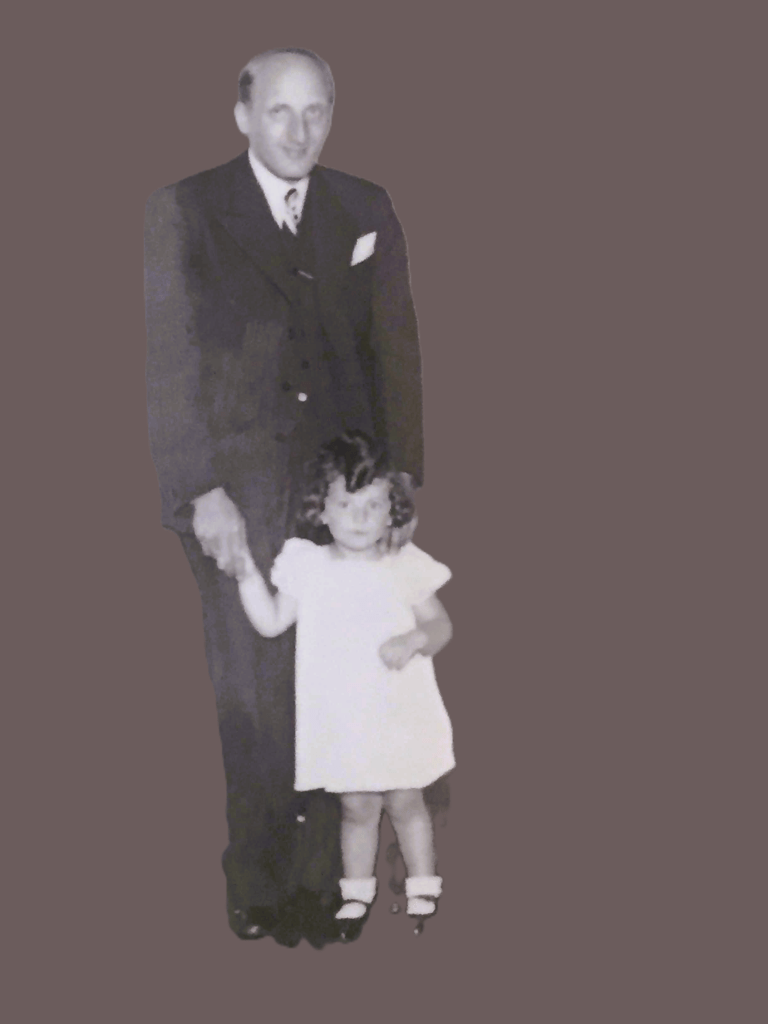
In early April 1945, as the Second World War approached its harrowing conclusion, the Nazi regime intensified its efforts to relocate concentration camp prisoners in a desperate attempt to obscure the full extent of their crimes. Among these efforts was the transportation of prisoners from Bergen-Belsen to Theresienstadt in three trains—each a grim convoy of suffering, uncertainty, and death. The story of one such prisoner, Hartog de Beer, stands as a haunting testament to the cruelty endured by countless victims and the chaos that marked the final days of the Holocaust.
The transports from Bergen-Belsen took place in the shadow of Allied advances, with Germany’s infrastructure crumbling under relentless air raids and the Wehrmacht in retreat. These trains were not designed for humane transport; instead, they were overcrowded cattle cars with little food, water, or medical care. Prisoners were subjected to appalling conditions, exacerbated by illness, starvation, and the psychological torment of not knowing their fate. For many, including Hartog de Beer, the journey proved fatal.
Hartog de Beer died on April 16, 1945 on the route between Hagenow-Land and Wittenberge, a stretch of land that for most would be unremarkable, but for him marked the end of a life filled with unimaginable hardship. His death occurred amidst a backdrop of chaos. As Allied forces bombed German targets in an effort to cripple the Nazi war machine, air raids became a daily terror. One such raid disrupted any possibility of a respectful burial for Hartog de Beer. Instead, his remains were left at Wittenberge station, abandoned as warplanes roared above—a final indignity inflicted upon a man who had already suffered so much.
This tragic incident is not just a footnote in the history of the Holocaust; it is emblematic of the countless lives lost in transit, forgotten in the shuffle of military strategy, and buried beneath the weight of incomprehensible human cruelty. The “lost trains,” as they came to be known, encapsulate the desperation of a regime in collapse and the resilience of those who, even in their final days, clung to life amidst unimaginable despair.
The fate of Hartog de Beer underscores the profound importance of remembrance. In telling his story, we acknowledge not just his death, but his humanity. He was more than a victim—he was a person, likely with family, dreams, and a life violently interrupted. His journey, and the journeys of so many others, compels us to confront the horrors of the Holocaust and reaffirm our commitment to ensuring that such atrocities are never repeated.
As we reflect on these final days of Nazi brutality, the abandoned remains at Wittenberge station become a symbol—not only of death but also of the urgent need for memory, justice, and human dignity. Hartog de Beer’s story, though one among millions, continues to echo through history as a silent cry against forgetting.
sources
https://oorlogsgravenstichting.nl/personen/8407/hartog-de-beer
https://collecties.kampwesterbork.nl/persoon/14895972
https://www.joodsmonument.nl/nl/page/97434/hartog-de-beer#intro
Please support us so we can continue our important work.
Donation
Your readership is what makes my site a success, and I am truly passionate about providing you with valuable content. I have been doing this at no cost and will continue to do so. Your voluntary donation of $2 or more, if you are able, would be a significant contribution to the continuation of my work. However, I fully understand if you’re not in a position to do so. Your support, in any form, is greatly appreciated. Thank you. To donate, click on the credit/debit card icon of the card you will use. If you want to donate more than $2, just add a higher number in the box left from the PayPal link. Your generosity is greatly appreciated. Many thanks.
$2.00

 History of Sorts
Leave a reply to tzipporahbatami Cancel reply