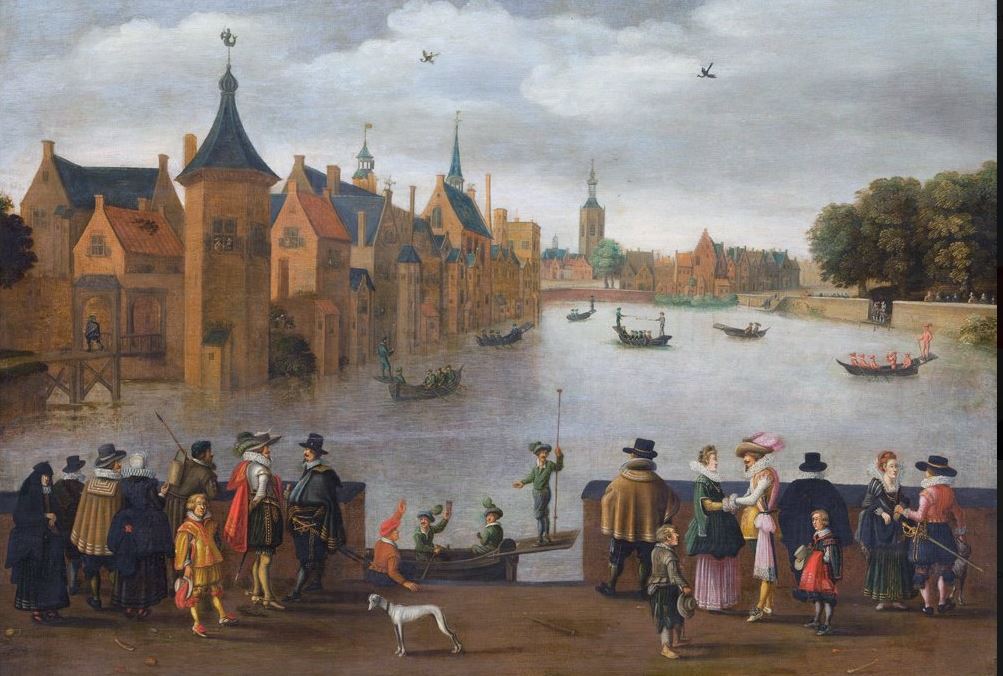
On April 19, 1782, John Adams was received by the States-General and the Dutch Republic as they were the first country, together with Morocco and France, to recognize the United States as an independent government. John Adams then became the first U.S. ambassador to the Netherlands and the house that he had purchased at Fluwelen Burgwal 18 in The Hague, became the first U.S. embassy anywhere in the world.
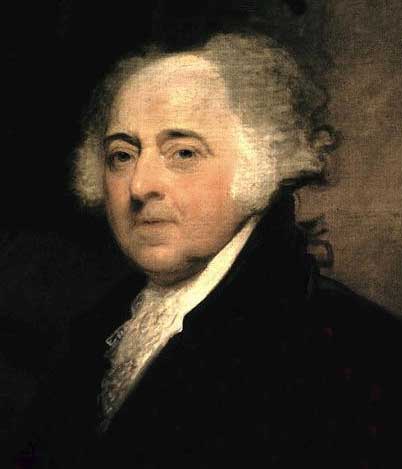
In July 1780 Adams replaced Laurens as the ambassador to the Dutch Republic, then one of the few other republics in the world, ironically less then 3 decades later it became a monarchy. With the aid of the Dutch Patriot leader Joan van der Capellen tot den Pol, Adams secured the recognition of the United States as an independent government at The Hague on April 19, 1782. In February 1782 the Frisian states was the first Dutch province to recognize the United States, while France had been the first European country to grant diplomatic recognition in 1778. He also negotiated a loan of five million guilders financed by Nicolaas van Staphorst and Wilhelm Willink. By 1794 a total of eleven loans were granted in Amsterdam to the United States with a value of 29 million guilders. In October 1782, he negotiated with the Dutch a treaty of amity and commerce, the first such treaty between the United States and a foreign power following the 1778 treaty with France.The house that Adams bought during this stay in the Netherlands became the first American-owned embassy on foreign soil.(Medallion given to John Adams in 1782 by Johann Georg Holtzhey to mark United States as an independent nation by the Netherlands)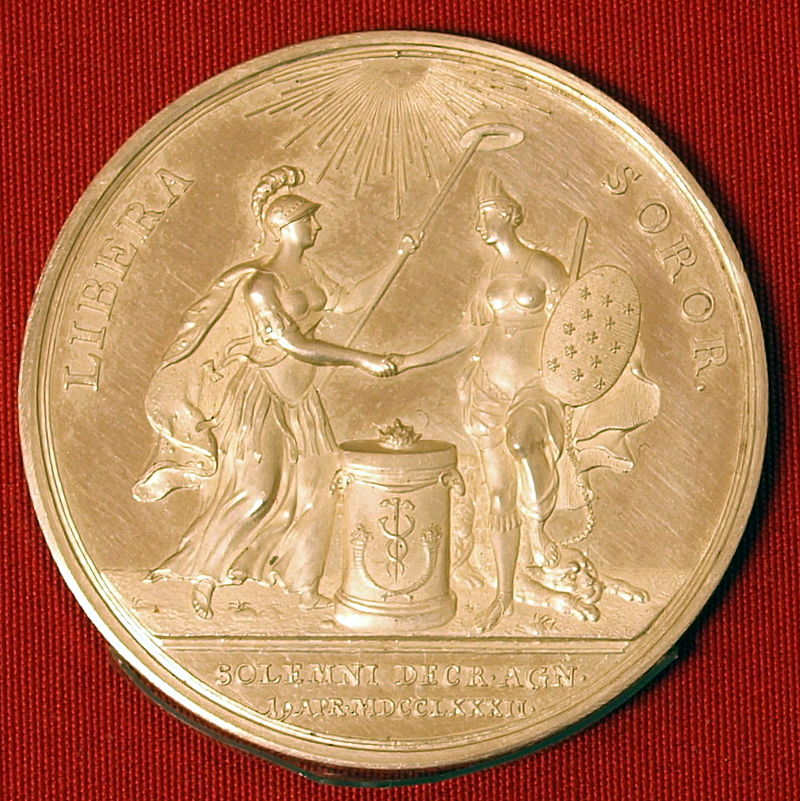
Adams liked the country. At an earlier visit to the Netherlands in 1780, Adams wrote to his wife Abigail:
“The country where I am is the greatest curiosity in the world. This nation is not known anywhere, not even by its neighbours. The Dutch language is spoken by none but themselves. Therefore they converse with nobody and nobody converses with them.
The English are a great nation, and they despise the Dutch because they are smaller. The French are a greater Nation still, and therefore they despise the Dutch because they are still smaller in comparison to them.
But I doubt much whether there is any nation of Europe more estimable than the Dutch, in proportion. Their industry and economy ought to be examples to the world.
They have less ambition, I mean that of conquest and military glory, than their Neighbours, but I don’t perceive that they have more avarice. And they carry learning and arts I think to greater extent. The collections of curiosities public and private are innumerable.”

Donation
Your readership is what makes my site a success, and I am truly passionate about providing you with valuable content. I have been doing this at no cost and will continue to do so. Your voluntary donation of $2 or more, if you are able, would be a significant contribution to the continuation of my work. However, I fully understand if you’re not in a position to do so. Your support, in any form, is greatly appreciated. Thank you. To donate, click on the credit/debit card icon of the card you will use. If you want to donate more than $2, just add a higher number in the box left from the PayPal link. Your generosity is greatly appreciated. Many thanks.
$2.00
 History of Sorts
Leave a comment