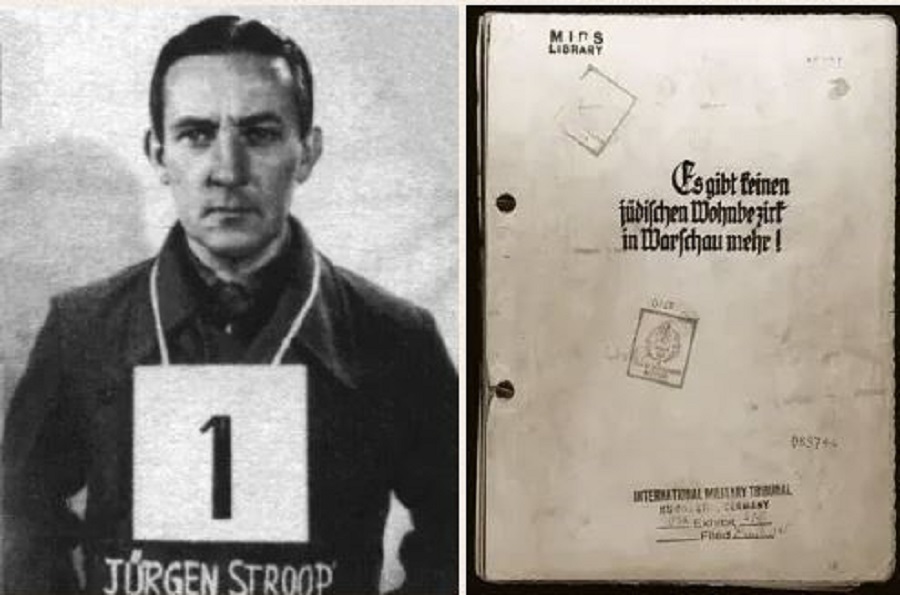
The Stroop Report is one of the most damning and significant pieces of documentary evidence from the Holocaust, meticulously detailing the Nazi suppression of the Warsaw Ghetto Uprising in 1943. Compiled by SS General Jürgen Stroop, the report serves not only as a military account but also as a grim testament to the brutality and systematic extermination practiced by the Nazi regime. Today, it remains a powerful reminder of the consequences of hatred, totalitarianism, and dehumanization.
Historical Context
The Warsaw Ghetto Uprising was a heroic, albeit tragic, act of resistance by the Jewish inhabitants of the Warsaw Ghetto against Nazi efforts to deport the remaining population to extermination camps. By April 1943, only about 60,000 Jews remained in the ghetto, many of whom were determined to resist deportation to Treblinka and other death camps. Armed with smuggled weapons and driven by desperation, Jewish fighters mounted an insurrection that lasted nearly a month—far longer than the Nazis had anticipated.
In response, SS General Jürgen Stroop was tasked with crushing the uprising. As he carried out the systematic destruction of the ghetto and the murder or deportation of its inhabitants, Stroop documented the operation in a report intended for Heinrich Himmler and other high-ranking Nazi officials.
Contents of the Report
Formally titled “The Jewish Quarter of Warsaw is No More!” (Es gibt keinen jüdischen Wohnbezirk in Warschau mehr!), the Stroop Report comprises three main components: daily operational reports, a summary of the overall operation, and a photographic album. Each part is chilling in its bureaucratic tone and clinical detail.

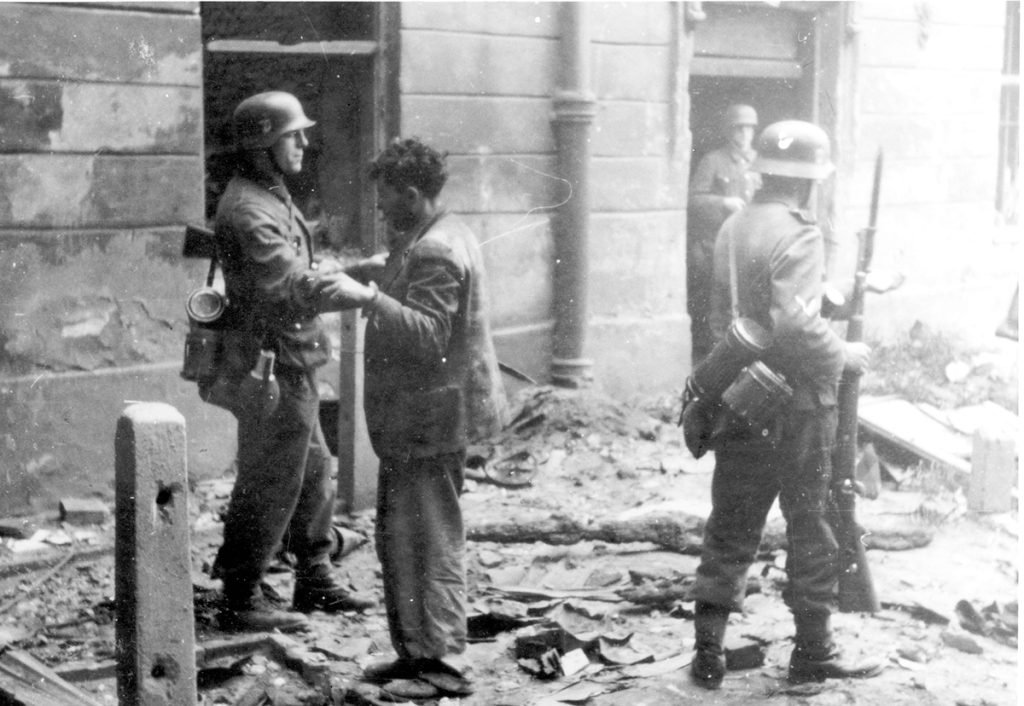
The daily reports provide a blow-by-blow account of Nazi actions, listing the number of Jews killed, captured, or deported. The language used is dehumanizing and euphemistic—for instance, describing the burning of homes and the killing of Jews as “cleansing actions.” The summary document serves as a triumphant declaration of the ghetto’s destruction, while the photo album includes over 50 photographs, many of which have become iconic representations of Holocaust atrocities, including the infamous image of a young boy with his hands raised, surrounded by Nazi soldiers.
🔹 Opening Statement (Preface)
“There is no longer a Jewish residential district in Warsaw. The largest Jewish ghetto in the world is no more.”
🔹 On Nazi Objectives:
“It was intended to comb out the ghetto, house by house and block by block, in a lightning operation and to seize the Jews present in it.”
🔹 On Jewish Resistance:
“The Jews and bandits fought stubbornly and used every imaginable trick. They fired from sewers, attics, and bunkers… they had arms of all kinds.”
🔹 Daily Entry – April 23, 1943:
“We encountered extraordinarily strong resistance… the bandits and Jews fired from concealed bunkers and from houses that had been prepared as fortresses.”
🔹 On Destruction:
“To force the Jews and bandits out, we set fire to the houses… hundreds of Jews jumped to their death.”
🔹 On Deportations and Killings:
“Total number of Jews caught: 56,065. Jews destroyed: 7,000. Jews transported: 6,929. Jews who perished in explosions or fires: 6,000.”
🔹 Closing Line of the Report:
“The former Jewish Quarter of Warsaw is no more.”
Significance and Legacy
The Stroop Report is significant for several reasons. First, it provides irrefutable evidence of Nazi war crimes created by the perpetrators themselves. Stroop’s detailed record was used as key evidence during the Nuremberg Trials and subsequent legal proceedings, including Stroop’s trial and execution for war crimes.
Second, the report offers rare insight into the Nazi mindset. Despite its inhumanity, the document reveals how the Nazi bureaucracy sought to document its actions with precision, demonstrating the dangerous intersection of modern administrative efficiency and genocidal ideology.
Lastly, the Stroop Report is a testament to the courage and resistance of the Warsaw Ghetto fighters. While the document was meant to glorify Nazi victory, it inadvertently preserved the memory of the uprising—a symbol of defiance in the face of extermination.
Sources
https://www.yadvashem.org/exhibitions/photographs-warsaw-ghetto/stroop-collection.html
https://en.wikipedia.org/wiki/Stroop_Report
https://encyclopedia.ushmm.org/content/en/photo/page-from-the-stroop-report
Please support us so we can continue our important work.
Donation
Your readership is what makes my site a success, and I am truly passionate about providing you with valuable content. I have been doing this at no cost and will continue to do so. Your voluntary donation of $2 or more, if you are able, would be a significant contribution to the continuation of my work. However, I fully understand if you’re not in a position to do so. Your support, in any form, is greatly appreciated. Thank you. To donate, click on the credit/debit card icon of the card you will use. If you want to donate more than $2, just add a higher number in the box left from the PayPal link. Your generosity is greatly appreciated. Many thanks.
$2.00
 History of Sorts
Leave a comment