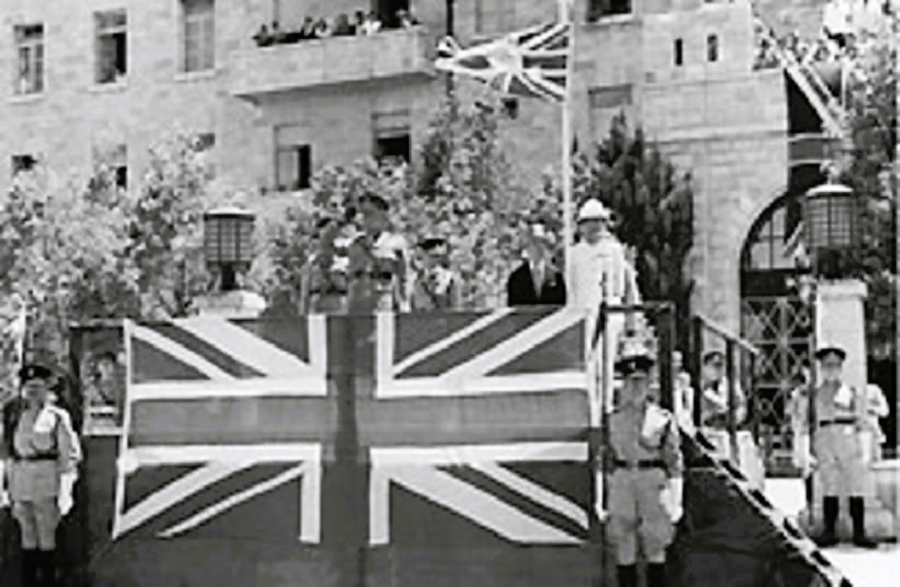
On July 24, 1922, the Council of the League of Nations — the predecessor to the United Nations Security Council — formally approved the British Mandate for Palestine, marking one of the earliest legal steps toward the eventual establishment of the State of Israel. This decision came in the aftermath of World War I and was heavily shaped by the prevailing colonial system.
Following the war, the victorious Western powers agreed that former Ottoman territories — including Palestine, Transjordan, Syria, and Lebanon — would be placed under European administration until they were deemed capable of self-governance.
Under the British Mandate, Great Britain was granted administrative control over Palestine and Transjordan — territories that now comprise Israel, Jordan, the West Bank, and the Gaza Strip. Intended as a temporary arrangement, the Mandate aimed to prepare these regions for eventual independence, including the establishment of “a national home for the Jewish people.”
German Templers
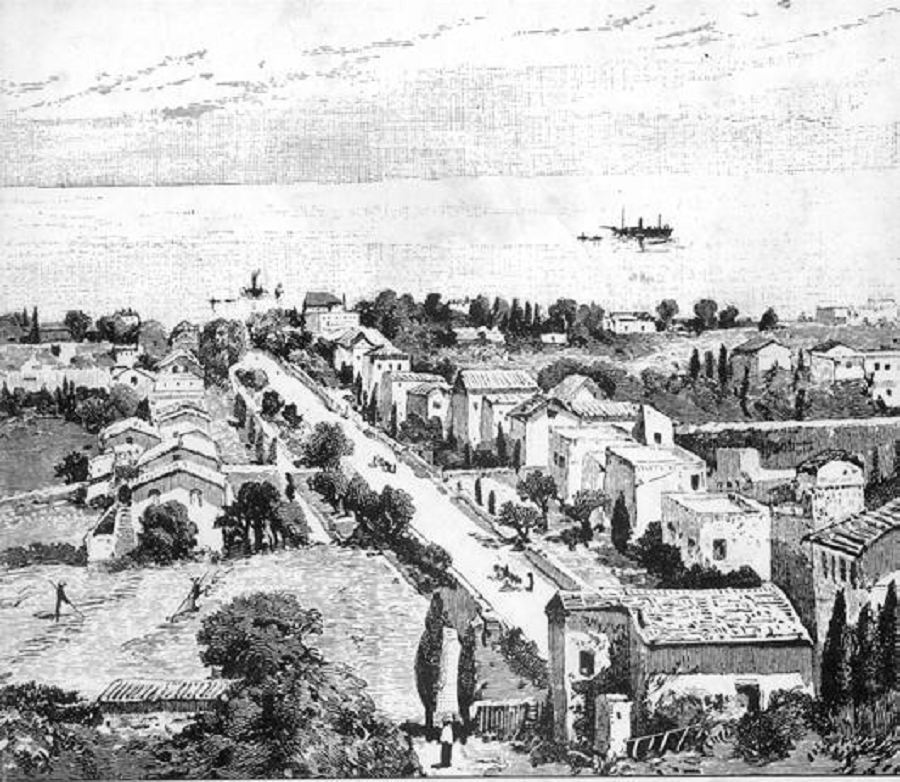
The 1922 Census of Palestine recorded 724 members of the German Templer community (listed as the “Templars Community”), with the majority—697 individuals—residing in the Jerusalem–Jaffa area and 27 in the northern region. More detailed church membership data from the census shows the following distribution: 117 in Jerusalem, 196 in Jaffa, 6 in Mas’udiyeh, 202 in Sarona, 176 in Wilhelma, 9 in Nev Herduf, 1 in Nazareth, and 17 in Tiberias.
Gotthilf Wagner: A Controversial Figure in Mandate Palestine
Gotthilf Johannes Wagner (1887–1946) was a prominent leader of the German Templer community in Mandatory Palestine. Born in Stuttgart, Germany, Wagner became deeply involved in the affairs of the Templer colonies, particularly Sarona, a settlement near Tel Aviv. His tenure as mayor and his affiliations during the tumultuous years of World War II positioned him as a contentious figure in the region’s complex socio-political landscape.

Early Life and Leadership
Wagner’s early years in Germany laid the foundation for his later role in Palestine. As the mayor of Sarona, he oversaw one of the most significant Templer settlements. The Templers, a German Protestant sect, had established colonies in Palestine in the 19th century, aiming to live a pious life in the Holy Land. Under Wagner’s leadership, Sarona flourished economically and culturally, becoming a model of Templer enterprise and community life.
Affiliation with the Nazi Party
The rise of the Nazi regime in Germany had profound effects on German communities abroad. Wagner became a member of the Nazi Party and reportedly held a position as an SS group leader. His alignment with Nazi ideology and policies extended to his administrative decisions in Sarona. Notably, he instructed the local population not to sell land to Jews, a directive that heightened tensions with the Jewish community in Palestine. These actions, combined with his prominent Nazi affiliations, made him a target of the Jewish resistance movements.
Jewish Telegraphic Agency
Assassination and Its Aftermath
On March 22, 1946, Wagner was assassinated by members of the Palmach, the elite strike force of the Haganah, the main Jewish paramilitary organization in Palestine. As he was traveling from the Wilhelma Detention Camp near Lydda airport to Sarona, his car was ambushed on the outskirts of Tel Aviv. Despite being accompanied by a police escort and carrying a significant sum of money intended for Arab laborers, the assailants focused solely on eliminating Wagner, leaving the money untouched. The assassination sent shockwaves through the Templer community and was part of a broader strategy by Jewish resistance groups to diminish Nazi influence and discourage collaboration with the British authorities.
The following account is based on anecdotal evidence and cannot be independently verified, though it has appeared in multiple sources.
Gotthilf Wagner, a leading figure among the German Templers in Palestine, was alleged to have assisted both the Gestapo and the Wehrmacht during World War II. According to one account, he once boasted to a Holocaust survivor—who had survived the war by masquerading as a Hungarian priest—that he had personally been present at both Auschwitz and Buchenwald. In a chilling claim, Wagner allegedly recounted that at Auschwitz, he watched as a group of Jewish children were brought before him. He said he poured flammable liquid over them and asked if they knew there was a hell on Earth, then set them on fire while declaring this was the fate awaiting Jews in Palestine.
At the time, 17-year-old Rafi Eitan—later a senior Mossad official—was the son of Russian Jewish pioneers in Palestine. He recalled his reaction to the return of former Nazis: “Here come exultant Germans who had been members of the Nazi Party, who enlisted in the Wehrmacht and SS, and they want to return to their property, when all the Jewish property outside was destroyed.”
Eitan was part of a 17-member Haganah squad assigned to assassinate Wagner. On March 22, 1946, they forced Wagner’s car off the road in Tel Aviv and shot him dead. In the weeks that followed, the Haganah carried out additional assassinations of Templers—two in the Galilee and two more in Haifa. The message was clear. The Templer community soon abandoned their settlements and property, and were never seen in Palestine again.
Legacy
Wagner’s assassination marked a turning point for the Templer communities in Palestine. In the ensuing years, increased hostilities and political pressures led to the evacuation of many Templers to internment camps in Cyprus by British authorities. Wagner’s life and death underscore the intricate interplay of ideology, colonialism, and resistance in the waning years of the British Mandate in Palestine.
sources
https://freerepublic.com/focus/f-bloggers/4141420/posts
https://www.tabletmag.com/sections/arts-letters/articles/jewish-vengeance-wwii
https://www.bbc.com/news/magazine-22276494
Please support us so we can continue our important work.
Donation
Your readership is what makes my site a success, and I am truly passionate about providing you with valuable content. I have been doing this at no cost and will continue to do so. Your voluntary donation of $2 or more, if you are able, would be a significant contribution to the continuation of my work. However, I fully understand if you’re not in a position to do so. Your support, in any form, is greatly appreciated. Thank you. To donate, click on the credit/debit card icon of the card you will use. If you want to donate more than $2, just add a higher number in the box left from the PayPal link. Your generosity is greatly appreciated. Many thanks.
$2.00
 History of Sorts
Leave a comment