
A mistake many people would make is that a charity as large as the Red Cross would not fall victim to manipulation. Although they have the best intentions, any charity can only go by the information given to them. They may believe they are eyewitnesses to something, but to suit “certain” narratives—façades can cover the truth.
On June 23, 1944, the Nazis invited the International Red Cross to inspect Theresienstadt Concentration Camp. The camp was described as a Utopian experiment by the Germans to produce a self-sustaining community of like-minded citizens who would live and work together for the common good. Craftsmen of all types exercised their talents in specially constructed workshops; fruit and vegetables were grown in abundance in large garden areas close to the moat; there was a post office, bank, library, hospital, and countless opportunities for the residents of the camp to participate in sporting and cultural activities. In short, the Nazis portrayed Theresienstadt as being a veritable paradise camp.
To ensure the Red Cross reported positively on Theresienstadt, the Nazis attempted to mask the true conditions, thereby presenting it as a model ghetto. The Nazis removed 7,503 Jews from Theresienstadt between 16 and 18 May 1944 to reduce the overcrowding of the ghetto, holding them in a special camp at Auschwitz in case the Red Cross requested to visit them there. Buildings along the inspection route were spruced up, a football match was staged, and cultural activities were promoted to add to the deception.
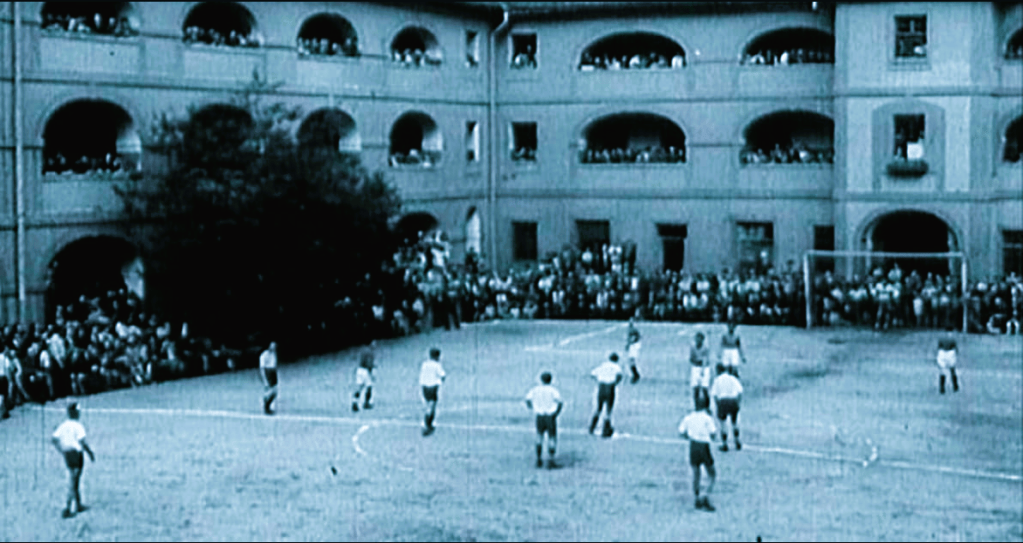
As the Red Cross arrived and toured the ghetto, they followed a specific route, which had been pre-planned to portray the camp in the best light possible. They met the prisoners who had been warned about how to act and what to say. The Red Cross was duped, and their report did not reveal the ghetto’s true purpose or conditions.
The commission that visited on June 23, 1944, included Maurice Rossel, a representative of the ICRC; E. Juel-Henningsen, the head physician at the Danish Ministry of Health; and Franz Hvass, the top civil servant at the Danish Foreign Ministry. Swiss historians Sébastien Farré and Yan Schubert view the choice of the young and inexperienced Rossel as indicative of the ICRC’s indifference to Jewish suffering.
The Nazis intensified deportations from the ghetto shortly before the visit, and the ghetto itself was beautified—by adding a garden, painting houses and renovating barracks. The Nazis had staged social and cultural events for the visiting dignitaries. Once the visit was over, the Germans resumed deportations from Theresienstadt, which ended in October 1944.
Rossel was completely duped. A sad fact is the subsequent report he produced was so favourable that the local SS decided to make a film about the camp. The intention was a resultant propaganda film that would be distributed worldwide, particularly to international humanitarian institutions and neutral countries. This was to assure them that the negative reports from the Western powers about their camps—were all exaggerated and untrue.
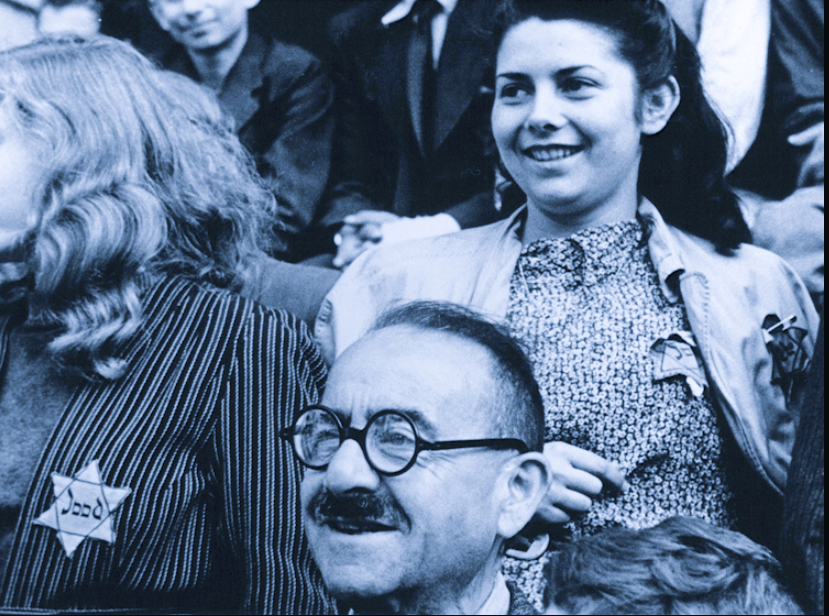
Not only was it enough to have a false depiction of Theresienstadt, but the Nazis also coerced German-Jewish Actor/Director Kurt Gerron into directing. Gerron escaped Germany after the Nazis took power and ended up in the Netherlands. When the filming finished, Gerron and members of the jazz pianist Martin Roman Ghetto Swingers—were deported on the final train transport to Auschwitz. Gerron and his wife were gassed immediately upon arrival, as well as the film’s performing entourage, with the exception of Martin Roman and guitarist Coco Schumann.
As a result of preparations for the Red Cross visit, the summer of 1944 was, as one survivor later wrote, “The best time we had in Terezín. Nobody thought of new transports.”
The gimmick was so successful that SS commander Hans Günther tried and decided to expand on it by having Kurt Gerron make a short documentary about the camp to assure audiences that the inmates kept there were not abused. In return, the Nazis promised that he would live. Shooting the film started on September 1, 1944, and took 11 days. Kurt Gerron was murdered upon arrival at Auschwitz on October 28, 1944.
This should be a lesson for today and the future that seeing should not always be believing.
Sources
https://www.thehistorypress.co.uk/articles/theresienstadt-paradise-camp/
https://encyclopedia.ushmm.org/content/en/article/theresienstadt-red-cross-visit
Please support us so we can continue our important work.
Donation
Your readership is what makes my site a success, and I am truly passionate about providing you with valuable content. I have been doing this at no cost and will continue to do so. Your voluntary donation of $2 or more, if you are able, would be a significant contribution to the continuation of my work. However, I fully understand if you’re not in a position to do so. Your support, in any form, is greatly appreciated. Thank you. To donate, click on the credit/debit card icon of the card you will use. If you want to donate more than $2, just add a higher number in the box left from the PayPal link. Your generosity is greatly appreciated. Many thanks.
$2.00

 History of Sorts
Leave a comment