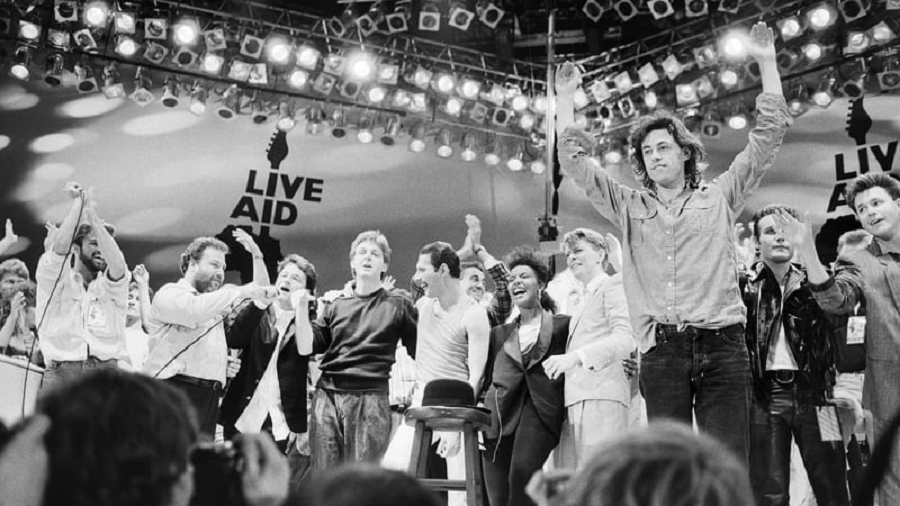
Live Aid: The Day the World Came Together Through Music
“Do they know it’s Christmas?” That haunting question echoed across radios in 1984, but it was on July 13, 1985 that the world truly came together to answer with action — and music. Live Aid, the brainchild of musicians Midge Ure, Bob Geldof and promoter Harvey Goldsmith, wasn’t just a concert. It was a global phenomenon, a humanitarian milestone, and a blueprint for how entertainment can drive real-world change.
What Was Live Aid?
Live Aid was a dual-venue benefit concert held simultaneously at Wembley Stadium in London and John F. Kennedy Stadium in Philadelphia. It was broadcast live to over 1.5 billion viewers in more than 150 countries — nearly 40% of the world’s population at the time.
But this wasn’t just a party. It was a musical response to the Ethiopian famine, which had claimed nearly a million lives. The goal? Raise funds, raise awareness, and raise hope.
A Lineup for the Ages
Live Aid’s roster read like a who’s who of 20th-century music:
Queen delivered what is now widely considered the greatest live performance in rock history, with Freddie Mercury commanding the stage with uncontainable charisma.
U2, relatively unknown outside the UK and Ireland at the time, transformed into global icons in real time.
David Bowie, The Who, Led Zeppelin, Elton John, Paul McCartney, Madonna, Bob Dylan, Eric Clapton, and Mick Jagger all shared the stage — if not physically, then spiritually.
There were also emotional moments, like Phil Collins performing in both London and Philadelphia — thanks to Concorde.

One act that stood out during the concert was Queen. Their performance at Live Aid has often been compared to Elvis Presley’s iconic ’68 Comeback Special—a moment that reignited their career and reestablished their status as rock legends.
Queen didn’t open or close the show. They took the stage just before 7 p.m., unusually performing in daylight, and were sandwiched between major acts like U2, Elton John, and David Bowie.
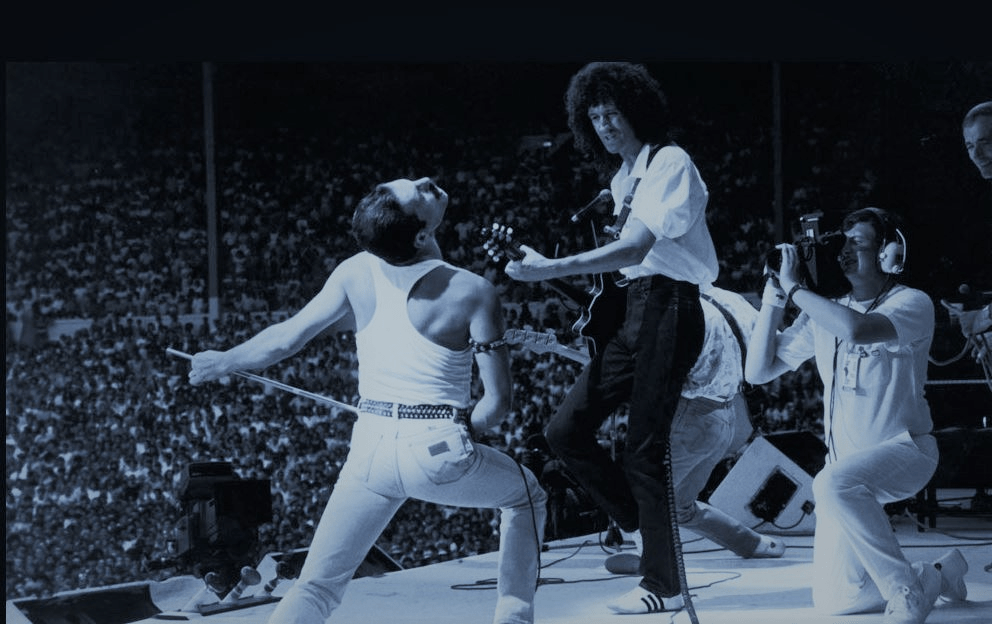
At the time, Queen were considered past their prime. Their reputation had taken a hit, especially after a controversial series of shows in apartheid-era South Africa the year before. Freddie Mercury, in particular, had become a target of negative press, with relentless speculation about his personal life and sexuality.
Yet, against all expectations, Queen delivered a performance that not only stole the show but would go down as one of the greatest live music moments in history. Lasting just 21 minutes, their set became a defining chapter in rock history—one that continues to be celebrated decades later.
Did It Actually Help?
Live Aid raised an estimated £150 million (over $245 million today) for famine relief. But the concert did more than fill donation buckets. It changed the public perception of Africa, prompted world leaders to take humanitarian issues more seriously, and inspired future philanthropic efforts like Live 8, Band Aid 20, and countless charity concerts thereafter.
The Power of Broadcast
Live Aid proved the immense potential of live global broadcasts. For many, it was the first time music, technology, and compassion converged so powerfully. People didn’t just watch — they felt connected. And they acted. Phone lines jammed with donations. Communities held local fundraisers. A generation woke up to the idea that they could make a difference.
On the same day, concerts inspired by the initiative took place in countries around the world, including the Soviet Union, Canada, Japan, Yugoslavia, Austria, Australia, and West Germany. The event became one of the largest satellite link-ups and television broadcasts in history, reaching an estimated audience of 1.9 billion people across 150 nations—nearly 40 percent of the global population.
In the first satellite transmission of rock music from Moscow, the Soviet band Autograph performed for millions of music fans worldwide as part of the Live Aid concert, which aimed to raise funds for famine relief in Africa.
The five-member group delivered two progressive rock pieces—“20th Century” and “We Need Peace”—in front of a carefully selected audience of around 200 enthusiastic youths packed into the State Radio and Television studio. Their performance was broadcast to millions of viewers around the globe.
Yugoslavia contributed its own version of Band Aid and USA for Africa with a song titled “For a Million Years.” The song was introduced by Mladen Popović, who also provided background information about its creation and significance.
At Live Aid, B.B. King performed at the North Sea Jazz Festival in the Hague, captivating the audience with his signature guitar playing and soulful voice. Known for his expressive style, King played his beloved guitar, Lucille, which had become almost an extension of himself.

Midge Ure the forgotten hero
Midge Ure, a Scottish musician best known as the frontman of Ultravox and co-writer of the hit song “Do They Know It’s Christmas?”, played a crucial role in the organization and success of Live Aid, the historic 1985 global benefit concert aimed at alleviating famine in Ethiopia.
Ure’s involvement began when he collaborated with Bob Geldof of The Boomtown Rats to co-write and produce “Do They Know It’s Christmas?” in 1984. The song, recorded by a supergroup of British and Irish musicians under the name Band Aid, became a massive hit and raised millions for famine relief. Its success inspired the larger vision of Live Aid.
As co-organizer of the Live Aid concerts, Ure worked behind the scenes to coordinate logistics, book performers, and ensure the event ran smoothly. Live Aid was held simultaneously at Wembley Stadium in London and JFK Stadium in Philadelphia on July 13, 1985, and was broadcast to an estimated global audience of 1.9 billion people across 150 nations. Ure also performed at Wembley with Ultravox, contributing musically as well as organizationally.
While Bob Geldof was often the public face of the initiative, Ure’s role was essential to its execution. His technical expertise, musical credibility, and dedication to humanitarian efforts helped bring the project to life.Midge Ure was not only a key creative force behind the Band Aid single but also a principal architect of Live Aid. His contributions were instrumental in uniting the music world for a humanitarian cause and demonstrating the powerful role of artists in global activism.
Legacy That Lives On
Forty years later, Live Aid still echoes in modern culture. It’s referenced in films like Bohemian Rhapsody, it’s studied in media and music courses, and most importantly, it’s remembered as the day when pop culture did something profound: it cared.
Live Aid wasn’t perfect. There were logistical issues, political critiques, and questions about aid distribution. But flaws aside, it galvanized the world in a way few events ever have.
In Dire Straits
At the time, Dire Straits were in the middle of a sold-out tour, and on July 13, 1985, they were scheduled to perform at Wembley Arena—just down the road from Wembley Stadium, where Live Aid was taking place. Their slot in the Live Aid lineup left them with only an hour to get to their own concert.
Dire Straits’ manager, Ed Bicknell, recalled that the band “had to go back immediately.” In a humorous twist, two policewomen helped escort them out of the stadium, unaware of who they were. Mistaking the band’s name for their urgent situation, they reportedly told Wembley security, “These blokes are in dire straits and need to get out quick.”
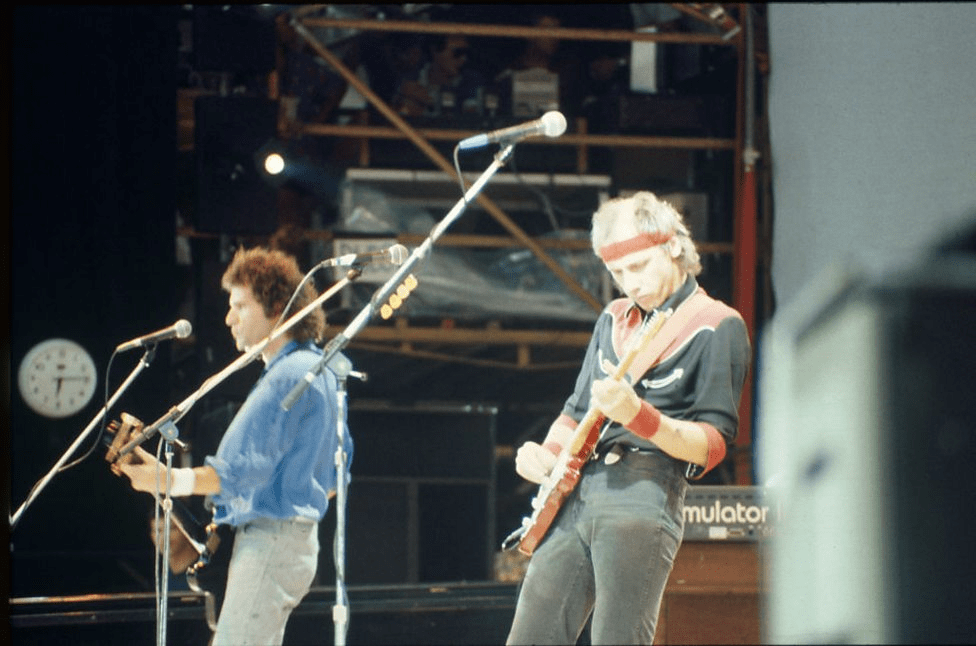
Finishing this blog with the song that triggered it all.
sources
https://www.britannica.com/event/Live-Aid
https://en.wikipedia.org/wiki/Live_Aid
https://catalogue.nli.ie/Record/vtls000879472/HoldingsILS
https://www.bbc.co.uk/bitesize/articles/zrynjfr
https://www.upi.com/Archives/1985/07/13/Soviet-band-plays-in-famine-concert/4129490075200/
http://liveaid.free.fr/rewind/bbc/pages/021bbking.html
Donation
Your readership is what makes my site a success, and I am truly passionate about providing you with valuable content. I have been doing this at no cost and will continue to do so. Your voluntary donation of $2 or more, if you are able, would be a significant contribution to the continuation of my work. However, I fully understand if you’re not in a position to do so. Your support, in any form, is greatly appreciated. Thank you. To donate, click on the credit/debit card icon of the card you will use. If you want to donate more than $2, just add a higher number in the box left from the PayPal link. Your generosity is greatly appreciated. Many thanks.
$2.00
 History of Sorts
Leave a comment