
Arthur Seyss-Inquart gravely misjudged the Dutch population in believing they would embrace Nazi ideology. While a minority in the Netherlands supported National Socialism, the vast majority rejected Hitler’s vision.
Arthur Seyss-Inquart (22 July 1892–16 October 1946) was an Austrian Nazi politician who briefly served as Chancellor of Austria—from 11 to 13 March 1938—before the Anschluss, during which Austria was annexed by Nazi Germany. As acting head of state, he signed the constitutional law effecting this annexation following President Wilhelm Miklas’s resignation.
During World War II, Seyss-Inquart held key administrative roles in Nazi-occupied territories, including the General Government of Poland and, most notoriously, as Reichskommissar of the Netherlands. He was later convicted at the Nuremberg Trials for crimes against humanity and executed.
Born in Stannern, Austria, in 1892, Seyss-Inquart was the son of a schoolteacher. His family relocated to Vienna in 1907, where he studied law before joining the Austro-Hungarian Army. He served on the Eastern and Italian fronts during World War I and was severely wounded in 1917.
After the war, he became a lawyer and adopted increasingly extreme right-wing views. He joined the German Brotherhood and emerged as a vocal proponent of Anschluss. In May 1937, he was appointed state counselor, and in February 1938, Austrian Chancellor Kurt von Schuschnigg made him Minister of the Interior. Seyss-Inquart briefly served as chancellor in March 1938 before Hitler’s forces took control of Austria.
Seyss-Inquart quickly rose within the Nazi hierarchy. He served as governor of the Ostmark (the Nazi name for Austria) and later joined Hitler’s cabinet as a minister without portfolio.
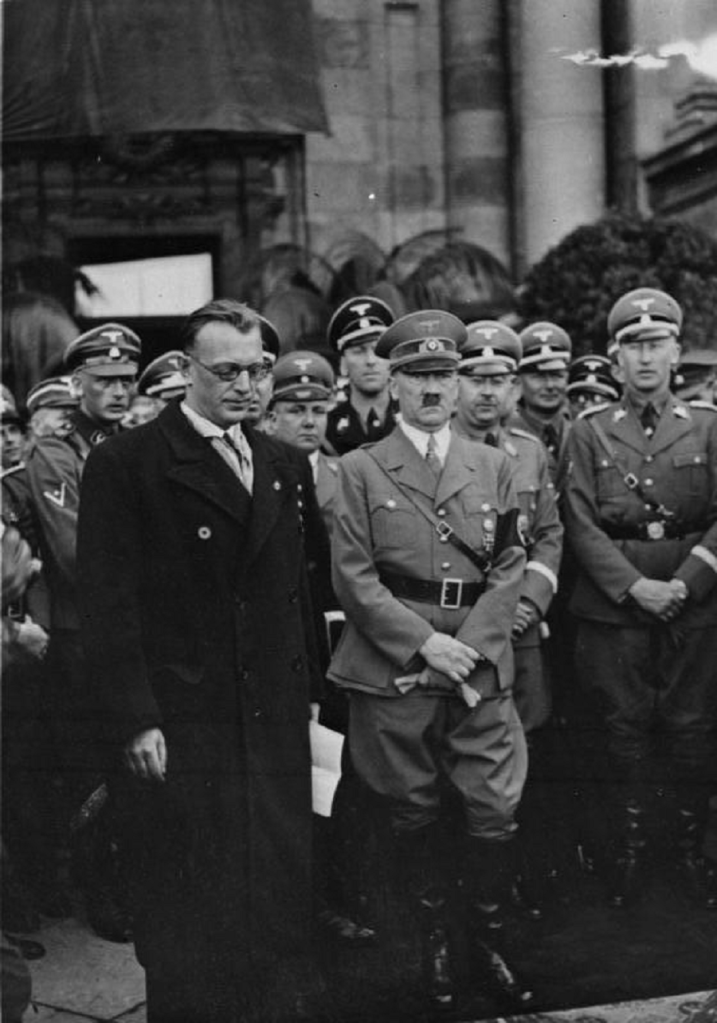
He drafted and signed the legislation that reduced Austria to a German province. Ernst Kaltenbrunner served as his chief minister, while Josef Burckel oversaw Jewish affairs.
In 1939, Seyss-Inquart was granted the honorary SS rank of Gruppenführer. He began implementing anti-Jewish policies, including property confiscation and deportations. After the invasion of Poland, he was appointed deputy to Hans Frank in the General Government and later became Reichskommissar of the Netherlands in May 1940.
In this role, he governed the Netherlands with brutal efficiency. He banned political parties (except the pro-Nazi NSB), imprisoned officials, and supported the formation of the Landwacht, a paramilitary auxiliary police. Seyss-Inquart imposed severe penalties on resistance efforts, including mass fines, arrests, and executions. His regime authorized or carried out up to 1,500 executions, including reprisals and hostage killings.
To suppress resistance, Seyss-Inquart implemented increasingly harsh measures. Following a large-scale strike in May 1943—spanning Amsterdam, Arnhem, and Hilversum—he imposed special summary court-martial procedures and levied a collective fine of 18 million guilders on the population. Until the liberation of the Netherlands, he authorized the execution of approximately 800 individuals. However, some estimates place the number at over 1,500. These figures include victims of the so-called “Hostage Law,” political prisoners executed shortly before liberation, casualties of the Putten raid, and the reprisal execution of 117 Dutchmen in response to an attack on SS and Police Leader Hanns Albin Rauter.
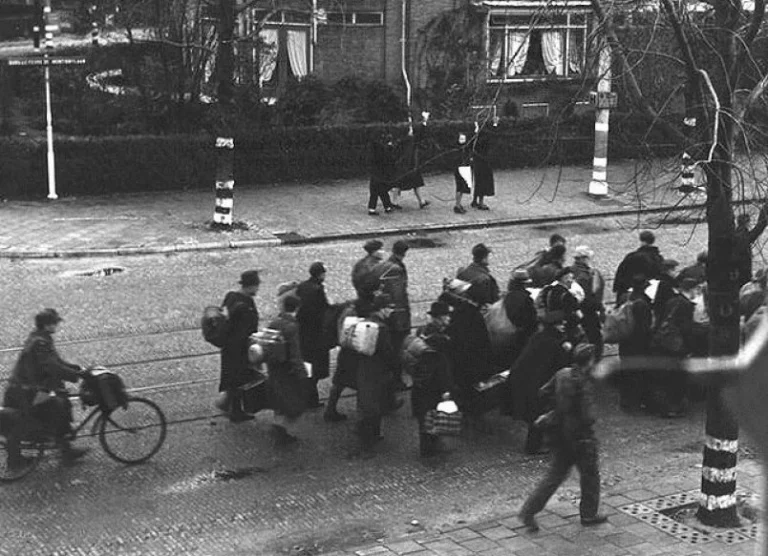
Despite a transfer of some authority to the military and Gestapo in mid-1944, Seyss-Inquart remained highly influential. He oversaw the forced labor of Dutch citizens—sending 250,000 to work in German factories—and attempted to limit deportations only to younger men, albeit with limited success.
His anti-Semitism was uncompromising. Shortly after his arrival in the Netherlands, Jews were systematically removed from public life. Approximately 140,000 Dutch Jews were registered; many were deported to Westerbork and from there to Auschwitz and other camps. Only 30,000 survived the war.
Though Hitler ordered scorched earth tactics as Allied forces approached, Seyss-Inquart—working with Armaments Minister Albert Speer and sympathetic military leaders—deliberately limited their implementation. In April 1945, he reluctantly allowed humanitarian food drops during the “Hunger Winter,” easing the famine in the occupied Netherlands.

Despite knowing the war was lost, Seyss-Inquart refused to surrender. In one exchange, General Walter Bedell Smith warned him, “Well, in any case, you are going to be shot.” Seyss-Inquart replied coldly, “That leaves me cold,” to which Smith snapped, “It will.”
In Hitler’s final political testament, Seyss-Inquart was appointed Foreign Minister, replacing Joachim von Ribbentrop—a symbolic nod to Hitler’s enduring loyalty to his Austrian comrade, despite the war’s imminent end. Seyss-Inquart never effectively exercised the role.
He was arrested on 7 May 1945 on the Elbe Bridge in Hamburg by British troops, including Norman Miller, a Jewish refugee from Nuremberg who had escaped to Britain via kindertransport and returned as a British soldier. Miller’s entire family had perished in the Holocaust.
At the Nuremberg Trials, Seyss-Inquart was represented by Gustav Steinbauer and faced four charges: conspiracy to commit crimes against peace, waging aggressive war, war crimes, and crimes against humanity. He was acquitted of conspiracy but convicted on the other three counts and sentenced to death by hanging.
Interestingly, he scored an IQ of 141 on psychological tests—second highest among the defendants, behind Hjalmar Schacht—suggesting intelligence that was tragically misapplied.
The court emphasized his role in the brutal suppression of dissent and the atrocities committed against the Dutch population, particularly the Jews. Upon hearing his sentence, Seyss-Inquart responded stoically: “Death by hanging… well, in view of the whole situation, I never expected anything different. It’s all right.”
He was hanged on 16 October 1946, the last among ten executed Nuremberg defendants. His final words were:
“I hope that this execution is the last act of the tragedy of the Second World War and that the lesson taken from this world war will be that peace and understanding should exist between peoples. I believe in Germany.”
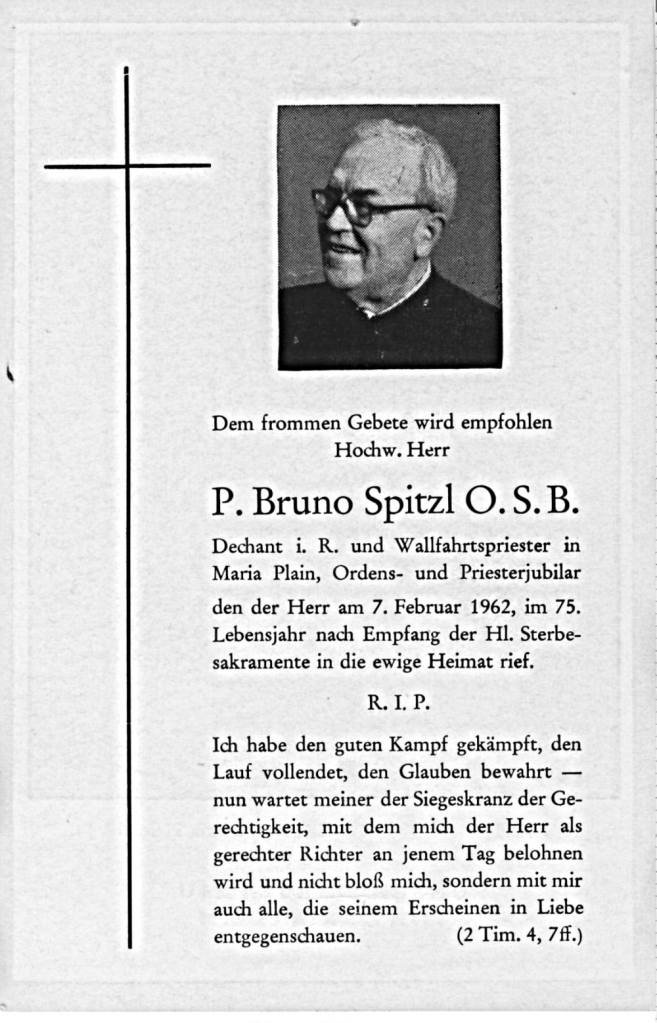
Before his execution, he returned to the Catholic faith, receiving absolution from prison chaplain Father Bruno Spitzl.
His body, along with those of the other executed men and Hermann Göring (who committed suicide), was cremated and the ashes scattered in the Isar River near Munich.
Sources
chrome-extension://efaidnbmnnnibpcajpcglclefindmkaj/https://wwv.yadvashem.org/odot_pdf/Microsoft%20Word%20-%206018.pdf
https://en.wikipedia.org/wiki/Arthur_Seyss-Inquart
https://www.annefrank.org/en/timeline/69/seyss-inquart-warns-the-dutch-jews/
https://encyclopedia.ushmm.org/content/en/article/arthur-seyss-inquart
Please support us so we can continue our important work.
Donation
Your readership is what makes my site a success, and I am truly passionate about providing you with valuable content. I have been doing this at no cost and will continue to do so. Your voluntary donation of $2 or more, if you are able, would be a significant contribution to the continuation of my work. However, I fully understand if you’re not in a position to do so. Your support, in any form, is greatly appreciated. Thank you. To donate, click on the credit/debit card icon of the card you will use. If you want to donate more than $2, just add a higher number in the box left from the PayPal link. Your generosity is greatly appreciated. Many thanks.
$2.00
 History of Sorts
Leave a comment