(originally posted in June 2016)
The Netherlands is generally known as a peaceful country with relatively little crime and especially the 2 most Northern provinces Friesland and Groningen, which are both rural areas would not be known for brutal crimes and yet 2 of the most notorious crimes in the country took place there. As far as my memory serves me one of the crimes is the 1st recorded mass murders in the country.
IIje Wijkstra

For all non-Dutch speakers, please refrain from attempting to pronounce the name. For all the non-Frisians and Groningers, the same applies.
He was born on the 4th of July 1885 in Doezum(Groningen) as the youngest of 7 children, which was actually an average-sized family in those days.
After primary school, IJje started an apprenticeship as a bricklayer; aside from that, he would also go poaching with his father. He certainly knew how to handle a gun.
In 1928, he began an affair with Aaltje Wobbes, the wife of his friend Hendrik Wobbes, who was incarcerated for theft at the time. It is rumored that Aaltje had a significant influence on IJje. After they had spent two weeks together in Aaltje’s house, the pair decided that it was best for them to move into IJje’s place and leave Aaltje’s six children behind.
Because of the abandonment of the children, a judge ordered that Aaltje be apprehended and brought in for questioning. On the 18th of January 1929, two communal policemen (Aldert Meijer and Mient van der Molen) and 2 state policemen (Herman Hoving and Jan Werkman) were sent to arrest her.
IJje was aware of the arrest order and waited for the police to come with his rifle.
It was -18 Celsius that day. IJje shot all 4 police officers and got injured himself, albeit just lightly.
After the murders, he burned the house and took Aaltje to his nephew.

IJje tried to escape to the City of Groningen, but on his way to the hospital, he was caught.
In April 1929, IJje was convicted to life by a court in Groningen, but after an appeal in Leeuwarden (the capital of Friesland), the sentence was reduced to 20 years.
In 1941, he was transferred from the state prison in Leeuwarden to an asylum for the mentally disabled in Eindhoven. Why this was the case is unclear, but the Germans had invaded the Netherlands at that stage, and they probably had a different agenda. IJje died in the asylum in 1941 due to tuberculosis. I suspect the Nazi’s may have conducted some experiments on him.
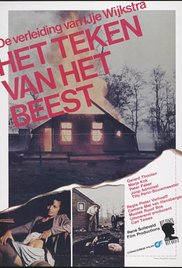
In 1980, a movie was made of that fateful day in 1929, called “Het teken van het best”; the English title is “The Mark of the Beast.”
Below a picture of the graves of the two states police officers.

Durk Tabak.
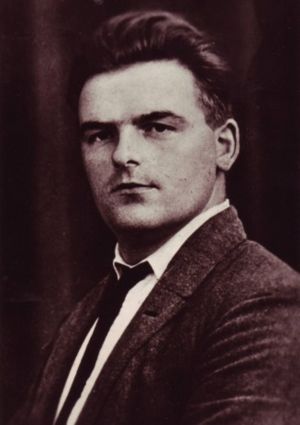
As a kid, I heard this name and his story mentioned frequently in my family, probably because there was a possibility that I was related to him.
Durk was born on Wednesday, 10 December 1902, in Harkema, Achtkarspelen. he was the son of Johannes Johannes Tabak and Antje Minnes Folkerstma.
Durk died on Friday, 16 September 1949, in Surhuizum, Achtkarspelen, at the age of 46.
He was a good friend of IJje Wijkstra. This is something I couldn’t understand until recently. Durk was living in Friesland, and IJje was a resident of the province of Groningen. Even though the Netherlands was a small country at the start of the 20th century, in a rural area with little to no cars and even less public transport, the distance to me seemed substantial.
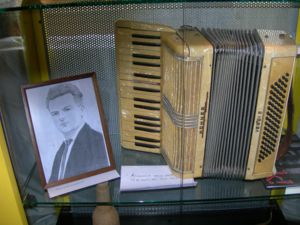
Apparently, Durk taught IJje to play the accordion.
However, when I looked closer at a map recently, I noticed that Harkema was at the very east of Friesland and Doezum was at the very west of Groningen; in fact, the 2 places are so close that the distance can be covered on foot.
Anyway, Durk Tabak was a double murderer and a musician. In 1930, Tabak was sentenced to 15 years in prison after he had stabbed the 29-year-old Jan van der Meulen to death in a café in Drachten.
Durk Tabak was a draughtsman by trade, but was also a gifted accordion player..A few years after being released, he shot his mistress, Grietje Groenland-Hayema, in Augustinusga. After this horrific deed, he committed suicide by shooting himself in the head.
Because he had been an exemplary prisoner, he could have been released in 1943, but because of the German occupation and fear that he would be drafted into the German army, Durk opted to remain in prison.
Durk died on Friday, 16 September 1949, in Surhuizum, Achtkarspelen, at the age of 46. He shot himself after killing his mistress, Grietje Groenland-Hayema.
Durk is also one of the main characters in the movie “The Mark of the Beast.”
 History of Sorts
Leave a comment