
In June 1940, following the fall of France, Nazi Germany turned its attention to the Channel Islands—British territories located in the English Channel. While most islanders across the archipelago chose to remain, the residents of Alderney, fearing an imminent occupation, made the fateful decision to evacuate. This unfortunate decision, while tragic for civilians, unwittingly aided the German occupiers by providing a vacant island suitable for building a system of internment camps.
The Camps of Alderney
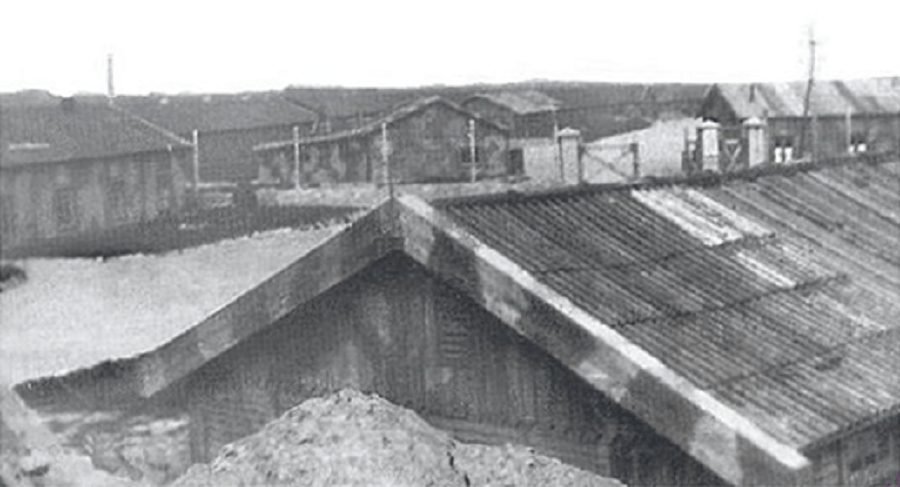
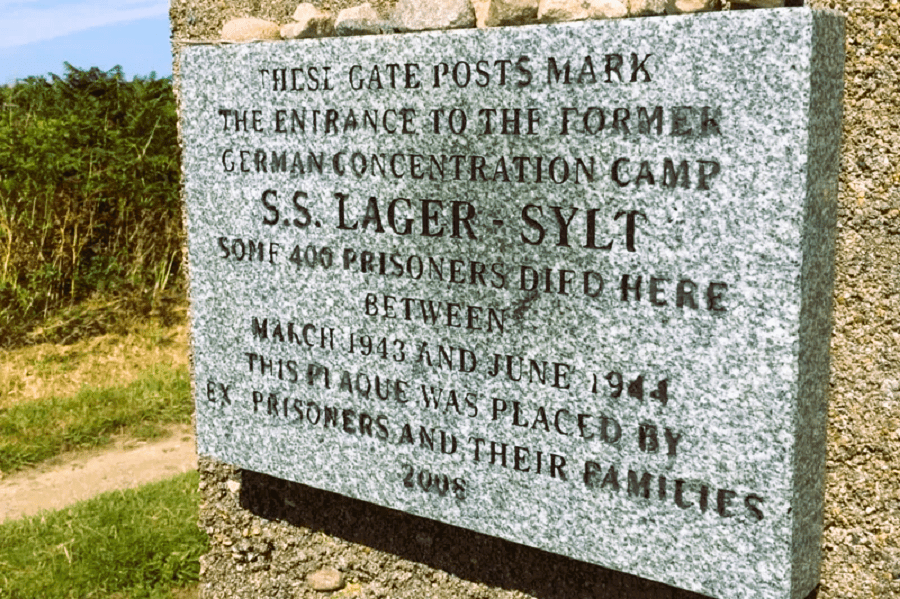
Alderney soon became the site of five internment camps, each with a specific function. Among them, Lager Sylt emerged as the most notorious, housing predominantly Jewish men from across Europe. The camp became infamous for its deplorable conditions and high mortality rate.
These camps operated under the auspices of the Organization Todt (OT)—a Nazi construction and engineering unit responsible for building military infrastructure, including bunkers, fortifications, and railways. Forced labour was central to OT operations, carried out under the inhumane doctrine of Vernichtung durch Arbeit (“extermination through labour”), which led to the deaths of thousands of prisoners. Lager Sylt became the epicentre of these atrocities on Alderney.
From Labour Camp to Concentration Camp
Initially, Lager Sylt functioned as a labour camp. However, in March 1943, its administration was handed over to the SS Totenkopfverbände (Death’s Head Unit), which also managed many of the Third Reich’s concentration camps. This marked a turning point in the camp’s operation: conditions deteriorated rapidly, violence escalated, and mortality rates surged.
Prisoners were forced into grueling labour under brutal conditions, often without adequate food, shelter, or medical care. Many succumbed to disease, exhaustion, or were executed outright. With the SS takeover came the introduction of the infamous blue-and-white striped uniforms, symbolizing the camp’s evolution into a formal concentration camp.
Lager Sylt was especially harsh due to its exposed geographical location, subject to freezing winds and storms from both the English Channel and the North Sea. Survivors recalled these environmental hardships as compounding the already inhumane treatment they endured.
Life and Death in Lager Sylt
The primary purpose of the prisoners’ forced labour was to construct defensive infrastructure, reinforcing Alderney’s role as a key stronghold within Hitler’s Atlantic Wall. However, Lager Sylt quickly developed a reputation for extreme cruelty. Survivor accounts paint a harrowing picture: Georgi Kondikov, who had endured several Nazi camps across Europe, described Sylt as “the most terrible camp.”
One of the camp’s most horrific features was its execution site near the main gate. Eyewitnesses and aerial photographs suggest prisoners were shot or pushed off nearby cliffs. Their remains, sometimes washed ashore or discovered among rocks, were later found by other prisoners or civilians. John Dalmau, a Spanish prisoner of war, recalled seeing skeletal remains being scavenged by crabs and lobsters—gruesome evidence of the atrocities committed.
Suppression and Cover-Up
As the Allied advance neared in 1945, German forces attempted to erase the evidence of their crimes on Alderney. Despite this, British intelligence officer Captain Theodore “Bunny” Pantcheff conducted a post-liberation investigation, resulting in the now-famous Pantcheff Report (Report No. PWIS(H)/KP/702). The report documented conditions in the camps, compiled testimonies from over 3,000 witnesses, and listed known victims and perpetrators.
However, the British government suppressed much of this report, likely due to political considerations and a broader desire to move beyond the war. The Soviet Union, although officially tasked with investigating Nazi crimes, did not prioritize Alderney in its post-war efforts.
Many suspected war criminals associated with Alderney, such as Carl Hoffman and Kurt Klebeck, were never prosecuted. Roland Puhr, Lager Sylt’s first commandant, was later arrested and executed for crimes committed at Sachsenhausen, but he was never tried for his role on Alderney—an enduring source of frustration for survivors and their descendants.
Atrocities at Lager Sylt: New Evidence of SS Brutality on Alderney

New evidence has emerged revealing that guards at Lager Sylt, a Nazi-run concentration camp on the Channel Island of Alderney, used prisoners for target practice as a form of weekend entertainment during the Second World War.
According to recent research, SS guards stationed at the camp routinely selected a dozen or more prisoners each Sunday, transporting them to a nearby light-gauge railway. There, they were bound—often upside down—to tipper trucks and used as live targets. The guards took turns shooting at specific parts of their bodies, prolonging their suffering over the course of hours before the prisoners finally died.
This chilling routine is among the many atrocities documented in Ghosts of Alderney, a forthcoming documentary investigating the Nazi occupation of the island between 1940 and 1945.
Survivor Testimony: Giorgi Zbovorski’s Story
One of the key testimonies in the film comes from the family of Giorgi Zbovorski, a Ukrainian prisoner held in Lager Sylt for 18 months beginning in 1942. Although Zbovorski passed away in 2006, his daughters, interviewed for the documentary, recall the harrowing stories he shared with them.
Ingrid Zbovorski described her father’s account:
“Prisoners were made to stand in formation. The guards were acting out of boredom. They would select 12 or 15 of the prisoners. They were put upside down, bound to the train wagons. The guards then started shooting at random, for their amusement. A bullet in your head or your heart and you were dead. A shot in your arm and in your leg, and you would suffer for hours.”
Researcher and presenter Piers Secunda spent five years investigating the forced labourers sent to Alderney. He confirmed that Zbovorski personally witnessed these Sunday executions for the duration of his internment.
Systemic Violence and SS Incentives
Secunda’s findings also reveal the systematic nature of the violence at Sylt. The head of the SS on Alderney, Otto Högelow, allegedly created incentives to encourage brutality among his guards. According to the research, SS men were rewarded with 10 days’ leave, extra rations, and cigarettes for every five prisoners they shot.
This may have prompted the visit of a delegation from Berlin, sent to investigate the extraordinarily high death rates at the camp.
Expert Commentary and Historical Responsibility
Professor Gilly Carr, a conflict archaeologist and Holocaust heritage specialist at the University of Cambridge, noted:
“There are sadly so many stories from Alderney of atrocities and brutal treatment against prisoners. The wealth of evidence, of which this is a part, confirms the horrific nature of the German occupation of the island.”
She emphasized the importance of cautious historical interpretation:
“While a trained historian should note this account, further questions should be asked… Was it the same number of prisoners every time? Was Giorgi a witness every single time? This is not to dispute the account, but to interrogate it properly and to consider how it can be used.”
Carr also served on the Lord Pickles Alderney Expert Review, which concluded in 2023 that more than 1,000 slave labourers likely died on British soil at the hands of the Nazis—far more than previously recorded in official archives.
Escape and Survival
Zbovorski’s ordeal did not end with Alderney. In 1944, he was transferred to Belgium, forced to work on V1 missile launch sites. There, he and other Ukrainian prisoners convinced a Polish-born German soldier not to shoot them as they attempted to escape. The soldier fired his machine gun into the air, allowing them to flee—though a German guard shot and killed three of the escapees.
Giorgi and two others survived, hiding with a Belgian farmer, where they remained until liberation by Allied forces a few weeks later. At the time of his rescue, Zbovorski weighed just 40 kilograms.
He remained in Belgium after the war, working for the same farmer who had sheltered him.
Remembering the Forgotten Camp
The revelations brought to light in Ghosts of Alderney reinforce the urgent need to confront the full scale of the Nazi occupation’s atrocities—particularly those committed on British territory, a fact still unfamiliar to many. As survivor testimonies and historical research converge, they expose not only the cruelty of the SS but also the systemic failure to investigate and prosecute those responsible in the post-war years.
Sources
https://www.visitalderney.com/see-do/wwii-occupation-trail/lager-sylt/
https://www.bbc.com/news/articles/crgg8y656yro
https://occupiedalderney.org/sites/sylt-ss-camp/
https://occupiedalderney.org/sites/sylt-ss-camp/
Donation
Your readership is what makes my site a success, and I am truly passionate about providing you with valuable content. I have been doing this at no cost and will continue to do so. Your voluntary donation of $2 or more, if you are able, would be a significant contribution to the continuation of my work. However, I fully understand if you’re not in a position to do so. Your support, in any form, is greatly appreciated. Thank you. To donate, click on the credit/debit card icon of the card you will use. If you want to donate more than $2, just add a higher number in the box left from the PayPal link. Your generosity is greatly appreciated. Many thanks.
$2.00

 History of Sorts
Leave a reply to tzipporahbatami Cancel reply