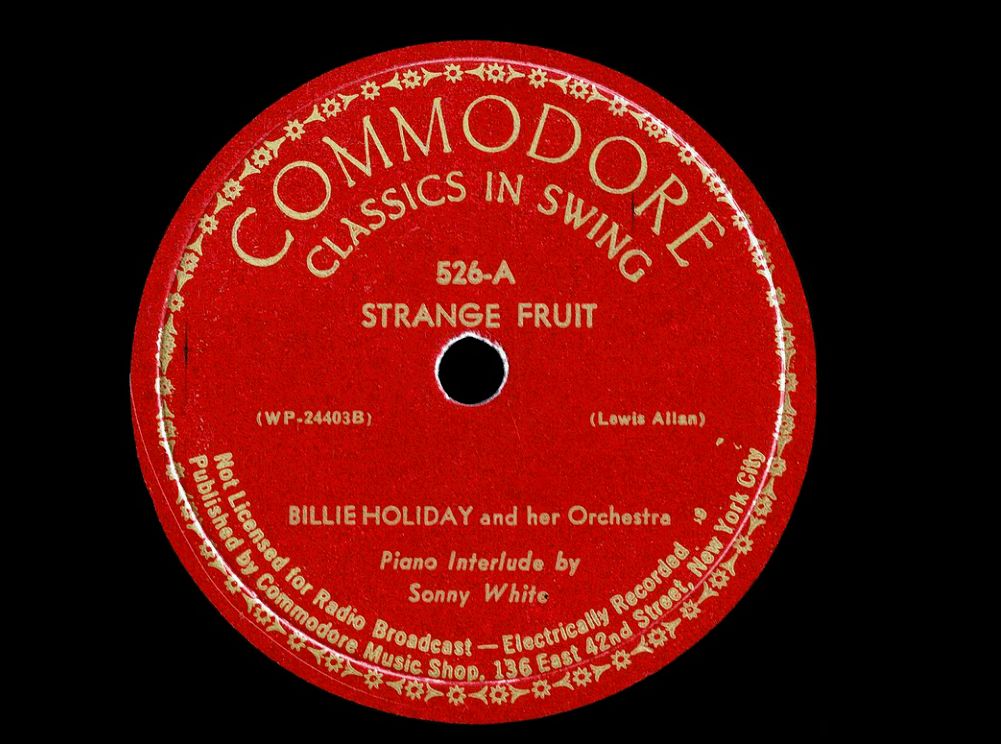
“Southern trees bear strange fruit
Blood on the leaves and blood at the root
Black bodies swinging in the southern breeze
Strange fruit hanging from the poplar tree.”
The lines above are from the song “Strange Fruit,” a beautiful song about a horrific event. It’s very hard to listen to it, but equally, it’s impossible not to listen to it.
It was written by Abel Meeropol (1903-1986), a teacher, poet, and songwriter who published under the name Lewis Allan. Along with “Strange Fruit,” Meeropol/Allen would also compose the hits “The House I Live In” for Frank Sinatra and “Apples, Peaches and Cherries” for Peggy Lee.
“Strange Fruit” is a song performed most famously by Billie Holiday. It is a powerful protest against the lynching of African Americans in the United States. The lyrics describe the bodies of Black lynching victims hanging from trees, which the song metaphorically refers to as “strange fruit.”
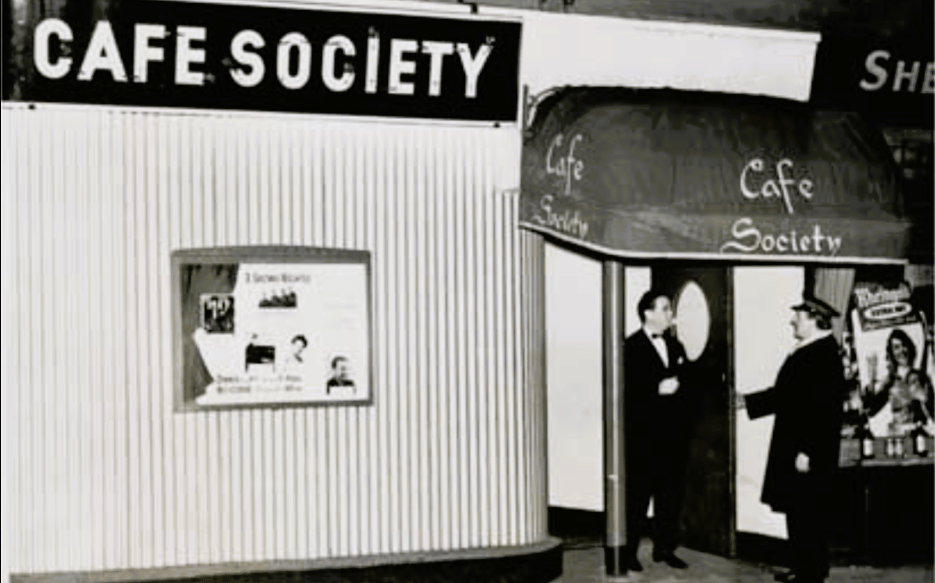
The song was originally a poem written by Abel Meeropol, a Jewish schoolteacher from the Bronx who published it under the pseudonym Lewis Allan. He set it to music, and Holiday first performed it in 1939 at the Café Society, an integrated nightclub in New York City.
During the late 19th and early 20th centuries, lynching was a common act of racial violence in the United States, primarily in the South. Thousands of African Americans were lynched during this period. The song brought widespread attention to the brutal reality of racism and violence in America. It became a symbol of the Civil Rights Movement and is considered one of the earliest and most influential protest songs.
Meeropol cited the photograph of the lynching of Thomas Shipp and Abram Smith on August 7, 1930, as inspiring his poem.
Billie Holiday’s rendition of “Strange Fruit” is haunting and emotional, conveying the pain and horror of the subject matter. Her performances were known for their intensity, and she often performed the song last, with the lights dimmed and only a spotlight on her face.
Numerous artists have covered “Strange Fruit,” which remains a poignant reminder of America’s history of racial violence. The song has been preserved in the National Recording Registry and was named one of the “Songs of the Century” by the Recording Industry Association of America and the National Endowment for the Arts.
The song’s enduring power lies in its stark, unflinching portrayal of the horrors of lynching and its ability to evoke a visceral reaction from listeners, forcing them to confront this dark chapter in American history.
Southern trees bear a strange fruit
Blood on the leaves and blood at the root
Black body swinging in the Southern breeze
Strange fruit hanging from the poplar trees
Pastoral scene of the gallant South
The bulging eyes and the twisted mouth
Scent of magnolia, sweet and fresh
And the sudden smell of burning flesh!
Here is a fruit for the crows to pluck
For the rain to gather, for the wind to suck
For the sun to rot, for a tree to drop,
Here is a strange and bitter crop.
Source
https://www.theguardian.com/music/2011/feb/16/protest-songs-billie-holiday-strange-fruit
https://www.bbc.com/culture/article/20190415-strange-fruit-the-most-shocking-song-of-all-time
https://www.biography.com/musicians/billie-holiday-strange-fruit
Donation
Your readership is what makes my site a success, and I am truly passionate about providing you with valuable content. I have been doing this at no cost and will continue to do so. Your voluntary donation of $2 or more, if you are able, would be a significant contribution to the continuation of my work. However, I fully understand if you’re not in a position to do so. Your support, in any form, is greatly appreciated. Thank you. To donate, click on the credit/debit card icon of the card you will use. If you want to donate more than $2, just add a higher number in the box left from the PayPal link. Your generosity is greatly appreciated. Many thanks.
$2.00

 History of Sorts
Leave a comment