The Vision and the Context
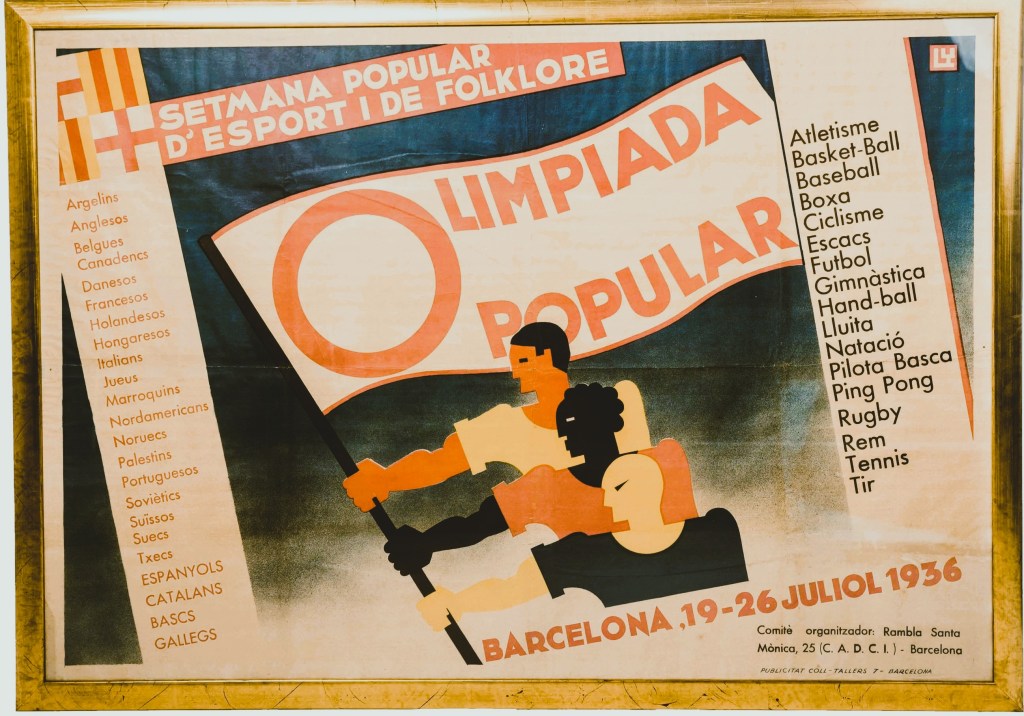
In 1936, as Berlin prepared to host the official Summer Olympics under Adolf Hitler’s Nazi regime, a radical alternative was being organized in Barcelona—the People’s Olympiad (Catalan: Olimpíada Popular, Spanish: Olimpiada Popular)
Selected as the official host, Berlin’s decision had rebuffed Barcelona’s bid during the 1931 IOC Session—Berlin won 43 votes to Barcelona’s 16 . In response, Catalonia’s Popular Front and the newly established Republican government of Spain supported an initiative organized by the Catalan Committee for Popular Sport (CCPEP) and the Organizing Committee of the People’s Olympiad (COOP) . The aim? To stage a multi-sport event rooted in anti-fascist solidarity and egalitarian values.
Planning the Games
The People’s Olympiad was scheduled for 19–26 July 1936, intentionally set to conclude six days before Berlin’s opening ceremony.It would have featured not just traditional athletics like swimming and boxing, but also chess, folk dancing, music, and theatre—championing culture alongside sport
Athletes were to be lodged across hotels and hostels, with the existing infrastructure from Barcelona’s 1929 International Exposition adapted for use.It planned a more inclusive approach, allowing non-national entities—like Catalonia or Basque regions, Jewish exiles, and stateless communities—to participate The opening ceremony was set to be opened by Catalonia’s president, Lluís Companys . A song composed by exiled German-Jewish composer Hanns Eisler, with Catalan poet Josep Maria de Sagarra’s lyrics, was to accompany the event
Participation and Solidarity
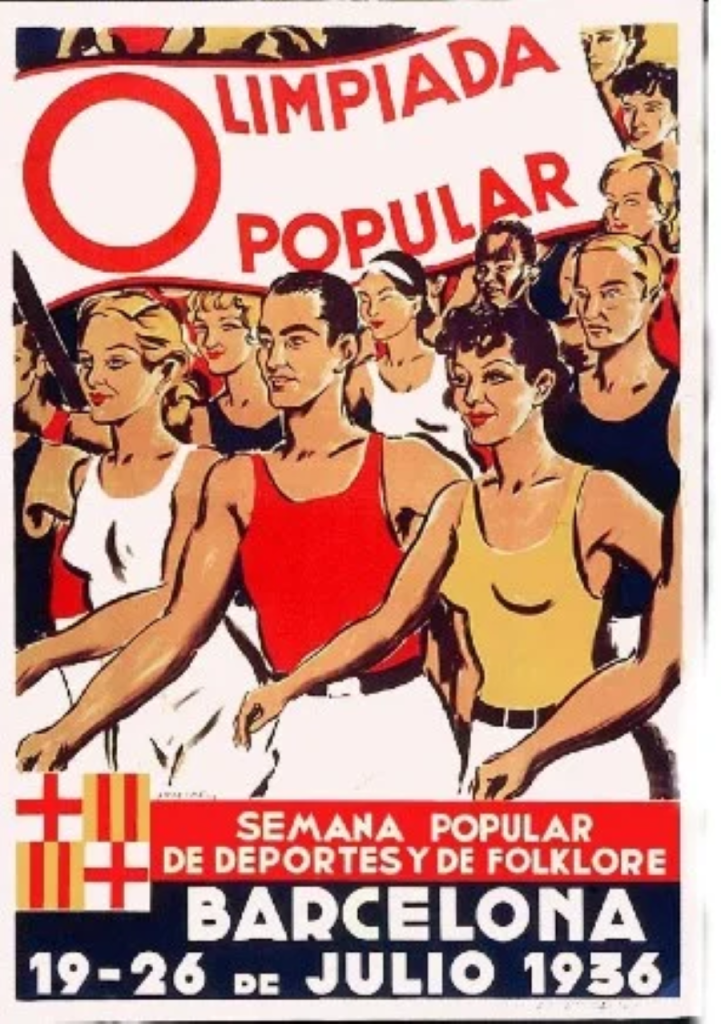
Reports show an outpouring of international support: 6,000 athletes registered from across 22 to 49 countries, depending on sources. Major delegations came from countries like the United States, the United Kingdom, the Netherlands, Belgium, Czechoslovakia, Denmark, Norway, Sweden, and French Algeria Crucially, there were also delegations of German and Italian political exiles, Jewish refugees, and stateless groups
Many athletes were supported by trade unions, socialist parties, or workers’ organizations instead of state sponsorship—highlighting the event’s anti-nationalist ethos Reddit.
Catastrophe Strikes: The Civil War
Tragically, just as the opening ceremonies were about to begin on 19 July, a military uprising led by Franco and supported by Nazi Germany and Fascist Italy erupted, igniting the Spanish Civil War
Though Barcelona initially repelled the coup, the games never commenced. Within days, the city descended into conflict, and the People’s Olympiad was cancelled just before launch
From Sport to Resistance
Many athletes—already in Barcelona—chose not to flee. Instead, around 200 immediately enlisted in leftist militias. Their involvement marked some of the earliest international volunteers in the conflict, laying groundwork for what would become the International Brigades
This dramatic turn transformed the People’s Olympiad from an athletic protest into a symbol of global antifascist resistance.
Legacy and Memory
Though it never occurred, the People’s Olympiad stands as the first global attempt to boycott a modern Olympic Games
Oskar Hekš: A Life of Athletic Triumph and Moral Courage
Early Life and Athletic Beginnings
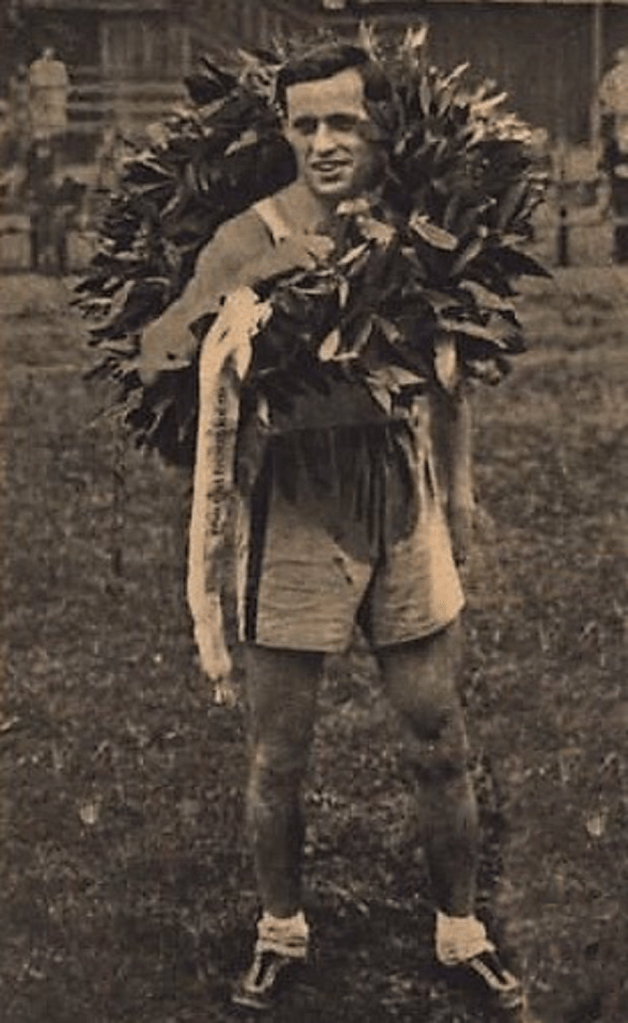
Oskar Hekš was born on 10 April 1908 in Rožďalovice, in what is today the Czech Republic . A Jewish athlete with exceptional endurance, he found his footing in athletics through scouting and later, running for the Prague-based club ŽSK Hagibor . By age 24, his talent was clear—he began participating in national-level marathons and won the Czechoslovak championship s.
Olympic Achievement in Los Angeles (1932)
Despite financial challenges—Czechoslovakia’s field athletes had to raise their own travel funding—Hekš made it to the 1932 Summer Olympics in Los Angeles, thanks in part to support from the Jewish community He ran the marathon in grueling heat and clocked an impressive 2:41:35, finishing 8th and earning a place among the top ten finishers—one of only two Czech marathoners to ever achieve such a rank, the other being Emil Zátopek . Moreover, his time set a new Czechoslovak record for the event .
A Stand Against Nazism: The People’s Olympiad
Hekš’s moral convictions extended far beyond his athletic prowess. In 1936, he refused to participate in the Berlin Olympics because of his Jewish heritage and his disgust for Nazi propaganda. Instead, he helped organize the People’s Olympiad in Barcelona—a counter-event meant to challenge the Nazi games Unfortunately, the event never took place; the Spanish Civil War erupted on the very day of its opening.
Holocaust and Tragic Fate
After Nazi Germany occupied Czechoslovakia in 1939, Hekš became one of the first deportees sent to the Terezín (Theresienstadt) ghetto in late 1941, as part of the “Aufbaukommando” tasked with preparing the camp. On September 6 1942, he was transferred to Auschwitz-Birkenau (Oświęcim), where he was tragically murdered in a gas chamber during the night of 8–9 March 1944.
sources
https://www.olympijskytym.cz/en/athlete/oskar-heks
https://www.olympedia.org/athletes/76613
https://en.wikipedia.org/wiki/People%27s_Olympiad
https://www.smithsonianmag.com/history/protest-olympics-never-came-be-180978179/
https://encyclopedia.ushmm.org/content/en/article/the-nazi-olympics-berlin-1936
https://mrc-catalogue.warwick.ac.uk/records/TUC/A/10/800/66
Donation
Your readership is what makes my site a success, and I am truly passionate about providing you with valuable content. I have been doing this at no cost and will continue to do so. Your voluntary donation of $2 or more, if you are able, would be a significant contribution to the continuation of my work. However, I fully understand if you’re not in a position to do so. Your support, in any form, is greatly appreciated. Thank you. To donate, click on the credit/debit card icon of the card you will use. If you want to donate more than $2, just add a higher number in the box left from the PayPal link. Your generosity is greatly appreciated. Many thanks.
$2.00
 History of Sorts
Leave a comment