
Alois Brunner was one of the most feared and ruthless Nazi war criminals during the Holocaust. As a senior SS officer and a close associate of Adolf Eichmann, Brunner played a pivotal role in the deportation of tens of thousands of Jews to concentration and extermination camps. Known for his cold-blooded efficiency and unrelenting cruelty, Brunner left a lasting legacy of terror and genocide. Despite his significant role in the Holocaust, Brunner managed to evade capture after World War II, living in relative freedom for decades before his death. His story is emblematic of the broader failure to bring many Nazi war criminals to justice, and his post-war life in Syria demonstrates the international complexities of extradition and justice.
Early Life and Rise in the Nazi Party
Alois Brunner was born on April 8, 1912, in Rohrbrunn, Austria-Hungary (now part of Austria). Like many young men of his generation, Brunner became captivated by the ideology of National Socialism, which swept through Austria and Germany during the interwar years. He joined the Nazi Party in 1931, well before the party came to power in Germany, and became a member of the SS (Schutzstaffel) shortly afterward. This early commitment to Nazism indicated Brunner’s strong ideological alignment with Adolf Hitler’s goals of racial purity and anti-Semitism.
Brunner quickly rose through the ranks of the SS, where he formed a close working relationship with Adolf Eichmann, the architect of the “Final Solution.” Eichmann, who headed the Reich Main Security Office’s Section IV B4, tasked Brunner with some of the most critical and brutal deportation operations of the Holocaust. Brunner proved to be an effective and loyal executor of Nazi policy, playing a key role in the Holocaust’s logistics and becoming one of Eichmann’s most trusted aides.

Role in the Holocaust
Alois Brunner’s participation in the Holocaust is marked by his personal involvement in some of the most significant deportation operations carried out by the Nazis. Brunner’s responsibilities grew as the Nazi regime expanded its efforts to exterminate European Jews. His direct involvement in the organization and execution of these deportations makes him one of the most culpable figures in the Holocaust.
- Deportation from Austria:
In 1938, following the Anschluss, the annexation of Austria by Nazi Germany, Brunner was tasked with overseeing the deportation of Austrian Jews. Between 1938 and 1943, Brunner was responsible for sending nearly 48,000 Austrian Jews to ghettos and extermination camps, including Auschwitz. His operations were characterized by extreme brutality, with little regard for the suffering inflicted on those being deported. - Deportation from France:
In 1943, Brunner was assigned to oversee the Drancy internment camp near Paris, which served as a holding area for Jews before their deportation to extermination camps. Under Brunner’s command, the conditions at Drancy worsened dramatically. His sadistic treatment of the prisoners and the ruthless efficiency with which he sent more than 24,000 Jews to Auschwitz and other death camps earned him a notorious reputation in France. Many of those deported under his orders were children. - Deportation from Greece:
Brunner’s next major assignment took him to Salonika, Greece, in 1943. There, he orchestrated the deportation of nearly 43,000 Greek Jews, most of whom were sent to Auschwitz. Salonika’s Jewish community was one of the oldest and most prominent in Europe, and Brunner’s actions decimated it, leaving a permanent scar on the cultural and religious history of Greece. - Deportation from Slovakia:
In 1944, Brunner was dispatched to Slovakia, where he oversaw the deportation of Slovak Jews during the latter stages of the Holocaust. He is estimated to have been responsible for the deportation of over 13,000 Slovak Jews to concentration camps. His relentless dedication to the Nazi cause did not wane even as the war turned against Germany, and Brunner continued to carry out his duties with ruthless efficiency.
Brunner’s Brutality and Legacy
Brunner’s methods were marked by exceptional cruelty. He was personally involved in the torment of Jewish prisoners, and survivors recalled his sadistic behavior. He had no qualms about sending children, the elderly, or the sick to their deaths, often boasting about his role in the extermination process. Brunner once reportedly said he regretted “not having killed more Jews.”
His actions were not merely those of an administrator following orders; Brunner was an enthusiastic participant in the genocidal policies of the Nazi regime. His ideological commitment to the extermination of Jews, combined with his personal cruelty, made him one of the most feared figures in the Nazi apparatus.
Post-War Escape and Life in Syria
At the end of World War II, many high-ranking Nazi officials were captured, tried, and convicted for war crimes during the Nuremberg Trials. However, Brunner managed to escape the Allied forces. Using false identities and the so-called “ratlines”—networks that helped Nazi criminals flee Europe—Brunner made his way to the Middle East.
By the early 1950s, Brunner had settled in Syria, where he assumed the alias Dr. Georg Fischer.
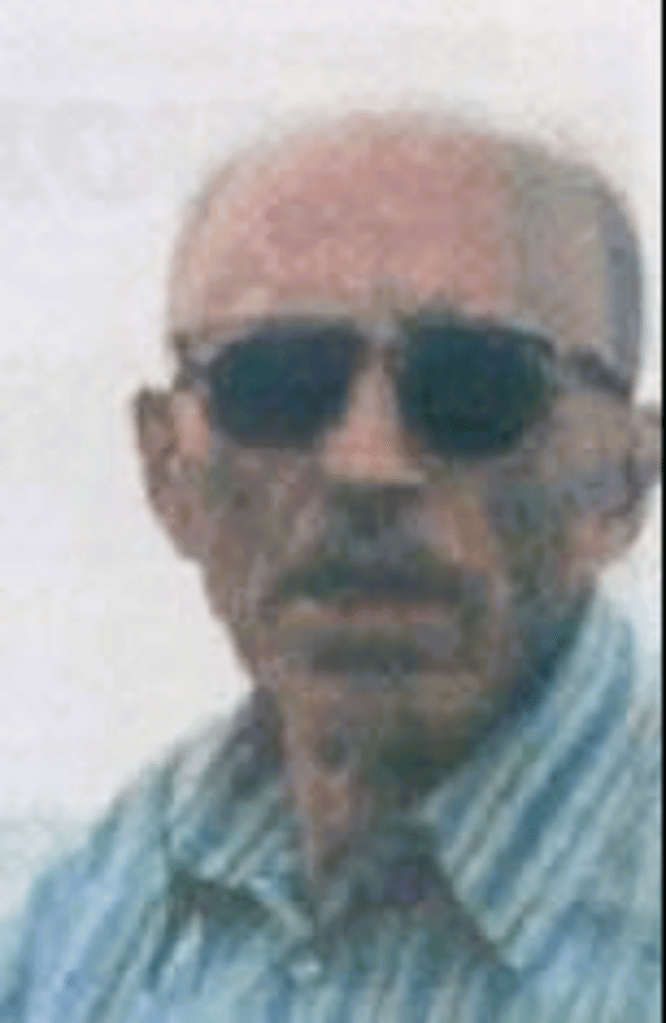
Brunner found refuge in Syria under the protection of its government, and he reportedly worked as an advisor to Syrian intelligence services, teaching them methods of interrogation and torture. Syria’s refusal to extradite Brunner, combined with his skills in hiding, allowed him to evade justice for decades.
Despite being one of the most wanted Nazi war criminals, Brunner remained elusive. Several international efforts to capture him, including operations by the Israeli Mossad, were unsuccessful. Mossad agents sent letter bombs to Brunner on two occasions—one in 1961 and another in 1980. These assassination attempts severely injured him, causing the loss of an eye and several fingers, but Brunner survived both attacks.
Attempts to Bring Brunner to Justice
Various efforts were made by Western governments, including France and Germany, to bring Brunner to justice, but they were hindered by diplomatic complications. France sentenced him to death in absentia in 1954 for war crimes committed during his time in Drancy. Despite pressure from international human rights groups and Nazi hunters like Simon Wiesenthal, Syria continually refused to extradite Brunner, who enjoyed protection under the regimes of Presidents Hafez al-Assad and Bashar al-Assad.
For decades, Brunner lived openly in Damascus. Some reports indicated that he lived in a guarded apartment building in relative comfort, never having to face the consequences of his horrific crimes. His ability to live freely and evade justice for so long remains one of the more frustrating examples of how many Nazi war criminals escaped prosecution.
Death and Legacy
Alois Brunner’s fate was long shrouded in mystery. By the early 2000s, conflicting reports about his death emerged, with some suggesting that he had died in Damascus around 2001. In 2014, the Simon Wiesenthal Center confirmed that Brunner likely died in 2001, though the exact circumstances of his death remain unclear. Syria never officially acknowledged Brunner’s presence or provided details about his life and death in the country.
Brunner’s legacy is one of unchecked cruelty and mass murder. He is directly responsible for the deaths of over 100,000 Jews during the Holocaust, and his role in implementing the Nazi genocidal program left an indelible mark on Holocaust history. Unlike many Nazi criminals who faced justice, Brunner managed to evade prosecution for his entire life, leaving a profound sense of injustice for the families of his victims and the broader world.
Alois Brunner’s story is one of horror, brutality, and the enduring question of how such a notorious war criminal was able to evade justice for so long. As Adolf Eichmann’s most trusted lieutenant, Brunner’s role in the Holocaust was instrumental in ensuring the mass deportation of Jews to death camps. His ruthless efficiency and sadism made him one of the most feared figures of the Nazi regime. That Brunner lived out his life in Syria, under the protection of its government, demonstrates the challenges of post-war justice and the difficulty of holding all Nazi war criminals accountable. Brunner’s life remains a stark reminder of the dark legacy of the Holocaust and the many who never faced justice for their crimes.
Sources
https://www.bbc.com/news/world-europe-38586945
https://www.holocausthistoricalsociety.org.uk/contents/germanbiographies/aloisbrunner.html
Donation
Your readership is what makes my site a success, and I am truly passionate about providing you with valuable content. I have been doing this at no cost and will continue to do so. Your voluntary donation of $2 or more, if you are able, would be a significant contribution to the continuation of my work. However, I fully understand if you’re not in a position to do so. Your support, in any form, is greatly appreciated. Thank you. To donate, click on the credit/debit card icon of the card you will use. If you want to donate more than $2, just add a higher number in the box left from the PayPal link. Your generosity is greatly appreciated. Many thanks.
$2.00
 History of Sorts
Leave a comment