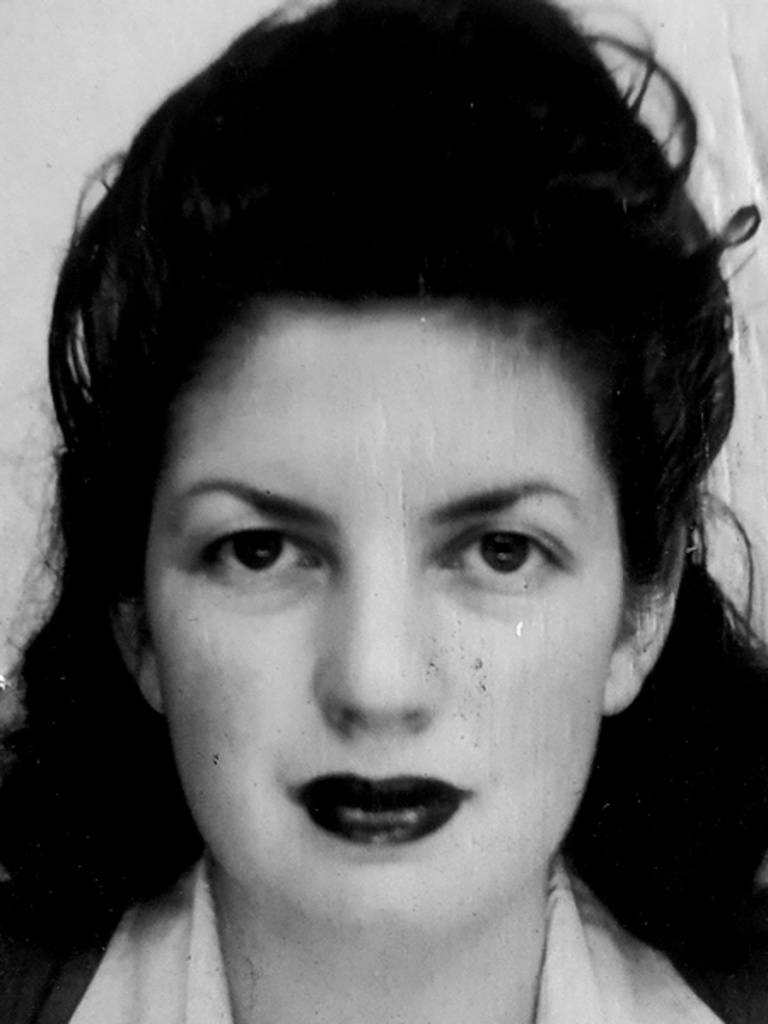
Claire Monis (1922–1967) lived a life that wove together art, defiance, and endurance. A French singer and actress from a Jewish family, she was both a member of the French Resistance and a survivor of Auschwitz, where she was forced to perform in the Women’s Orchestra. Her story illustrates how music could serve as both a weapon of survival and a haunting echo of oppression — and how memory of that time has remained complex and contested.
Early Life and Artistic Beginnings
Claire Monis was born on February 10, 1922, in Paris, to Russian-Jewish immigrant parents. Her father, Avroum (Albert) Monis, was a musician and craftsman who ran a small furniture business, and her mother, Suzanne Aisenstein, helped manage the family home. From an early age, Claire displayed exceptional musical talent, studying voice and violin and gravitating toward performance.
In 1938, she won the Music-Hall des Jeunes competition organized by leftist youth groups and soon began appearing on radio and in cabarets. That same year she played “Clarita” in the film Je Chante alongside the famous French singer Charles Trenet. Before the war, she had established herself as a rising performer of swing, cabaret, and light classical music — a bright presence in the cultural life of prewar Paris.

Joining the French Resistance
When Nazi Germany occupied France, Monis’s artistic life became a cover for something more dangerous. She joined the Resistance through the Robin–Buckmaster network, connected with the Free French Forces. Using her performances as camouflage, she passed messages and coded signals to other Resistance members by altering song orders or lyrics during her shows.
In 1942, Monis was arrested by the Gestapo in Paris and imprisoned at Fresnes. She was later transferred to the Citadel of Autun and classified as “100% Jewish” under the racial laws of the collaborationist Vichy regime. After further imprisonment in Drancy, the main transit camp for French Jews, she was deported on January 20, 1944, on Convoy No. 66 to Auschwitz-Birkenau.
The Women’s Orchestra of Auschwitz
At Auschwitz, Claire Monis’s musical talent became a key to her survival. She was selected to join the Women’s Orchestra of Auschwitz, a group of prisoners who performed under SS orders. Led first by Zofia Czajkowska and later by Alma Rosé, the orchestra played marches as prisoners left for work, serenades for SS officers, and even classical pieces for camp events.
For Monis, as for others, music was both salvation and torment. Being in the orchestra spared her from immediate death or the most brutal labor, but it forced her to perform in service of the Nazi regime that was murdering her people. Survivors described this as an unbearable paradox: music became a means to live — yet each note was tied to suffering and loss. Anita Lasker-Wallfisch, another member of the orchestra, later summed up the experience with the simple truth: “We were playing to survive.”
Transfer and Liberation
As Soviet forces advanced in late 1944, Monis and other members of the orchestra were transferred to the Bergen-Belsen concentration camp on October 31. Conditions there were appalling — starvation, disease, and chaos reigned. When British forces liberated the camp on April 15, 1945, Monis was among the survivors. She returned to France a month later, emaciated but alive, having endured the worst horrors of Nazi brutality.
Return to Life and Recognition
After the war, Claire Monis was recognized for her service in the Resistance, receiving the rank of Lieutenant in the French Forces of the Interior. Despite her physical and emotional scars, she resumed her musical career, performing in operettas such as Andalousie by Francis Lopez and in various cabarets and radio programs.
Her versatility extended into television and cinema, where she became a producer and contributor to French film and television in the 1950s and 60s. Her work included projects like L’Inspecteur Leclerc, Les Aventures de Robinson Crusoé, and Trois Chambres à Manhattan. She married Charles-Henri Kahn in 1947 and had two children, including Philippe Kahn, who would later become a prominent technologist.
Monis’s life was tragically cut short in 1967, when she died from injuries sustained in a car accident. In 1977, her death certificate was amended to include the phrase “Mort pour la France” — “Died for France” — in recognition of her Resistance service.
Memory, Testimony, and Contested Narratives
After the war, the story of the Auschwitz Women’s Orchestra reached the public largely through survivor memoirs, most famously Fania Fénelon’s Playing for Time. While Fénelon’s account brought attention to the group’s ordeal, it also provoked deep controversy. Many survivors, scholars, and witnesses disputed her portrayal of fellow prisoners, including Claire Monis, arguing that it exaggerated conflicts and misrepresented the character of women like Alma Rosé and Monis herself.
Historians such as Susan Eischeid later examined these discrepancies, emphasizing that Fénelon’s version, while emotionally powerful, took dramatic liberties that obscured the complexity of the real women behind the story. Monis, who had been both a Resistance fighter and a professional artist before deportation, was reduced in some portrayals to a secondary or even caricatured figure — a fate that mirrors broader issues in how Holocaust survivors’ stories are often shaped by others’ pens.

Comparing Lives Within the Orchestra
Claire Monis’s experience can be better understood in relation to other members of the orchestra.
Alma Rosé, the orchestra’s conductor and niece of composer Gustav Mahler, maintained strict discipline to ensure the group’s survival. Survivors described her as demanding but fiercely protective, using her authority to shield her musicians from arbitrary punishment.
Fania Fénelon, the singer and pianist whose memoir made the orchestra famous, presented a more dramatic, tension-filled account that highlighted moral conflicts but sometimes blurred fact and fiction.
Anita Lasker-Wallfisch, the cellist who later became one of Britain’s most respected Holocaust witnesses, spoke plainly of the orchestra’s grim purpose: “We were playing to survive.” Her recollections remain some of the most historically consistent and restrained, underscoring the orchestra’s ambivalence — a rare refuge that existed entirely within the machinery of genocide.
Through these comparisons, Monis’s story stands out for its additional layer of political resistance. Unlike some of her fellow musicians, she had already risked her life in the French Resistance before entering Auschwitz. Her survival thus represents not just endurance through music, but a continuum of defiance that began long before deportation.
Legacy and Reflection
Claire Monis’s life encapsulates the contradictions of art and survival under tyranny. Her music once entertained the free people of Paris, then echoed through the gates of Auschwitz as part of a perverse performance of control, and finally returned to life in liberated France as a means of rebuilding identity and dignity.
Her story is a reminder that music in the camps was not merely solace or propaganda — it was a fragile thread of humanity stretched between death and life. Monis’s courage, both as a member of the French Resistance and as a performer in Auschwitz, shows how even in the darkest circumstances, creativity and conscience could persist.
Today, as historians continue to reexamine the testimonies of the Women’s Orchestra, Claire Monis stands as a symbol of those who fought with both voice and spirit — resisting tyranny with song, and surviving to tell the world what it cost.
Claire’s son is Philippe Kahn, Kahn is credited with creating the first camera phone.
sources
https://www.imdb.com/name/nm1013445/
https://holocaustmusic.ort.org/places/camps/death-camps/auschwitz/claire-monis/
https://en.wikipedia.org/wiki/Claire_Monis
https://en.wikipedia.org/wiki/Women%27s_Orchestra_of_Auschwitz
Donation
Your readership is what makes my site a success, and I am truly passionate about providing you with valuable content. I have been doing this at no cost and will continue to do so. Your voluntary donation of $2 or more, if you are able, would be a significant contribution to the continuation of my work. However, I fully understand if you’re not in a position to do so. Your support, in any form, is greatly appreciated. Thank you. To donate, click on the credit/debit card icon of the card you will use. If you want to donate more than $2, just add a higher number in the box left from the PayPal link. Your generosity is greatly appreciated. Many thanks.
$2.00
 History of Sorts
Leave a comment