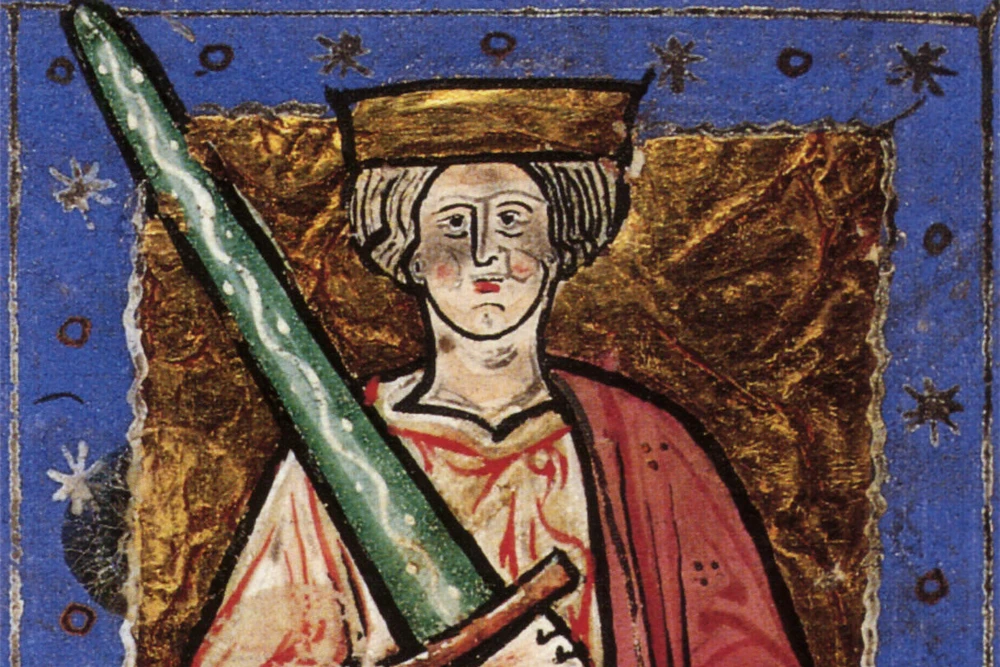
I am a fan of the Netflix series The Last Kingdom, which presents a dramatized portrayal of the life of Uhtred of Bamburgh, a figure rooted in early medieval England. The events depicted in the series coincide with significant historical occurrences, such as the St. Brice’s Day Massacre, which took place around the same period.
The St. Brice’s Day Massacre, which took place on 13 November 1002, stands as one of the most infamous acts of royal violence in medieval English history. Ordered by King Æthelred II (“the Unready”), the massacre targeted Danish settlers living within England, whom the king accused of plotting against him. Occurring in a period marked by deep political instability, Viking raids, and tensions between Anglo-Saxons and Danes, the massacre illuminates both the fragility of Æthelred’s rule and the ethnic and political complexities of early eleventh-century England. While the full extent of the killings remains debated, the St. Brice’s Day Massacre represents a crucial turning point in Anglo-Scandinavian relations and in the downfall of Æthelred’s regime.
Historical Background: England and the Viking Threat
By the late tenth century, England was under near-constant pressure from Scandinavian incursions. Viking activity, which had begun in earnest in the late eighth century with raids on monasteries such as Lindisfarne (793 AD), evolved from sporadic plundering into organized invasions and settlements. The Danelaw—territories in northern and eastern England settled and governed by Danes—had long been a center of cultural exchange and political tension.
King Æthelred II, who ascended the throne in 978 following the suspicious death of his half-brother, King Edward the Martyr, inherited a kingdom under strain. His epithet “Unready” derives from the Old English unræd, meaning “poorly advised,” reflecting not so much his personal incompetence as the ineffectiveness of his counsel and administration. Throughout his reign, England suffered devastating raids by Danish forces, and the king responded by paying enormous sums of Danegeld—tribute money meant to buy peace. By the early 1000s, however, Æthelred’s payments had drained the treasury and failed to secure lasting security.
Causes of the Massacre
The immediate cause of the St. Brice’s Day Massacre was the king’s fear of a Danish conspiracy within England. According to the Anglo-Saxon Chronicle, Æthelred received intelligence that “all the Danish men who were among the English people were to be slain on St. Brice’s Day,” suggesting the king acted on the belief that Danes living in England planned to overthrow him. Modern historians, however, question whether such a plot truly existed, or whether the massacre was a preemptive strike driven by paranoia and nationalist fervor.
Several long-term factors contributed to Æthelred’s decision:
- Military Frustration – The repeated failure to repel Viking attacks had undermined confidence in Æthelred’s leadership. The massacre can be seen as an act of desperation, aimed at reasserting control and deterring further invasions.
- Ethnic Hostility – Decades of warfare between Anglo-Saxons and Danes had fostered widespread animosity. Many Danes had integrated into English society, but suspicions lingered regarding their loyalties, especially during renewed Viking offensives.
- Political Weakness – Æthelred’s rule faced internal dissent, including from powerful nobles who doubted his competence. A violent demonstration of royal authority might have been intended to consolidate loyalty and instill fear.
The Events of 13 November 1002
The massacre took place on St. Brice’s Day, a feast day commemorating St. Brice of Tours. Æthelred issued orders for the killing of “all the Danish men in England,” though in practice, the scope was limited to certain regions—primarily southern and western England, where the king’s control was strongest.
The Anglo-Saxon Chronicle provides only a brief entry, but later sources, including William of Malmesbury and Henry of Huntingdon, expand upon the event, portraying it as widespread slaughter. One particularly significant incident occurred in Oxford, where Danish settlers took refuge in the church of St. Frideswide. The townspeople set fire to the church, killing those inside—a grim episode that demonstrates both the religious and ethnic dimensions of the violence.
Archaeological evidence offers some corroboration. In 2008, a mass grave discovered near St. John’s College, Oxford, contained the remains of approximately 35 men who had been violently killed around the time of the massacre. Isotopic analysis suggested Scandinavian origins, lending physical confirmation to the historical record.
Consequences and Aftermath
The St. Brice’s Day Massacre had profound and far-reaching consequences. Rather than securing England’s safety, Æthelred’s actions provoked vengeance from Denmark. The Danish king Sweyn Forkbeard, whose sister (possibly named Gunnhild) may have been among those killed, launched a series of retaliatory invasions. These culminated in Sweyn’s conquest of England in 1013, forcing Æthelred into exile in Normandy.
The massacre thus backfired disastrously: it deepened hostility, united the Danes against Æthelred, and destabilized his already fragile rule. When Æthelred briefly regained the throne after Sweyn’s death in 1014, the kingdom was exhausted and vulnerable. Within two years of Æthelred’s death (1016), England fell under the control of Sweyn’s son, Cnut the Great, inaugurating a period of Danish rule that would last until 1042.
Interpretation and Legacy
Historians continue to debate the motivations and magnitude of the St. Brice’s Day Massacre. Some interpret it as a genocidal act—an attempt to purge England of an ethnic minority viewed as a fifth column. Others see it as a politically calculated, though brutally executed, move aimed at restoring royal authority. The massacre’s symbolic resonance lies in its exposure of the fragile boundaries between integration and exclusion in medieval societies.
In modern historiography, the massacre has also been reexamined through lenses of ethnic cleansing, nationalism, and state violence. It serves as an early example of how rulers exploited ethnic divisions to consolidate power, foreshadowing patterns of persecution seen throughout later European history.
The St. Brice’s Day Massacre was a tragic culmination of fear, insecurity, and failed leadership in a time of relentless conflict. King Æthelred’s decision to exterminate Danish settlers reflected not only his personal desperation but also the deep fractures within Anglo-Saxon England. Far from securing peace, the massacre accelerated England’s downfall and reshaped its political future under Danish rule. Today, it stands as both a cautionary tale about the destructive potential of xenophobia and a window into the volatile world of early medieval Europe—a time when identity, loyalty, and survival were perilously intertwined.
sources
https://en.wikipedia.org/wiki/Uhtred_of_Bamburgh
https://www.historyextra.com/period/anglo-saxon/st-brices-day-massacre-what-happened-how-violent/
 History of Sorts
Leave a comment