“Let not any one pacify his conscience by the delusion that he can do no harm if he takes no part, and forms no opinion. Bad men need nothing more to compass their ends, than that good men should look on and do nothing. He is not a good man who, without a protest, allows wrong to be committed in his name, and with the means which he helps to supply, because he will not trouble himself to use his mind on the subject.” —John Stuart Mill
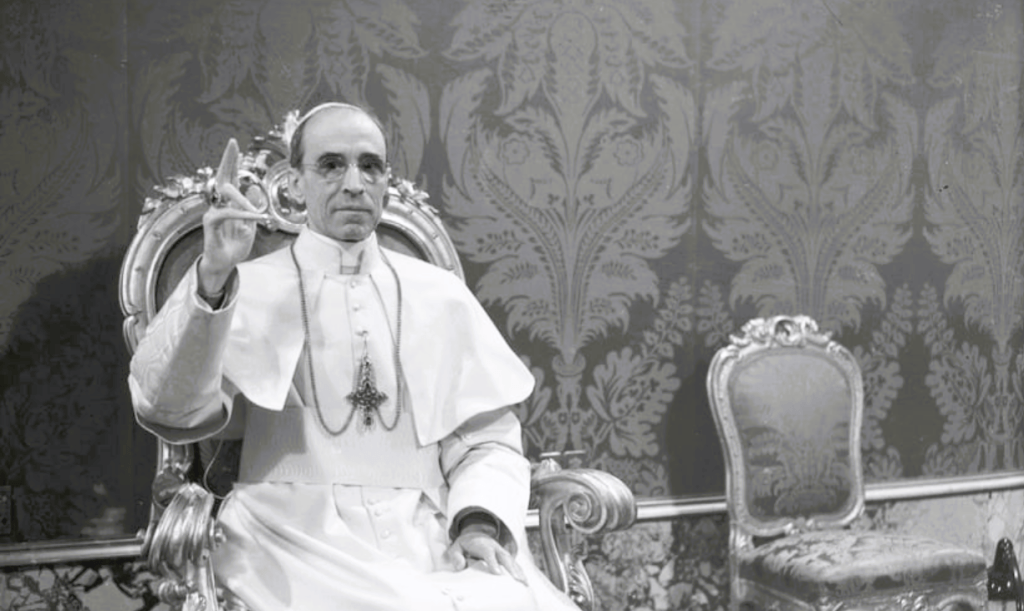
The figure of Pope Pius XII, born Eugenio Pacelli, remains one of the most controversial in the history of the Catholic Church, particularly in the context of World War II. Pius XII’s papacy, which spanned from 1939 to 1958, coincided with one of the darkest periods in human history—the Holocaust and the atrocities of the Nazi regime. His actions, or lack thereof, during the war and the Holocaust, have led to his being labeled by some critics as “Hitler’s Pope,” a term popularized by British author John Cornwell in his 1999 book Hitler’s Pope: The Secret History of Pius XII. The term implies complicity or passivity in the face of Adolf Hitler’s crimes. It has ignited a heated debate over Pius XII’s moral and political stance during the war. This essay seeks to explore the controversies surrounding Pius XII’s papacy, evaluate his conduct during the Holocaust, and assess whether the title “Hitler’s Pope” is a fair or misleading portrayal.
The Context of Pius XII’s Papacy
Pope Pius XII came to the papacy just as World War II was about to erupt. Prior to becoming pope, Pacelli served as the Vatican’s Secretary of State and had been a Vatican diplomat in Germany during the 1920s and early 1930s, a period in which he negotiated the controversial Reichskonkordat of 1933. This agreement between the Vatican and Nazi Germany was intended to protect the rights of the Catholic Church in Germany. Still, critics have argued that it also gave moral legitimacy to Hitler’s regime at a critical moment in its consolidation of power. Pius XII’s defenders argue that the agreement was primarily aimed at safeguarding the Church’s interests in a challenging political environment and that it did not equate to an endorsement of Nazi ideology.
When World War II began, Pope Pius XII maintained a public stance of neutrality, which was consistent with the Vatican’s traditional diplomatic policy. His supporters argue that this neutrality allowed the Church to provide humanitarian aid to victims of the war on both sides and to act as a discreet intermediary in various diplomatic negotiations. However, as the Holocaust unfolded and millions of Jews were systematically exterminated by the Nazi regime, Pius XII’s silence in the face of such atrocities has become a major point of contention.
The Charges of Complicity or Silence
Critics of Pius XII, including Cornwell in Hitler’s Pope, argue that the pope’s failure to publicly denounce the Holocaust or the Nazi regime was a moral failure of the highest order. While Pius XII was aware of the mass extermination of Jews, as confirmed by both Vatican archives and testimonies of those who worked within the Holy See, he never issued a formal condemnation of the Nazi genocide during the war. Instead, his statements were often vague, expressing general concern for human rights and suffering without directly naming the perpetrators or the Jewish victims.
Cornwell and other critics argue that Pius XII’s silence may have stemmed from a combination of political caution, a desire to protect the Vatican from Nazi reprisals, and latent anti-Semitism within the Church hierarchy. Some historians also suggest that Pius XII feared that a strong condemnation of the Nazis might provoke retaliation against Catholics in Nazi-occupied territories, particularly in Germany and Poland. This theory is supported by the fact that after the pope’s Christmas message in 1942, in which he alluded to the “hundreds of thousands” who were being killed “for no fault of their own,” Nazi officials noted that the speech was “directed against the German government” and yet did not provoke a major Nazi backlash.
Furthermore, critics point to instances where the Vatican appeared to turn a blind eye to Nazi war crimes. For example, after the deportation of over 1,000 Jews from Rome in October 1943, Pius XII refrained from publicly protesting. Many saw this as an unforgivable omission, especially given that the Vatican was located in the heart of Italy, and these events occurred under the watch of German occupying forces.
Defenders of Pius XII
On the other hand, Pius XII has many defenders who argue that he worked quietly behind the scenes to save Jewish lives and that his public silence was a strategic decision meant to avoid provoking even worse consequences. One of the most prominent arguments in his favor is that the Catholic Church, under Pius XII’s leadership, helped shelter thousands of Jews in monasteries, convents, and even within the Vatican itself. Some estimate that as many as 4,000 Jews were hidden in Catholic institutions in Italy during the German occupation.
In addition, Pius XII issued instructions to Catholic clergy across Europe to provide assistance to Jews, often through secret channels. His defenders also argue that his neutral stance allowed the Church to act as an intermediary between the Allies and the Axis powers, facilitating prisoner exchanges and peace negotiations.
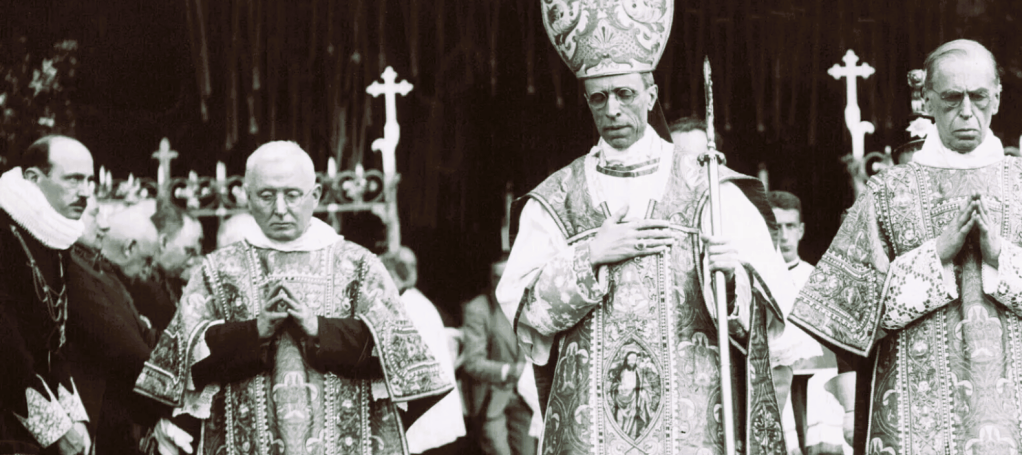
Pius XII’s supporters further contend that any overt condemnation of the Nazis would have jeopardized the Church’s ability to carry out these covert operations and may have led to even more severe persecution of Jews and Catholics alike. They point to the example of the Dutch bishops, who issued a strong public denunciation of Nazi deportations in 1942. In retaliation, the Nazis intensified their efforts in the Netherlands, deporting more Jews, including many Catholics of Jewish descent.
However, there is no indication Pius XII had personally instructed clergymen to criticize the Nazi regime or to save Jews. These actions were mainly individual actions by Catholic clergy.
The Complexity of Pius XII’s Legacy
The question of whether Pope Pius XII was “Hitler’s Pope” is not a simple one. It touches on larger issues of moral responsibility, political calculation, and the limits of human agency in the face of overwhelming evil. Pius XII was operating in an exceptionally complex and dangerous geopolitical environment where any action could have had unforeseen and possibly catastrophic consequences.
While it is clear that Pius XII did not publicly confront the Nazis in the manner that many hoped, it is also clear that he was not a passive bystander. The Church under his leadership did work to save Jewish lives, albeit quietly, and he maintained diplomatic channels that some argue were essential for peace efforts. Yet, the criticism that he failed to speak out clearly and forcefully against the Holocaust remains powerful. In the post-war years, as more information about the scale of the genocide became known, the pope’s silence seemed increasingly difficult to justify in the eyes of many.
In conclusion, the title “Hitler’s Pope” is a provocative and, to some extent, misleading label for Pope Pius XII. While he did not take the bold public stance that some might have wished, he was not an ally of Hitler or Nazism, as the title might imply. Rather, Pius XII’s actions during World War II were shaped by a combination of pragmatism, caution, and a desire to protect the Church and its humanitarian efforts. Whether these considerations outweighed his moral responsibility to publicly denounce the Holocaust is a question that continues to divide historians and theologians.
The debate over Pius XII’s legacy is likely to persist as new archival evidence emerges and as scholars continue to grapple with the ethical challenges of his papacy. What remains clear is that Pius XII’s pontificate stands as a case study of the difficult balance between diplomacy and moral clarity in times of crisis, a balance that remains relevant to this day.
Pope Pius XII even failed to save many Catholic Clergymen.
Catholic Clergymen Murdered During the Holocaust
During the Holocaust, while the Nazi regime focused primarily on the systematic extermination of Jews, they also targeted other groups, including Catholic clergy, whose faith and moral opposition posed a threat to Hitler’s totalitarian rule. The persecution of Catholic clergymen was part of the broader Nazi agenda to suppress any institution or group that could challenge their ideology, and it occurred across various parts of Europe, especially in Poland. Thousands of Catholic priests, monks, and nuns were arrested, tortured, and executed in concentration camps during World War II, making their martyrdom a poignant chapter in the history of the Holocaust.
The Nazi Ideological War Against Christianity
The Nazi regime saw Christianity, particularly Catholicism, as a threat to its totalitarian ambitions. Hitler and leading Nazis viewed the Catholic Church’s teachings on the dignity of human life, its international influence, and its moral authority as incompatible with the ideals of the Third Reich. Nazi ideology demanded complete loyalty to the state, whereas the Church upheld the primacy of religious and moral principles. This fundamental clash led to a concerted effort to weaken the Church’s influence by imprisoning or killing its leaders, many of whom refused to conform to Nazi demands.
In Hitler’s occupied territories, particularly Poland, this anti-Catholic persecution was especially brutal. As part of the Nazis’ broader campaign to decimate Poland’s intellectual and cultural elite, priests and bishops became prime targets. In the initial years of occupation, thousands of Polish Catholic clergy were arrested, many of whom were sent to concentration camps like Dachau and Auschwitz.
The Dachau Concentration Camp and Clergy Martyrs
One of the most notorious sites of clerical persecution was the Dachau concentration camp in Germany. Dachau had a special “Priests’ Barracks,” where over 2,700 clergymen, the majority of them Catholic, were imprisoned. Of these, nearly 1,800 were Polish priests, reflecting the intense persecution of the Church in Poland. The conditions in Dachau were brutal—priests were subjected to forced labor, medical experiments, and starvation. Many of these clergymen died from mistreatment or were executed.
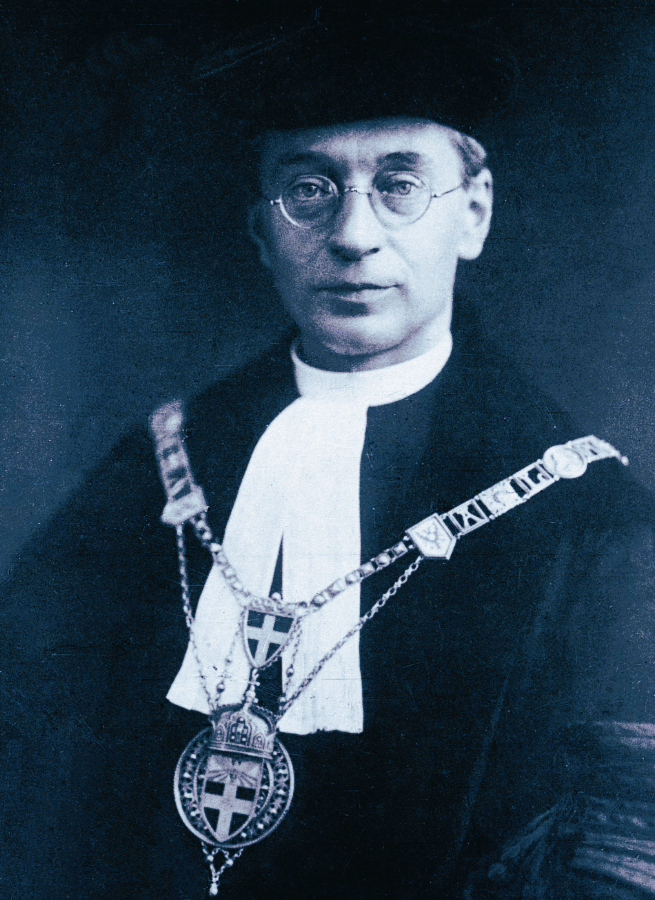
One well-known figure among the Dachau martyrs was Blessed Titus Brandsma, a Dutch Carmelite priest and philosopher who vocally opposed Nazi ideology and their anti-Semitic policies. Arrested for his outspoken resistance, he was eventually sent to Dachau, where he was killed by lethal injection in 1942. His death symbolized the fate of countless others who refused to bow to Nazi authority.
The Martyrdom of Maximilian Kolbe
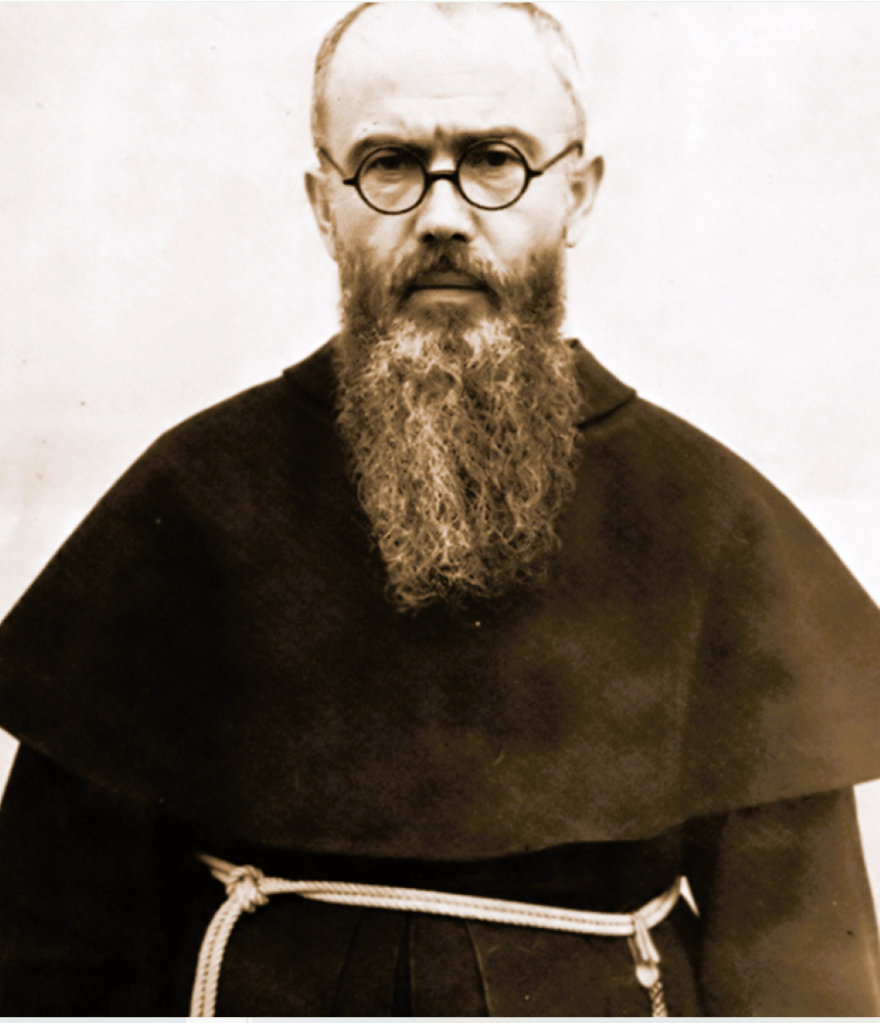
Among the most famous Catholic clergymen killed during the Holocaust was Saint Maximilian Kolbe, a Polish Franciscan friar. Kolbe was arrested for his anti-Nazi writings and for sheltering Jewish refugees in his monastery. In 1941, he was sent to Auschwitz. There, he made the ultimate act of self-sacrifice when he volunteered to take the place of another prisoner who had been sentenced to death by starvation. Kolbe’s act of heroism has been widely recognized, and he was canonized as a saint by the Catholic Church in 1982.
Kolbe’s martyrdom represents the broader role Catholic clergymen played during the Holocaust as spiritual resistors. Though many were imprisoned or killed, they continued to offer hope, support, and moral leadership to those suffering under the Nazi regime. He was canonized on October 10, 1982, at the Vatican City by Pope John Paul II.
The murder of Catholic clergymen during the Holocaust highlights the Nazis’ broader attack on religious and moral opposition to their rule. Whether through their outspoken resistance, their acts of sheltering Jews, or simply their adherence to their faith in the face of Nazi brutality, these clergy members became targets for persecution. Their martyrdom, particularly in places like Dachau and Auschwitz, stands as a testament to their courage and faith in one of history’s darkest moments. Today, their stories serve as reminders of the power of moral resistance in the face of totalitarian evil.
Sources
https://www.euronews.com/2023/09/16/new-claims-that-ww2-pope-pius-xii-knew-about-nazi-crimes
https://www.jpost.com/opinion/article-717557
https://www.jewishvirtuallibrary.org/pope-pius-xii-and-the-holocaust
https://www.vanityfair.com/style/1999/10/pope-pius-xii-199910
https://de.wikipedia.org/wiki/Pfarrerblock
https://en.wikipedia.org/wiki/Maximilian_Kolbe
Donation
Your readership is what makes my site a success, and I am truly passionate about providing you with valuable content. I have been doing this at no cost and will continue to do so. Your voluntary donation of $2 or more, if you are able, would be a significant contribution to the continuation of my work. However, I fully understand if you’re not in a position to do so. Your support, in any form, is greatly appreciated. Thank you. To donate, click on the credit/debit card icon of the card you will use. If you want to donate more than $2, just add a higher number in the box left from the PayPal link. Your generosity is greatly appreciated. Many thanks.
$2.00

 History of Sorts
Leave a comment